The Airbus A340 has been declared “finished” more times than a long-haul red-eye passenger swearing off overnight flights. Its four engines, once symbols of intercontinental confidence, are now treated as artifacts from a pre-ETOPS era. To many observers, the aircraft looks like a relic parked at the edge of modern aviation’s runway, overshadowed by twin-engine widebodies that sip fuel with monk-like restraint. And yet, despite shrinking airline fleets and dramatic retirement headlines, the Airbus A340 is nowhere near extinction.
Retirement in aviation is rarely a dramatic cliff edge. It is more often a slow fade, a redistribution of purpose. The Airbus A340 has undeniably stepped out of the airline spotlight, but stepping out of the spotlight is not the same as stepping into oblivion. Across governments, VIP fleets, niche carriers, and specialist missions, the quadjet continues to fly. Quietly. Reliably. Persistently.
The reason the Airbus A340 won’t be retired anytime soon lies in understanding what “retired” actually means in aviation economics, operational strategy, and long-term fleet management. The story is not about a comeback. It is about endurance.
What “Retirement” Really Means in Aviation
In most industries, retirement is binary. A product disappears from shelves. A worker leaves the workforce. The curtain falls. Aviation refuses to follow that script.
An aircraft can be retired from one airline and begin a second career the following week. It can exit commercial passenger service while remaining structurally sound for cargo, charter, military, or VIP transport. The McDonnell Douglas MD-11 offers a perfect precedent. It vanished from passenger service in 2014, yet it remains a cornerstone of global cargo networks. The airplane did not stop being capable; the market simply changed its requirements.
For airlines, retirement is a financial calculation long before it is a technical necessity. Rising fuel costs, environmental targets, route restructuring, and fleet simplification drive decisions. When newer aircraft deliver lower fuel burn per seat and reduced maintenance exposure, even a perfectly airworthy jet becomes economically inconvenient.
The Airbus A340 was not retired because it failed. It was retired because four engines in a twin-optimized world are hard to justify on a balance sheet built around efficiency metrics.
Outside airlines, the calculus shifts dramatically. Governments, militaries, and VIP operators prioritize range, autonomy, cabin volume, and acquisition cost. Aircraft in these roles fly fewer annual hours. They age more slowly in terms of flight cycles. They are not competing for slim profit margins on daily transcontinental rotations. In that environment, the Airbus A340 transforms from outdated liability to specialized asset.
The Airbus A340’s Original Strategic Advantage
To understand its staying power, rewind to the late 1980s. The Airbus A340 was conceived during a time when Extended-range Twin-engine Operational Performance Standards—ETOPS—severely limited how far twin-engine jets could fly from diversion airports. Oceanic and polar routes demanded redundancy. Four engines were not extravagance; they were permission.
When Lufthansa and Air France introduced the Airbus A340 into service in 1993, it represented long-haul autonomy. Airlines could launch intercontinental routes without the regulatory constraints that restricted early twin-engine operations. For carriers based in Europe, the Middle East, and Asia, this mattered enormously.
The aircraft family evolved into four main variants: the A340-200 and A340-300 focused on long-haul flexibility, while the A340-500 and A340-600 pushed range and capacity boundaries. When Emirates introduced the A340-500 in 2002, it operated what was then the world’s longest commercial nonstop route, connecting Dubai and New York. That was not incremental progress. That was strategic transformation.
All A340 variants shared cockpit commonality with the Airbus A330, reducing training complexity and easing fleet integration. Airlines could transition crews efficiently, a significant cost advantage during its prime.
Technologically, the A340 was robust. Structurally conservative. Built for missions that demanded endurance over empty oceans and sparsely populated terrain.
Why Airlines Moved On
The turning point was not a flaw in the aircraft but a revolution in engine reliability and regulatory flexibility. As ETOPS standards expanded and high-bypass turbofan engines became more efficient and dependable, twin-engine widebodies like the Boeing 777, Airbus A330neo, and Airbus A350 redefined long-haul economics.
Two engines burning less fuel than four engines is not subtle mathematics. For airlines operating tight margins across global networks, fuel efficiency translates directly into competitiveness. Add rising environmental scrutiny and carbon targets, and the quadjet’s operating profile becomes increasingly difficult to defend.
Even a fully paid-off Airbus A340 struggles against new-generation aircraft that offer double-digit percentage improvements in fuel burn. Maintenance on four engines instead of two compounds the cost differential. Cabin upgrades cannot compensate for structural inefficiency.
Airlines, driven by shareholder expectations and cost per available seat mile metrics, gradually retired the type. But retirement from airlines is not retirement from the sky.
Who Still Flies the Airbus A340 in 2026?
Despite perceptions, dozens of Airbus A340 aircraft remain active worldwide. The global fleet is a fraction of the 380 originally produced, yet it is far from zero.
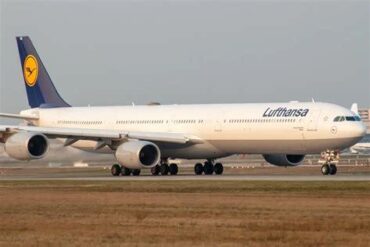
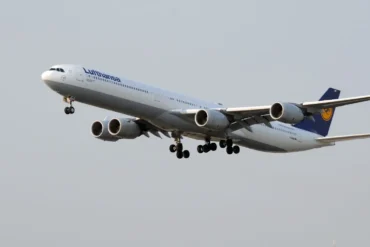
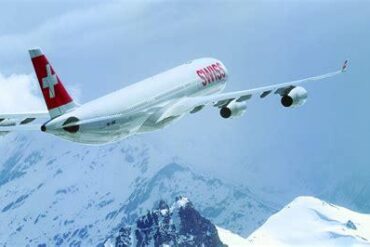
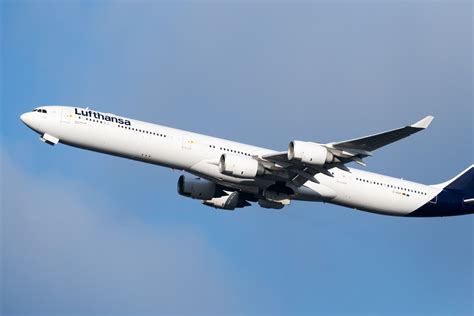
Lufthansa continues to operate both A340-300 and A340-600 aircraft on select long-haul routes, particularly where fleet gaps emerged due to delivery delays of newer jets. Swiss and Edelweiss maintain smaller fleets. Mahan Air operates multiple A340-300 aircraft. Beyond commercial carriers, a substantial portion of active aircraft falls into government, charter, VIP, and special-mission categories.
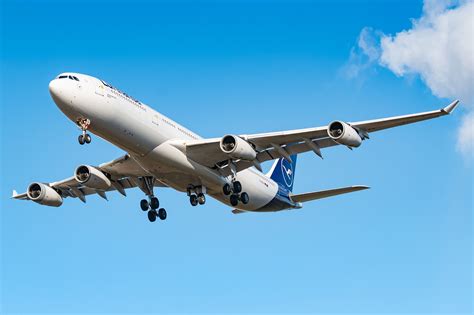
Government and specialist operators collectively represent the largest share of remaining active A340s. These aircraft are often configured with customized interiors, secure communications suites, or mission-specific equipment that would be costly to replicate in newer platforms.
The age profile of the fleet may appear daunting. Many airframes date back to the late 1990s and early 2000s. Yet aviation age is measured less in calendar years than in cycles and structural fatigue. Aircraft that fly fewer sectors accumulate wear far more slowly.
For VIP and governmental roles, annual utilization can be dramatically lower than airline schedules. This extends structural service life considerably. Thirty to forty years in such roles is not unusual. The continued operation of aging presidential aircraft worldwide demonstrates how longevity aligns with mission-critical reliability.
The Economics of a Second Life
The Airbus A340’s current value proposition rests on a simple truth: acquisition cost has collapsed.
A new Airbus A350 commands hundreds of millions of dollars. A used A340 can be acquired for a fraction of that figure. For operators unconcerned with squeezing maximum seat-mile efficiency, this cost differential is transformative.
Four engines, often criticized in commercial service, become operational reassurance in remote-area missions. The aircraft’s long range allows nonstop intercontinental travel without refueling stops that may present security or logistical challenges.
Cabin space in the A340-600, in particular, offers enormous flexibility for VIP layouts. Conference rooms, medical facilities, sleeping quarters, and secure communications installations fit comfortably within its elongated fuselage.
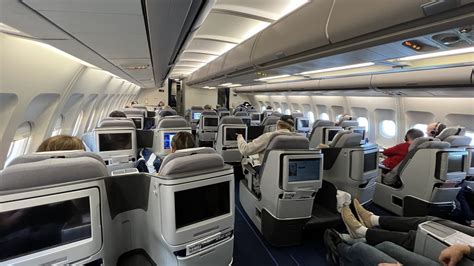
Maintenance ecosystems also persist. As airline fleets shrink, surplus parts become available, often at reduced cost. This supports continued operations for smaller fleets. It creates a self-sustaining niche market that extends the aircraft’s viability.
In aviation, obsolescence is rarely total. It is contextual.
Structural Longevity and Engineering Margin
The Airbus A340 was engineered conservatively. Its four CFM56-5C engines on the A340-300 variant, for example, were derivatives of well-established powerplants. Reliability was never its weakness.
Because many remaining A340s now fly fewer hours annually, structural fatigue progresses slowly. Airframes designed for high-frequency airline operations often have substantial remaining life when shifted to low-utilization roles.
This is why extinction headlines overestimate speed. Aircraft are capital assets with long depreciation arcs. Operators do not scrap viable assets casually, especially when they meet mission requirements at acceptable cost.
Parts scarcity will eventually become a constraint. Over time, supplier networks thin. However, the gradual pace of airline retirement actually moderates this effect by releasing components into secondary markets. The result is not a sudden cliff but a controlled descent.
The Psychological Effect of Visibility
Part of the myth surrounding the Airbus A340’s imminent retirement stems from visibility bias. When an aircraft type disappears from major hubs and flagship routes, it feels gone.
But aviation ecosystems are vast. Aircraft operate in regions and roles that rarely attract mainstream attention. Charter flights, governmental missions, and regional long-haul routes do not generate daily headlines.
Spotting an A340 today may feel like encountering a vintage watch still keeping perfect time. Rare does not mean obsolete. It means specialized.
The Airbus A340’s Likely Future: A Gradual Diminishing
Over the next two decades, the Airbus A340 fleet will continue to contract. Airlines will phase out remaining examples as fleet simplification strategies accelerate. Environmental regulations may tighten further. New aircraft will deliver even more dramatic efficiency gains.
Yet the disappearance will not be abrupt.
Specialized operators will retain aircraft as long as maintenance frameworks and mission profiles align. Governments rarely replace high-value aircraft hastily. VIP operators invest heavily in interior customization, which incentivizes long service lives. Some airframes may convert to cargo or experimental roles. Others will serve as training platforms or be preserved as heritage aircraft.
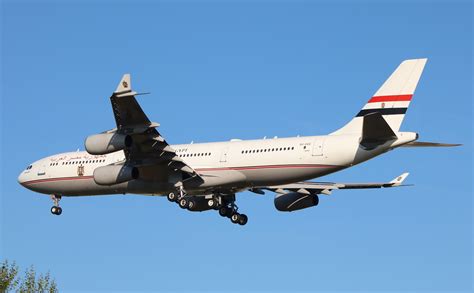
The quadjet era in commercial aviation has largely closed, but the quadjet itself remains capable. The Airbus A340’s future is not glamorous, but it is durable.
Why the Airbus A340 Won’t Be Retired Anytime Soon
The aircraft occupies a transitional space between commercial obsolescence and operational relevance. It no longer defines airline ambition, yet it still fulfills missions that demand range, cabin volume, and redundancy.
Retirement in aviation is not a funeral. It is redistribution.
The Airbus A340’s design philosophy—long range, structural robustness, cockpit commonality—continues to support operators who value those traits. Low acquisition costs, manageable utilization rates, and specialized applications create a stable niche. As long as that niche exists, the aircraft will fly.
Aviation history shows that aircraft rarely vanish overnight. They fade. They migrate. They adapt. The Airbus A340 is in that phase now—a quiet persistence measured in decades rather than headlines.
Its silhouette, four engines suspended beneath a wide, elegant wing, may no longer dominate global timetables. But it remains a working machine. And in aviation, a working machine is not retired.