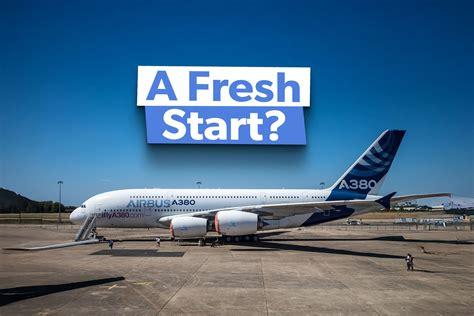
The Airbus A380 did not emerge from excess or whim. It was born from a particular moment in aviation history when the industry’s assumptions about growth, congestion, and prestige all pointed in the same direction: bigger. In the closing years of the twentieth century, long-haul air travel was dominated by hub-to-hub flows, constrained airports, and a single, towering symbol of global reach—the Boeing 747. Airbus had already proven it could compete in narrowbodies and mid-size widebodies, yet it lacked a flagship that could match Boeing’s aura at the very top of the market. The A380 was conceived to fill that void and, more importantly, to redefine it.
Airbus entered commercial aviation later than its American rival and spent decades earning trust. By the 1990s, aircraft such as the A320 and A330 had secured major airline customers and validated Airbus’s engineering philosophy. Still, perception mattered. The upper end of long-haul travel remained psychologically owned by Boeing. The 747 was not just an airplane; it was a cultural artifact, shorthand for intercontinental travel itself. Airbus leadership understood that incremental competition would never break that association. To change the narrative, the company needed a machine so audacious that it forced the market to reconsider who set the ceiling of commercial aviation.
The A380 became that statement. Airbus believed the future of air travel would concentrate around a limited number of global mega-hubs, where slot scarcity would reward maximum capacity rather than higher frequency. In this worldview, a very large aircraft was not a gamble but an inevitability. The A380 was therefore designed to surpass the 747 in capacity, comfort, and technological sophistication, announcing that Airbus had arrived not as a follower, but as a peer with ambitions to lead.
Airbus’s Strategic Moment At The Turn Of The Millennium
The timing of the A380 program was as important as its size. The late 1990s and early 2000s were marked by sustained growth in international travel, rapid globalization, and mounting congestion at airports such as Heathrow, JFK, and Narita. Airlines were struggling to add slots, and regulators faced physical limits on runway expansion. Airbus planners saw a structural problem that could not be solved by smaller airplanes flying more often. The solution, they argued, was capacity per movement.
This logic fit neatly with the dominant airline network model of the era. Large carriers funneled passengers from regional spokes into central hubs, then redistributed them across long-haul trunk routes. A single daily departure between two mega-cities could carry enormous demand if the aircraft were large enough. Airbus forecast that dozens of such routes would justify a new class of aircraft well above existing widebodies. The A380 was engineered precisely for this role, optimized for dense intercontinental corridors rather than marginal, long-thin routes.
Beyond market forecasts, there was also an internal imperative. Airbus was a consortium with multiple national stakeholders, and the A380 program unified European aerospace ambition at an unprecedented scale. It validated supply chains, production coordination, and systems integration across borders. Building the world’s largest passenger aircraft was not only about selling seats; it was about proving that Airbus could execute projects of extreme complexity and long time horizons.
Engineering A New Class Of Aircraft
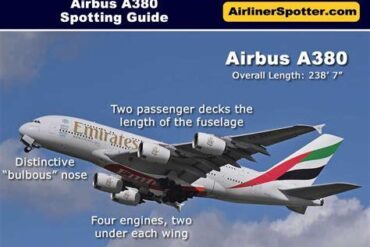
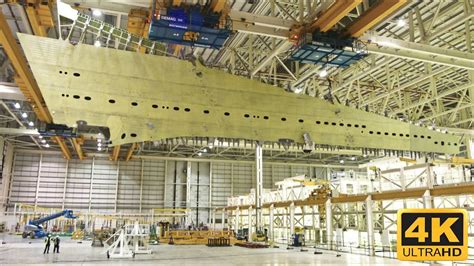
From its inception, the A380 was designed to be more than a stretched version of existing aircraft. It introduced a full-length double-deck fuselage, giving airlines an entirely new canvas for cabin design. The wings were among the largest ever built for a commercial aircraft, optimized for long-range cruise with four high-thrust engines. Advanced materials reduced weight where possible, while fly-by-wire systems refined handling for an aircraft of unprecedented mass.
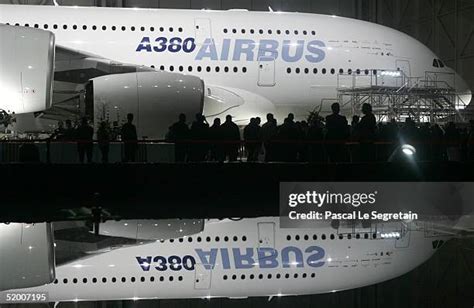
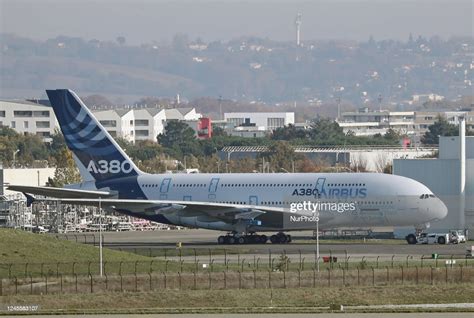
The aircraft formally took shape in the early 2000s, rolling out in January 2005 before making its maiden flight later that year from Toulouse. This flight marked the beginning of an exhaustive test campaign involving thousands of flight hours and multiple development aircraft. Certification was a major undertaking, as regulators had never evaluated a passenger jet of this scale. When the first A380 entered service in 2007 with Singapore Airlines, it represented a new category of commercial aviation rather than a simple product launch.
In performance terms, the A380 delivered exactly what Airbus promised. With a range of roughly 8,000 nautical miles, it could connect almost any two major cities on Earth. In high-density configuration, it was capable of carrying up to 853 passengers, a figure unmatched before or since. Even in more typical airline layouts, its capacity dwarfed that of competing widebodies, creating economies of scale that looked compelling on paper.
Breaking Boeing’s Symbolic Monopoly
Airbus did not hide the symbolic intent behind the A380. The aircraft was explicitly positioned as a response to the Boeing 747, whose dominance at the top end of the market had lasted for decades. While Boeing continued to refine the 747 through successive variants, Airbus chose a different approach: leapfrog rather than iterate. The A380 was larger, quieter, and designed around modern cabin expectations rather than legacy layouts.
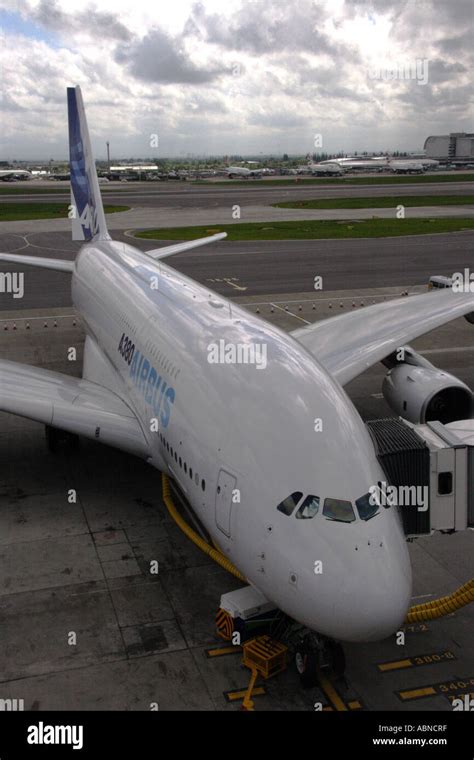
This mattered to airlines seeking differentiation. Operating the world’s largest passenger aircraft carried prestige, signaling global reach and operational sophistication. For Airbus, every A380 delivery was also a branding victory. It placed the company’s logo on an aircraft that passengers noticed, photographed, and talked about. Even people indifferent to aviation recognized the A380’s silhouette, reinforcing Airbus’s presence in the public imagination.
Yet Airbus’s ambition extended beyond symbolism. The company genuinely believed that very large aircraft would become a cornerstone of future fleets. Internal forecasts predicted hundreds of sales, driven by traffic growth and infrastructure constraints. Early orders from major carriers appeared to validate this optimism, suggesting that the A380 could anchor long-haul networks for decades.
Redefining The Premium Cabin Experience
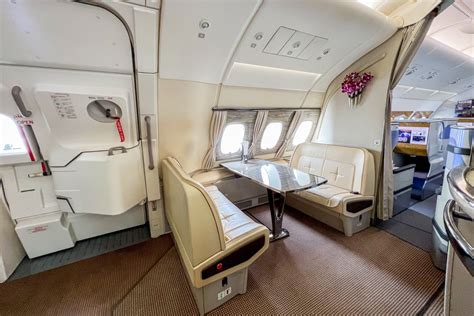
If the A380 changed anything decisively, it was premium long-haul travel. The aircraft’s sheer internal volume allowed airlines to rethink how space was allocated. Instead of squeezing premium seats into marginal gains, carriers could build expansive first and business class cabins without sacrificing overall capacity. This spatial freedom reshaped expectations at the top end of the market.
Airlines quickly realized that the A380 could support features previously considered impractical. Fully enclosed suites, onboard lounges, and even in-flight showers became possible because the aircraft could absorb the space and weight penalties. These were not superficial luxuries; they altered passenger psychology on ultra-long flights, turning travel time into an experience rather than a compromise.
No airline embraced this potential more fully than Emirates. The A380 became central to its brand strategy, anchoring a network built around Dubai as a global hub. By pairing the aircraft with lavish interiors and consistent service standards, Emirates used the A380 to redefine what passengers expected from long-haul premium travel. The aircraft was not merely a tool of capacity, but a stage for storytelling and differentiation.
Concentrated Success And A Narrow Customer Base
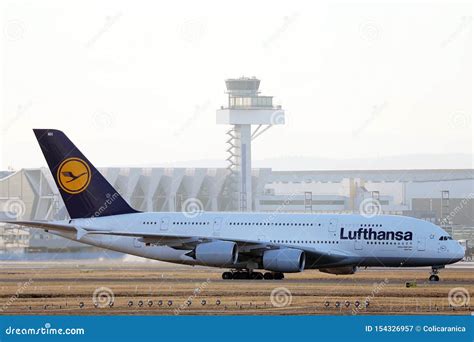
Despite its technological success, the A380’s commercial footprint remained narrow. Over the life of the program, 251 aircraft were ordered, with deliveries concluding in 2021. A significant portion of these went to a small number of carriers. Emirates alone accounted for nearly half of all orders, while airlines such as Singapore Airlines, Lufthansa, and British Airways operated modest fleets by comparison.
This concentration revealed an underlying truth about the A380’s economics. The aircraft worked best for carriers with specific network characteristics: strong hub dominance, high premium demand, and access to slot-constrained airports. Airlines without these advantages struggled to justify the investment. For them, the risks of filling such a large aircraft consistently outweighed the benefits of its scale.
As a result, the A380 never became a universal solution. It was a specialist tool, extraordinarily effective in the right hands and circumstances, but unforgiving elsewhere. This reality increasingly shaped perceptions of the aircraft as market conditions evolved.
Why The Market Moved Away From Quadjets
The A380 entered service just as the industry’s priorities began to shift. Fuel prices rose, environmental scrutiny intensified, and airlines sharpened their focus on operating efficiency. As a four-engine aircraft, the A380 carried inherent cost penalties in fuel burn and maintenance compared to emerging twin-engine designs. Even when full, its economics were sensitive to external variables that airlines could not control.
At the same time, technological advances transformed what twin-engine aircraft could do. Improvements in engine reliability and regulatory frameworks allowed twins to fly routes once reserved for quadjets. Aircraft such as the Boeing 777, 787, and Airbus A350 offered comparable range with far lower trip costs. They also provided flexibility, enabling airlines to open new city pairs without committing to massive capacity.
Passenger preferences reinforced this shift. Travelers increasingly valued nonstop flights between secondary cities, even at the expense of frequency or aircraft size. The point-to-point model gained momentum, eroding the hub-centric logic that had underpinned the A380’s business case. In this new environment, very large aircraft became harder to justify.
The A380’s Enduring Legacy
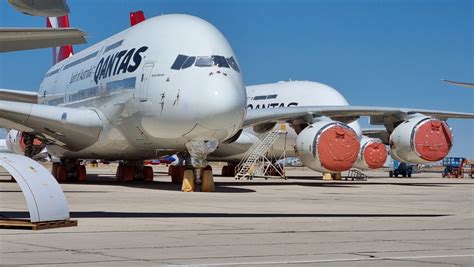
Judged purely by sales, the A380 fell short of Airbus’s original expectations. Yet measuring its impact solely through orders misses the broader picture. The aircraft demonstrated what was technically achievable at the outer limits of commercial aviation. It pushed suppliers, regulators, and airports to adapt to a new scale, leaving lasting infrastructure and design legacies.
Culturally, the A380 reshaped how passengers thought about flying. For a generation of travelers, it represented the pinnacle of comfort and spectacle, an aircraft that made the journey itself memorable. Few airplanes have inspired such affection or visibility in the age of social media and global travel.
The A380 was built for a future that seemed logical at the time and partially arrived before diverging. Its story is therefore not one of failure, but of ambition meeting a moving target. Airbus set out to challenge a monopoly, redefine an experience, and prove its mastery at the highest level of aerospace engineering. In all three respects, the A380 succeeded, even as the market chose a different path.