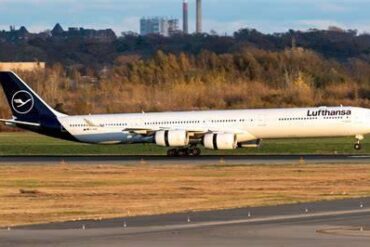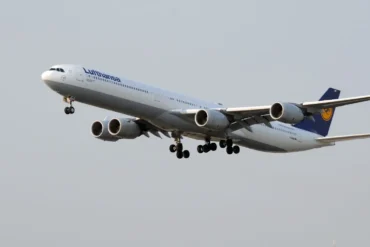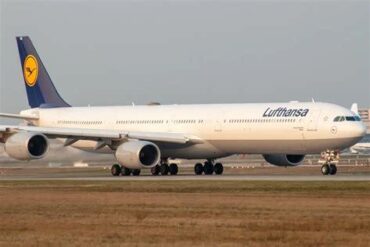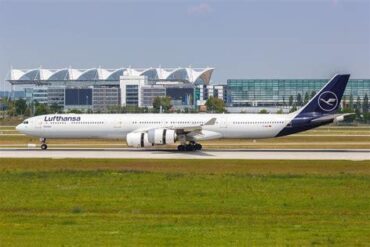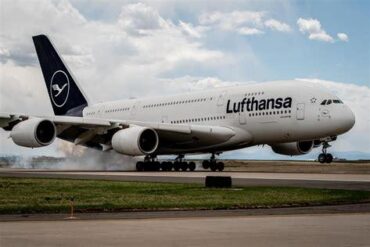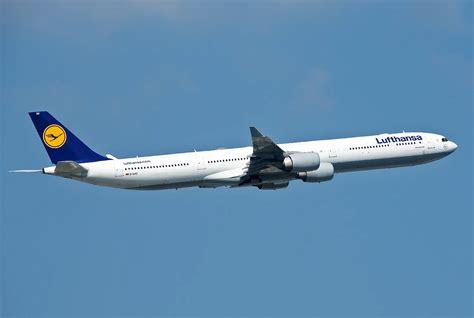
Lufthansa’s long goodbye to the Airbus A340-600 has finally gained a firm end date. After years of incremental extensions driven by delayed deliveries of next-generation widebodies, scheduling data now points to October 25, 2026 as the final chapter for the stretched quadjet in Lufthansa colors. It is a symbolic moment for the German flag carrier, closing a chapter defined by long-haul reach, four engines, and a distinctly early-2000s vision of intercontinental travel.
The timing is not accidental. The final A340-600 operation is planned for the last Sunday of October, the precise moment when the IATA Summer Schedule transitions into the Winter Schedule, a traditional pivot point for major fleet and network changes. Airlines often choose this date to introduce or retire aircraft, making Lufthansa’s decision feel deliberate and ceremonious rather than abrupt.
For Lufthansa, this retirement has been anticipated for years. The A340-600 was always a transitional aircraft, bridging the gap between classic four-engine long-haul operations and the modern era of ultra-efficient twinjets. Yet repeated delays to incoming aircraft—most notably the Boeing 787 Dreamliner—have kept the type in frontline service longer than originally planned, stretching its relevance well beyond initial expectations.
A Shrinking Fleet Nearing the End of the Line
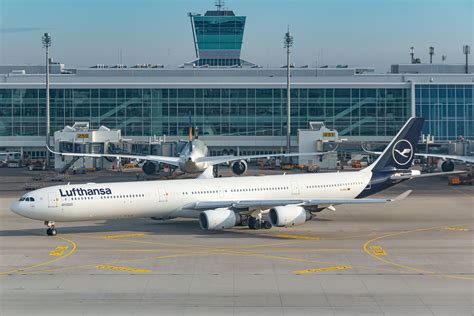
At present, Lufthansa retains 13 Airbus A340-600s on its books. Only four remain active, while the remaining nine have already been placed into storage. With an average age of 19.6 years, these aircraft are among the oldest in Lufthansa’s long-haul fleet, standing in contrast to the airline’s overall fleet average of 14.9 years. The imbalance highlights how far the A340-600 has drifted from Lufthansa’s current efficiency and sustainability goals.
The final heavy maintenance milestone has already passed. Lufthansa Technik completed the type’s last C-check in April, a strong signal that no further long-term investment would be made. At one point, the aircraft was expected to exit by October 2025, but the global aircraft delivery backlog reshaped that plan. The A340-600 stayed on as a reliable capacity buffer during a period when demand rebounded faster than manufacturers could deliver.
Why Lufthansa Held On Longer Than Expected
The persistence of the A340-600 is less about nostalgia and more about operational pragmatism. During the post-pandemic recovery, Lufthansa needed widebody lift immediately, not promises on paper. The A340-600, despite its fuel thirst, offered known performance, trained crews, and proven reliability on long-haul routes. In an environment defined by uncertainty, those qualities mattered more than efficiency metrics alone.
Yet the strategic direction has never changed. Lufthansa’s future long-haul fleet is firmly anchored around twin-engine aircraft such as the Airbus A350 and Boeing 787, which deliver dramatic reductions in fuel burn, emissions, and maintenance complexity. The A340-600’s four engines, once a selling point for long overwater operations, have become an economic liability in an era of tight margins and environmental scrutiny.
The Final Year: Routes, Frequencies, and a Gradual Wind-Down
Cirium scheduling data shows that Lufthansa plans 1,669 A340-600 flights in 2026, all routed through its Frankfurt hub. Operations are heavily concentrated on transatlantic services, particularly to the United States. New York JFK and Chicago O’Hare dominate the schedule, reflecting the aircraft’s role as a high-capacity solution on consistently strong markets.
The network flexes month by month. Early in 2026, JFK emerges as the only daily A340-600 destination, while Chicago sees reduced frequencies. That shift frees capacity for selective deployments to Boston and Riyadh, illustrating how Lufthansa uses the type tactically rather than expansively as retirement approaches.
October 2026 marks the final act. During that month, Lufthansa schedules 145 flights with the A340-600, maintaining daily rotations from Frankfurt to JFK, Washington Dulles, and Riyadh. The very last flight is planned for October 25, operating from Riyadh to Frankfurt, a quietly fitting end to an aircraft that spent its final years shuttling steadily between continents.
Inside the Cabin: A Snapshot of Another Era
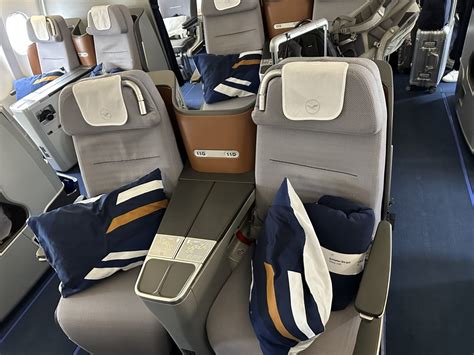
The onboard experience of Lufthansa’s A340-600 is a time capsule of long-haul travel design from the early 2000s. The aircraft seats 281 passengers, anchored by eight First Class suites in a 1-2-1 layout that guarantees direct aisle access for every premium traveler. This forward cabin remains one of the aircraft’s most admired features, offering generous space and a sense of old-school exclusivity.
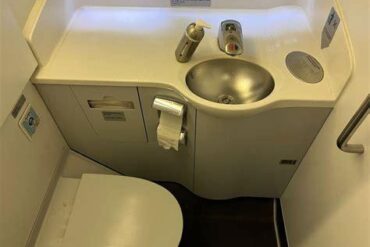
Behind it sits a 2-2-2 business class, with angled flatbeds that lack universal aisle access, followed by a 2-3-2 premium economy and a 2-4-2 economy cabin. A distinctive quirk remains memorable to frequent flyers: some lavatories are located below the main deck, accessed by a short staircase, a layout choice rarely seen on newer widebodies.
A Quiet but Meaningful Farewell
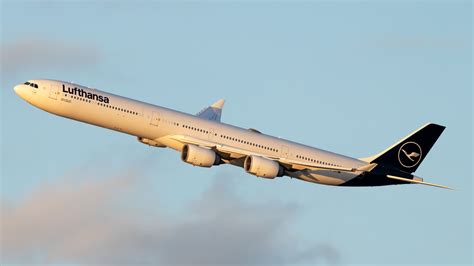
The retirement of the Airbus A340-600 is not just a fleet update; it is a philosophical shift made visible. It marks Lufthansa’s final break from four-engine passenger jets and reinforces a future defined by efficiency, range, and flexibility rather than brute thrust. The aircraft served faithfully, often unglamorously, absorbing demand when newer jets were unavailable and proving its worth long after critics wrote it off.
When the final Riyadh–Frankfurt flight touches down in October 2026, it will close a chapter that shaped Lufthansa’s long-haul identity for more than two decades. The A340-600 departs without fanfare, but its imprint on the airline’s global network—and on a generation of travelers—remains unmistakable.