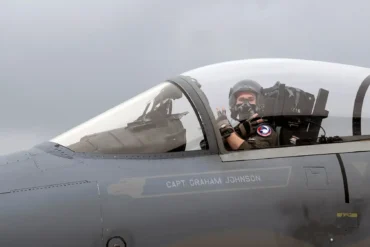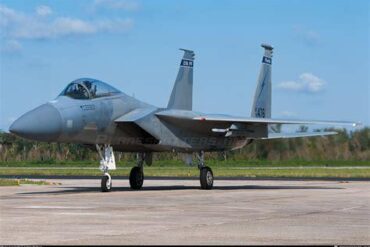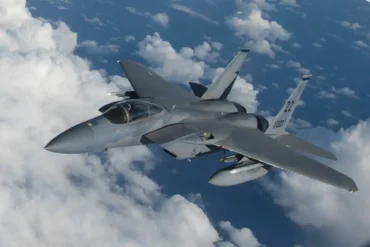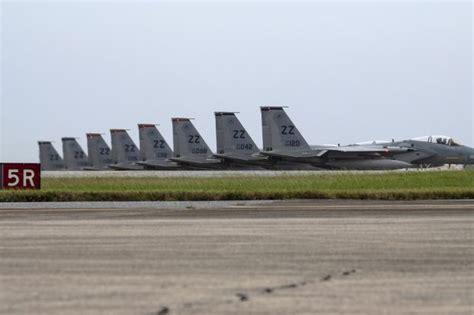
For over 18 years, the thunderous roar of F-15C Eagles echoed over Westfield, Massachusetts, as Barnes Air National Guard Base served as a vital linchpin in America’s air defense network. That era has come to a poignant end. On October 23, 2025, the final three F-15C jets from the 104th Fighter Wing lifted off for the last time, bound for the arid expanse of Davis-Monthan Air Force Base, Arizona — more specifically, the storied Boneyard, formally known as the 309th Aerospace Maintenance and Regeneration Group (AMARG).
The Last Flight: Closing a Chapter in Air Superiority
The farewell flight was as symbolic as it was operational. 1st Lt. Kyle “Nuke” Eckert of the 131st Fighter Squadron piloted the final Eagle to leave Barnes, carrying not just a legacy of missions but the collective sentiment of decades of service. “It was a bittersweet moment,” Nuke shared, capturing the emotional weight of an entire generation of pilots who’ve flown these iconic fighters.
Joining him in this historic sendoff were Col. David “Moon” Halasi-Kun, Commander of the 104th Fighter Wing, and 1st Lt. Eric “Gronk” Flynn, both also of the 131st. Together, they marked the official conclusion of F-15 operations at Barnes.
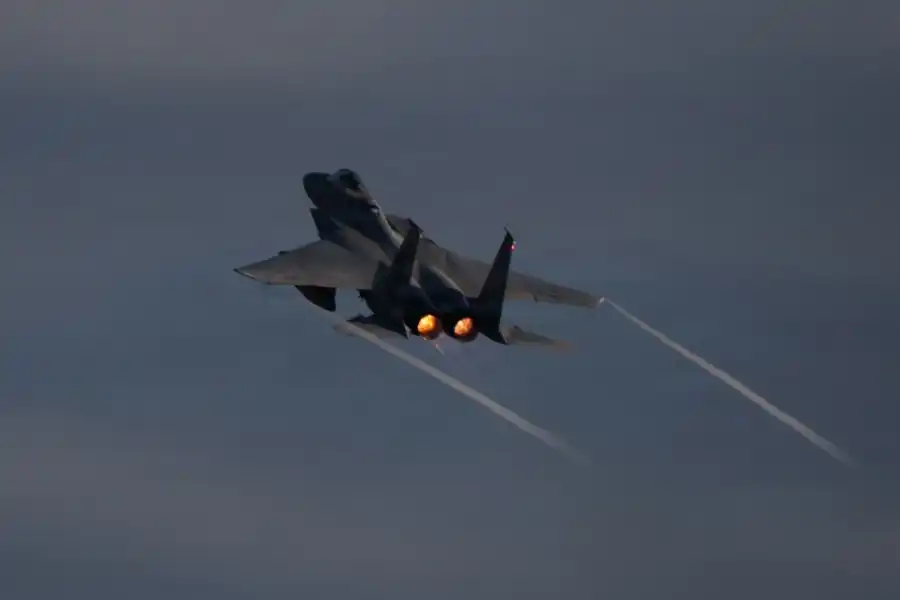
These Eagles now join 37 others already sent to the Boneyard, making Barnes one of the largest contributors to this aircraft retirement phase. While the F-15C fleet at large was originally slated for full retirement by 2026, the Air Force recently extended the lifespan of a select few to 2030 due to strategic necessity. Nonetheless, over 75 percent of the fleet faces operational limitations — either in maximum G-force capabilities or airspeed restrictions — prompting this tactical transition.
Guardians of the Northeast: The Homeland Defense Role
Since taking on the homeland defense mission under NORAD, the 104th Fighter Wing’s F-15Cs served as America’s rapid-response guardians against airborne threats to the northeastern United States, protecting the skies over a region home to nearly a quarter of the U.S. population. The aircraft’s legendary acceleration, climb rate, and combat range made them ideal for these high-stakes intercept missions.
These jets didn’t just defend the homeland. They also deployed overseas, participating in combat and strategic deterrence missions as part of broader NATO and U.S. operations. A highlight came during Exercise Noble Defender 2023, a joint U.S.-Canadian NORAD drill, where Barnes’ F-15Cs scrambled to intercept two American B-1B Lancers simulating a hostile cruise missile attack on North America. Joined by Royal Canadian Air Force CF-18s and other NATO fighters, the Barnes Eagles showcased their tactical agility and multinational interoperability.
Transitioning to the Fifth Generation: F-35A Lightning II on the Horizon
While the sky over Westfield may now fall silent, that silence won’t last long. Both “Nuke” and “Gronk” are already preparing to transition to the F-35A Lightning II, the Air Force’s fifth-generation multi-role stealth fighter. The 104th Fighter Wing is set to receive 20 F-35As in the summer of 2026, ushering in a new era of digital warfare, stealth penetration, and multirole adaptability.
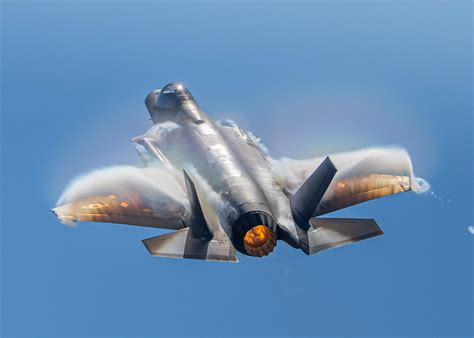
The switch from the F-15C to the F-35A is more than a platform upgrade — it’s a strategic pivot. With aging airframes retiring, the F-35A will bring advanced sensor fusion, stealth capabilities, and joint-force connectivity that are essential for modern threat environments. It’s a leap that reflects the evolving demands of national security and air dominance.
A Legacy Etched in Steel and Sky
The F-15C Eagle, while now retired from Barnes, leaves behind an indelible mark. Second only to the A-10 Thunderbolt II in terms of service longevity at the base, the Eagle’s time at Barnes is remembered not just for its longevity, but for its excellence. From routine NORAD alert missions to high-profile multinational intercept drills, the F-15Cs from Barnes have been more than machines — they’ve been sentinels of American airspace.
Their departure marks not an end, but a transformation. The 104th Fighter Wing, steeped in decades of tradition and tactical prowess, now stands ready to embrace the future. And when the F-35s scream back into the skies over Westfield, they won’t just be carrying missiles and munitions — they’ll be carrying forward a legacy.