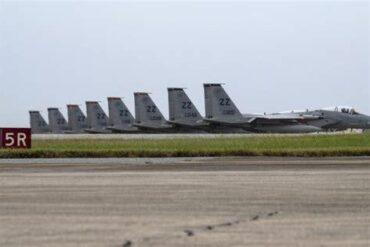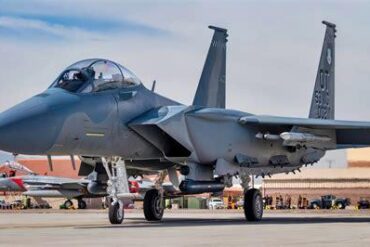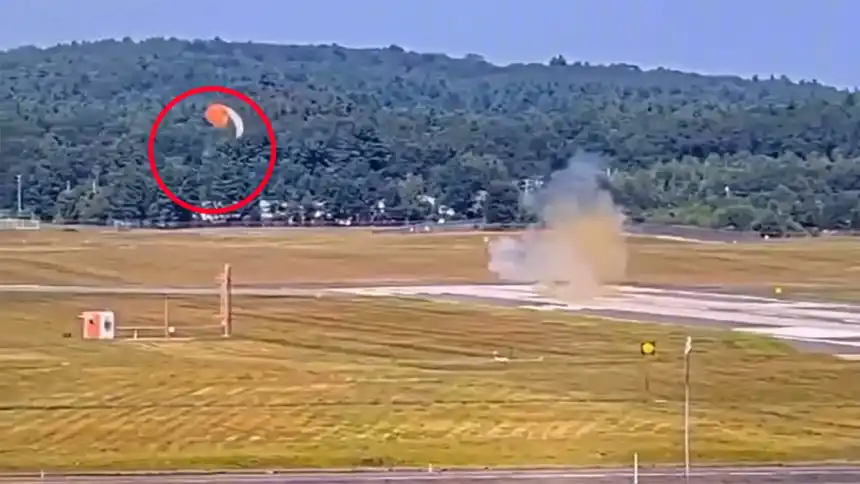
In a rare and unsettling turn of events, a leaked security camera video has surfaced online, capturing the exact moment an Airman accidentally ejected from the back seat of an F-15D Eagle at Barnes Air National Guard Base in Westfield, Massachusetts. The incident, which unfolded on August 12, 2025, has triggered widespread attention across aviation circles, sparking discussions about cockpit safety, ejection seat protocols, and the unusual circumstances that can arise during incentive flights.
The footage begins with the F-15D taxiing at the end of the runway. Suddenly, the ACES II ejection seat’s rocket motor ignites, sending the backseat passenger skyward. The parachute deploys almost instantly, ensuring the Airman’s safe descent onto the grass near the taxiway. Thick plumes of smoke engulf the aircraft momentarily before dissipating, revealing the pilot pausing briefly before resuming taxi operations. Emergency crews were immediately alerted, and the pilot, flying under the callsign “RAMBO 01,” declared a ground emergency over radio communications.
The Incident at Barnes ANGB
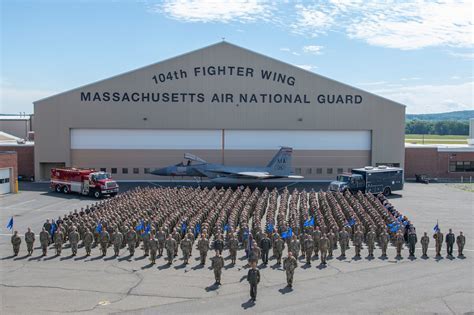
According to a statement from the Massachusetts Air National Guard’s 104th Fighter Wing, the mishap occurred around 2:05 p.m. local time. The aircraft was returning from an incentive flight, typically offered to exemplary service members as both a reward and an inspiration to pursue aviation. While incentive flights are routine within the U.S. Air Force, this event highlights the rare risks involved.
The passenger, reportedly a recruiting Airman, was transported to a nearby hospital for precautionary checks. Both the unit and official sources confirmed there were no serious injuries. Confusion initially clouded the timeline, with early reports suggesting the ejection occurred before takeoff. However, further confirmation from Mandatory Occurrence Reporting (MOR) logs and air traffic control recordings confirmed it happened after landing, as the jet exited runway 02 via taxiway Bravo.
Another Mishap the Same Day
Complicating matters further, reports suggest that another incident occurred earlier on the same runway. In this case, an F-15C Eagle, flying under the callsign “SLAM 02,” experienced a tire blowout on its main landing gear. The jet had just completed a scramble exercise as part of a two-ship formation. Radio chatter confirmed the event and added to the chaotic day at Barnes ANGB. Both mishaps took place only hours apart, underscoring the intensity of operational risks even during routine exercises and landings.
The Rare Phenomenon of Accidental Ejections
Accidental ejections are exceedingly rare but not without precedent. One of the most cited cases occurred in 2019, when a passenger aboard a French Dassault Rafale accidentally ejected during takeoff on an incentive flight. Investigations later revealed a mix of human error and mechanical oversight.
More recently, in 2024, a U.S. Air Force T-6A Texan II instructor pilot suffered a fatal ejection while taxiing after landing. Investigators discovered that a loose harness strap inadvertently engaged the seat’s activation handle, triggering the seat when the aircraft was still on the ground. While parallels can be drawn to the F-15D case, the specifics remain unclear until a full safety investigation is concluded.
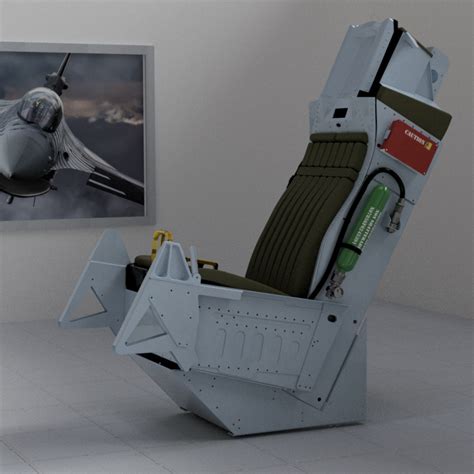
Technical Focus: The ACES II Ejection Seat
The ACES II ejection seat used in the F-15 Eagle has a strong reputation for reliability, credited with saving hundreds of lives since its introduction in the 1970s. Designed with redundant safety mechanisms, the seat can initiate ejections under extreme conditions, from zero altitude and zero speed to supersonic flight. However, as the recent incident demonstrates, no system is entirely immune to unintended activations.
When an ejection is triggered, the seat’s rocket catapult launches it clear of the aircraft. Within fractions of a second, stabilization devices and parachutes deploy to protect the occupant. In this case, the parachute opened seamlessly, preventing injury to the Airman despite the unusual ground-based activation.
Operational and Psychological Impact
For the 104th Fighter Wing, the incident represents not only a technical mishap but also a morale challenge. Incentive flights are designed to motivate Airmen and build enthusiasm for aviation careers. An accidental ejection during such a flight could cause hesitation among future participants and raises concerns about the psychological aftermath for those involved.
The pilot, continuing to taxi after the ejection, demonstrated composure under unexpected pressure. His ability to maintain control and coordinate with ATC ensured that the situation did not escalate further, preventing potential secondary hazards.
Historical Perspective on Ejection Mishaps
Throughout aviation history, unintended ejections have punctuated otherwise routine operations. From early Cold War-era jets with less reliable mechanisms to modern high-tech fighters, the balance between safety redundancy and human factors remains delicate.
- In the 1980s, NATO pilots experienced multiple ground ejection mishaps linked to maintenance oversights.
- In 2019, the French Rafale case drew international attention for its unusual circumstances involving a civilian passenger.
- In 2024, the tragic T-6A accident underlined how small deviations in procedure can lead to catastrophic outcomes.
The F-15D’s latest mishap will likely join this list as a case study in flight safety programs worldwide.
Investigation and Future Safety Measures
The Air Force has already launched a formal investigation into the Barnes ANGB event. Such inquiries typically examine:
- The condition and maintenance records of the ejection seat.
- Cockpit procedures and whether the ejection handle was inadvertently activated.
- The background and preparation of the passenger, including training provided before the flight.
- Ground crew checks before taxi operations.
While official conclusions may take months, the findings will likely influence future safety protocols across Air National Guard units. Adjustments may include enhanced passenger briefings, stricter cockpit checklists, or modifications to seat safeguards during taxi operations.
Public and Media Reactions
The leaked video has amplified interest beyond military and aviation circles. Online platforms quickly circulated the footage, with analysts dissecting every frame of the ejection sequence. While the viral spread highlights the public’s fascination with aviation drama, it also raises concerns about sensitive security footage reaching social media channels.
Military observers point out that such leaks may affect both public trust and operational security. The Massachusetts Air National Guard has yet to address how the footage was released but emphasized that no classified information was compromised.
Conclusion
The accidental ejection of an Airman from an F-15D Eagle at Barnes ANGB underscores the unpredictable nature of military aviation. Despite the impeccable safety record of the ACES II system and decades of operational experience with the F-15, this event reveals that risks remain even in seemingly controlled environments. While no injuries were reported, the incident will leave a lasting mark on both the 104th Fighter Wing and broader Air Force safety culture.
As investigations progress, the aviation community awaits answers that may lead to enhanced safeguards for incentive flights and routine operations. Until then, the image of a parachute blossoming unexpectedly over a taxiing Eagle serves as a stark reminder that in aviation, certainty is never absolute.