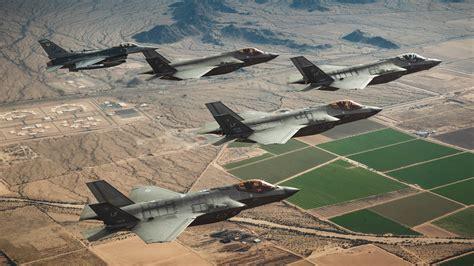
The United States operates the most formidable air armada on Earth. Across the U.S. Air Force, Space Force, and Air National Guard, more than 5,000 aircraft form a layered shield of deterrence and power projection. Of those, over 2,000 are fighter jets or direct-attack aircraft designed to seize and hold air superiority. These aircraft are dispersed across installations worldwide, but one base stands apart in sheer fighter density: Luke Air Force Base in Arizona, the installation with the most fighter jets in the country.
Located west of Phoenix, Luke Air Force Base is not merely a hub of activity; it is the beating heart of American fighter pilot training. While operational bases often keep detailed aircraft inventories close to the vest, Luke’s mission as a premier training center makes its scale unmistakable. Home to the 56th Fighter Wing, the base houses 138 F-16 Fighting Falcons, officially making it the largest fighter wing in the U.S. Air Force under Air Education and Training Command.
Luke Air Force Base: The Epicenter of F-16 Dominance
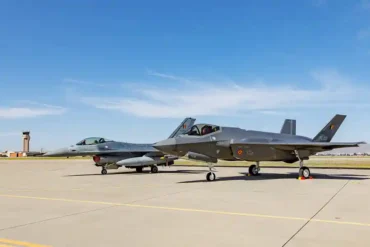
The F-16 Fighting Falcon is one of the most recognizable multirole fighters ever built. Introduced in the 1970s, the single-engine jet revolutionized aerial combat with fly-by-wire controls and unmatched agility. At Luke Air Force Base, rows of F-16s line the desert flightline, shimmering under the Arizona sun, each one representing a stepping stone for future combat aviators.
Luke serves as the de facto home of the F-16 community. If a pilot earns a slot to fly the Fighting Falcon, there is a strong likelihood that Arizona will become home during the most formative phase of their career. The 56th Fighter Wing operates at a scale unmatched elsewhere, sustaining high sortie rates and maintaining a concentration of fighter aircraft that surpasses any other U.S. Air Force installation.
This concentration is not accidental. Training demands redundancy, availability, and volume. To produce combat-ready fighter pilots, aircraft must be ready around the clock. Luke’s fleet size ensures continuity of instruction and operational flexibility, creating a pipeline that feeds squadrons across the globe.
A Legacy Forged in War and Innovation
Luke Air Force Base carries a name rooted in valor. It honors Lieutenant Frank Luke Jr., a World War I fighter ace credited with 18 aerial victories. Flying a French SPAD biplane in 1918, Luke demonstrated daring tactics that earned him the Medal of Honor. His legacy of aggressive air combat finds a fitting home at a base dedicated to forging the next generation of fighter pilots.
Established in 1940 as part of President Franklin D. Roosevelt’s expansion of pilot training before World War II, Luke quickly became central to America’s wartime aviation effort. During the war, more than 17,000 pilots earned their wings there. In total, over 61,000 aviators have graduated from Luke, a testament to its enduring role as a training powerhouse.
The Sonoran Desert Advantage
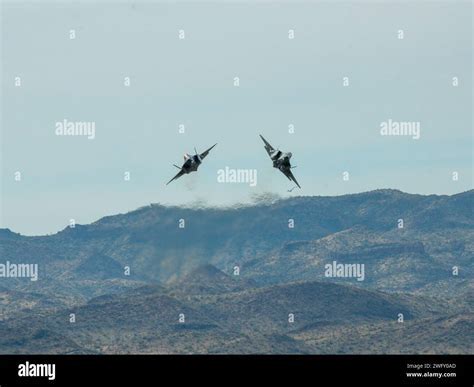
Spanning millions of acres in the Sonoran Desert, Luke benefits from ideal flying conditions. Clear skies, expansive airspace, and proximity to the Barry M. Goldwater Range allow pilots to conduct realistic combat training far from congested civilian corridors. The range provides space for live-fire exercises, advanced maneuvering, and multinational training with allied air forces.
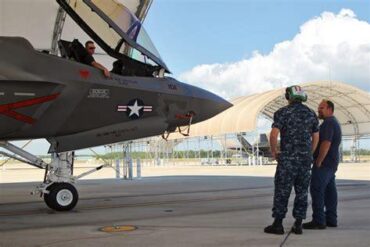
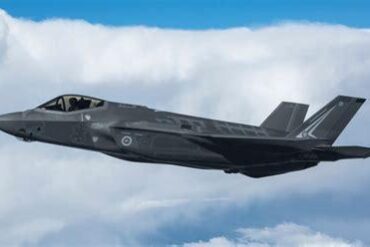
In addition to its F-16 fleet, Luke Air Force Base also trains pilots on the F-35 Lightning II, integrating fifth-generation capabilities into its already formidable footprint. The coexistence of fourth- and fifth-generation fighters ensures that Luke remains central not only to today’s Air Force but to its future evolution.
No other U.S. Air Force base combines such a high concentration of fighter jets with a singular focus on pilot production. Luke Air Force Base is more than the installation with the most fighter jets in the country; it is the crucible where American airpower is continuously reforged.