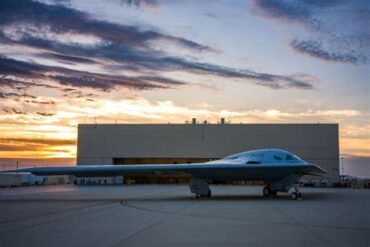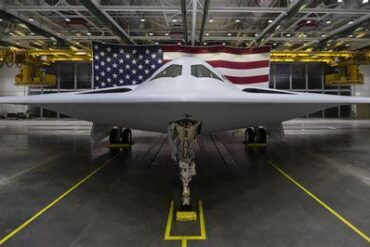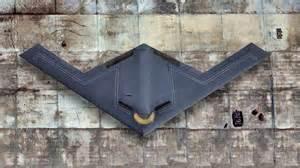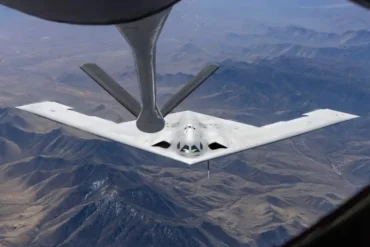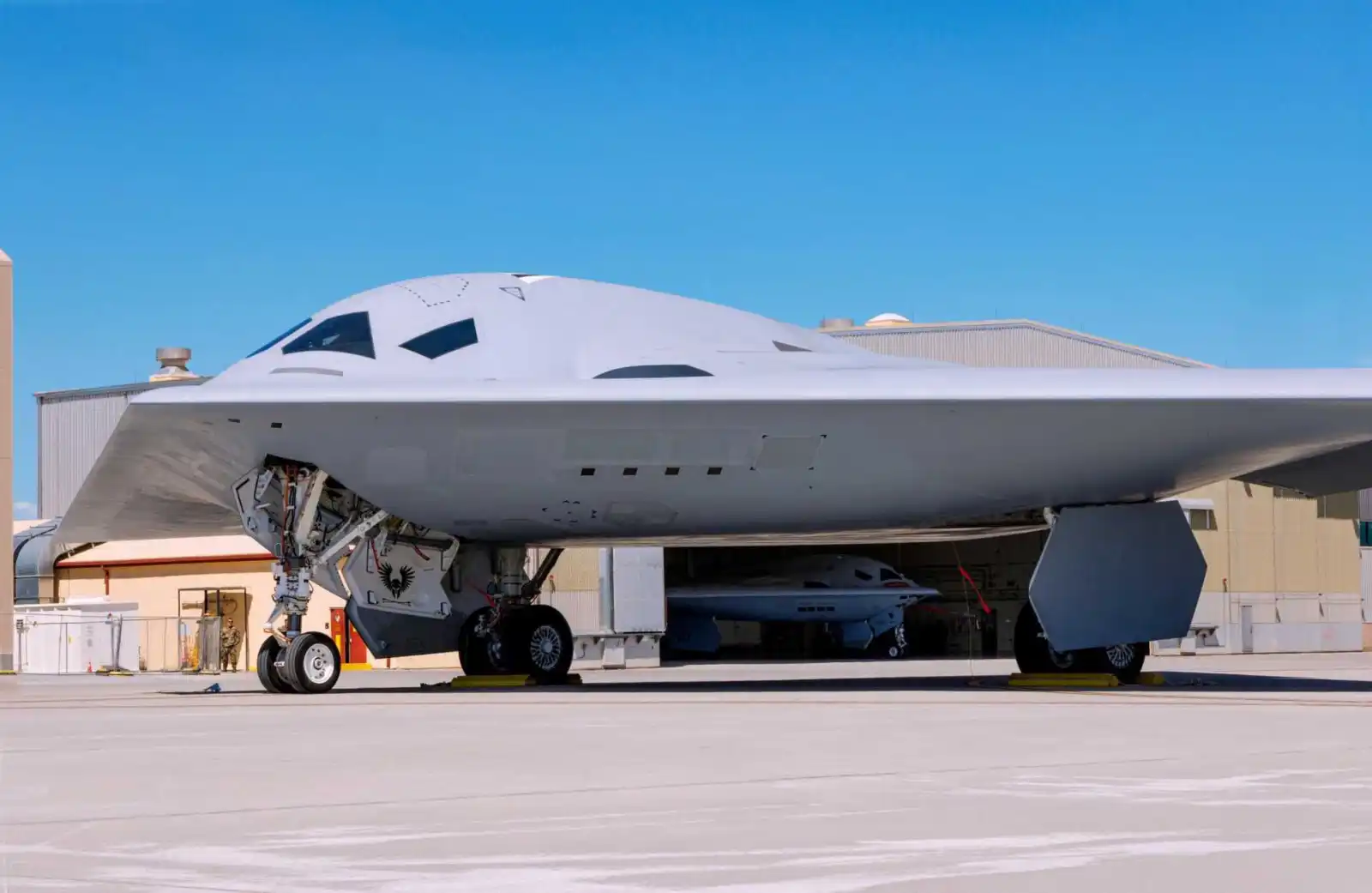
The vast plains of western South Dakota have long been synonymous with American airpower, but a transformation now underway at Ellsworth Air Force Base is redefining the future of strategic warfare. Once known primarily as a home for the aging Rockwell B-1B Lancer, the remote installation is rapidly evolving into the centerpiece of the United States Air Force’s next-generation bomber enterprise. Backed by more than $4 billion in construction and modernization funding, Ellsworth is being rebuilt from the ground up to host the revolutionary Northrop Grumman B-21 Raider, the stealth aircraft expected to become America’s primary strategic strike platform for decades.
The scale of the undertaking is unprecedented in modern Air Force history. Rather than merely adapting existing infrastructure, military planners are effectively constructing an entirely new operational ecosystem capable of supporting one of the world’s most advanced combat aircraft. Runways are being reinforced, maintenance facilities erected, housing expanded, and classified support infrastructure integrated into the landscape. The project reflects not only a technological leap in bomber design but also a fundamental shift in how the United States intends to project power in an increasingly contested global environment.
At the center of this effort is a simple strategic reality: the B-21 Raider is designed to replace most of the Air Force’s current bomber fleet. While upgraded Boeing B-52J Stratofortresses will remain in service as part of a complementary high-low force mix, the Raider will shoulder the burden of penetrating heavily defended airspace, delivering both conventional and nuclear effects against sophisticated adversaries.
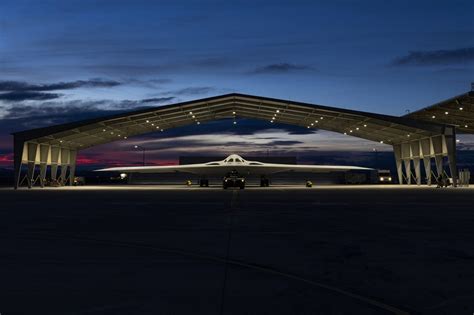
Why Ellsworth Air Force Base Was Chosen As The B-21’s First Home
The Air Force designated Ellsworth as Main Operating Base 1 for the B-21 program, making it the first installation to receive operational aircraft and the permanent location of the bomber’s Formal Training Unit (FTU).
This designation carries enormous implications. Every future B-21 pilot, weapons systems officer, and many maintenance personnel will begin their operational careers at Ellsworth. Consequently, the base is not merely receiving aircraft; it is becoming the institutional heart of America’s stealth bomber force.
The first operational Raiders are expected to arrive in 2027, but years before that milestone, construction crews have already reshaped large portions of the installation. The transformation extends well beyond military infrastructure. Thousands of new personnel and family members are expected to relocate to the region, prompting extensive investment in civilian infrastructure throughout South Dakota.
Local communities are preparing for the arrival of approximately 1,600 additional Airmen and thousands of family members, a demographic surge that has triggered major expansions in schools, residential developments, roads, utilities, and public services. What began as a military modernization initiative has evolved into one of the largest economic development projects in South Dakota’s history.
A $2 Billion Investment To Rebuild America’s Future Bomber Base
Ellsworth alone is absorbing roughly $2 billion in direct military investment, making it one of the most expensive infrastructure modernization efforts ever undertaken by the Air Force.
Unlike bases already operating stealth aircraft, Ellsworth lacked virtually all facilities necessary for low-observable bomber operations. Existing infrastructure had been tailored specifically for the B-1B Lancer, an aircraft developed during the Cold War with vastly different maintenance requirements.
Stealth bombers demand specialized support systems that conventional aircraft simply do not require. Secure facilities for classified avionics, advanced maintenance bays, protected communications networks, and unique radar-absorbent material servicing capabilities must all be integrated into the base architecture.
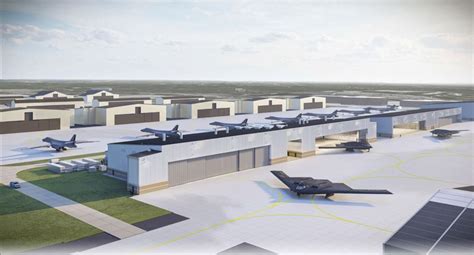
Construction efforts encompass:
- New aircraft maintenance complexes.
- Specialized stealth coating facilities.
- Expanded taxiways and parking aprons.
- Advanced fueling systems.
- Classified mission planning centers.
- Secure communications infrastructure.
- New simulator buildings and training facilities.
- Additional housing and support facilities.
The result will be an installation purpose-built around fifth- and sixth-generation operational concepts rather than retrofitted Cold War infrastructure.
Learning From The B-2 Spirit’s Expensive Lessons
The B-21 program was deliberately designed around a “do-not-repeat” philosophy intended to avoid the shortcomings that plagued the Northrop Grumman B-2 Spirit.
The B-2 remains one of the most capable combat aircraft ever constructed, yet it also became one of the most expensive military programs in history. Originally envisioned as a fleet exceeding one hundred aircraft, congressional cuts reduced production to only twenty-one bombers. That dramatic reduction shattered economies of scale and sent procurement costs soaring.
Maintenance proved equally problematic. The B-2’s fragile stealth coatings required extensive labor, climate-controlled hangars, and painstaking repairs after routine operations. Mission capable rates frequently hovered between 50 and 60 percent, meaning a substantial portion of the fleet was unavailable for combat at any given time.
Air Force leaders concluded that the next stealth bomber needed to be fundamentally different.
Rather than treating stealth as an externally applied coating, engineers incorporated low-observable characteristics directly into the aircraft’s composite structure. This innovation dramatically reduces maintenance complexity while increasing operational availability.
The B-21 is expected to achieve mission capable rates exceeding 80 percent, a remarkable improvement that could fundamentally alter how strategic bombing campaigns are conducted.
Building Infrastructure For A New Generation Of Stealth Warfare
Although the B-21 is significantly easier to maintain than its predecessor, it still requires highly specialized infrastructure.
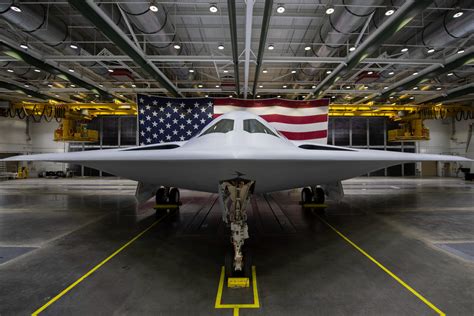
One of Ellsworth’s most notable construction projects is a 95,000-square-foot dual-dock maintenance hangar specifically designed to service the Raider’s advanced radar-absorbent materials.
Even though B-21 coatings are substantially more durable than those found on the B-2, periodic inspection and restoration remain essential to preserving the aircraft’s low-observable characteristics.
Technicians working within these facilities will employ advanced diagnostic technologies capable of rapidly identifying minute imperfections in the aircraft’s stealth surfaces. Automated scanning systems, sophisticated curing equipment, and digitally integrated maintenance workflows will dramatically shorten repair timelines.
Equally important is the construction of highly secure facilities capable of supporting the Raider’s classified mission systems. Modern stealth bombers function as flying sensor networks, electronic warfare platforms, and information dominance assets as much as traditional bombers. Maintaining these capabilities demands infrastructure every bit as sophisticated as the aircraft itself.
Modernized Runways Designed For Continuous Bomber Operations
The Air Force has already completed one of Ellsworth’s most critical upgrades: a $130 million runway modernization project.
More than 106,000 tons of concrete were used during reconstruction efforts, ensuring the airfield can sustain decades of intensive stealth bomber operations.
Runways represent far more than simple strips of pavement. Continuous heavy aircraft activity places enormous stress on airfield surfaces, particularly when large strategic bombers operate under high-tempo conditions.
Broader taxiways, expanded aprons, and redesigned aircraft parking areas are also being constructed to accommodate the operational rhythms of a much larger stealth fleet.
Rapid refueling infrastructure is another major focus. In future conflicts, particularly in the Indo-Pacific theater, the ability to rapidly generate sorties may prove decisive. Every minute saved during ground operations directly translates into increased combat power.
How The B-21 Raider Is Revolutionizing Stealth Maintenance
Perhaps the most revolutionary aspect of the B-21 program lies not in its stealth characteristics but in its maintainability.
Historically, stealth aircraft have demanded extraordinary levels of maintenance. The B-2 famously required as many as 60 maintenance hours for every flight hour, largely because technicians had to painstakingly remove, repair, and reapply sensitive stealth materials.
The Raider fundamentally changes this equation.
Advanced composite structures, robotically manufactured components, and integrated low-observable materials dramatically simplify sustainment requirements. Minor surface imperfections no longer automatically compromise survivability.
New automated facilities at Ellsworth will enable crews to scan aircraft surfaces, identify degraded areas, apply localized repairs, and rapidly return bombers to operational status.
Moreover, many new shelters being constructed at the base do not require the elaborate climate-control systems essential for B-2 operations. Because the Raider’s stealth materials are far more resilient, aircraft can remain mission-ready despite South Dakota’s notoriously harsh weather.
This resilience translates directly into increased operational availability, reduced costs, and greater strategic flexibility.
The Secretive Radio Frequency Hangar At The Center Of The Program
Among the most sensitive facilities under construction is a state-of-the-art radio frequency hangar.
These specialized structures allow technicians to evaluate radar signatures, electronic warfare systems, sensors, and communications equipment without exposing classified capabilities.
Traditionally, many system checks required lengthy flight testing. The new facility enables maintainers to certify aircraft readiness while the bomber remains safely on the ground.
This capability dramatically shortens turnaround times between missions and minimizes operational disruptions.
In an era where information dominance increasingly determines battlefield success, the ability to rapidly validate electronic systems could prove as important as maintaining engines or landing gear.
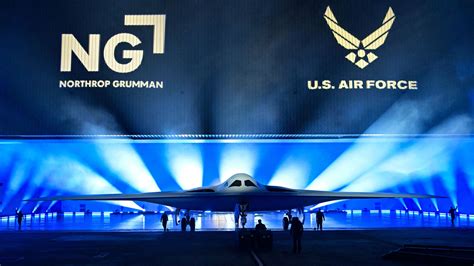
Digital Engineering Is Driving The B-21 Revolution
The infrastructure transformation occurring at Ellsworth mirrors a parallel revolution taking place inside Northrop Grumman’s production facilities in Palmdale, California.
The B-21 program relies heavily on digital engineering, enabling designers to model, test, and refine every aspect of the aircraft long before physical production begins.
Billions of dollars have been invested in digital manufacturing technologies that ensure unprecedented production consistency. Unlike the B-2, where individual aircraft often required custom solutions, B-21 airframes are designed to be highly standardized.
Advanced three-dimensional modeling allows engineers to verify that components fit perfectly before assembly begins. Robotically woven composites, automated production techniques, and digitally integrated supply chains further reduce manufacturing variability.
These innovations are essential because Pentagon planners increasingly believe that the original requirement for one hundred aircraft may ultimately prove insufficient.
Some defense analysts and military leaders have suggested future fleets could exceed 145 or even 185 bombers, particularly as geopolitical competition intensifies in the Indo-Pacific.
Why America Needs A Larger Stealth Bomber Fleet
The strategic environment confronting the United States differs dramatically from that of the post-Cold War era.
China’s rapidly expanding anti-access and area-denial networks, sophisticated integrated air defense systems, and long-range missile capabilities have transformed operational planning across the Pacific.
Legacy bombers face growing survivability challenges in heavily defended environments.
The B-52 Stratofortress, despite remaining enormously valuable as a standoff missile carrier, cannot penetrate advanced air defenses. The aging B-1B Lancer fleet suffers from significant structural fatigue after decades of intensive combat operations. Meanwhile, only nineteen operational B-2 Spirits remain available.
Consequently, the B-21 Raider is expected to become the backbone of American long-range strike capability throughout the twenty-first century.
Ellsworth Air Force Base’s sweeping modernization is therefore far more than a construction project. It represents the physical manifestation of a broader strategic transformation—one intended to ensure the United States retains credible global strike capabilities in an era defined by great-power competition.
As concrete pours across South Dakota and new facilities rise from the prairie, America’s next generation of stealth airpower is steadily taking shape.