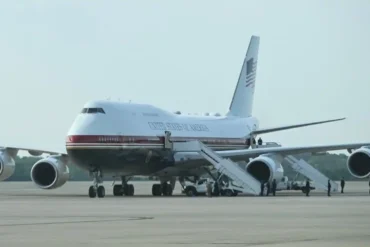
The former Qatari Boeing 747-8 is rapidly approaching one of the most remarkable transformations in modern aviation history. Once a luxurious flying palace built for Qatar’s ruling family, the aircraft is now on the verge of entering service as an interim Air Force One, potentially carrying the President of the United States before the nation celebrates its 250th anniversary on July 4, 2026.
The project has attracted extraordinary attention from aviation enthusiasts, military analysts, and government observers alike. What initially appeared to be an unusual diplomatic gift has evolved into a critical solution for a growing problem within the United States Air Force. As delays continue to affect Boeing’s permanent VC-25B Air Force One replacement program, the modified Boeing 747-8 has become an essential bridge aircraft designed to ensure uninterrupted presidential airlift capability.
The aircraft’s journey from royal transport to presidential flagship represents far more than a simple repainting exercise. Behind the scenes, engineers, defense contractors, communications specialists, and military planners have spent months converting one of the world’s most luxurious private aircraft into a flying command center capable of supporting the President of the United States.
For the first time in decades, a temporary presidential aircraft will fill a capability gap created by aging airframes and delayed modernization efforts. The result is a program unlike anything previously seen in the history of Air Force One.
After years of uncertainty surrounding the future of presidential aviation, the finish line now appears to be in sight.
Why The United States Needed An Interim Air Force One
The emergence of the Boeing 747-8 bridge aircraft was never part of the original modernization strategy for presidential transportation. Instead, it became necessary because of a perfect storm involving aging aircraft, rising maintenance challenges, and significant delays affecting the next generation of Air Force One.
The current presidential fleet consists of two VC-25A aircraft derived from the Boeing 747-200B. These aircraft entered service during the administration of President George H.W. Bush and have faithfully served multiple presidents for decades. However, despite extensive upgrades and modernization efforts over the years, the airframes themselves are approaching forty years of age.
As aircraft age, maintaining them becomes increasingly difficult. Spare parts become harder to source, maintenance intervals become longer, and operating costs continue to climb. For an aircraft carrying the President of the United States, reliability is not merely important—it is absolutely essential.
Recent operational issues have highlighted these concerns. Reports surrounding an electrical malfunction aboard one of the VC-25A aircraft during a presidential trip reinforced fears that the aging fleet could face growing reliability challenges in the years ahead. Such incidents have strengthened the argument that the Air Force required a faster solution while waiting for Boeing’s delayed VC-25B replacements.
Rather than risk a capability gap, military planners accelerated efforts to introduce an interim platform capable of assuming presidential transport duties years before the permanent replacement fleet arrives.
The Royal Origins Of The Boeing 747-8
Before becoming America’s future presidential aircraft, the Boeing 747-8 enjoyed a very different life.
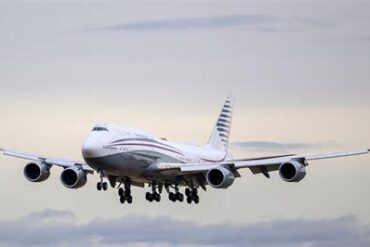
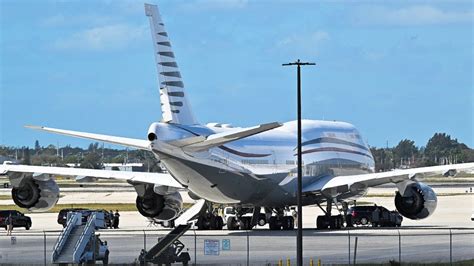
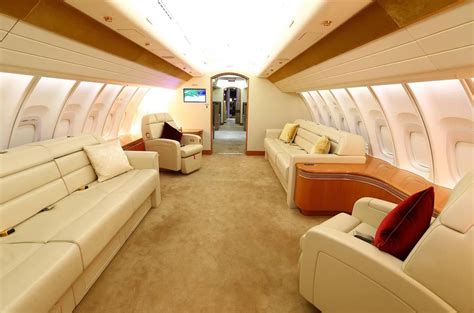
The aircraft was originally built as a Boeing Business Jet version of the 747-8 Intercontinental, one of the largest and most prestigious VIP aircraft ever produced. Configured specifically for Qatar’s ruling family, the aircraft represented the pinnacle of luxury aviation.
Inside, the jet reportedly featured lavish accommodations that rivaled those found in five-star hotels. Spacious lounges, private suites, conference areas, dining facilities, and highly customized interiors transformed the aircraft into a flying palace capable of transporting royalty across the globe in exceptional comfort.
The Boeing 747-8 itself is among the most advanced variants ever developed within the legendary 747 family. Featuring new-generation engines, improved aerodynamics, enhanced fuel efficiency, and increased range, it offers substantial performance improvements over earlier Boeing 747 models.
When Qatar gifted the aircraft to the United States government in May 2025, it instantly became one of the most valuable and unusual diplomatic transfers in aviation history.
Yet the luxurious interior represented only a small part of what would ultimately become an extensive transformation process.
The Massive Modification Program In Texas
Following its transfer to the United States, the aircraft was flown to L3Harris facilities at Majors Field in Greenville, Texas.
There, the aircraft entered a comprehensive modification program aimed at converting a civilian VIP aircraft into a secure government transport platform capable of supporting presidential operations.
The process involved far more than cosmetic changes.
Workers reportedly stripped portions of the aircraft to bare metal as engineers began integrating specialized communications systems, military-grade networking equipment, secure data links, and mission-critical hardware. The aircraft underwent extensive structural and electronic modifications designed to support its future role.
L3Harris was selected for the project because of its substantial expertise in secure communications, airborne networking systems, and executive transport support. The company possesses significant experience working with sensitive government programs, making it an ideal candidate for a project involving presidential transportation.
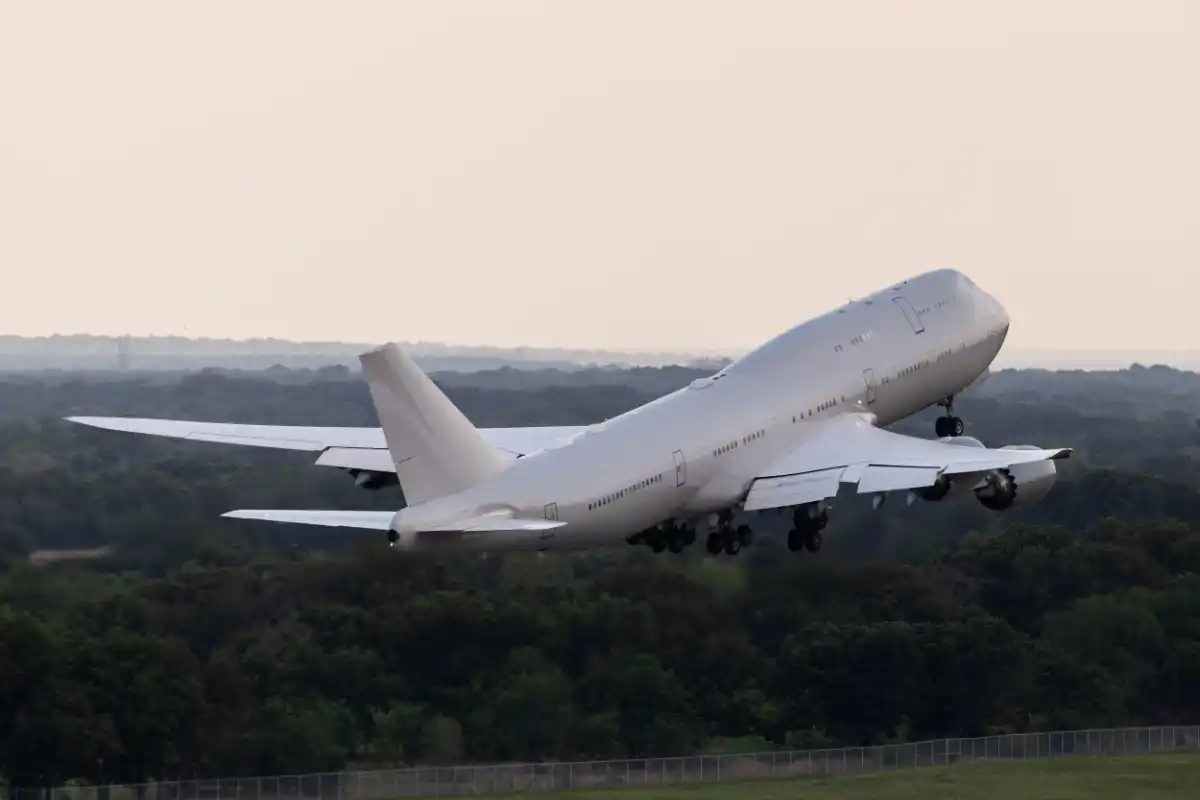
Throughout 2025 and early 2026, aviation enthusiasts closely tracked the aircraft’s progress. Numerous sightings around Texas revealed repeated test flights as engineers evaluated aircraft performance, systems integration, and mission readiness.
Each successful test sortie represented another step toward operational certification.
As the months progressed, the aircraft increasingly resembled a military transport platform rather than the royal aircraft it once was.
Flight Testing Is Complete
One of the most important milestones occurred when officials confirmed that modification and flight-testing activities had been successfully completed.
For any aircraft undergoing significant alterations, flight testing serves as the ultimate validation process. Every modified system must function properly under real-world operating conditions. Engineers evaluate everything from flight characteristics and communications performance to electrical systems and mission equipment.
Completing the testing campaign suggests that the aircraft has successfully passed one of the most demanding phases of the entire conversion effort.
Observers tracking activity around Greenville noted a sharp increase in test operations during the final months of development. Multiple flights conducted over Texas appeared designed to validate the aircraft’s readiness before final acceptance.
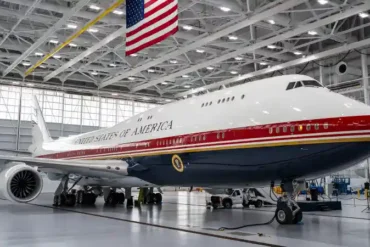
With testing concluded, the aircraft moved into its final preparation phase: painting.
This stage may seem relatively straightforward, but it represents one of the clearest indicators that delivery is rapidly approaching.
A New Air Force One Appearance For A New Era
Perhaps the most visible aspect of the bridge aircraft program is the dramatic change to its exterior appearance.
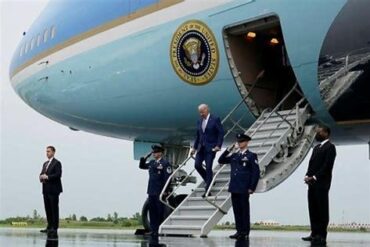
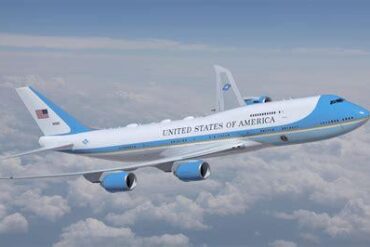
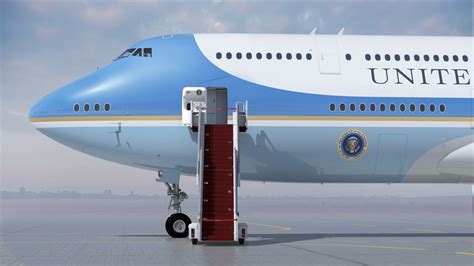
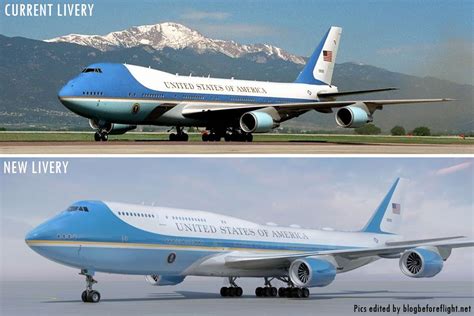
For more than sixty years, Air Force One has been closely associated with the iconic robin’s egg blue color scheme introduced during the administration of President John F. Kennedy. Designed by famed industrial designer Raymond Loewy, the livery became one of the most recognizable aircraft paint schemes in the world.
That legacy is now set to change.
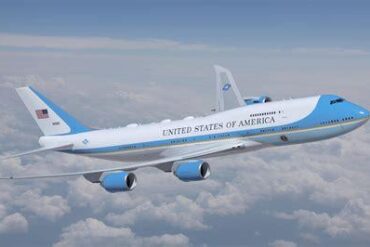
The interim Boeing 747-8 is receiving a red, white, and blue design associated with President Donald Trump’s preferred vision for the presidential fleet. The new scheme draws heavily from concepts publicly discussed during Trump’s first presidential term.
The redesign represents more than a cosmetic adjustment. Air Force One serves as a global symbol of American leadership. Every visual detail communicates a message about national identity, presidential authority, and international presence.
When the modified Boeing 747-8 makes its first official appearance, it will immediately stand apart from every Air Force One that has flown since the early 1960s.
For aviation historians, the change marks the most significant visual evolution of the presidential fleet in generations.
Why July 4, 2026 Matters
The timing of the aircraft’s delivery carries extraordinary symbolic significance.
The United States will celebrate the 250th anniversary of its independence on July 4, 2026. The milestone represents one of the most important national commemorations in American history.
Government officials have reportedly expressed interest in ensuring the aircraft enters service before those celebrations begin.
Several reports indicate that program managers are working toward an aggressive delivery schedule that could place the aircraft into presidential service before Independence Day. Some reports have even suggested a potential target date earlier in June.
Such timelines would be remarkable considering the complexity of the modifications involved. Presidential aircraft are among the most sophisticated transport platforms in existence, requiring extensive testing, certification, and security validation before operational use.
Nevertheless, completion of testing and the beginning of the paint phase suggest the program is moving steadily toward its final objective.
If the schedule holds, the former Qatari Boeing 747-8 could become one of the most visible symbols of America’s semiquincentennial celebrations.
Is The Aircraft Truly A Full Air Force One?
This remains the most intriguing question surrounding the entire project.
Air Force One is not simply a luxury airliner reserved for presidential travel. It functions as a flying White House, mobile command center, secure communications hub, and national leadership platform.
Many of its most important capabilities remain classified.
Aviation observers have documented visible additions to the aircraft, including antennas, satellite communications systems, and specialized aerial structures mounted on the fuselage. These modifications clearly indicate substantial upgrades beyond the aircraft’s original VIP configuration.
However, critical questions remain unanswered.
Analysts continue to debate whether the bridge aircraft possesses the same level of electromagnetic pulse protection, strategic communications capability, defensive systems integration, and nuclear command-and-control functionality expected aboard the future VC-25B fleet.
Because such information remains classified, public observers can only evaluate visible modifications and infer likely capabilities.
What is clear is that the aircraft has been upgraded sufficiently to support presidential transportation requirements. Whether it matches every capability associated with a fully specified Air Force One remains unknown.
That uncertainty has become one of the defining aspects of the program.
The VC-25B Program That Changed Everything
Ironically, the aircraft originally intended to solve the Air Force One replacement challenge remains years away from operational service.
The VC-25B program, based on two specially modified Boeing 747-8 aircraft, was initially expected to deliver a new generation of presidential transports much earlier. However, the project encountered significant challenges involving certification requirements, security modifications, supply-chain disruptions, and production complexities.
Costs have also risen dramatically.
What began as a major modernization effort evolved into one of Boeing’s most financially challenging defense programs. The company has absorbed billions of dollars in losses while working to complete the aircraft.
As delays accumulated, military planners faced an increasingly difficult reality. The existing VC-25A fleet continued aging while replacement aircraft remained unavailable.
The bridge aircraft emerged as the practical answer.
Rather than waiting until 2028 or later for permanent replacements, the Air Force chose to introduce an interim solution capable of supporting presidential operations immediately.
This decision transformed the former Qatari Boeing 747-8 from a diplomatic curiosity into a critical national asset.
A Presidential Aircraft With A Bigger Future Than Expected
When planners first envisioned the bridge aircraft, many assumed it would serve only a temporary role.
That assumption may prove incorrect.
If additional delays affect the VC-25B program, the interim Boeing 747-8 could remain in presidential service far longer than originally anticipated. What began as a short-term solution could evolve into a central component of presidential aviation for years.
Its advanced airframe, relatively young age, modern systems architecture, and extensive modifications provide a strong foundation for extended operations.
The aircraft also represents a fascinating intersection of diplomacy, military aviation, engineering, and presidential history. Few aircraft have experienced such a dramatic transformation—from royal luxury jet to interim Air Force One.
Today, as painting progresses and delivery approaches, the aircraft stands on the threshold of a historic new chapter.
Within weeks, the former Qatari Boeing 747-8 may no longer be remembered as a gifted royal aircraft. Instead, it could become the primary symbol of American presidential aviation, carrying the Commander-in-Chief aboard one of the most closely watched aircraft in the world.