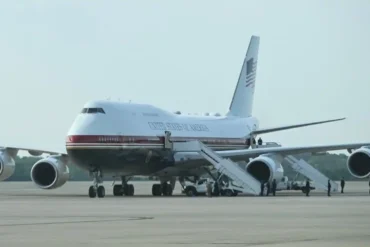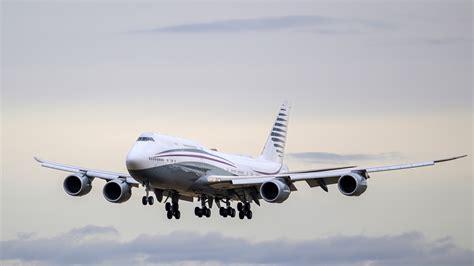
In the opaque world of presidential aviation, timelines are rarely simple, budgets are never modest, and symbolism carries as much weight as engineering. The Qatari-donated Boeing 747, now widely referred to as the interim Qatari Air Force One, sits squarely at the intersection of urgency and uncertainty as the United States looks for a stopgap solution to an aging fleet.
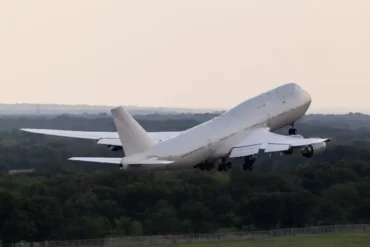
The aircraft entered the conversation in May 2025, when the Qatari royal family transferred a $400 million Boeing 747 jumbo jet to the U.S. government. The intent was clear and pragmatic: provide a temporary presidential transport while Boeing struggles to complete the long-delayed VC-25B Air Force One replacements. Those new aircraft, originally slated for delivery in 2024, are now not expected until mid-2028, burdened by supply chain breakdowns, labor shortages, and spiraling costs that have pushed Boeing toward a projected $2 billion loss on the program.
Recent events underscored the urgency. During a presidential trip to Davos, Switzerland, one of the current VC-25A aircraft experienced a minor electrical malfunction, forcing a return. It was a small incident with a large message: the existing fleet, in service since the George H.W. Bush administration, is showing its age.
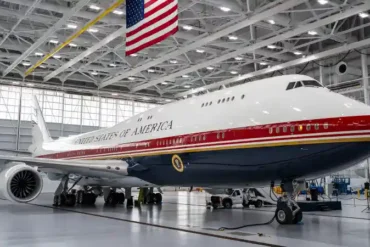
Before the Qatari 747 can carry a U.S. president, however, it must undergo an exhaustive retrofit. Every inch of the aircraft requires inspection, testing, and validation to eliminate potential security vulnerabilities or surveillance devices. While former President Donald Trump suggested the jet could be ready by February 2026, the U.S. Air Force later clarified that readiness would come slightly later in 2026, still remarkably fast by Air Force One standards.
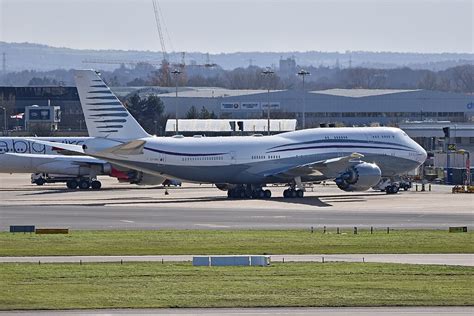
The retrofit process itself remains deliberately opaque. Although the Pentagon formally accepted the aircraft in 2025, conversion work reportedly began months later, with sightings placing the jet at defense contractor facilities in Texas. No official disclosure has detailed who is performing the work or the precise scope involved, a silence consistent with the classified nature of presidential aviation programs.
What is known is what the aircraft likely will not receive. The existing VC-25A Air Force Ones can refuel midair, deploy electronic countermeasures, and operate as flying command centers during crises. Given the accelerated timeline, officials expect the Qatari jet to lack aerial refueling capability and possibly some defensive systems. Even so, Pentagon leadership has emphasized that converting a commercial 747 into a presidentially certified aircraft still demands substantial modifications, including hardened structures, secure communications, and electromagnetic protections.
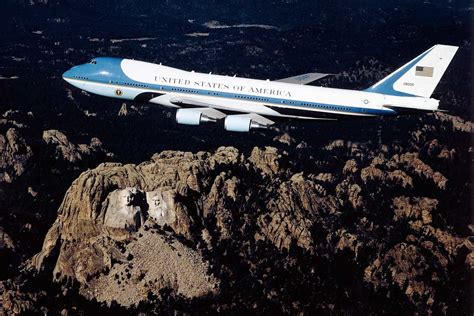
Cost estimates once ballooned toward $1 billion, raising eyebrows on Capitol Hill. Those figures were later revised downward, with officials stating the retrofit would remain under $400 million and finish in under a year. Funding came from unused allocations within the Sentinel intercontinental ballistic missile program, a reallocation that avoided new congressional appropriations while still drawing scrutiny.
The jet’s future beyond its interim role is equally unusual. Trump has publicly stated that once it is no longer needed for presidential duties, the aircraft would be decommissioned and donated to his presidential library, a fate unlike any previous Air Force One. That declaration reinforces the aircraft’s temporary status and underscores why its capabilities, while robust, may stop short of full parity with the upcoming VC-25Bs.
For now, the delivery update remains cautiously optimistic. Barring unforeseen complications, the Qatari Air Force One could enter service in 2026, bridging a widening gap until Boeing’s next-generation presidential aircraft finally arrive. In the world of strategic aviation, that makes the jet less a luxury and more a necessary improvisation.