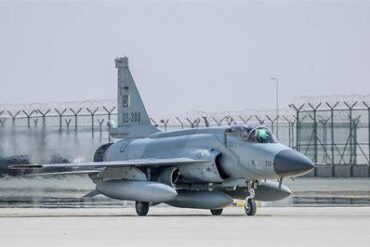
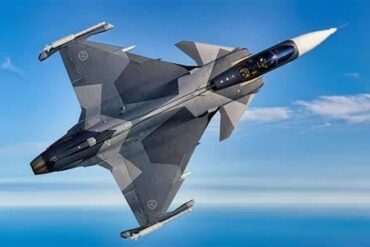
Fighter jets have long captured the imagination with their aggressive silhouettes, cutting-edge technology, and raw power. Today’s most formidable airframes, like the Russian Sukhoi Su-34 Fullback, stretch an imposing 76 feet, while stealth champions such as the F-22 Raptor measure over 60 feet long. Yet, hidden within aviation history lies a much smaller marvel—the smallest fighter jet to ever enter military service.
The Era of Compact Combat Aircraft
In the dawn of jet-powered aviation, smaller designs were more common, particularly in the late World War II and early Cold War years. The Nazi Messerschmitt Me 262, widely regarded as the world’s first operational jet fighter, measured 34 feet 9 inches—modest by today’s standards. The Soviet Union’s MiG-15, a dominant force in the Korean skies, shaved the size down slightly to 33 feet 3 inches. But neither claims the title of the world’s smallest.
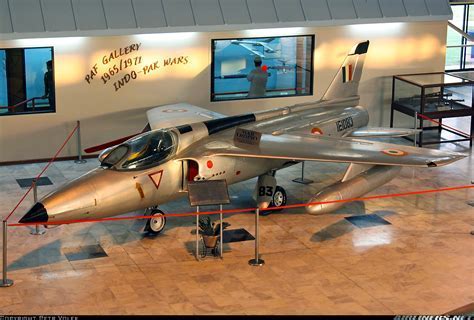
That distinction belongs to the Folland Gnat, a compact, lightweight jet fighter crafted in Britain during the 1950s.
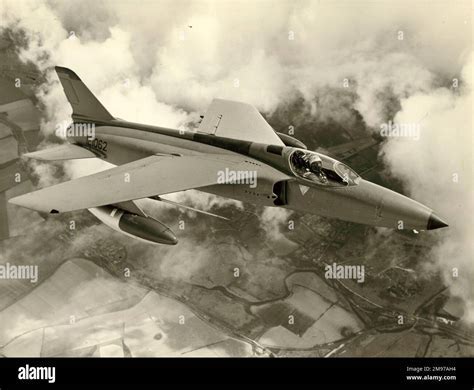
Folland Gnat: Britain’s Compact Contender
Introduced in 1955, the Folland Gnat emerged from the vision of British aerospace engineer W.E.W. Petter, who sought to create a nimble, low-cost fighter. At just 29 feet 9 inches long, the Gnat is less than half the length of an F-22 Raptor, yet it packed enough firepower and agility to earn its place in military aviation history.
Its performance specs included a top speed of 695 miles per hour, just under the speed of sound—a notable figure for such a tiny airframe. Though not designed to dominate supersonic dogfights like its larger contemporaries, the Gnat’s compact size made it incredibly maneuverable, ideal for certain combat roles.
Combat Effectiveness and Operational History
Despite its diminutive dimensions, the Gnat’s record in service is far from insignificant. Initially deployed by the British Royal Air Force (RAF) as a trainer and aerobatic demonstrator, the aircraft was soon modified into a two-seater variant, earning fame with the Red Arrows, the RAF’s premier aerobatic team.
But its true combat prowess was revealed under the banner of the Indian Air Force (IAF). In the 1960s, the Gnat gained combat experience in several conflicts, most notably during skirmishes between India and Pakistan. Armed with two 30-millimeter cannons, and capable of carrying bombs and rockets for ground-attack missions, the Gnat defied expectations.
During the Indo-Pakistani Wars, IAF Gnat pilots faced off against Pakistani F-86 Sabres, a formidable jet of the era. Reports from the March Field Air Museum suggest the Gnat’s agility and small radar profile allowed Indian pilots to outmaneuver and score kills against the heavier Sabres—a testament to how effective the world’s smallest fighter could be in skilled hands.
Small but Mighty: The Gnat’s Legacy
Despite being overshadowed—both figuratively and literally—by larger, more famous jets like the Sabre and MiG families, the Gnat secured a unique legacy. Its performance in combat operations, particularly for a lightweight aircraft, debunked the assumption that size and mass alone dictated battlefield effectiveness.
Today, aviation enthusiasts and military historians view the Gnat as more than a historical curiosity. It’s a symbol of how intelligent design, tactical deployment, and pilot skill can elevate even the smallest airframe into a formidable combat asset.
Evolution of Ground-Attack Aircraft: Beyond the Gnat
While the Folland Gnat thrived in air-to-air combat, the lineage of ground-attack aircraft has carved out a parallel, equally significant role in military history. From the trench-strike planes of World War I to modern-day aerial artillery, the development of these platforms reflects advances in design, firepower, and versatility.
Halberstadt CL.II (1916)
The Halberstadt CL.II, entering combat in 1916, embodied the earliest form of close air support. This German two-seat biplane, powered by a 160 to 180 horsepower Mercedes engine, featured a 35-foot wingspan and could reach 102 mph. Armed with 7.92 mm machine guns and bombs, it brought deadly fire to the front lines while remaining agile for trench warfare.
Sopwith Salamander (1918)
British engineers responded to the call for ground-attack supremacy with the Sopwith Salamander, a “trench fighter” derived from the famed Sopwith Camel. With integrated armor protecting its structure, the Salamander achieved 125 mph and carried .303 Vickers machine guns alongside a bomb load. Though over 1,400 units were ordered, the war’s end meant only 200 saw production.
Messerschmitt Bf 110 (1939)
During World War II, the German Bf 110 transitioned from heavy fighter to ground-attack platform after heavy losses in the Battle of Britain. Capable of carrying 72 rockets, 20 mm cannons, and bombs, the Bf 110 became a lethal threat to ground and naval targets alike.
Ilyushin Il-2 Sturmovik (1940)
Nicknamed the “Flying Tank,” the Soviet Il-2 Sturmovik became a battlefield icon. Featuring robust armor, 37 mm cannons, machine guns, bombs, and specialized PTAB bomblets, it decimated enemy armor and amassed over 31,000 units—the most-produced combat aircraft of the war.
Douglas A-1 Skyraider (1945)
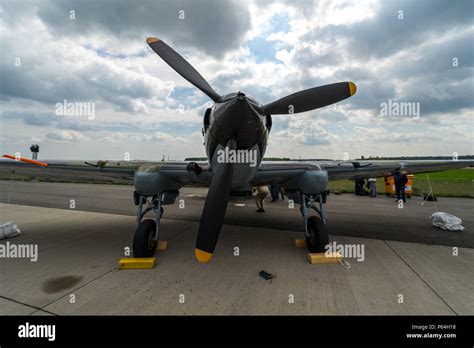
Despite the jet age’s dawn, the propeller-driven Skyraider proved invaluable for close air support in Korea and Vietnam. With a payload of 8,000 pounds, it flew diverse missions, including torpedo runs and nuclear strike training. Its rugged design played a role in Medal of Honor rescues.
Douglas A-4 Skyhawk (1956)
The jet-powered A-4 Skyhawk succeeded the Skyraider, offering speeds of 670 mph and the flexibility to carry nuclear weapons, missiles, and bombs. Its compact frame allowed aircraft carrier operations, making it a cornerstone of Vietnam War air combat.
General Dynamics F-111 Aardvark (1967)
The F-111 Aardvark, with variable-sweep wings, introduced high-speed strike capabilities to the U.S. arsenal. Reaching over 1,400 mph, with advanced targeting like the Pave Tack pod, it served in Vietnam and the Gulf War, revolutionizing long-range precision strikes.
McDonnell Douglas AV-8B Harrier (1971)
The revolutionary Harrier offered vertical takeoff and landing (VTOL) capability, enabling operations from minimal runways and small naval vessels. Armed with 25 mm cannons, Sidewinders, and laser-guided bombs, it excelled in the Falklands War, the Gulf, and Afghanistan.
Sukhoi Su-25 Frogfoot (1980s)
The Soviet Su-25 Frogfoot, spiritual successor to the Il-2, continues to serve in modern conflicts like the Russo-Ukrainian War. Equipped with Kh-series missiles, bombs, and advanced targeting, it provides resilient battlefield support.
Fairchild Republic A-10 Thunderbolt (1975)
Known as the “Warthog,” the A-10 Thunderbolt epitomizes close air support. Its GAU-8/A 30 mm Gatling gun, loiter time, and titanium armor make it a lifeline for ground troops, though retirement is slated for 2030.
Lockheed AC-130 Gunship (Vietnam–Present)
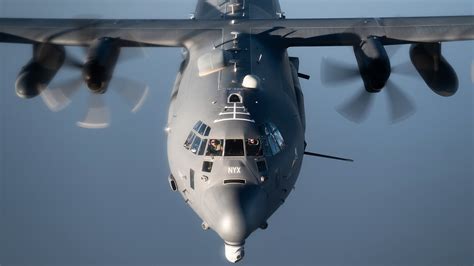
Aerial artillery at its finest, the AC-130 Gunship employs 105 mm, 40 mm, and 25 mm cannons from high altitude, utilizing cutting-edge optics for nighttime precision strikes. Its role in modern warfare underscores the evolution of ground-attack aircraft.
Conclusion: Small Size, Big Impact
The Folland Gnat, though diminutive, shattered expectations, proving that battlefield effectiveness isn’t solely dictated by size. In an era of increasingly massive, complex fighters, the Gnat’s legacy endures as a testament to design innovation, strategic deployment, and the enduring importance of agility.
While the evolution of ground-attack aircraft introduced increasingly specialized, heavily armed platforms, the Gnat’s story reminds us that even the smallest fighters can leave a lasting mark on military aviation history.