The Vision Behind the Bede BD-5 Micro
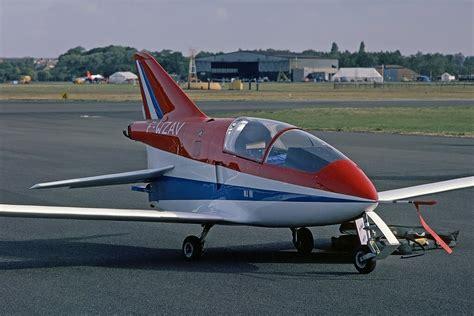
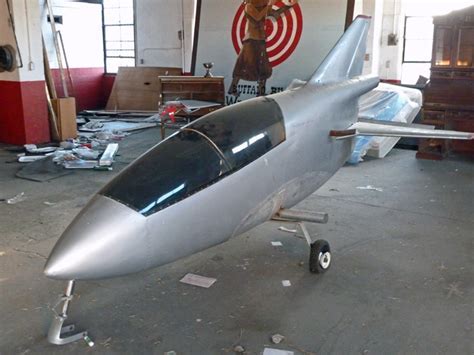
The Bede BD-5 Micro was a revolution in personal aviation, a high-performance, homebuilt aircraft that captivated aviation enthusiasts with its sleek profile and remarkable promise. Conceived by Jim Bede in the late 1960s, the BD-5 was designed as a compact, affordable, high-speed aircraft that anyone with moderate mechanical skills could assemble and fly. This vision was not just about democratizing flight but about introducing a new category of aircraft that merged jet-like aesthetics with the affordability of kit building.
Unveiled to the public in the early 1970s, the BD-5 immediately drew attention for its futuristic design, low weight, and claims of performance nearing 200 mph. The airframe’s low frontal area, fiberglass skin over aluminum tubing, and compact pusher engine design made it look more like a jet fighter than a homebuilt sport plane. Thousands were captivated, and more than 5,000 kits were sold — a staggering number in the world of amateur-built aviation.
From Concept to Prototype: Design Challenges and Breakthroughs
The BD-5’s development started in earnest in 1970, with early prototypes borrowing inspiration from the ASW-15 glider. The aircraft’s configuration placed the pilot in a semi-reclined position under a bubble canopy, behind which sat a small two-cylinder engine in a pusher setup. A retractable tricycle landing gear, V-tail configuration, and options for different wings made the BD-5 adaptable to varying pilot needs, from fuel-efficient cruising to agile aerobatics.
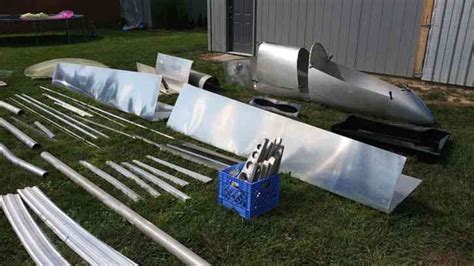
Initially, the aircraft featured a 40 hp engine, a V-tail, and 14 ft 3 in “A” wings for tight maneuverability. Later, the 21 ft 6 in “B” wing extended the range to over 1,200 miles and improved low-speed handling. Bede’s engineering team pushed to reduce build time by using fiberglass panels on an aluminum frame, enabling the entire aircraft to be disassembled and packed into a small trailer for storage or travel. Publicity campaigns touted fuel efficiency of 38 mpg and near jet-like speeds on minimal power.
However, as with many ambitious designs, early flight testing exposed severe flaws. The prototype N500BD, powered by a 36 hp snowmobile engine, suffered from poor stability and unreliable control responses. A shift to a conventional tail, metal fuselage, and longer nose followed.
Flight Testing Realities and Hard Lessons Learned
Subsequent prototypes — N501BD and N502BD — encountered a string of mechanical and aerodynamic issues. Engine failures, especially from the unreliable Hirth and Kiekhaefer powerplants, plagued early flights. Problems included belt-drive vibrations, unpredictable pitch changes, canopy failures, and frequent dead-stick landings. Stability and control were marginal, particularly with the “A” wing, which proved unforgiving in stalls.
As the company refined the design, it abandoned the “A” wing and reduced top speed by 10% for safety. Nevertheless, the two-stroke engines remained problematic. At low RPM, they vibrated excessively, were difficult to tune, and guzzled 4.5–5.5 gallons per hour — a far cry from the advertised fuel efficiency.
Promises Unfulfilled: Deliveries and Financial Collapse
Despite design improvements, engine procurement lagged behind kit production, leading to thousands of kits being shipped without engines. Builders were left waiting for powerplants that either never arrived or proved unsuitable. In 1973, Bede began marketing the aircraft with the 70 hp Hirth engine as standard, but Hirth’s bankruptcy derailed the effort.
By the time Zenoah engines were available in 1978, the damage was done. Although over 5,100 kits were shipped, only a few hundred were completed and flown. Bede Aircraft filed for bankruptcy in 1979, and the Federal Trade Commission banned Jim Bede from accepting customer deposits for a decade.
A Tragic Start: Early Operational History and Accidents
Early BD-5 operations were marred by a troubling accident rate. Builders, eager to fly, often assembled the aircraft with minimal testing or omitted the recommended jigs for alignment. Kits equipped solely with the “A” wing had disastrous outcomes — four crashed on first flights, killing three pilots. Of the first 25 aircraft built with both wings, 14 were destroyed in accidents, resulting in nine fatalities.
Core issues included center-of-gravity sensitivity, abrupt pitch-up behavior, and a sharp stall without warning. One wing-skin production flaw further worsened low-speed performance. Combined with unreliable engines prone to failure during takeoff, the BD-5 became synonymous with danger despite its alluring performance envelope.
Resurgence Through Innovation: Aftermarket Mods and Performance Records
Over time, enthusiasts and engineers sought to salvage the BD-5’s potential. Aftermarket engines like the Rotax 582, Subaru EA-81, and Honda EB1 improved reliability and power. Harry Riblett’s reprofiled wing roots significantly reduced stall severity, and longer fuselage kits helped broaden the CG range.
One notable achievement was a BD-5A equipped with a Rotax 618 that broke the FAI C-1a/0 class speed record in 1999, achieving 351.39 km/h — a record that stood for over a decade. Companies like BD-Micro Technologies and Alturair now offer updated versions of the aircraft, including the BD-5T turboprop variant, further refining the original vision.
BD-5J: The World’s Smallest Jet
Perhaps the most iconic version of the BD-5 is the BD-5J jet variant, a true microjet powered by turbojets such as the TRS-18 or PBS TJ100. Capable of speeds over 300 mph, the BD-5J is widely recognized from its appearance in the James Bond film Octopussy (1983), where it performed daring sequences as the “Acrostar Jet.”
Bob Bishop produced around 20 BD-5Js, many of which were used in airshows, most famously as the Bud Light Jet and Coors “Silver Bullet.” Despite their performance, BD-5Js have experienced several high-profile crashes. These include a mid-air engine fire bailout, Scott Manning’s 2006 fatal stall caused by wing misinstallation, and Guido Gehrmann’s 2013 emergency landing that led to a fatality. Still, the BD-5J holds the Guinness World Record for the smallest jet aircraft for more than 25 years.
Variants and Unique Configurations
Over its complicated development, several BD-5 variants emerged:
- BD-5: Original prototype
- BD-5A: Short “A” wing for aerobatics
- BD-5B: Extended “B” wing for cruise
- BD-5D: Proposed factory-built model
- BD-5G: Mid-size 17 ft wing, 660 lb MTOW
- BD-5J: Jet variant
- BD-5T: Turboprop version
- BD-5S: Proposed glider (abandoned)
- Acapella/FLS Microjet: Modern conversions
Each variant was tailored to a specific performance envelope, whether emphasizing speed, range, aerobatics, or jet propulsion. While only a few of each were completed, they collectively represent a powerful expression of experimental aviation.
Museums and Aircraft Preservation
Despite the small number of operational BD-5s, the aircraft holds a lasting place in aviation history. Several examples are now on display in museums, honoring both their innovation and troubled legacy:
- EAA Aviation Museum (N500BD)
- Wings Over the Rockies Air & Space Museum
- Steven F. Udvar-Hazy Center (Smithsonian)
- Evergreen Aviation & Space Museum
- Pima Air & Space Museum
- Bond in Motion Exhibition (UK)
- French Valley Airport Collection
- Oregon Air & Space Museum
These static displays serve as a reminder of the passion and peril that surrounded this extraordinary micro aircraft.
BD-5B Performance Specifications
- Crew: 1
- Length: 13 ft 7 in (4.14 m)
- Wingspan: 21 ft 6 in (6.55 m)
- Height: 4 ft 2 in (1.27 m)
- Empty weight: 355 lb (161 kg)
- Max takeoff weight: 659 lb (299 kg)
- Powerplant: 1 × 70 hp Hirth two-stroke engine
- Max speed: 232 mph (373 km/h)
- Cruise speed: 229 mph (369 km/h)
- Stall speed: 55 mph (89 km/h)
- Range: 935 mi (1,505 km)
- Rate of climb: 1,919 ft/min (9.75 m/s)
- Takeoff distance to 50 ft: 226 m
- Landing distance from 50 ft: 253 m
Conclusion: A Cautionary Icon of Homebuilt Flight
The Bede BD-5 remains one of the most fascinating and controversial aircraft in aviation history. It represents a bold attempt to reimagine what personal flight could look like — compact, affordable, fast, and elegant. However, its turbulent development, tragic early safety record, and commercial collapse reveal the challenges of experimental design and mass-market aviation dreams.
Yet, enthusiasts around the world continue to restore, fly, and evolve the BD-5. Whether in museums, on the airshow circuit, or tucked in garages being rebuilt with modern engines, the BD-5 endures as an icon — not just of what was, but of what might still be.