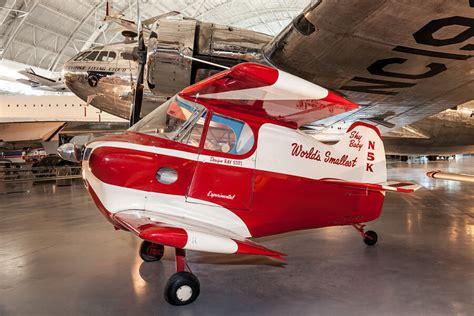
The allure of aviation often conjures images of massive jets soaring across continents, but the world of commercial flight is far more diverse and, in many cases, surprisingly compact. When we ponder the smallest airplane that can be used for commercial flights, the answer isn’t a single, definitive aircraft model. Instead, it unravels into a fascinating exploration of what “commercial flight” truly means and the remarkable versatility of aviation technology. The spectrum ranges from tiny, single-pilot aircraft performing specialized tasks to small turboprops connecting remote communities. Understanding this distinction is key to pinpointing these diminutive workhorses of the sky.
Decoding “Commercial Flights”: More Than Just Major Airliners
Before diving into specific aircraft, it’s crucial to define what constitutes a commercial flight. For many, the term immediately brings to mind scheduled passenger services operated by large, well-known airlines. However, in aviation regulatory terms, “commercial” has a much broader meaning. Essentially, a commercial flight is any flight operation conducted for hire or reward. This encompasses a vast array of activities far removed from the typical passenger jet experience. The U.S. Federal Aviation Administration (FAA), for instance, has different operating certificates for various types of commercial air services, such as Part 135 for commuter and on-demand charter operations, and Part 137 for agricultural aircraft operations. Therefore, an aircraft doesn’t need to have dozens of seats or serve in-flight beverages to be classified as commercial; it simply needs to be generating revenue for its operator by transporting goods, people, or performing a service.
This broader definition opens the door to a fascinating array of smaller aircraft. Consider operations like crop dusting, where pilots, who must hold a commercial rating on their pilot’s certificate, fly specialized agricultural aircraft for pay. Similarly, banner towing planes, often small, single-engine aircraft, are engaged in commercial advertising. Air cargo services, especially those serving remote or difficult-to-access locations, frequently rely on smaller, rugged aircraft. Even sightseeing tours or “joy rides,” where passengers pay for a short flight experience, fall under the umbrella of commercial aviation if the operator holds the necessary certifications. This understanding fundamentally shifts our search for the smallest commercial airplane from large passenger carriers to a more diverse and specialized fleet.
The Absolute Minimum: Single and Two-Seaters Taking to the Commercial Skies
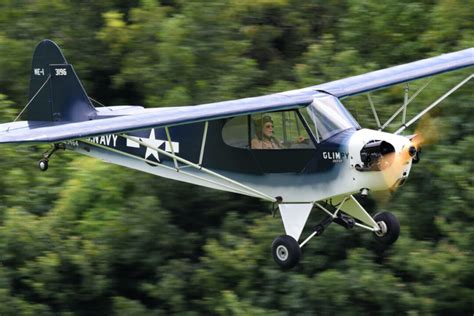
When we consider the broadest definition of commercial aviation, the smallest aircraft involved can be incredibly tiny, often single or two-seat airplanes. For instance, the venerable Piper J-3 Cub, a simple, lightweight aircraft renowned for its gentle flying characteristics, has been and continues to be used for commercial purposes. Pilots have utilized Piper Cubs for banner towing, a clear example of an aircraft being operated for hire. While not transporting passengers in the traditional airline sense, these operations are undeniably commercial. Similarly, aircraft like the Cessna 150 or 152, popular two-seat trainers, have also been employed for banner towing services. These aircraft represent some of the most minimal platforms capable of engaging in revenue-generating flight operations.
Crop-dusting, or agricultural aviation, is another domain where relatively small aircraft perform essential commercial services. While some modern agricultural aircraft are quite powerful and sophisticated, the principle involves a pilot being paid to apply treatments to crops, a commercial endeavor. The pilots operating these aircraft must possess a commercial pilot certificate, underscoring the professional nature of their work, even if the aircraft itself is designed for a single occupant and a specialized payload. These operations highlight that the “smallest” commercial aircraft isn’t necessarily about passenger capacity but about the ability to perform a paid service effectively and legally.
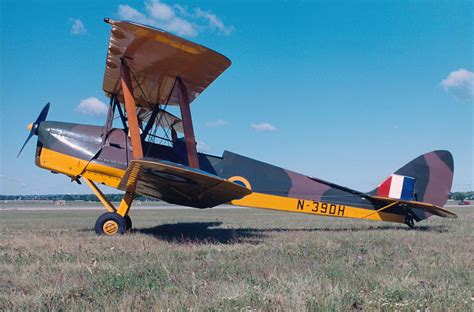
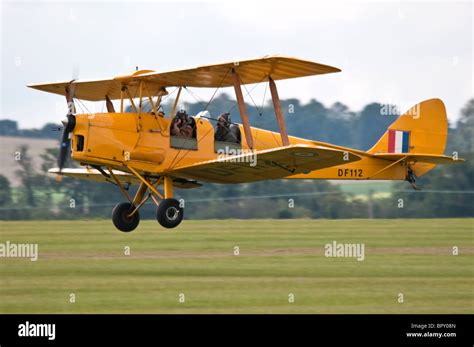
Perhaps one of the most compelling examples of a truly tiny aircraft operating in a passenger-carrying commercial role comes from specialized air tour or historical flight operators. Verdun, a former airline pilot, shared an experience of starting and running a flying operation with a De Havilland DH 82A Tiger Moth. This classic biplane has only two seats: one for the pilot and one for the passenger. Crucially, this operation held an Air Operator’s Certificate (AOC), legally permitting them to conduct public transport flights. While many flights were scenic “joy rides” taking off and landing at the same airfield, they were also legally authorized to carry fare-paying passengers from one airfield to another, which they occasionally did. It’s difficult to envision a smaller aircraft configuration for carrying a paying passenger under a regulated commercial framework. This demonstrates that, with the appropriate certifications, even a two-seat vintage biplane can serve as a commercial passenger aircraft, making it a strong contender for the title of the smallest.
Beyond Banners and Dust: The Smallest True Passenger Transporters
While banner towers and crop dusters fit the technical definition of commercial aircraft, many people asking about the “smallest commercial airplane” are often thinking about aircraft that transport fare-paying passengers from one point to another, even if on a small scale. The aforementioned DH 82A Tiger Moth operation in the UK, holding an AOC and capable of A-to-B transport, certainly fits this bill for a two-seater. Such operations, though niche, underscore that passenger capacity can be minimal if the regulatory and safety requirements are met.
In various parts of the world, particularly in regions with challenging terrain or scattered populations, very small aircraft are essential for maintaining connectivity. For example, in Botswana, it’s noted that commercial flights can be operated in planes as small as six seats. These aircraft often serve remote lodges, communities, or facilitate specialized tours where larger aircraft would be impractical or uneconomical. Similarly, in vast and sparsely populated areas like Alaska, small aircraft, sometimes even smaller than six-seaters, are lifeline services, delivering mail, supplies, and transporting people to locations inaccessible by road. These are not typically scheduled airline services in the way one might find in a major city, but they are undoubtedly commercial operations vital to the communities they serve. The pilots are compensated, and the flights operate under specific regulatory frameworks governing commercial air transport.
These micro-operations often utilize robust and reliable aircraft designed for short take-off and landing (STOL) capabilities, able to operate from unprepared or short airstrips. The emphasis is on utility and reliability rather than passenger luxury. The “flight attendant” might be non-existent, and in-flight service could be as basic as a cooler box with drinks, as one traveler experienced on a 19-seat turboprop in Malawi. While that particular aircraft had 19 seats, the principle extends to even smaller aircraft in similar operational contexts. The key factor is the issuance of an Air Operator’s Certificate or equivalent authorization, which permits the carrying of fare-paying passengers. This regulatory approval is what distinguishes a private flight from a commercial one, regardless of the aircraft’s size.
Stepping Up in Size: The Realm of Small Commuter and Charter Aircraft
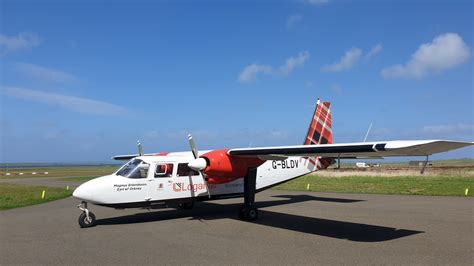
When discussions move towards more structured, albeit still small-scale, passenger services like those provided by regional airlines or charter companies, a different category of aircraft emerges. While still diminutive compared to mainline jets, these aircraft are workhorses in connecting smaller communities and feeding into larger airline networks. Among the smallest aircraft frequently cited in this context are those with around nine passenger seats. The Britten-Norman Islander (BN-2) is a classic example. This rugged, twin-engine aircraft is renowned for its STOL capabilities and its ability to operate in harsh environments, making it a favorite for short-hop routes, island connections (like those operated by Loganair in Scotland, including the world’s shortest scheduled flight), and services to remote airstrips. With typically nine passenger seats, it represents one of the smallest aircraft in regular scheduled or charter passenger service globally.
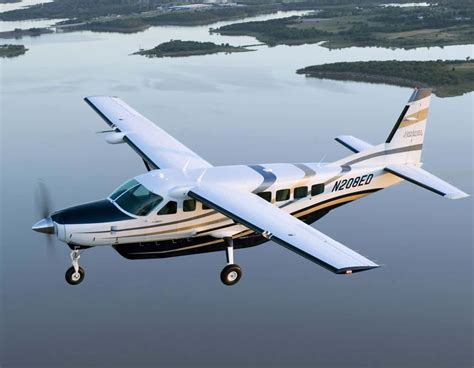
Another aircraft in this size category is the Cessna 402, particularly the Cessna 402C Utililiner or Businessliner variants, which can also accommodate up to nine passengers. These twin-piston engine aircraft have been staples for small commuter airlines and charter operators for decades, valued for their reliability and operating economics on short-haul routes. Similarly, some versions of the Cessna 208 Caravan, a single-engine turboprop, are configured for nine passengers. The Caravan is celebrated for its versatility, capable of operating from unimproved runways and adaptable for various roles, including passenger transport, cargo, and even amphibious operations with floats. These aircraft often form the backbone of air services in regions where passenger demand doesn’t justify larger equipment.
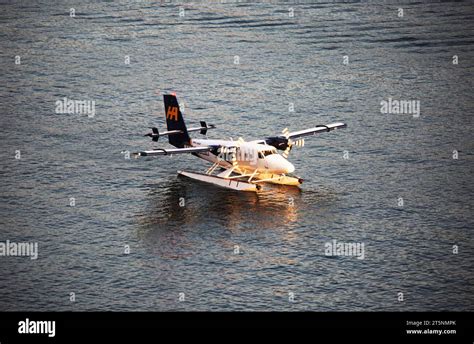
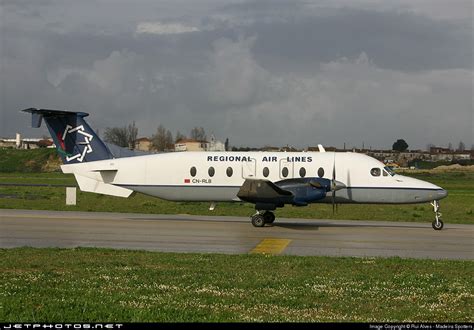
The De Havilland Canada DHC-6 Twin Otter is another iconic aircraft in this segment, though typically seating more passengers (around 19-20). Its exceptional STOL performance, reliability, and ability to operate on wheels, skis, or floats have made it indispensable for accessing remote areas worldwide, from the Canadian Arctic to the Maldives. While slightly larger than the nine-seaters, it represents the next step up in capacity for many small commercial operators. Further up the scale, but still considered small in the grand scheme of commercial aviation, is the Beechcraft 1900. This is a 19-passenger, twin-engine turboprop aircraft that has been widely operated by regional airlines and charter services. It was designed for short to medium-haul routes and is known for its efficiency and reliability in regional air transportation. One anecdote shared by a former pilot highlights the passenger perception challenges with such aircraft; despite flying a shiny new Beech 1900 emblazoned with “Jet Piedmont,” passengers sometimes mistook it for an “antique piston pounder,” underscoring the public’s association of “commercial” with larger jet aircraft.
These aircraft, from the 9-seat Islander and Caravans to the 19-seat Beechcraft 1900 and Twin Otters, represent the smaller end of what many would recognize as traditional passenger-carrying commercial aviation. They are subject to stringent regulations, require commercially rated pilots, and often operate under an Air Operator’s Certificate that specifies the types of operations they are permitted to conduct.
Why These Diminutive Aircraft Dominate Niche Commercial Markets
The persistence and necessity of these small commercial aircraft stem from a confluence of economic, geographical, and operational factors. Firstly, accessibility is paramount. Many communities and destinations, particularly in remote or underdeveloped regions, lack the infrastructure to support larger aircraft. Runways may be short, unpaved, or situated in challenging terrain. Aircraft like the Britten-Norman Islander or Cessna Caravan, with their STOL capabilities and rugged undercarriages, are specifically designed to thrive in these environments, providing essential lifelines where larger jets cannot venture.
Secondly, economic viability plays a critical role. For routes with low passenger demand, operating a larger aircraft would be financially unsustainable. Small aircraft, with their lower acquisition and operating costs, allow airlines and charter companies to serve these thin routes profitably. They can offer higher frequencies than a larger aircraft might, providing better service to the community. This right-sizing of aircraft to market demand is a fundamental principle of airline network planning. Furthermore, for specialized commercial tasks like pipeline inspection, aerial surveying, or emergency medical transport to remote areas, smaller, more maneuverable aircraft are often the only practical solution. Their ability to operate at lower altitudes and access confined spaces makes them invaluable for such niche services.
The Unique Passenger Experience Aboard These Small Commercial Fliers
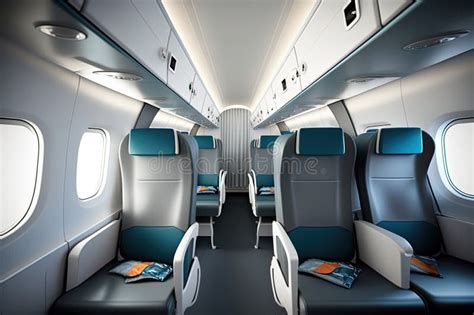
Flying on one of these smallest commercial aircraft offers a passenger experience vastly different from that on a large jetliner. Amenities are typically minimal. There are often no flight attendants, especially on aircraft with fewer than 19 seats. The separation between the cockpit and the passenger cabin might be a simple curtain, or non-existent, offering passengers a direct view of the pilots at work. Overhead bins are small or absent, and lavatories, if present, are compact. In-flight service, as mentioned in one traveler’s account on an Air Malawi flight, might be a self-serve cool box. However, this lack of frills is often compensated by other unique aspects.
Flights are generally at lower altitudes, providing spectacular views of the landscape below. The sensation of flight can be more pronounced, offering a more direct connection to the experience of flying. Boarding and disembarking are quick and often involve walking across the tarmac. For many passengers, particularly those traveling to unique or remote destinations, the flight on a small aircraft is an integral and memorable part of the adventure. The anecdote of the disgruntled Piedmont passenger expecting a jet, only to be met with a Beechcraft 1900, highlights a common misconception. Yet, for those who appreciate the utility and unique perspective these small aircraft offer, the experience can be thoroughly enjoyable and efficient for the routes they serve. It’s a more intimate and often more scenic way to travel, stripping air travel back to its more fundamental elements.
What About the Smallest Jet for Commercial Flights?
While this exploration has largely focused on propeller-driven aircraft, it’s worth briefly touching upon the smallest jets used in commercial service. Generally, jet aircraft are larger and designed for longer routes and higher speeds. However, the category of regional jets includes some relatively small models. For instance, an Airlink jet with 39 seats was mentioned as the smallest jet experience by one traveler. Aircraft like the Embraer ERJ family (e.g., ERJ-135, ERJ-140, ERJ-145 with capacities from 37 to 50 passengers) or the smaller variants of the Bombardier CRJ series were developed to serve routes that were too long or too dense for turboprops but not large enough for bigger jets. These are significantly larger than the single-digit passenger aircraft discussed earlier but represent the lower end of the commercial jet spectrum. Their existence further refines the answer, distinguishing between the absolute smallest commercial aircraft (which are typically prop-driven) and the smallest jet commercial aircraft.
Conclusion: The Surprising Versatility of Small Commercial Aircraft
Ultimately, the smallest airplane that can be used for commercial flights is not a single model but rather a category defined by the nature of the commercial operation. If “commercial” includes specialized services like banner towing or agricultural work, then aircraft as small as a Piper Cub or a Cessna 150 qualify. If the focus is on fare-paying passenger transport, even a two-seat DH 82A Tiger Moth holding an Air Operator’s Certificate can fit the description. For scheduled or charter passenger services connecting communities, aircraft like the Britten-Norman Islander or Cessna Caravan, typically seating around nine passengers, are among the smallest in common use. These diminutive aircraft play a crucial, often unsung, role in the global aviation network, providing essential services, connecting remote locations, and offering unique flight experiences far removed from the world of wide-body jets. Their existence is a testament to the adaptability and ingenuity of the aviation industry in meeting diverse transportation and service needs.