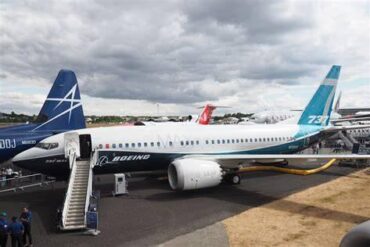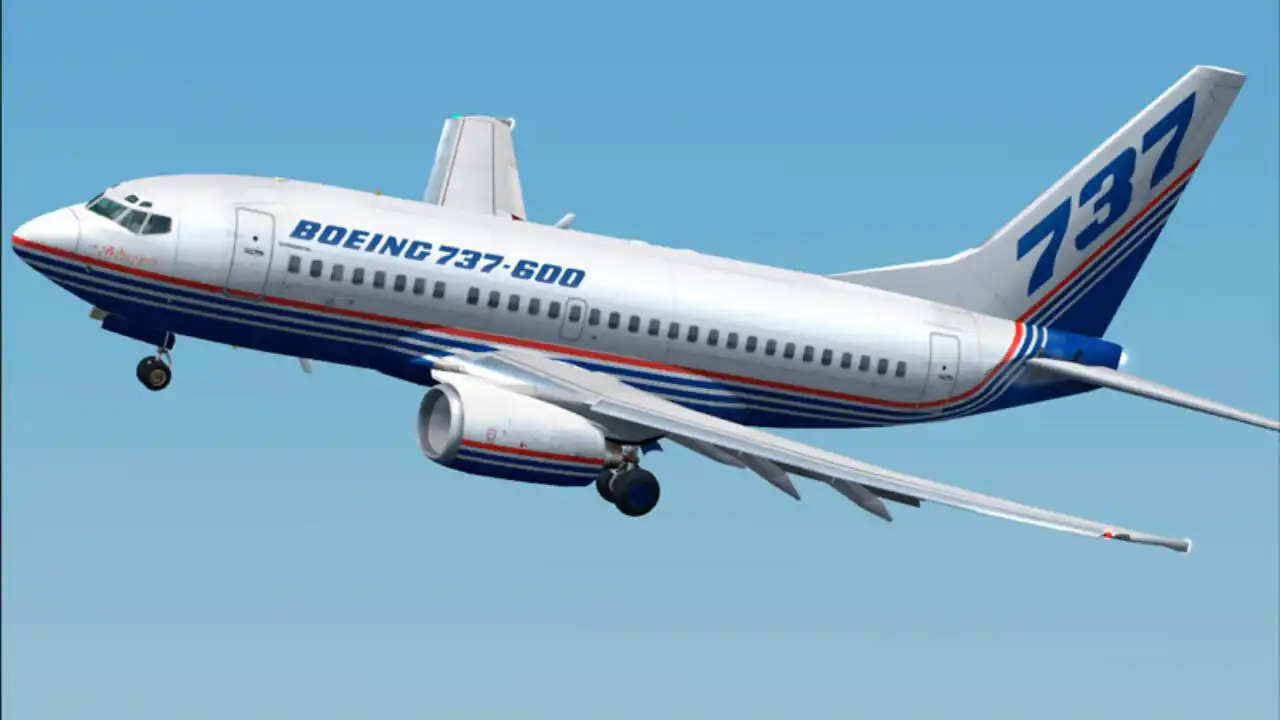
The Boeing 737-600 remains one of the most unusual chapters in the history of the 737 family. While the 737 series became one of the most successful commercial aircraft programs ever created, this smallest member of the 737 Next Generation (NG) family quietly disappeared after only 69 deliveries. The aircraft was designed to replace the successful 737-500, yet it struggled to find a clear place in the airline market.
At first glance, the 737-600 seemed like a logical addition to Boeing’s lineup. Airlines had already shown demand for smaller versions of the 737, and the 737-500 had proven that a compact narrowbody could succeed. However, the aviation market of the late 1990s was changing rapidly. Airlines were demanding better economics, regional jets were becoming more capable, and the smallest mainline aircraft were facing a difficult financial reality.
The biggest problem was hidden in the aircraft’s design philosophy. Boeing created the 737NG family around a common platform, using a new wing, improved engines, updated avionics, and increased fuel capacity. These improvements transformed models like the 737-700 and 737-800 into industry leaders, but they created a disadvantage for the smaller 737-600. By keeping much of the larger aircraft’s structure, Boeing accidentally created an airplane that was too heavy for its size.

The Boeing 737 Family Evolution Before the 737-600
The story of the 737-600 begins with the earlier generations of Boeing’s narrowbody family. The original 737-100 entered service in the late 1960s, but it was quickly replaced by the more capable 737-200. Boeing then expanded the family with the 737 Classic generation, introducing the 737-300, 737-400, and 737-500.
The 737-500 was particularly important because it represented Boeing’s attempt to preserve the advantages of the original small 737 concept. It was designed as a direct replacement for the 737-200, offering modern engines, improved efficiency, and enough capacity for airlines serving smaller markets. Although it was not as popular as the 737-300 or 737-400, it still achieved respectable sales with 389 aircraft delivered.
When Boeing launched the 737NG program, the company redesigned the family around larger and more efficient aircraft. The 737-700 became the natural successor to the 737-300, while the 737-800 replaced the 737-400. The 737-800 eventually became the star of the family, thanks to its excellent combination of range, passenger capacity, and operating economics.
The 737-600 was intended to fill the smallest position in the lineup by replacing the 737-500. However, Boeing did not create a completely optimized small aircraft. Instead, the company essentially produced a shortened version of the 737-700 while retaining many of the larger aircraft’s structural features.
This decision created the aircraft’s greatest weakness. A smaller aircraft needs to become significantly lighter to offset its reduced passenger capacity. Otherwise, airlines end up paying almost the same operating costs while earning revenue from fewer seats.
The Oversized Wing Problem That Hurt the 737-600
The defining engineering choice behind the 737NG family was its redesigned wing. Compared with the previous 737 Classic generation, the NG wing provided improved aerodynamics, greater fuel efficiency, and higher performance. It was one of the major reasons the 737NG became such a successful family.
However, the same wing that benefited larger aircraft became a disadvantage on the 737-600. The aircraft carried essentially the same wing design as the 737-700, despite being shorter and carrying fewer passengers. This meant the airplane had more capability than it needed but also carried unnecessary weight.
The result was an aircraft that was technically advanced but economically inefficient. The 737-600 burned almost the same amount of fuel as the larger 737-700 while offering fewer seats. For airlines, this created a difficult calculation: why operate a smaller aircraft with nearly identical costs when the larger model could generate more revenue?
Boeing attempted to compensate by reducing the aircraft’s maximum takeoff weight and using lower-rated engines. These modifications helped position the aircraft for shorter routes, but they did not create a meaningful advantage. The 737-600 did not offer dramatically better runway performance, significantly lower operating costs, or a major range benefit compared with its larger sibling.
Why Airlines Rejected the Smallest 737 NG Model
The commercial aircraft market is extremely sensitive to operating economics. Airlines do not simply choose aircraft based on size; they consider how much revenue each flight can generate compared with expenses such as fuel, maintenance, airport charges, and crew costs.
The 737-600 faced problems in every category. Because it shared much of its structure with larger 737NG models, it carried a weight penalty. Because it had fewer seats, it had less revenue potential. Because it lacked a unique performance advantage, airlines had little reason to select it over other options.
The timing of its introduction also worked against it. When the 737-600 entered service in 1998, many 737-500 aircraft were still relatively young. Airlines that already operated the previous generation had limited urgency to replace them. Instead of creating a wave of demand, Boeing found itself competing for a shrinking market.
Meanwhile, the 737-700 became a stronger alternative than expected. Although it was designed as the middle member of the NG family, the popularity of the 737-800 changed the market structure. Airlines often selected the 737-700 when they needed a smaller aircraft, meaning the 737-600 became trapped between Boeing’s own products.
The aircraft was too large and expensive compared with regional jets but too small and inefficient compared with other 737NG models. It occupied a market segment that was becoming increasingly difficult to defend.
Regional Jets Created New Competition From Below
The failure of the 737-600 was not only caused by Boeing’s design choices. The aircraft also entered a market where regional jets were rapidly improving.
During the late 1990s and early 2000s, manufacturers such as Embraer and Bombardier developed aircraft specifically designed for smaller routes. Models such as the Embraer E-Jet family and Bombardier CRJ series offered airlines a more flexible solution.
Regional jets had fewer seats than the 737-600, but they also had lower operating costs. They were lighter, consumed less fuel, and were often operated through regional airline structures with lower labor costs. For airlines trying to connect smaller cities, these aircraft offered better economics.
The introduction of aircraft such as the Embraer E170 and E190 further weakened the 737-600’s position. These aircraft could carry a similar number of passengers while avoiding many of the cost disadvantages associated with a small mainline jet.
The market simply did not need a 100-seat aircraft with nearly 6,000 kilometers of range. Most airlines either wanted a smaller, cheaper regional aircraft or a larger narrowbody with better seat economics.
The Airbus A318 Faced the Same Problem
Interestingly, Boeing was not alone in misjudging this market segment. Airbus experienced a similar challenge with the Airbus A318, the smallest member of the A320 family.
Like the 737-600, the A318 was created by shrinking a larger aircraft design. Airbus attempted to reduce the disadvantages by lowering weight and installing smaller engines, but the aircraft still struggled. It retained many fixed costs from its larger family members while offering fewer seats.
The A318 sold only 80 units, slightly more than the 737-600 but still considered a commercial disappointment. Its failure demonstrated a broader industry lesson: shrinking a successful aircraft does not automatically create a successful smaller aircraft.
The problem was not simply size. The issue was that smaller aircraft must be designed around their mission. A successful small aircraft requires efficiency at the lower end of the market, not just a shortened version of a larger aircraft.
The Limited Operators of the Boeing 737-600
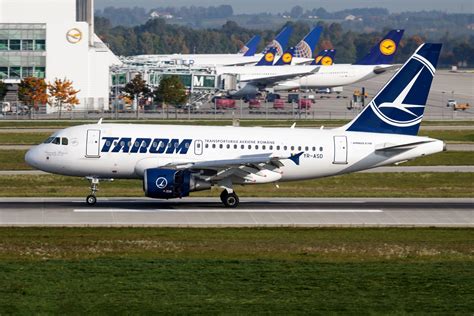
The 737-600 attracted only a handful of customers. Scandinavian Airlines became the launch customer and operated 30 aircraft, making it the largest commercial operator of the type.
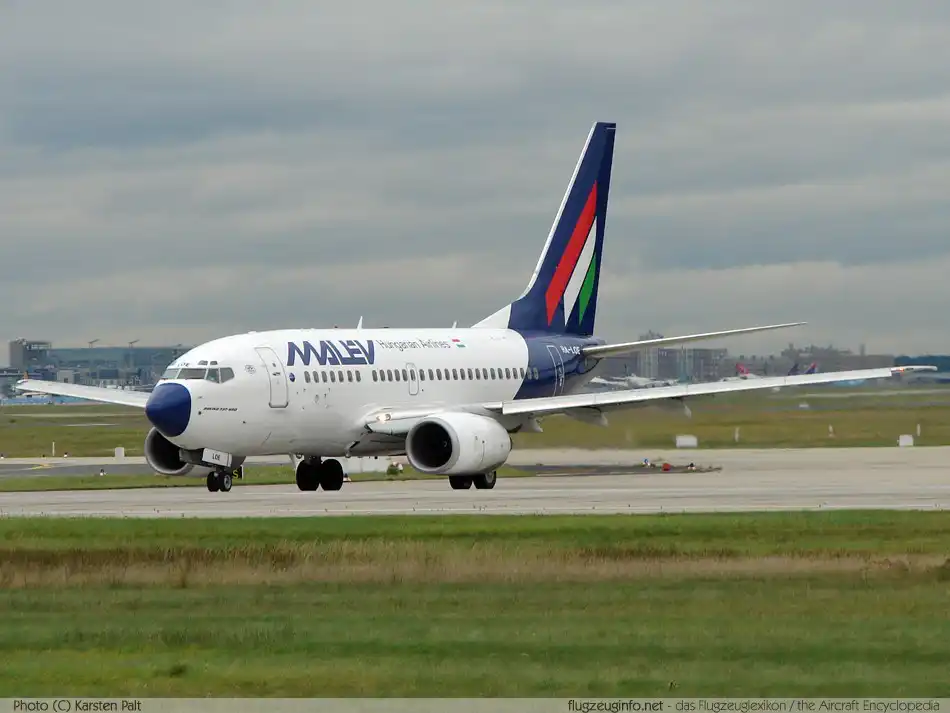
Other airlines that purchased the aircraft included WestJet, Tunisair, China Southwest Airlines, Malev Hungarian Airlines, Air Algerie, and Lauda. Together, these airlines accounted for all 69 deliveries.
Today, the global 737-600 fleet has almost disappeared. A small number of aircraft remain active, including examples operated by Janet Airlines, a secretive U.S. government aviation operation supporting flights to military facilities. These aircraft represent one of the few remaining uses of the type.
The limited survival of the 737-600 highlights how quickly aviation markets remove aircraft that fail to provide a strong economic advantage. Even technically capable aircraft can disappear when they do not fit airline priorities.
The Legacy of Boeing’s Smallest NG Jet
The Boeing 737-600 was not a technological failure. It featured the same modern improvements that helped make the 737NG family successful, including advanced avionics, improved engines, and a redesigned wing. The problem was that those improvements were not optimized for its smaller size.
The aircraft’s oversized wing and shared structure with larger models created a hidden penalty. Instead of becoming an efficient replacement for the 737-500, it became a compromise aircraft caught between larger narrowbodies and smaller regional jets.
The 737-600 serves as a reminder that aircraft design is about balance. A larger wing, stronger structure, and greater capability can be advantages, but only when matched to the aircraft’s mission. In the case of Boeing’s smallest NG jet, those features became unnecessary costs.
The aircraft quietly disappeared because it solved a problem airlines no longer had. While the rest of the 737NG family became one of the most successful commercial aviation programs in history, the 737-600 became the rare example of a Boeing jet that was overshadowed by its own family members.