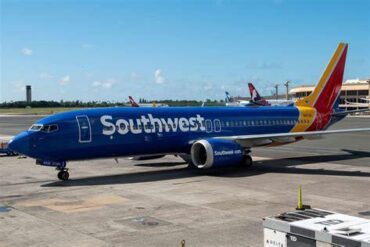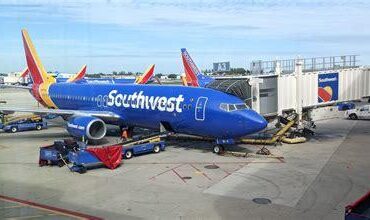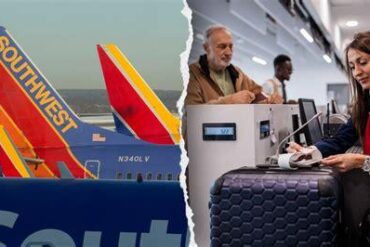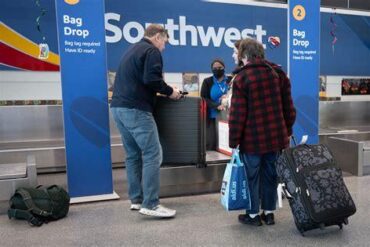
For decades, Southwest Airlines cultivated a reputation as the friendly, no-frills carrier where bags fly free and passengers knew what to expect. That image, however, is now being sharply challenged by a wave of traveler complaints exposing what many are calling the “New Southwest” — a version of the airline that appears to be doubling down on strict, sudden baggage enforcement with shockingly high penalties.
What began as a single flyer’s bewildering experience during a routine domestic flight has now become a broader conversation across social platforms. The passenger, an A-List status traveler with years of loyalty to the airline, found themselves stunned at check-in when a gate agent pulled out a measuring tape and began scrutinizing their bags. These weren’t new or unusually packed suitcases, but rather the same luggage they had used for over a year on the same route — with no prior issue.
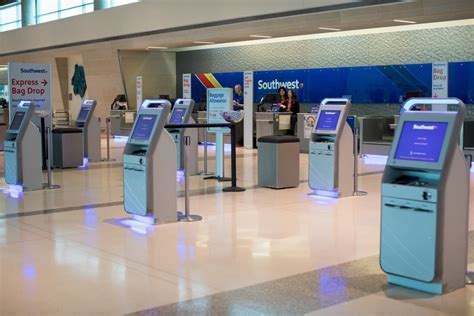
The Hidden Rule Enforcement That Caught Passengers Off Guard
Without any visible change in policy announcements or pre-flight warnings, the agent reportedly informed the passenger that their bags were technically oversized. One bag measured 62.99 inches — just 0.99 inches over Southwest’s 62-inch linear size limit. The other was measured at 61.02 inches, under the limit, but still considered problematic due to unspecified criteria.
Instead of issuing a one-time warning or allowing a grace policy as previously done, the agent sternly warned the passenger that future infractions would cost them $200 per bag, even if the size exceeded the limit by less than an inch. Although the agent ultimately let them board without charging the fee, the threat was clear — next time, they would not be so lucky.
From Customer-Friendly to Fee-First: A Cultural Shift?
The real issue, as voiced by frequent travelers, isn’t just the fee. It’s the lack of communication, transparency, and predictability that is creating distrust. For years, Southwest’s brand hinged on simplicity: no hidden charges, two free checked bags, and a feeling that travelers were treated like humans, not numbers.
Now, however, passengers say they’re being hit with last-minute bag measurements, unannounced rule changes, and steep penalties that feel more like ambushes than enforcement. It’s not merely about policy — it’s about principle.
The $200 Fee and Its Psychological Shock Factor
A $200 fine for an inch of excess may sound absurd — and to most travelers, it is. What amplifies the backlash is the fact that the overweight fee is often lower than what Southwest is reportedly charging for oversized bags.
Even industry insiders have begun questioning the logic behind such harsh enforcement. For a company that previously prided itself on transparency and simplicity, the sudden application of airport-level micromanagement tactics feels off-brand. Some aviation observers note that Southwest’s financials have been under pressure in recent quarters, leading them to speculate whether these newly enforced penalties are part of a revenue-recovery strategy — executed at the expense of brand goodwill.
A Growing Pattern of Traveler Complaints
The experience of this single A-List flyer quickly became a rallying cry for other frustrated travelers. Social media is now filled with similar stories — passengers caught off-guard by tape measures and fee threats at check-in desks. Many note that their bags had previously flown without issue, only to suddenly be flagged without warning.
One of the more troubling details is that several passengers claim they were never informed of the fee before it was too late. In some cases, people say they were told after their bags were already tagged and taken away. “It’s not enforcement,” one frequent flyer posted on Reddit. “It’s entrapment.”
The Math Doesn’t Add Up
The 62-inch limit Southwest enforces refers to the total linear inches — the sum of a bag’s length, width, and height. For most standard checked luggage, this measurement hovers just under the maximum. But even a bulging zipper or extended handle can push a bag slightly over the line. In many cases, the difference between compliance and penalty is less than one percent.
Travelers argue that it’s unreasonable to expect millimeter precision from average consumers who purchased bags labeled “checked size” by mainstream luggage brands. Worse still, many airlines — including Southwest in past years — allowed a small margin of error in recognition of the natural wear, stretch, and bulging that occurs with use.
Enforcement Without Education: A Dangerous Shift
What makes this new policy so jarring is the absence of advanced notice. No pre-flight emails, no app alerts, and no updated signage at check-in counters — just surprise enforcement, which feels targeted rather than fair.
Experts in airline consumer rights emphasize the importance of transparency before penalty. If a company wishes to tighten rules, it must invest in customer education campaigns, clearly updating its website, and ensuring front-line staff communicate new rules with tact.
Is This a One-Off or a Broader Strategy?
While Southwest has not issued a formal press release regarding this new enforcement, the growing number of affected passengers suggests it may be part of a broader systematic strategy, perhaps linked to internal revenue benchmarks or new baggage compliance tools.
Analysts speculate that with Southwest facing rising fuel and labor costs, as well as post-pandemic profitability challenges, executives may be looking at non-ticket sources of revenue more aggressively. Baggage fees, especially those quietly enforced and rarely contested, are an easy way to generate funds without having to increase base ticket prices — which are more likely to attract public scrutiny.
Public Backlash and the Risk of Losing Trust
The outcry from loyal customers is already taking a toll. Brand sentiment across forums and review sites shows a noticeable dip, with many travelers stating they are now considering alternative carriers despite the appeal of free bags.
What’s more, the perception of sneakiness — enforcing rules without warning or reasonable margin — could do lasting damage. Southwest has long leaned on its quirky, customer-first brand identity to differentiate itself in a crowded domestic airline market. Losing that reputation could cost more than any single revenue scheme could earn.
The Legal Gray Zone of Airline Fee Enforcement
There is also the looming question of legal standing. While airlines do have the right to enforce size limits under their published contract of carriage, ambiguous or inconsistent application can be challenged. Legal advocates argue that if Southwest fails to clearly publish and communicate the fine, it may leave itself open to small claims actions or even class-action lawsuits.
Airline consumer rights attorneys have already begun monitoring complaints and social activity related to the issue. In past cases, surprise fees and ambiguous rules have led to legal judgments against airlines for deceptive practices.
What Southwest Must Do Now
If Southwest wishes to preserve the goodwill it has spent decades building, the airline must act quickly and decisively. That starts with publicly acknowledging the growing concern, clearly outlining any policy changes, and giving passengers a reasonable buffer period to adjust.
A good-faith approach would include:
- Updated signage at all check-in counters
- Advanced app and email notifications for booked passengers
- Clear documentation of how bags are measured and what constitutes a violation
- A grace policy for borderline infractions, especially for loyal passengers
Failing to do so risks turning a one-off controversy into a brand-wide identity crisis.
Final Thoughts: A Cautionary Tale for Airlines
The unfolding situation at Southwest serves as a stark reminder of the fragile balance between operational enforcement and customer experience. In an industry where brand loyalty is increasingly rare and passengers are more empowered than ever to share their stories, small policy changes can snowball into major PR disasters.
Southwest may have thought it was enforcing a simple rule. Instead, it may have cracked the foundation of trust that kept flyers coming back.
For now, passengers are left with a clear message: measure your bags, but measure your trust too.