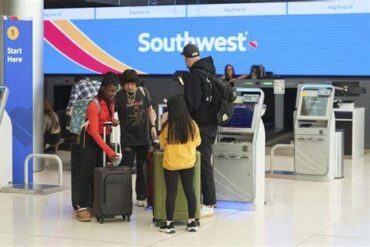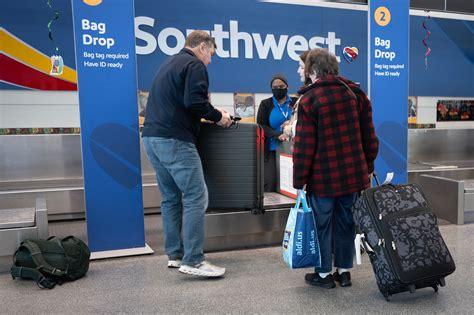
A year ago, one of the clearest reasons many travelers booked Southwest Airlines was simple: checked bags were free. For families, that benefit often meant real savings. A household of four flying round-trip with one suitcase each could avoid baggage fees entirely while competing airlines charged heavily. Today, that same family could pay $360 just to check four bags on the same type of trip.
That shift is more than a price increase. It represents a dramatic transformation of one of America’s most recognizable airline brands. Southwest built decades of loyalty around straightforward fares, free checked bags, open seating, and a friendlier alternative to legacy carriers. Now, the airline is embracing many of the same revenue strategies used by competitors.
For travelers, especially families who pack more than solo business flyers, the impact is immediate and painful. For investors, it may look like smart business. For the airline industry, it signals that no customer-friendly perk is guaranteed forever.
After decades of being the airline that proudly said “bags fly free,” Southwest now charges fees that can turn a budget trip into an unexpectedly expensive one.
How a Family of Four Now Pays $360 in Southwest Bag Fees
The new math is easy to understand and hard to love.
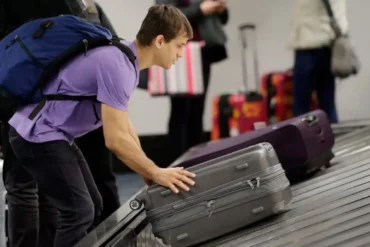
Southwest’s reported baggage pricing moved to $45 for the first checked bag and $55 for the second checked bag, per person, per direction. If a family of four checks one bag each on a round-trip flight, the cost looks like this:
- 4 passengers × $45 outbound = $180
- 4 passengers × $45 return = $180
- Total = $360
That same family would have paid $0 under Southwest’s previous long-standing policy.
For many households, $360 is not a minor add-on. It can cover hotel nights, rental car fuel, meals during the trip, or attraction tickets. It may also erase the fare advantage if Southwest’s base ticket price is only slightly lower than rivals.
This is where baggage fees become psychologically powerful. Travelers often shop by headline fare first, then feel punished during checkout when extras pile up. Southwest once avoided that frustration. Now it participates in it.
Why Southwest Airlines Changed Its Famous Free Bag Policy
The simple answer is revenue.
Airlines have become increasingly dependent on ancillary revenue, which includes baggage fees, seat selection charges, priority boarding, onboard sales, and loyalty program monetization. These extras often carry strong margins because they cost relatively little to provide compared with selling a seat.
Southwest historically resisted this model. That resistance helped define the brand, but it also limited revenue opportunities while competitors expanded theirs.
After the pandemic, the airline industry changed rapidly. Delta and United recovered strongly. Southwest lagged behind. Investors wanted faster modernization, stronger profits, and a strategy better aligned with the current marketplace.
Charging for bags created an obvious new income stream almost overnight.
From a spreadsheet perspective, the move makes sense. From a branding perspective, it risks tearing down one of the company’s strongest emotional advantages.
The Bigger Southwest Transformation Goes Beyond Bag Fees
The baggage policy is only one piece of a much larger overhaul.
Southwest once stood apart because it rejected industry norms. That difference attracted loyal flyers who appreciated simplicity. But the modern version of Southwest increasingly resembles the airlines it once challenged.
Recent changes reportedly include:
- Assigned seating replacing open seating traditions
- Fees for preferred seat selection
- Extra-legroom seating products
- Basic economy style fare segmentation
- Operational restructuring and network adjustments
In other words, Southwest is moving from a quirky outsider brand to a more conventional airline business model.
For some travelers, that is progress. Many people prefer assigned seats and clearer cabin options. For longtime fans, it can feel like watching a favorite neighborhood diner turn into a chain restaurant.
The Elliott Investment Management Effect
A major catalyst behind Southwest’s strategic pivot was pressure from activist investor Elliott Investment Management, which built a significant stake in the airline.
Elliott argued that leadership had failed to adapt after COVID-era disruption and that stronger financial performance required structural change. Such investors typically seek sharper profitability, cost discipline, and management accountability.
Soon after, executive changes followed, board influence shifted, and Southwest accelerated reforms.
This matters because airlines are emotional brands but also public companies. Customers care about comfort, trust, and fairness. Investors care about returns. When those priorities clash, fees often win.
Southwest’s baggage decision is a textbook example of that tension.
Why Families Feel the Pain Most
Not every traveler checks bags. Business travelers on short trips often carry on luggage. Solo travelers can travel light. But families are different.
Parents traveling with children frequently need:
- Larger suitcases
- Extra clothing
- Car seats or gear
- Strollers
- Shared vacation items
Even disciplined packers often need at least one checked bag per person on longer trips. That makes families especially vulnerable to fee changes.
A couple might absorb $180 reluctantly. A family of four sees $360 and may rethink the booking entirely.
This is why the headline resonates. It is not just about baggage. It is about how airline pricing often penalizes travelers with the least flexibility.
Does Southwest Still Have a Competitive Advantage?
Yes—but it is narrower than before.
Southwest still benefits from a powerful domestic network, strong presence in several cities, frequent schedules, and widespread brand recognition. Airports such as Dallas Love Field, Chicago Midway, Denver, Orlando, Phoenix, Nashville, and Baltimore remain strategically valuable.
Many customers also appreciate Southwest crews, generally efficient operations, and nonstop route options.
However, the airline’s differentiation is less obvious now. If bags cost money, seats cost money, and fare classes become more complex, travelers naturally compare Southwest against Delta, United, American, Alaska, JetBlue, and low-cost carriers on pure price or loyalty rewards.
That comparison used to favor Southwest emotionally. Today it becomes more transactional.
Why Investors May Love the Change
Customers may groan, but investors often applaud fee-based revenue because it can be highly effective.
If millions of passengers each pay baggage charges annually, the totals become substantial. Combined with seat fees and upsells, ancillary revenue can strengthen quarterly earnings quickly.
Reports indicate Southwest returned to profitability in early 2026, a sharp contrast with prior losses. While many factors contribute to results, pricing changes and operational discipline likely helped.
That creates a blunt reality: if customers keep booking despite complaints, the strategy works financially.
Airlines measure behavior more than sentiment. Angry tweets matter less than full planes.
The Risk: Losing What Made Southwest Special
Brands built over decades can weaken faster than expected.
Southwest was once admired for transparency and customer friendliness. The airline’s humor-filled image, simple policies, and free bags made it memorable in a sector not known for warmth.
When companies abandon signature advantages, they must replace them with something equally compelling.
If Southwest becomes merely “another airline with fees,” then customers may ask difficult questions:
Why not choose Delta for premium cabins?
Why not United for international connections?
Why not American for hub convenience?
Why not a low-cost carrier for cheaper fares?
This is the strategic gamble. Southwest may earn more now while risking long-term uniqueness.
What Travelers Should Do Before Booking Southwest
The smartest move is not outrage—it is comparison shopping.
Always calculate the total trip cost, including:
- Base fare
- Checked bags
- Seat selection
- Boarding upgrades
- Change flexibility
- Loyalty benefits
A $40 cheaper ticket can become $150 more expensive after extras. A slightly higher fare elsewhere may include better value.
Families should especially compare full round-trip totals, not teaser fares.
And yes, packing lighter helps—but telling children to share one sock each rarely ends well.
Will Bag Fees Keep Rising?
It is possible.
Airline fees often rise gradually once normalized. Fuel prices, labor costs, aircraft expenses, and economic pressure can all push airlines toward more ancillary charges.
If customers accept baggage fees with minimal booking impact, future increases become easier to justify.
That means the $360 family example may not be the ceiling. It may simply be the new baseline.
Final Verdict: Southwest Chose Profit Over Simplicity
The story of Southwest charging $360 in checked bag fees for a family of four is bigger than one painful vacation expense. It marks the end of an era.
For years, Southwest won loyalty by rejecting the nickel-and-dime culture common across aviation. Free bags were not just a perk—they were proof that the airline was different.
Now, difference is fading.
From a business standpoint, the pivot may be working. From a customer standpoint, especially for families, it feels like losing one of the last honest deals in air travel.
Southwest may still be successful. It may remain profitable. It may even grow stronger financially.
But when a family goes from paying $0 to $360 for the same luggage in about a year, travelers are entitled to say exactly one thing:
Ouch.