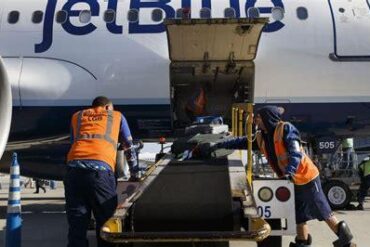
Commercial aviation has always been a business of narrow margins, but in periods of geopolitical instability and energy disruptions, airlines are forced to become even more creative to preserve profitability. Canada’s two largest carriers, Air Canada and WestJet, are now demonstrating how an ordinary ancillary charge can evolve into a sophisticated financial tool. Rather than relying solely on ticket prices, both airlines have effectively transformed checked baggage fees into flexible mechanisms that absorb sudden fuel shocks while keeping advertised fares attractive.
For decades, fuel has represented one of the most unpredictable expenses in aviation. Depending on market conditions, jet fuel can account for nearly one-third of total operating costs. A spike in oil prices can rapidly erase profits across entire networks, forcing airlines to rethink how they generate revenue without damaging demand. Instead of raising headline fares and risking reduced bookings, Canadian airlines are increasingly using baggage charges to transfer some of the additional costs directly to passengers whose luggage adds measurable weight to the aircraft.
This shift reflects a broader transformation in airline economics. Ancillary revenues, once viewed as supplemental income streams, have evolved into highly strategic instruments capable of responding quickly to changing market realities. In many ways, checked bags have become more than cargo. They have become part of a carrier’s fuel-management strategy.
Why Fuel Volatility Forced Canadian Airlines To Adapt
Recent instability across global energy markets exposed the vulnerability of traditional airline pricing models. Supply disruptions and geopolitical tensions caused crude oil and refined petroleum products to surge rapidly. Jet A fuel prices climbed sharply, approaching levels that dramatically altered financial assumptions used by airline treasury departments.
Unlike aircraft leases or airport agreements, fuel expenses can increase almost overnight. When prices rise by twenty or thirty percent within weeks, airlines cannot easily absorb those costs without jeopardizing profitability. Raising base fares across an entire network also presents risks because consumers compare flights based largely on the lowest advertised ticket prices.
This challenge encouraged airlines to separate optional services from the ticket itself. Travelers who carry little luggage benefit from lower entry fares, while passengers transporting heavier loads contribute more directly toward the additional fuel required to move that weight. Such a system protects demand while ensuring that operational costs are shared more proportionately.
Weight has always mattered in aviation. Every extra pound carried across thousands of miles translates into additional fuel burn. Heavy baggage, oversized sporting equipment, and multiple checked bags all increase aircraft weight and therefore increase operating costs. During periods when jet fuel becomes exceptionally expensive, that relationship becomes impossible to ignore.
The Economics Behind Every Pound Of Checked Luggage
Aircraft performance calculations revolve around weight. Pilots and dispatchers carefully balance fuel requirements, passenger loads, cargo capacity, and weather conditions before each flight departs. Even seemingly insignificant changes can affect fuel consumption over long distances.
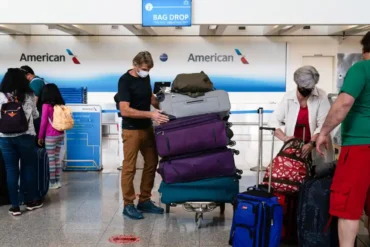
A standard checked bag weighing fifty pounds may not appear substantial, but multiplied across hundreds of passengers and thousands of daily flights, the impact becomes enormous. Larger bags weighing seventy pounds or more impose even greater penalties on efficiency.
Airlines have increasingly recognized that baggage represents one of the few operating variables they can influence directly. Unlike airport fees or lease payments, luggage charges can be adjusted almost immediately. This flexibility makes baggage fees an effective buffer against sudden increases in fuel prices.
Rather than spreading higher costs evenly among all passengers, airlines can assign those expenses to travelers who consume more physical resources. This strategy creates a more targeted approach to cost recovery while maintaining competitive ticket prices.
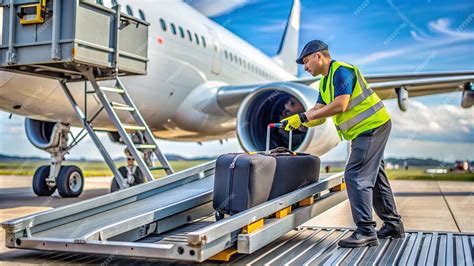
Air Canada’s Capacity Reductions And Baggage Fee Strategy
Faced with rising energy costs, Air Canada moved quickly to reduce financial exposure. Operating under a high-fuel environment makes inefficient capacity particularly expensive. Flying partially filled aircraft can rapidly erode margins, especially on international routes where fuel consumption is greatest.
To address these challenges, the carrier adjusted its network and reduced available seats on several routes. Lower capacity helped improve load factors, allowing the airline to maximize revenue per flight while minimizing waste.
At the same time, baggage fees increased across various fare categories. Domestic travelers experienced higher charges, while passengers flying long-haul and trans-Pacific sectors encountered even steeper fees for additional checked bags.
These increases were not arbitrary. They reflected a broader strategy focused on optimizing revenue relative to aircraft weight. Every bag loaded into the cargo hold contributes to fuel burn, and pricing structures now increasingly reflect that reality.
By keeping base fares relatively stable while generating additional revenue through baggage charges, Air Canada preserves competitiveness in online booking systems. Price-sensitive customers continue to see attractive ticket prices, while travelers requiring more luggage effectively subsidize the additional costs associated with carrying that weight.
WestJet’s Dynamic Baggage Pricing Model
While Air Canada focused on capacity management and fee increases, WestJet embraced a more flexible approach. The introduction of UltraBasic fares and dynamic baggage pricing represents a fundamental shift away from fixed ancillary charges.
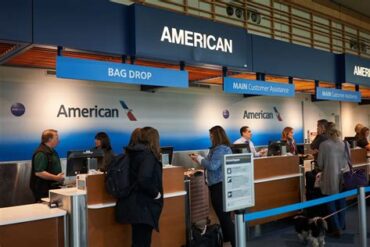
Under this model, baggage fees vary depending on when passengers pay. Customers who declare their baggage requirements early and complete transactions online receive lower prices. Those waiting until airport check-in counters face higher charges.
This pricing architecture serves multiple purposes. First, it encourages passengers to commit earlier, providing airlines with more accurate information regarding aircraft weight distribution. Second, it discourages last-minute surprises that complicate operational planning.
Knowing cargo loads in advance allows dispatchers and pilots to optimize fuel calculations with greater precision. Fuel tankering strategies become more efficient, contingency fuel requirements can be refined, and unnecessary weight is reduced.
WestJet has also increased penalties for oversized luggage. These higher charges are designed to discourage heavy items that significantly increase fuel consumption and handling complexity.
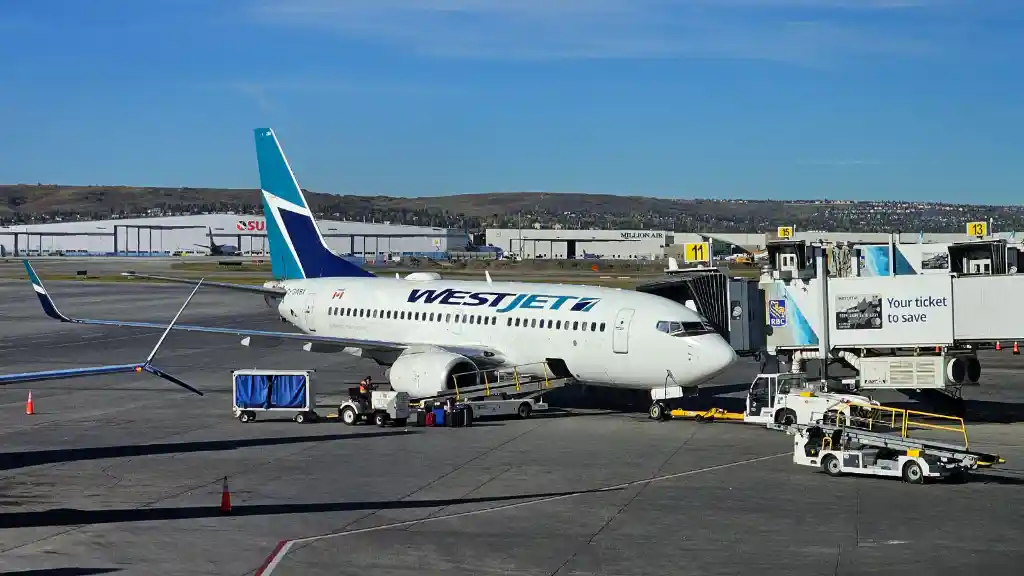
Why Airlines Prefer Baggage Fees Over Higher Ticket Prices
Raising ticket prices may seem like the simplest solution to increasing fuel costs, but modern airline distribution systems make such decisions risky. Consumers frequently use travel search engines that rank flights primarily according to price.
A modest increase in headline fares can move an airline several positions lower in search results, reducing visibility and ultimately hurting demand. Baggage fees solve this problem because they preserve attractive advertised prices while generating additional revenue from passengers who require extra services.
Corporate travelers carrying only hand luggage benefit from lower fares. Leisure travelers packing multiple suitcases contribute more toward operational expenses. This segmentation creates a pricing structure that better reflects actual resource consumption.
Ancillary revenues also offer flexibility unavailable through traditional fares. Regulatory approvals and tariff changes associated with international ticket pricing often require time. Baggage charges, by contrast, can be adjusted quickly to respond to changing market conditions.
As fuel prices fluctuate, baggage fees effectively function as real-time economic shock absorbers.
The Rise Of Weight-Based Revenue Management
Modern airlines increasingly view weight as a revenue opportunity rather than merely an operational consideration. Every pound saved translates into lower fuel consumption and reduced emissions.
This philosophy has driven investments in lighter seats, composite materials, winglets, and fuel-efficient engines. Baggage management now represents another frontier in this pursuit of efficiency.
Charging more for heavier or oversized luggage encourages passengers to travel lighter. Reduced aircraft weight improves fuel burn, lowers carbon emissions, and strengthens profit margins simultaneously.
Weight optimization has become particularly important as environmental regulations tighten worldwide. Airlines face growing pressure to reduce emissions while managing rising costs associated with sustainable aviation initiatives.
Consequently, baggage pricing is no longer simply about generating extra income. It forms part of broader sustainability and efficiency objectives that affect every aspect of airline operations.
Why These Fees May Never Return To Previous Levels
History suggests that once airlines introduce new ancillary charges, they rarely eliminate them. Previous fuel crises have repeatedly transformed temporary measures into permanent revenue streams.
After the oil shocks of 2008, many airlines introduced checked bag fees that were initially presented as responses to exceptional circumstances. Yet years later, those fees remained embedded within airline business models.
The same pattern emerged following the post-pandemic recovery period. Capacity constraints and rising operational costs encouraged additional charges that eventually became normalized across the industry.
Infrastructure investments also contribute to fee permanence. Airlines spend billions modernizing baggage systems, digital platforms, and airport technologies. These investments create long-term expectations for ancillary revenue streams.
Even if fuel prices decline substantially, the operational benefits associated with lighter loads and improved efficiency remain attractive. Corporate planning departments rarely abandon systems that have proven financially successful.
For this reason, today’s baggage fee increases may outlast the current energy crisis by many years.
Global Airlines Are Watching Canada’s Experiment Closely
What Air Canada and WestJet are doing could influence carriers around the world. European and Asia-Pacific airlines face similar challenges involving fuel volatility, environmental pressures, and competitive pricing dynamics.
Traditional fare structures built around generous baggage allowances increasingly appear outdated. Consumers have become accustomed to unbundled pricing, where they pay only for the services they use.
As fuel markets remain vulnerable to geopolitical disruptions, airlines need flexible mechanisms capable of responding quickly. Dynamic baggage pricing provides exactly that capability.
Future developments may include even more sophisticated systems. Artificial intelligence and predictive analytics could enable airlines to adjust baggage charges based on route economics, seasonal demand, aircraft type, and fuel prices in near real time.
Such innovations would make baggage fees function almost like variable fuel surcharges, except with greater flexibility and fewer regulatory complications.
Checked Bags Have Become Strategic Assets
The transformation underway in Canada reveals a profound shift in airline economics. Checked baggage is no longer viewed merely as passenger property being transported from one destination to another. It has become a variable cost, a weight-management tool, and increasingly a hedge against fuel volatility.
By maintaining low headline fares and moving cost recovery into ancillary products, Air Canada and WestJet preserve competitiveness while protecting margins from sudden energy shocks. Their approach demonstrates how operational agility has become essential in modern aviation.
As geopolitical uncertainty continues to reshape fuel markets and sustainability pressures intensify, baggage pricing will likely play an even larger role in airline strategy. The age of fixed luggage fees is gradually fading. In its place emerges a new model where every pound carried through the sky carries a price, and that price may rise or fall with the energy markets themselves.
For airlines navigating an unpredictable world, flexibility has become the most valuable currency of all.