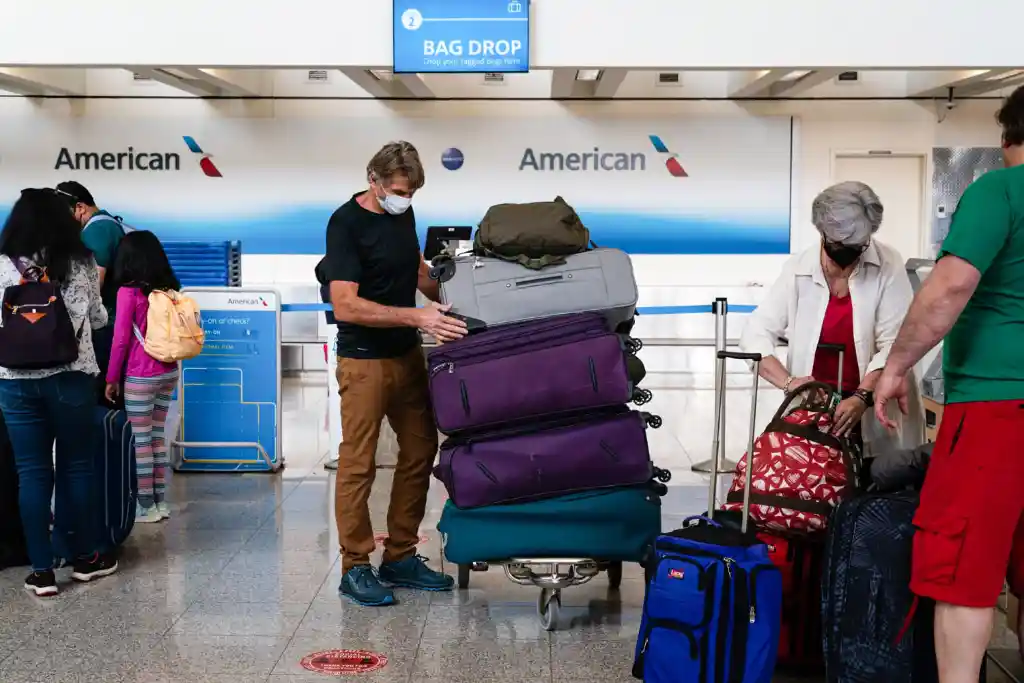
Airline fees have a way of creeping into travel budgets quietly, almost politely, until one day the total looks very different from what was expected. American Airlines’ checked bag fee increase is a textbook example of that slow drift. What appears on the surface to be a modest adjustment actually reflects a much broader shift in how airlines price travel, manage passenger behavior, and extract revenue from services that were once assumed to be included. Understanding what changed, why it changed, and how it fits into the wider U.S. airline landscape helps explain why this issue keeps resurfacing—and why it matters more than the raw dollar amount.
The recent changes made by American Airlines did not arrive with a press conference or a marketing campaign. Instead, they appeared quietly in fare rules and fee charts, affecting tickets issued from December 1, 2025 onward. For travelers booking short international trips—routes that often feel like domestic flights with passports—the price of checking a bag subtly rose, erasing a long-standing pricing gap that had favored these destinations. That small shift has ripple effects far beyond the $5 difference most passengers notice first.
At its core, this change signals a recalibration of how American Airlines views “short international” flying. Routes to Canada, Mexico, the Caribbean, Central America, and Guyana have long sat in a gray zone: international in paperwork, but domestic in duration, aircraft type, and customer expectations. By aligning baggage fees on these routes with domestic flights, American effectively declared that from a pricing perspective, these trips are no longer special.
What Exactly Changed in American Airlines’ Checked Bag Fees
Before December 2025, passengers flying from the United States to nearby international destinations enjoyed a small but meaningful perk: cheaper checked bag fees than on domestic routes. The first checked bag typically cost $35 at the airport, compared with higher domestic pricing that had already climbed. This difference mattered most to families, leisure travelers, and snowbirds—groups far more likely to check bags than frequent business travelers.
With the new policy, American Airlines raised the airport price for a first checked bag on these short international flights to $40, matching its domestic fee. The increase applies only to tickets issued on or after December 1, 2025, which softened the blow for travelers who had already booked. Still, for anyone planning future travel, the message is clear: the era of cheaper checked bags on nearby international routes is over.
There is one remaining concession. Travelers who prepay for their checked bag online still receive a $5 discount, bringing the cost down to $35. This discount is less about generosity and more about efficiency. Prepayment reduces airport congestion, speeds up the check-in process, and guarantees revenue before the passenger even reaches the terminal. From the airline’s perspective, it is a win on multiple fronts, even if the traveler feels they are merely clawing back a fee that used to be standard.
Why American Airlines Quietly Closed the Pricing Gap
The decision to eliminate cheaper checked bag fees on short international routes did not happen in isolation. American Airlines had already raised domestic checked bag fees earlier, increasing the airport price from $35 to $40. That move aligned American with several major competitors but left an odd inconsistency in place: it was cheaper to check a bag to Mexico than to Miami.
From a revenue management standpoint, inconsistencies like that invite friction. Passengers notice them, question them, and sometimes exploit them by choosing routings or ticket types that minimize fees. By standardizing prices across domestic and short international routes, American simplified its fee structure and reduced the chance of passengers gaming the system.
This alignment also reflects changing passenger behavior. Short international routes increasingly attract the same mix of travelers as domestic leisure markets, particularly in peak seasons. These passengers are price-sensitive but also predictable in their habits. Standardized fees make forecasting easier and allow the airline to present a cleaner, more uniform pricing model, even if that model is less forgiving than before.
How This Fits Into American Airlines’ Broader Baggage Strategy
The recent adjustment is only one piece of a much larger puzzle. Today, most American Airlines flights now follow a semi-unified baggage fee structure for economy passengers. Domestic routes and nearby international destinations share the same baseline pricing, while long-haul international flights maintain more traditional baggage inclusions.
On transatlantic and transpacific routes, as well as flights to many destinations in South America, Qatar, and Israel, at least one checked bag is still included for most fares outside of basic economy. This reflects global norms, where free checked baggage remains standard and competition from international carriers keeps fees in check. In these markets, charging for the first bag would be a competitive disadvantage rather than a revenue opportunity.
There are still narrow exceptions within American’s system. Certain routes, such as flights involving Haiti or Cuba, continue to feature a $35 checked bag fee for basic economy passengers. These carve-outs are limited and often shaped by local market conditions, bilateral agreements, or unique travel patterns. They are reminders that airline pricing is never purely uniform, even when it appears to be.
How American Airlines Compares to Other U.S. Airlines
American Airlines is not leading the charge on higher baggage fees; it is following a well-established industry trend. Across the U.S., major carriers have steadily raised the price of checking a bag as operating costs increased and ticket prices became more competitive. For many airlines, baggage fees have become a reliable revenue stream that helps keep base fares attractive in search results.
Delta Air Lines, United Airlines, Alaska Airlines, and JetBlue have all implemented first checked bag fees in the $35 to $45 range, often with discounts for online prepayment. The differences between them are now measured in single dollars rather than meaningful policy distinctions. In that context, American’s $40 fee looks less like an outlier and more like table stakes.
The contrast becomes starker when looking at ultra-low-cost carriers. Airlines such as Spirit and Frontier often charge $55 to over $100 for a checked bag, depending on when and how it is purchased. These carriers advertise low base fares but rely heavily on ancillary fees, making checked baggage one of their most lucrative add-ons.
At the opposite end of the spectrum, Hawaiian Airlines remains an exception on certain routes. Interisland flights in Hawaii can still feature checked bag fees as low as $15, a reflection of local travel needs and competitive dynamics that differ sharply from the mainland.
Southwest’s Policy Shift Changed the Entire Conversation
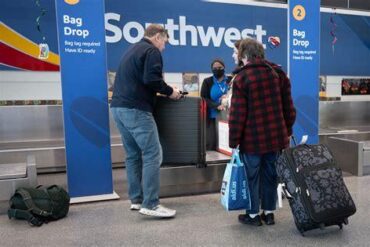
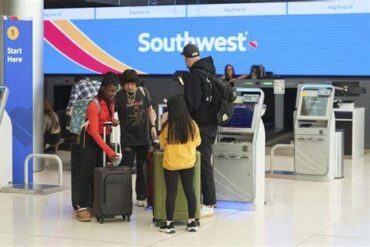
Perhaps the most telling backdrop to American Airlines’ move is the dramatic shift by Southwest Airlines. For decades, Southwest’s “bags fly free” policy served as a powerful differentiator and a subtle form of price discipline for the rest of the industry. When Southwest introduced checked bag fees on most fares in 2025, it removed one of the last major barriers to widespread fee increases.
In that new environment, American’s decision looks less like a bold change and more like an inevitability. When even the most customer-friendly baggage policy in the U.S. gives way, the competitive pressure to keep fees low evaporates. What remains is a landscape where checked bag fees are normalized, expected, and quietly adjusted upward as needed.
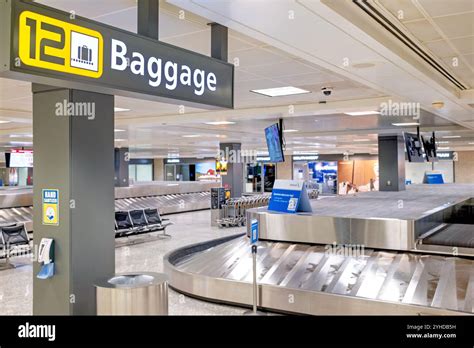
Ways Travelers Still Get Free Checked Bags on American Airlines
Despite rising fees, free checked bags have not disappeared entirely. They have simply become benefits reserved for specific travelers. American AAdvantage elite status remains one of the most reliable ways to avoid baggage charges. Depending on status level, members can check up to three bags for free, often with priority handling. These benefits can extend to companions on the same reservation, dramatically increasing their value for families or group travelers.
Co-branded American Airlines credit cards offer another pathway. Several Citi-issued cards include a free checked bag for the cardholder and multiple companions on the same booking. Over the course of a year, this perk alone can offset a significant portion of the card’s annual fee, especially for travelers who check bags regularly.
Premium cabin tickets also continue to bundle baggage. Domestic first class, international business class, and premium economy fares include at least two checked bags. On select long-haul aircraft, such as American’s specialized Boeing 787-9 configurations, premium fares can include up to three complimentary checked bags. These inclusions reinforce the idea that baggage fees are less about cost recovery and more about fare segmentation.
The Rise of Carry-On-Only Travel
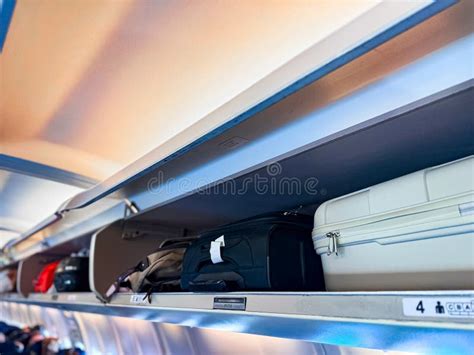
As checked bag fees have climbed, passenger behavior has adapted. Carry-on-only travel has become more common, especially on short trips. American Airlines still allows one free carry-on and one personal item, with size limits that reflect industry standards. Enforcement has shifted away from rigid bag sizers toward gate agent discretion, creating a system that is flexible but occasionally unpredictable.
This shift has consequences. Overhead bin space is increasingly contested, boarding takes longer, and gate-checked bags have become more common on full flights or regional aircraft. In some cases, American proactively asks for volunteers to gate-check carry-ons, a practice that can benefit travelers who prefer not to wrestle with luggage in the cabin.
The irony is hard to miss. Higher checked bag fees push passengers toward carry-ons, which in turn create operational challenges that airlines must manage. The system adapts, but not always smoothly.
Extra Fees: Where Costs Can Escalate Quickly
Standard checked bag fees are only the beginning. Overweight and oversized baggage charges can significantly increase the cost of travel for passengers who are not careful. Bags exceeding the standard 50-pound limit face escalating fees, with the steepest charges applied to luggage over 70 pounds. American does not accept bags over 100 pounds at all, a hard cutoff that can catch unprepared travelers off guard.
Oversized bags follow a similar pattern. Once total dimensions exceed 62 inches, additional charges apply, rising sharply for very large items. Sporting equipment, musical instruments, and specialty items often fall into these categories, though American does offer specific policies and services to accommodate them.
These fees are not unique to American, but their cumulative effect reinforces a broader truth: modern airline pricing rewards passengers who travel light, plan carefully, and understand the rules in advance.
What the Price Increase Really Signals
The American Airlines checked bag fee increase is less about $5 and more about direction. It signals a future where ancillary fees continue to grow in importance, where consistency matters more than generosity, and where the definition of “included” keeps shrinking. For travelers, the challenge is no longer avoiding fees entirely but navigating them intelligently.
This shift also reflects a maturing airline market. Competition on base fares remains fierce, but differentiation increasingly happens through loyalty programs, credit card partnerships, and bundled benefits. Checked bags have become a lever airlines pull to shape customer behavior and reward specific segments, rather than a universal service.
In that sense, American’s move is neither surprising nor isolated. It is a small but telling chapter in the ongoing story of how airlines price travel in an era where transparency and frustration often coexist. Travelers who understand that story are better equipped to manage its costs—and to decide when a fee is worth paying and when it is not.