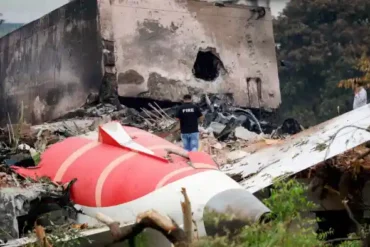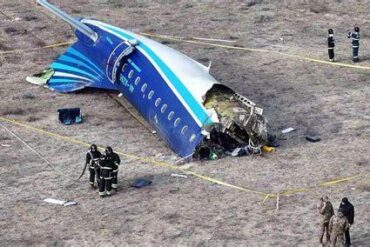
A fatal takeoff accident involving a Bombardier Challenger 600 at Bangor International Airport has reignited long-standing concerns within the aviation safety community about the aircraft’s wing design and its intolerance to ice contamination. The crash occurred during a severe winter storm affecting the northeastern United States, compounding operational risks at a critical phase of flight and placing renewed focus on design characteristics that have surfaced repeatedly in past investigations.
On Sunday evening at approximately 7:45 PM local time, the privately operated Challenger 600 attempted to depart Bangor under heavy snowfall. According to early information from the Federal Aviation Administration, eight people were on board. Only one, a crew member, survived with serious injuries. The aircraft was destroyed in a post-crash fire moments after the failed takeoff attempt, marking one of the most serious business aviation accidents in recent years.
The aircraft, registered as N10KJ, had arrived from Houston just after 6:00 PM for a planned refueling stop before continuing on a transatlantic flight to Paris. The short ground time placed the jet squarely within deteriorating weather conditions driven by a powerful winter system that had already caused widespread disruptions across the region.
Sequence of Events Leading to the Accident
Live air traffic control recordings provide critical context for the environment in which the Challenger departed. Shortly before N10KJ was cleared for takeoff, a scheduled Allegiant Air flight reported aborting its own departure after failing a post-deicing contamination check. The crew described ice adhering aggressively to the aircraft despite treatment, an unusually blunt warning that underscored the severity of conditions on the ramp and runway.
Roughly ten minutes later, the Challenger began its takeoff roll in continuing snowfall. Flight tracking data indicates the jet accelerated to approximately 152 knots before abruptly veering to the right of the runway and coming to rest inverted. Controllers reported the aircraft upside down less than a minute after clearance was issued, and emergency responders arrived rapidly to find the wreckage engulfed in flames.
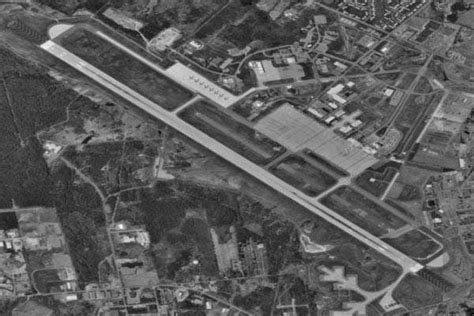
The National Transportation Safety Board confirmed that the aircraft crashed during departure and experienced an intense post-impact fire. Investigators are expected to examine runway conditions, de-icing procedures, flight control inputs, and the aircraft’s aerodynamic performance in the moments leading up to the accident.
Challenger 600: A High-Performance Wing With Narrow Margins
The Challenger 600 series traces its origins to a Bill Lear concept later developed by Canadair and produced by Bombardier beginning in the mid-1980s. Designed for high-altitude cruise efficiency and long-range performance, the aircraft features a clean, swept wing optimized for laminar airflow.
That same wing, however, lacks leading-edge slats or Krueger flaps—devices commonly used to improve low-speed lift and contamination tolerance. As a result, the Challenger’s wing is exceptionally sensitive to surface imperfections. Even minute accumulations of ice on the leading edge can disrupt airflow enough to cause dramatic lift loss.
In winter operations, this vulnerability becomes acute. Investigators and test data have repeatedly shown that as little as 1/64th of an inch of ice, comparable to the thickness of coarse sandpaper, can reduce the wing’s effective angle of attack and provoke an uncommanded stall during rotation.
Rotation Sensitivity and Low-Altitude Risk
Beyond contamination sensitivity, the Challenger 600 is known among pilots for being light in pitch response, meaning it reacts quickly to control inputs during rotation. This characteristic demands precise handling, particularly on icy runways where braking and directional control may already be compromised.
If contaminated wings reduce lift at the moment of rotation, the aircraft may either fail to climb adequately or lift off only to stall almost immediately. At such low altitude, recovery options are virtually nonexistent. While investigators have not suggested improper pilot technique at this stage, any ice present would have magnified the wing’s unforgiving nature.
Winter Storm Fern, which affected much of the region that evening, created exactly the type of conditions most challenging for hard-wing aircraft: wet snow, rapidly accumulating ice, and marginal de-icing effectiveness.
A Pattern Seen in Earlier Challenger Accidents
This accident is not occurring in isolation. Several high-profile Challenger 600-series crashes over the past two decades have involved wing contamination or rotation issues during takeoff, prompting regulatory action and design scrutiny.
In 2000, a Challenger 604 crashed shortly after departing Wichita, with investigators concluding the aircraft stalled following an excessive rotation. Two years later, another 604 was lost at Birmingham in the United Kingdom when frost on the wings reduced the stall margin below safe limits. A 2004 crash in Colorado and a 2007 accident in Kazakhstan similarly pointed to ice accumulation and inadequate anti-ice activation as causal factors.
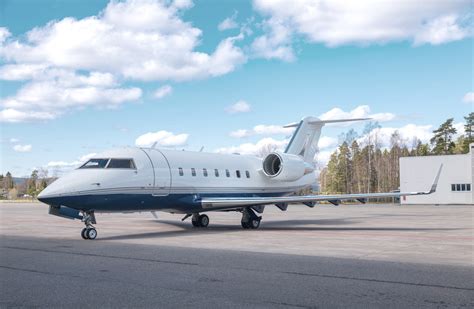
Each investigation reinforced the same conclusion: the Challenger’s wing delivers outstanding cruise efficiency but offers little forgiveness when contaminated.
Regulatory Changes and Operational Mandates
In response to these events, aviation authorities and Bombardier implemented multiple layers of mitigation. The NTSB issued targeted safety alerts for so-called “hard-wing” aircraft, emphasizing that visual inspections alone are insufficient under winter conditions.
For the Challenger 600 family, operators are now required to perform tactile inspections, physically running a gloved hand along the wing’s leading edge to detect ice or frost that may not be visible from the cockpit or cabin windows. This procedural change reflects hard-earned lessons from past accidents and recognizes the aircraft’s narrow aerodynamic margins.
Investigators will be keenly interested in whether such an inspection was conducted during the Bangor stop, particularly given the short turnaround time and intensifying snowfall.
What Investigators Will Examine Next
As wreckage is recovered to a secure facility, investigators will analyze de-icing fluid effectiveness, wing anti-ice system status, and flight data parameters such as pitch rate and acceleration. Weather data, ground handling logs, and crew decision-making will all form part of a comprehensive reconstruction.
While it remains premature to assign causation, the crash has already reignited debate about whether high-performance business jets should be held to even stricter operational limits in severe winter environments, regardless of regulatory compliance.
A Broader Safety Conversation Reopens
More than 1,000 Challenger 600-series aircraft have been built, and thousands of safe flights are conducted every year. Yet history shows that certain design philosophies demand heightened respect for environmental limits. The Bangor crash serves as a stark reminder that aerodynamic efficiency and operational robustness often exist in tension.
As investigators piece together the final moments of N10KJ, the aviation community is once again confronting an uncomfortable truth: when conditions turn hostile, even a thin veneer of ice can overwhelm an aircraft designed with speed and altitude in mind. The Challenger 600’s wing, celebrated for decades, now stands once more at the center of a sobering safety reckoning.