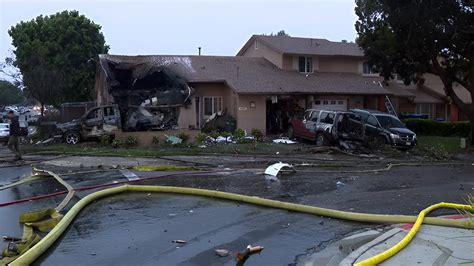
In the early hours of May 22, 2025, tragedy struck the quiet residential neighborhood of Murphy Canyon in San Diego, California, when a Cessna Citation II business jet crashed into a row of military housing. The accident occurred around 3:45 a.m. local time, claiming the lives of all six occupants aboard the aircraft and injuring eight residents on the ground. The crash left behind a trail of wreckage, fire, and shattered homes, marking one of the deadliest private jet incidents in recent San Diego history.
The aircraft, a 1985-built Cessna 550 Citation II (tail number N666DS), was operated by Daviator LLC. It had originated from Teterboro Airport, New Jersey, making a refueling stop in Wichita, Kansas, before heading for its final destination: Montgomery-Gibbs Executive Airport, just two miles from the crash site.
A Deadly Descent: Collision with Power Lines and Devastation
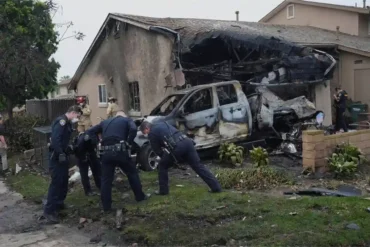
According to the Federal Aviation Administration (FAA), the pilot made a standard final approach call to Runway 28R at Montgomery-Gibbs shortly before the crash. However, at approximately three miles from the airport, the jet struck high-voltage power lines. Seconds later, it plummeted into Murphy Canyon, igniting fires, damaging ten homes, and destroying one residence entirely. Several vehicles were also engulfed in flames, and jet fuel covered the crash zone.
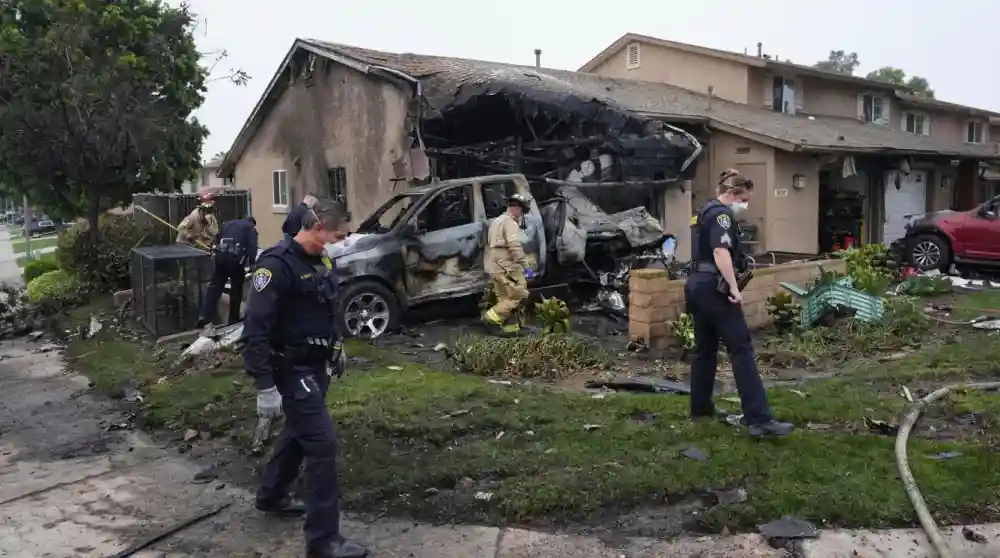
The fire and explosion prompted an immediate large-scale emergency response. Over 50 police officers, hazmat teams, and firefighters arrived within minutes. Residents from the area, many of whom were part of military families, were evacuated to temporary shelters, including Miller and Hancock Elementary Schools.
Victims Aboard: Music Industry and Creative Arts Community Mourn
The deceased included several individuals tied to the music and entertainment industries, most notably:
- Dave Shapiro, the aircraft’s pilot and owner, who was also the co-founder of Sound Talent Group.
- Emma Huke and Kendall Fortner, employees of Sound Talent Group.
- Daniel Williams, former drummer for the Christian metalcore band The Devil Wears Prada.
- Dominic Damian, a software engineer.
- Celina Kenyon, a photographer known for her work with artists and live events.
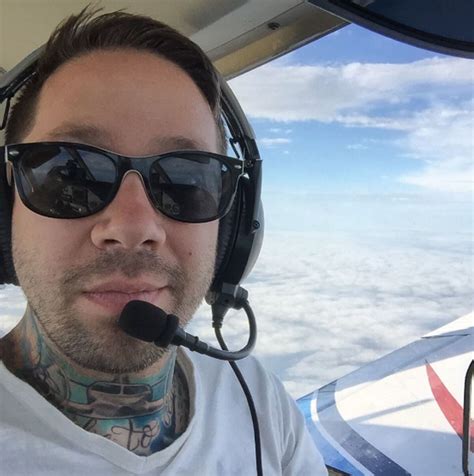
Their deaths sent shockwaves through the artistic community. Williams, in particular, had posted several Instagram stories shortly before the crash, highlighting the excitement of travel, unaware of the tragedy looming ahead.
Multiple Failures Converge: A Perfect Storm of Catastrophe
As investigations unfolded, the National Transportation Safety Board (NTSB) and FAA uncovered a confluence of failures and risky decisions that set the stage for disaster. Each factor alone may not have proven fatal, but together they created a cascade of vulnerabilities:
Severe Weather Conditions
The night skies over San Diego were blanketed in thick fog, with visibility reduced to less than 500 meters. Meteorological data confirmed low cloud cover and mist, rendering visual navigation extremely hazardous. Despite this, under Part 91 private flight regulations, pilots can initiate instrument approaches even if reported weather is below minimums, provided they do not descend without visual references.
Critical Equipment Failures at the Airport
At Montgomery-Gibbs Executive Airport, two crucial systems were inoperative at the time:
- The Automated Surface Observing System (ASOS), responsible for transmitting live weather data, had gone offline due to a power surge roughly 30 minutes prior to the crash.
- The Precision Approach Path Indicator (PAPI) lights on Runway 14 were also reported faulty. These lights provide essential glide slope guidance during landings in low visibility.
While the pilot was aware of these outages, NOTAMs (Notices to Air Missions) had been issued, and air traffic controllers also communicated the limitations. Nevertheless, Shapiro elected to continue the approach.
Questionable Human Decision-Making
Audio transcripts between the aircraft and air traffic control revealed a chilling final exchange. When informed of the conditions and system failures, Shapiro reportedly replied, “Sounds rough, but we’ll give it a try.” He made no attempt to initiate a go-around or divert to an alternate airport, even though such a discussion had occurred earlier with the tower.
The NTSB preliminary report confirmed that no alternate airport was selected, despite awareness of the weather and system issues. Investigators also noted that no flight plan requirement existed under Part 91, leaving more discretion in the pilot’s hands—a dangerous loophole under such challenging conditions.
Devastation on the Ground: Military Families Displaced
The impact extended well beyond the aircraft. The Murphy Canyon neighborhood is composed largely of military housing. At least eight people on the ground were injured—five members of a single household were hospitalized for smoke inhalation, and one resident sustained injuries while escaping through a window. Two others were treated at the scene.
The crash resulted in extensive property loss:
- 10 homes damaged
- 1 house completely destroyed
- 6 vehicles ruined by fire or impact
- Dozens of residents temporarily displaced
Aided by community services, the Red Cross, and military support agencies, displaced families received food, shelter, and counseling support.
A Challenging Investigation: Scarce Data and Burned Evidence
Investigators faced major obstacles in reconstructing the final moments of the flight. Unlike commercial airliners, the 1985 Cessna Citation II was not required to carry a flight data recorder. However, the NTSB was able to retrieve a Cockpit Voice Recorder (CVR) and Full Authority Digital Engine Control (FADEC) units from the wreckage.
The NTSB deployed eight investigators, joined by representatives from the aircraft and engine manufacturers. Recovery teams moved wreckage to a secure site on May 24 for further analysis. The lack of complete telemetry data made the investigation heavily reliant on physical evidence, CVR transcripts, and tower communication logs.
Regulatory Debate Rekindled: Should Business Jets Follow Stricter Rules?
The San Diego tragedy has reignited debate over private aviation regulations. Part 91 flights, which govern private, non-commercial operations, allow for a greater degree of pilot discretion—arguably too much when lives are at stake.
In contrast, Part 135 (charter operations) and Part 121 (airlines) require stricter planning, mandatory alternate airports, and equipment standards, including flight recorders and backup systems. The fact that Shapiro was flying for business purposes, carrying employees and professionals, blurs the line between private and commercial operations.
Critics argue that reclassifying certain business-related flights under stricter rules could prevent future tragedies. Others maintain that existing rules already grant flexibility needed for unique missions and that better pilot training is the key.
A Sobering Reminder of Vulnerability
The 2025 San Diego crash serves as a haunting reminder of the unforgiving nature of aviation, particularly under marginal conditions. It reveals how quickly cascading failures—weather, equipment, and judgment—can lead to irreversible outcomes.
For the families of the six victims, for the residents of Murphy Canyon, and for the broader aviation community, the incident is a call for deeper scrutiny, better oversight, and a renewed commitment to safety above convenience. The skies over San Diego may have returned to calm, but the lessons from that foggy morning in May must continue to resonate.