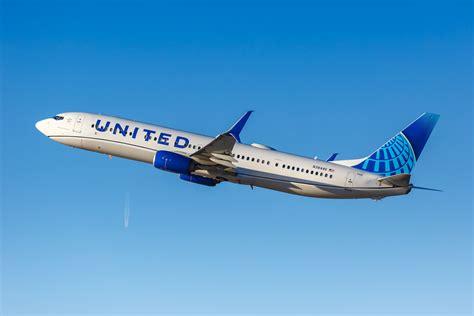
The story of the Boeing 737-900 is not one of catastrophic failure, but rather of strategic misalignment, technical compromise, and market misreading. In a family of aircraft that redefined short- and medium-haul aviation, this particular variant stands out—not for innovation or dominance, but for its inability to carve out a meaningful niche.
To understand why, it is essential to look beyond raw sales numbers and examine the design philosophy, competitive landscape, and operational limitations that ultimately shaped its fate.
The Legacy of the Boeing 737 and the Rise of the Next Generation
The journey begins with the iconic Boeing 737 program, which first entered service in 1968 and quickly became a cornerstone of global aviation. Over decades, the aircraft evolved through multiple generations, culminating in the highly successful 737 Next Generation (737NG) family.
The 737NG was Boeing’s answer to the rapidly rising Airbus A320 family. With improved aerodynamics, modern avionics, and more efficient engines, the NG series was designed to match or exceed Airbus across key performance metrics.
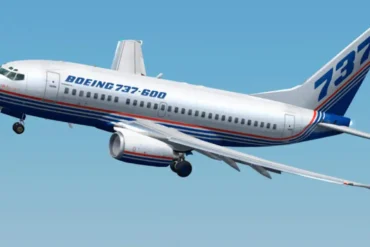
Within this lineup, the 737-800 emerged as a runaway success, dominating airline fleets worldwide. The smaller 737-700 also held its own. But at the edges of the family—the smallest and largest variants—performance faltered. The 737-600 and 737-900 both struggled, albeit for different reasons.
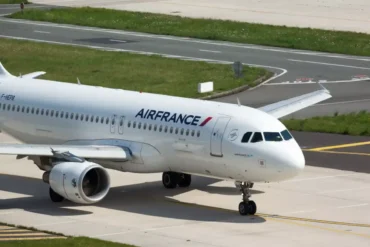
The 737-900, in particular, was meant to challenge the growing dominance of the Airbus A321. Instead, it became a case study in how incremental design can fall short in a rapidly evolving market.
A Stretched Design With Limited Vision
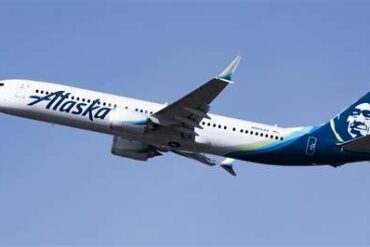
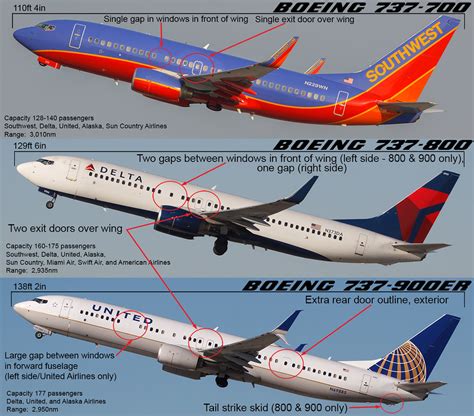
Introduced in 2001, the Boeing 737-900 was essentially a stretched version of the 737-800. The goal was straightforward: increase passenger capacity and reduce per-seat costs, thereby appealing to airlines seeking higher efficiency on busy routes.
However, this approach came with a critical limitation. While the fuselage was extended, the aircraft retained the same exit configuration as the 737-800. This seemingly minor decision had enormous consequences.
Because of safety regulations, the number of passengers an aircraft can carry is tied directly to the number and placement of emergency exits. As a result, the 737-900 was capped at 189 passengers—the exact same limit as the smaller 737-800.
This meant that airlines gained virtually no additional seating capacity, despite operating a larger aircraft. For low-cost carriers, where every seat translates directly into revenue, this was a dealbreaker.
The Capacity Paradox That Undermined Its Value
In theory, the 737-900 should have delivered lower per-seat operating costs. In practice, it failed to do so because it could not carry more passengers than its predecessor.
This created a paradox:
- Airlines were flying a larger, heavier aircraft
- But without the revenue advantage of additional seats
- While still incurring higher operational and acquisition costs
For carriers already maximizing the 737-800’s capacity—especially budget airlines—there was simply no compelling reason to upgrade.
Meanwhile, the competing Airbus A321 offered genuine capacity growth, often exceeding 200 passengers depending on configuration. This made it a far more attractive option for airlines looking to scale up.
Range Limitations and Operational Inflexibility
The problems didn’t stop at capacity. The 737-900 also suffered from restricted range and payload flexibility.
Despite its larger size, the aircraft retained the same fuel capacity and maximum takeoff weight (MTOW) as the 737-800. This meant that any increase in passenger load came at the expense of range.
In practical terms, airlines faced a trade-off:
- Fill more seats, but fly shorter distances
- Or maintain range, but limit passenger load
This lack of flexibility made the aircraft less appealing for route planners, who increasingly valued versatility in network design.
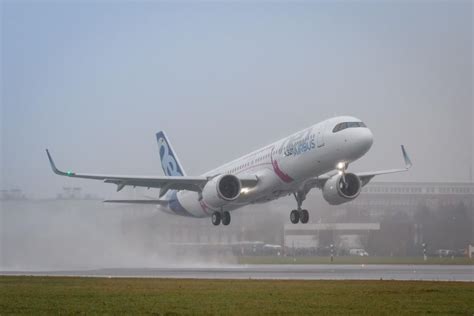
In contrast, Airbus continuously improved the A321, enhancing its range and efficiency. Over time, the A321 evolved into a highly capable aircraft capable of transcontinental and even long-haul narrowbody operations.
Market Timing and Strategic Misjudgment
Another key factor in the 737-900’s underperformance was market timing.
When the aircraft was introduced, demand for larger narrowbody jets was still developing. The middle-of-the-market segment—between traditional narrowbodies and widebodies—was not yet fully mature.
At the same time, Boeing’s own Boeing 757-200 was still in service, offering superior range and capacity. Airlines that needed more capability often chose the 757 instead.
By the time the 757 was discontinued in 2004, the 737-900 was expected to fill the gap. But it was already clear that it lacked the performance needed to fully replace the 757.
This left Boeing in a difficult position:
- The 737-900 was too limited to replace the 757
- Yet not competitive enough to challenge the A321
Sales Performance: A Stark Reality Check
The numbers tell a compelling story. The Boeing 737-900 recorded just 52 orders, making it one of the least successful variants in the entire 737 family.
By comparison:
- The Airbus A321 sold over 1,700 units
- The Boeing 757-200 sold over 900 units
- Even within its own family, the 737-800 vastly outperformed it
This disparity highlights a crucial point: airlines did not see sufficient value in the 737-900’s offering.
The 737-900ER: A Necessary Correction
Recognizing the shortcomings, Boeing introduced the 737-900ER (Extended Range) in 2007. This updated version addressed many of the original model’s flaws.
Key improvements included:
- Additional emergency exits, increasing capacity to over 200 passengers
- Higher MTOW, enabling greater range and payload flexibility
- Optional fuel tanks for extended operations
- Improved aerodynamics with winglets
These changes transformed the aircraft into a far more competitive platform. The 737-900ER went on to sell over 500 units, a significant improvement over its predecessor.
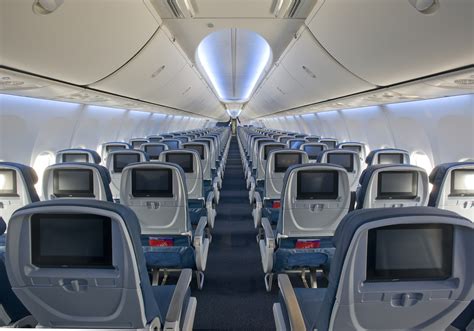
However, even this enhanced version struggled to match the efficiency of the A321. Despite burning less fuel overall, it often had higher fuel consumption per seat, due to its smaller size.
This meant that the A321 continued to dominate in terms of unit economics, especially on high-demand routes.
Why the Airbus A321 Won the Battle
The success of the A321 was not accidental. Airbus pursued a strategy of continuous improvement, steadily enhancing the aircraft’s capabilities over time.
Key advantages of the A321 included:
- Higher passenger capacity, offering better revenue potential
- Greater range, enabling more route options
- Ongoing upgrades, including the A321neo with improved fuel efficiency
This approach allowed Airbus to adapt to evolving airline needs, while Boeing’s 737 platform faced structural limitations due to its original design.
The result was a widening gap between the two aircraft, particularly in the upper end of the narrowbody market.
The Broader Lesson: Limits of Incremental Design
The failure of the 737-900 underscores a broader lesson in aerospace engineering: incremental upgrades can only go so far.
The 737 platform, originally designed in the 1960s, imposed constraints that became increasingly difficult to overcome. Stretching the fuselage without fundamentally redesigning the aircraft led to compromises that limited performance and competitiveness.
In contrast, Airbus benefited from a more modern baseline design, allowing for greater scalability and adaptability.
The Path Forward: Enter the 737 MAX 10
Boeing’s latest attempt to address this segment is the Boeing 737 MAX 10. This aircraft represents a further stretch of the 737 platform, designed to directly compete with the A321neo.
The MAX 10 promises:
- Lower per-seat costs
- Increased capacity
- Improved efficiency with new-generation engines
Despite certification delays, it has already secured over 1,000 orders, indicating strong market interest.

Whether it can truly challenge the A321neo remains to be seen. But one thing is clear: Boeing has learned from the shortcomings of the 737-900.
The Bottom Line: A Missed Opportunity, Not a Disaster
The Boeing 737-900 was not a failure in the traditional sense—it was safe, reliable, and operationally sound. But in the fiercely competitive world of commercial aviation, being adequate is not enough.
Its downfall stemmed from a combination of:
- Limited capacity gains
- Restricted range and flexibility
- Poor alignment with market needs
- Strong competition from a better-positioned rival
In the end, the 737-900 became a transitional aircraft, bridging the gap between earlier designs and more capable successors. It served its purpose, but never achieved the prominence Boeing had envisioned.
And in aviation, where margins are thin and competition is relentless, that’s often the difference between success and obscurity.