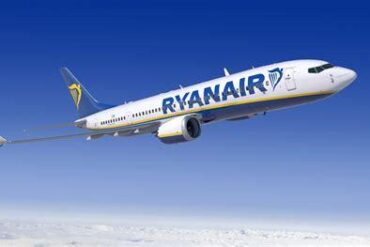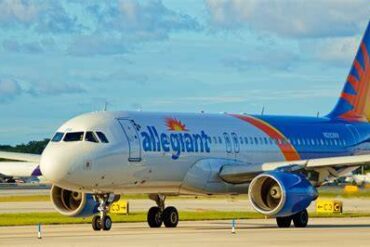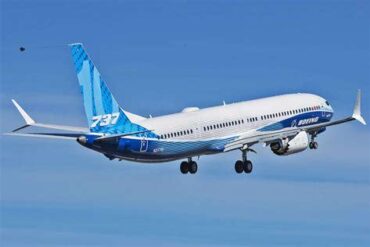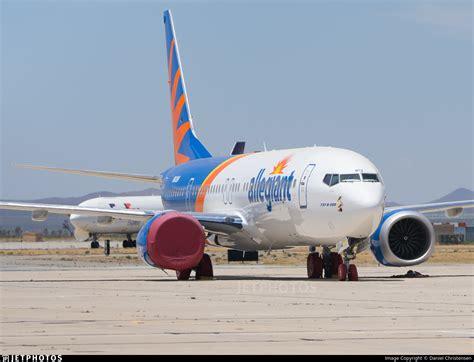
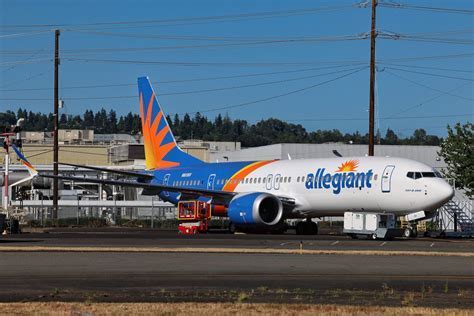
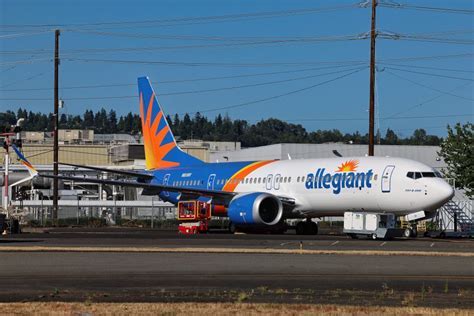
Allegiant Air, a key player in the ultra-low-cost carrier (ULCC) market, has swiftly emerged as a major operator of the Boeing 737 MAX 8-200, a high-density variant of the MAX 8. In less than a year since taking delivery of its first MAX aircraft in September 2024, Allegiant has already amassed a fleet of 12 Boeing 737 MAX 8200s — placing it second only to Ryanair globally in operating this type. These aircraft are optimized for maximum efficiency, carrying up to 190 passengers in a single-class, economy-only configuration, slightly below the MAX 8200’s certified limit of 200 due to Allegiant’s more spacious interior setup.
Allegiant’s Deployment Strategy: Florida as the Epicenter
Allegiant’s focus on Florida-centric routes is no accident. Its operational strategy revolves around funneling large volumes of leisure travelers between underserved secondary airports and major Florida destinations. Notably, Orlando Sanford (SFB) and St. Pete–Clearwater (PIE) function as dominant operational bases, with the MAX 8200 fleet deployed heavily from these hubs to connect with regional airports across the Midwest and East Coast. The high-density seating and low trip cost of the MAX 8200 make it ideal for Allegiant’s business model, which thrives on high-capacity, point-to-point leisure travel.
Top Route: Orlando Sanford – Harrisburg (MDT)
The crown jewel in Allegiant’s current MAX 8200 deployment is the Orlando Sanford to Harrisburg route. With 26 scheduled roundtrip flights in June 2025, Allegiant offers a staggering 4,940 seats on this route alone. The pairing covers 827 miles, representing a sweet spot for the MAX 8200’s operational efficiency. This corridor connects Florida’s theme park corridor with the capital of Pennsylvania — a region dense with family travelers and seasonal snowbirds.
Orlando Sanford – Lexington (LEX): Dual-Route Saturation
Lexington’s Blue Grass Airport, a rising regional hub in Kentucky, appears twice in Allegiant’s MAX 8200 route map. The Orlando Sanford to Lexington connection ranks second in frequency, with 24 roundtrip flights and 4,560 seats. The other link, from St. Pete–Clearwater to Lexington, includes 18 flights and 3,420 seats, revealing the importance of Kentucky as a dual-market for the carrier. Blue Grass Airport’s 16% year-over-year growth in 2024 to 1.57 million passengers underscores its growing demand for leisure connectivity.
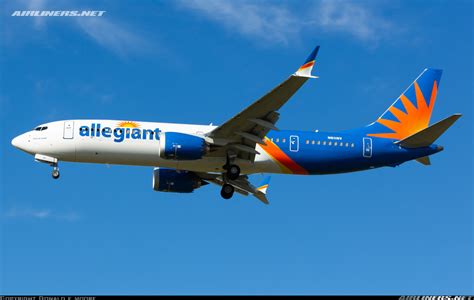
Orlando Sanford – Grand Rapids (GRR): The Longest Haul
Clocking in at just over 1,000 miles, Allegiant’s route from Orlando Sanford to Grand Rapids is the longest MAX 8200-served sector in the current network. The airline has scheduled 23 roundtrip flights in June, translating to 4,370 seats in total. Grand Rapids’ Gerald R. Ford International Airport handled over 4.1 million passengers in 2024, a record figure driven by increased leisure and business traffic. Allegiant is the second-largest carrier at GRR and connects the city to 18 destinations, nine of which are in Florida.
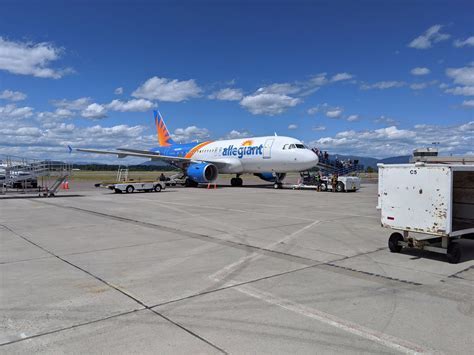
Orlando Sanford – Flint Bishop (FNT): Michigan’s Leisure Artery
At nearly 988 miles, the Flint Bishop to Orlando Sanford connection remains a critical route for Allegiant, which has earmarked 18 flights and 3,420 seats for June operations. Flint, now a focus city for Allegiant, benefits from a dozen nonstop routes served almost exclusively by the ULCC. The only competition comes from American and United, both offering limited connections to Chicago O’Hare. Flint Bishop has proven resilient, ranking as Michigan’s third-busiest airport, boosted by Allegiant’s investment in reliable sun-bound service.
St. Pete–Clearwater – Lexington (LEX): Florida’s Northern Corridor
St. Pete–Clearwater International, one of Allegiant’s six Florida operating bases, remains vital in feeding regional cities like Lexington. The 706-mile sector between PIE and LEX will also see 18 MAX 8200 flights, the same as its Sanford counterpart. The total seat count — 3,420 — mirrors the Orlando route, suggesting consistent demand across both corridors. Florida continues to lure retirees, vacationers, and VFR (visiting friends and relatives) travelers from Kentucky, maintaining this corridor’s relevance.
St. Pete–Clearwater – Springfield-Branson National (SGF)
Missouri’s Springfield-Branson National Airport reached a new milestone in 2024, welcoming over 1.42 million passengers, a jump from its previous year’s 1.29 million. Allegiant’s role is crucial here, operating 17 MAX 8200 flights between PIE and SGF — an 895-mile route that offers 3,230 seats this June. Springfield serves as a gateway to the Branson leisure market and Ozarks region, which remain magnets for seasonal travelers.
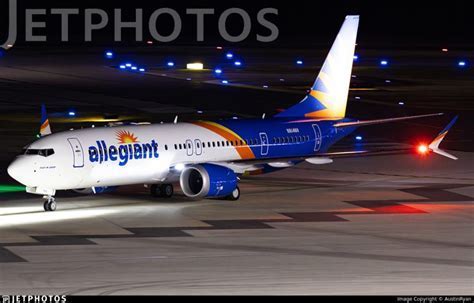
St. Pete–Clearwater – Concord-Padgett Regional (USA): The Underdog Connector
Located in North Carolina, Concord-Padgett Regional Airport is a small but strategic location for Allegiant. In June 2025, 17 flights are planned between PIE and Concord-Padgett, offering 3,230 seats. This route was the busiest at the Concord airport in 2024, with over 30,000 passengers. Allegiant holds a dominant 70%+ market share, further expected to rise due to Avelo Airlines’ route cuts. Allegiant’s sustained investment in the airport — over $50 million — underscores its long-term strategy for underserved regional airports.
St. Pete–Clearwater – Chattanooga (CHA): Low-Key, High-Impact
The Tennessee connection from PIE to Chattanooga mirrors the flight count and seat capacity of the Concord route — 17 flights and 3,230 seats in June. Chattanooga Airport, with fewer than a dozen domestic routes, saw a modest yet record-breaking 1.1 million passengers in 2024. Allegiant taps into this niche market by offering direct Florida access, bypassing congested hubs like Atlanta and Charlotte.
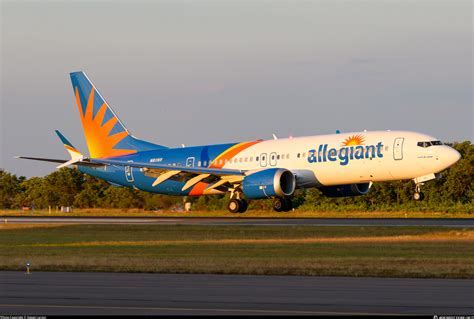
A Fleet Built for Scale: Boeing 737 MAX 8-200
The Boeing 737 MAX 8-200 variant is key to Allegiant’s growth trajectory. Its high-density configuration, lower per-seat trip cost, and fuel efficiency allow the airline to serve thinner, leisure-heavy markets profitably. Allegiant’s aircraft are equipped with:
- 190 all-economy seats
- Allegiant Extra: upgraded seating in the front three rows
- 16 Legroom+ seats: offering increased pitch
Compared to Ryanair’s configuration of 197 seats (with lavatory reconfigurations), Allegiant’s MAX 8200 layout offers slightly more space without sacrificing efficiency — a subtle yet strategic move for the American leisure market.
What Lies Ahead: More MAX, More Markets
Allegiant’s confidence in the MAX platform is only growing. While it currently only operates the MAX 8200, the airline has plans to incorporate the Boeing 737 MAX 7 once certification clears. This will allow for greater flexibility on shorter and lower-volume routes. With a keen focus on point-to-point routes, underserved regional airports, and Florida-bound leisure travelers, Allegiant is crafting a network strategy that thrives on volume, simplicity, and low cost.
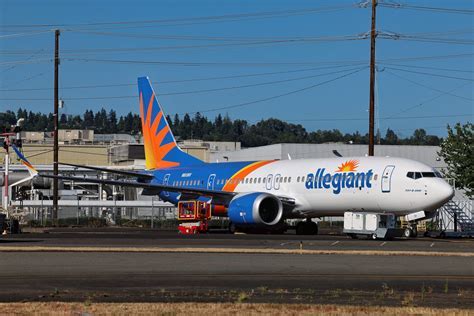
In less than a year, Allegiant has leveraged the MAX 8200 to scale up operations at lightning speed, reaching markets that were previously cost-prohibitive to serve. By aligning its high-density jets with data-backed regional demand, the airline is redefining low-cost travel between America’s secondary cities and sunbelt tourism magnets. The Boeing 737 MAX 8-200 is not just a fleet upgrade — it is the spine of Allegiant’s next era of national expansion.