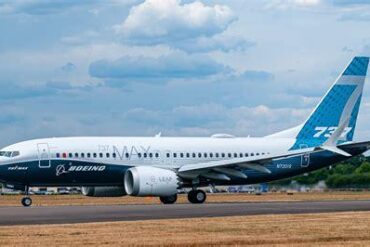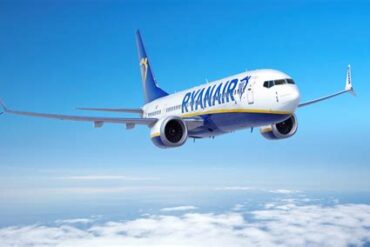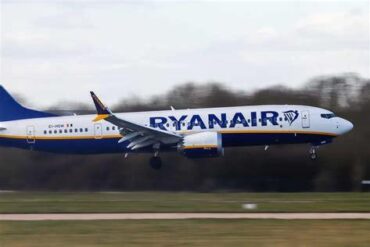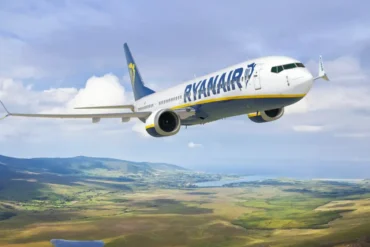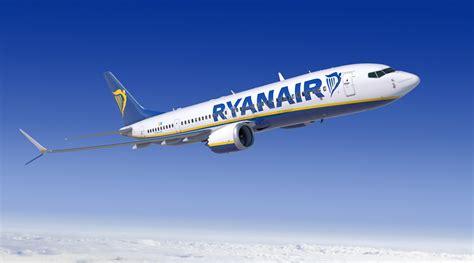
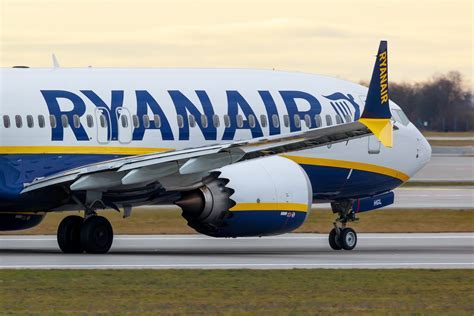
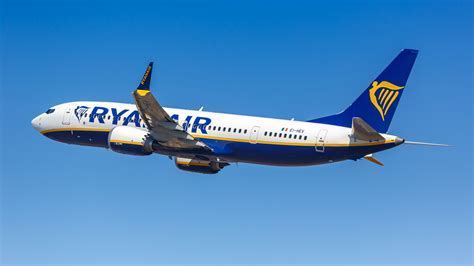
Ryanair, Europe’s largest low-cost carrier, is aggressively deploying its Boeing 737 MAX 8-200 aircraft—nicknamed the “Gamechanger”—across its expansive network this summer. With over 119 units in active service and more on order, these high-density jets are crucial to Ryanair’s strategy of cutting fuel costs, increasing passenger capacity, and dominating European leisure routes.
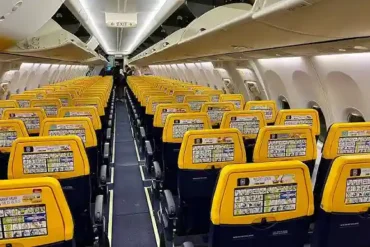
Designed to seat 197 passengers, the 737 MAX 8-200 delivers up to 4% more seating capacity and 16% lower fuel consumption compared to the older 737-800s, making it ideal for both short island hops and extended Mediterranean routes. In July 2025 alone, Ryanair is set to operate 30,177 MAX 8-200 flights, carrying nearly 5.9 million passengers and producing 5.7 billion available seat miles (ASMs).
Longest Ryanair MAX 8-200 Routes Target Sunseekers
Ryanair’s MAX 8-200s will stretch their wings this summer with some of the airline’s longest intra-European routes. The Canary Islands dominate the list, a testament to their popularity as year-round sun destinations.
Leading the pack is the 2,437-mile route from Kraków, Poland to Tenerife South, followed closely by flights from Kraków to Gran Canaria (2,395 miles), and Budapest to Tenerife South (2,343 miles). These lengthy sectors test the MAX 8-200’s range capabilities while delivering affordable access to remote vacation spots.
Further long-haul routes include:
- Kraków to Fuerteventura (2,308 miles)
- Budapest to Gran Canaria (2,297 miles)
- Dublin to Paphos, Cyprus (2,278 miles)
- Paris-Beauvais to Amman, Jordan (2,134 miles), the only destination outside Europe among the longest MAX routes.
These ultra-long European flights show the reach of the MAX 8-200, offering Ryanair flexibility to serve diverse holiday markets from Central and Eastern Europe.
Busiest Routes: Irish Core Dominates
Despite the impressive range capabilities, the MAX 8-200 will mostly be found on high-density, high-frequency European routes. In July, the busiest route is Dublin to Faro, Portugal, with 103 flights each way, translating to more than 20,000 seats. The route reflects strong demand between Ireland and the Algarve’s sunny coastline.
Other high-frequency MAX routes include:
- Dublin to Málaga, Spain (83 flights each way)
- Dublin to Edinburgh, Scotland (69 flights each way)
- Cologne to Palma de Mallorca, Spain (61 flights)
- Lanzarote to Madrid (58 flights)
Ryanair’s strategy here is clear: deploy the Gamechanger where dense passenger flows and airport slot limitations make increased seat counts highly profitable.
Shortest Flights: Fast Hops Across Islands and Seas
Not every MAX 8-200 flight stretches its wings. The aircraft is also used for quick regional hops, particularly between Mediterranean islands and nearby European mainland cities. The shortest scheduled route is from Alicante to Ibiza, just 112 miles, with 35 flights set to run this July.
Following closely are:
- Malta to Catania (Sicily) – 116 miles
- Valencia to Palma de Mallorca – 125 miles
- Dublin to Liverpool – 140 miles
- Dublin to Manchester – 164 miles
These short-haul flights serve island residents and sun-chasing tourists alike. Even with such limited distances, the MAX 8-200 proves economically viable thanks to its reduced fuel burn and high passenger count.
Gamechanger’s Performance Advantage
Ryanair’s adoption of the 737 MAX 8-200 is rooted in efficiency. The aircraft’s LEAP-1B engines, advanced winglets, and lighter airframe help Ryanair cut operational costs without sacrificing capacity. Compared to the 737 NGs, the Gamechanger is 40% quieter, making it more palatable for noise-sensitive airports.
In the low-cost carrier market, where margins are thin and competition is fierce, these advantages are crucial. By squeezing in 197 seats and maintaining low per-seat costs, Ryanair solidifies its grip on Europe’s budget-conscious flying public.
Moreover, Ryanair’s environmental profile improves thanks to lower carbon emissions per passenger—a growing priority as European regulators tighten environmental standards on air travel.
Strategic Hub Deployments Across Europe
Ryanair operates under a point-to-point model, avoiding complex hub-and-spoke systems. Yet, certain airports like Dublin, London Stansted, and Milan Bergamo serve as de facto hubs due to the sheer volume of flights and passenger connections.
The MAX 8-200 is heavily utilized on routes connecting these airports to high-demand destinations in Spain, Italy, Portugal, Germany, and Eastern Europe. It also serves select longer-haul operations to Israel, Jordan, and North Africa, including Morocco.
Ryanair’s growth strategy hinges on expanding in non-Schengen and peripheral markets while maintaining dominance in intra-European travel. The MAX 8-200 enables that by bridging longer distances and slot-constrained airports with higher density traffic.
Fleet Expansion Plans and Competitive Positioning
The airline has placed a substantial order for 210 Boeing 737-8200 aircraft, valued at $22 billion, which will continue to roll out over the next several years. This summer’s operations will be a stress test of sorts for the Gamechanger’s role in Ryanair’s future.
Looking further ahead, Ryanair has signed up for 300 Boeing 737 MAX 10s, pending FAA certification. These jets are expected to be even more efficient, offering 21% more capacity, 20% less fuel burn, and 50% lower noise emissions than current-generation aircraft.
While Ryanair has toyed with the idea of ordering China’s COMAC C919, political and certification hurdles make that unlikely in the short term. Regulatory concerns from both the EU and U.S. lawmakers signal that Ryanair will remain a loyal Boeing customer—at least for now.
Summer Travel Trends Show Demand for Leisure Islands
The bulk of MAX 8-200 flights in July 2025 reflects broader European travel patterns: an overwhelming demand for leisure travel to sun-soaked island destinations.
The Canary Islands, Balearic Islands, Cyprus, and Southern Mediterranean all appear consistently among the longest and most frequent destinations. Even shorter hops to Ibiza and Mallorca are high-volume routes, underscoring their importance.
The aircraft’s mix of range, capacity, and cost-efficiency is helping Ryanair tap into these markets with unmatched scale. It ensures the airline remains a dominant player during Europe’s peak summer travel season.
Conclusion: The Gamechanger Is Here to Stay
Ryanair’s deployment of the Boeing 737 MAX 8-200 this summer is more than just a fleet update—it’s a strategic cornerstone in its ongoing dominance of European skies. Whether flying from Kraków to Tenerife or shuttling passengers between Dublin and Faro, the MAX 8-200’s blend of efficiency, capacity, and reliability makes it indispensable.
As air travel rebounds and leisure demand remains strong, Ryanair’s ability to offer ultra-low fares while preserving margins will largely rest on the back of these Gamechanger aircraft. With expansion plans firmly underway and a relentless push toward operational optimization, Ryanair is positioning itself not just as a low-cost leader, but as a carrier capable of reshaping what high-volume European air travel looks like in the post-pandemic era.