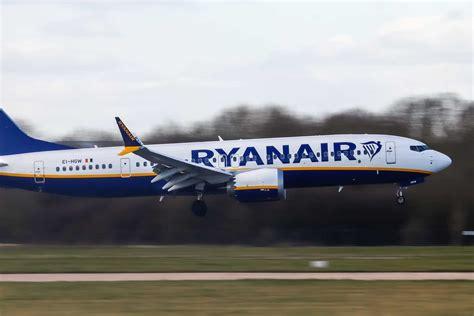
Ryanair’s 2026 network plan is not just about adding routes or boosting passenger numbers—it is about scale, precision, and aggressive cost engineering built around one aircraft type: the Boeing 737 MAX 8-200. As Europe’s largest ultra-low-cost carrier prepares to operate what amounts to one of the most concentrated narrowbody deployments in aviation history, the numbers tell a compelling story. In 2026 alone, Ryanair is scheduled to operate 350,411 flights with the 737 MAX 8-200, offering 69,030,967 seats across its European network.
This is not a minor fleet adjustment. It represents a structural transformation of how Ryanair flies, how it prices, and how it competes. By early 2026, the airline’s delivery program reaches a critical milestone, with 206 Boeing 737-8-200 aircraft already in service by the end of 2025 and the final four expected by February 2026. The timing aligns perfectly with the summer schedule ramp-up and a significant route expansion plan.
The implications are massive. Nearly 960 daily flights will be operated by this variant alone. That figure positions the MAX 8-200 not as a supplemental aircraft but as the backbone of Ryanair’s growth engine.
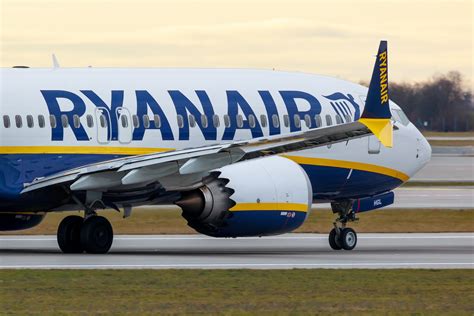
The Scale Of Ryanair’s 737 MAX 8-200 Operation In 2026
When analyzing 350,411 annual flights, the first reality that emerges is operational dominance. Divide that number by 365 days, and the result is approximately 960 flights per day operated exclusively by the MAX 8-200. For context, that is equivalent to launching a fully loaded narrowbody roughly every 90 seconds across the day.
Each aircraft in the fleet is configured with 197 seats, compared to the 189-seat configuration of Ryanair’s older Boeing 737-800 aircraft. Multiply 197 seats by 350,411 departures, and the seat math precisely confirms the projected 69 million available seats.
This scale does more than inflate passenger totals. It fundamentally lowers per-seat operating costs. Crew expenses, airport handling charges, maintenance overhead, and ownership costs are distributed across eight additional passengers per flight compared to the 737-800. On thin margins, those eight seats are not incremental—they are decisive.
The deployment also reflects delivery timing. Earlier-than-expected Boeing deliveries have supported stronger 2026 growth projections. Ryanair has publicly linked aircraft availability directly to capacity increases and traffic growth forecasts, making the MAX 8-200 central to its annual performance outlook.
What Makes The Boeing 737 MAX 8-200 Different?
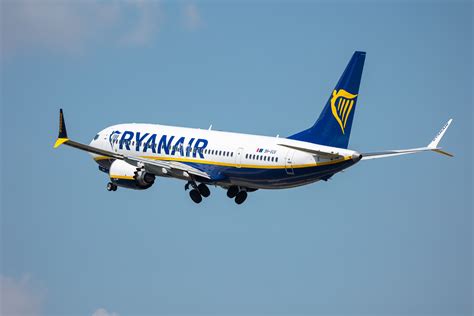
The Boeing 737 MAX 8-200, often branded by Ryanair as the “Gamechanger,” is a high-density evolution of the standard 737 MAX 8. Designed specifically for low-cost carriers, it emphasizes maximum seat capacity without stepping into a larger aircraft category.
Technically, the aircraft retains the core MAX platform advantages:
- CFM LEAP-1B engines delivering improved fuel efficiency
- Enhanced aerodynamics with advanced winglets
- Boeing Sky Interior for a modern cabin environment
- Full operational commonality with other 737 variants
What differentiates the 8-200 is its certification for up to 200 seats. Ryanair configures it at 197 seats to meet regulatory and operational requirements while maximizing revenue potential.
From the outside, it looks nearly identical to other 737 MAX aircraft. Operationally, it integrates seamlessly into Ryanair’s single-type philosophy. That commonality means no major retraining programs, no new maintenance ecosystems, and no complexity penalties.
Instead, the aircraft delivers lower fuel burn per seat, improved environmental performance, and stronger economics on both short-haul and medium-length European routes.
Where Will 350,000+ Flights Be Concentrated?
The deployment pattern reveals a dual strategy: dense trunk routes and longer leisure corridors.
The busiest routes for the MAX 8-200 in 2026 are heavily concentrated in the British Isles and Ireland. High-frequency services include:
- Dublin (DUB) – London Gatwick (LGW): 1,237 flights
- Dublin (DUB) – London Stansted (STN): 1,203 flights
- Dublin (DUB) – Birmingham (BHX): 891 flights
- Dublin (DUB) – Manchester (MAN): 865 flights
These are classic short-haul, high-demand corridors where adding seats per movement improves profitability without increasing airport slots. In slot-constrained markets such as London, adding frequencies is often impossible. Increasing capacity per flight becomes the most efficient growth lever available.
Across the ten busiest MAX 8-200 routes, approximately 24,848 flights will operate in 2026, delivering nearly 4.8 million seats. That accounts for roughly 7% of total MAX 8-200 deployment—demonstrating how even a small portion of the network carries significant volume.
Yet the aircraft is not limited to short sectors. It also operates longer leisure routes linking the UK and Ireland to Spanish resorts, Mediterranean destinations, and Atlantic island markets. These flights may operate at lower frequency, but they generate high Available Seat Miles (ASMs), enhancing revenue potential.
The Strategic Purpose: Cost Dilution At Industrial Scale
Ryanair’s business model revolves around one principle: unit cost leadership. The MAX 8-200 amplifies that advantage.
Cost dilution occurs when fixed expenses remain constant but are spread across more passengers. Pilots, cabin crew, airport ground handling, and aircraft ownership costs do not meaningfully increase between 189 and 197 seats. Yet ticket inventory does.
Fuel efficiency is another lever. Even if fuel burn per flight improves modestly compared to older 737-800 aircraft, spreading consumption over more seats reduces per-passenger fuel cost. In a region where environmental charges and carbon costs are increasingly relevant, lower emissions per seat strengthen long-term competitiveness.
Slot constraints further magnify the value of this aircraft. European airports are notoriously congested. Additional movements are difficult to secure. The MAX 8-200 enables Ryanair to grow passenger numbers without increasing departure counts, effectively extracting more value from each slot.
This is operational leverage at its cleanest.
106 New Routes And Network Expansion Momentum
Ryanair has flagged 106 new routes for summer 2026, directly tied to aircraft availability. Delivery timing dictates schedule ambition. Without the MAX 8-200 fleet expansion, those route launches would be constrained.
The link between fleet growth and traffic forecasts is explicit. Earlier aircraft deliveries have supported stronger 2026 traffic growth projections. In ultra-low-cost aviation, fleet availability is destiny. Every delayed delivery translates into postponed capacity and revenue.
The MAX 8-200 gives Ryanair the flexibility to rotate aircraft into peak summer flying while maintaining high utilization rates. European aviation is highly seasonal. Summer months generate disproportionate revenue. Having the fleet fully delivered by early 2026 ensures maximum deployment during the most profitable period of the year.
Daily Operational Impact: 189,000 Seats Per Day
Operating nearly 960 flights daily equates to approximately 189,000 seats offered every day by this variant alone. That volume would make the MAX 8-200 operation comparable to a mid-sized airline on its own.
This concentration simplifies scheduling. A largely uniform fleet reduces complexity in crew rostering, maintenance planning, and spare parts logistics. Uniformity improves dispatch reliability and minimizes operational friction.
Air traffic control disruption and weather-related delays remain external constraints, but aircraft commonality enhances recovery flexibility. Swapping aircraft between routes becomes seamless when nearly identical variants dominate the fleet.
Profitability Outlook For 2026
The profitability implications are substantial. More seats per aircraft, lower fuel burn per seat, and slot optimization combine to reinforce margins even in volatile fuel environments.
Aircraft crew and maintenance costs scale minimally with seat count. Revenue, however, scales directly. If Ryanair maintains high load factors—a consistent feature of its business model—the additional seats translate directly into incremental income.
Environmental performance also supports long-term resilience. Lower emissions per passenger reduce exposure to European carbon taxation mechanisms. In a policy landscape increasingly focused on sustainability, that edge matters.
The aircraft therefore serves not just as a cost tool but as a strategic shield against inflationary pressures.
Passenger Experience: Incremental But Meaningful
From a traveler’s perspective, the MAX 8-200 feels similar to other 737 aircraft. The Boeing Sky Interior offers improved lighting and a modernized cabin aesthetic. Noise levels are marginally reduced compared to older-generation jets.
The primary difference lies in density. The 197-seat layout reflects a high-capacity configuration optimized for short-haul efficiency. Legroom and seating style remain consistent with Ryanair’s no-frills approach.
However, operational reliability improvements benefit passengers indirectly. A standardized, fuel-efficient fleet enhances schedule stability and reduces operational irregularities.
Comparing MAX 8-200 Deployment To The 737-800 Legacy Fleet
Ryanair’s historical growth relied heavily on the Boeing 737-800. With 189 seats, that aircraft defined the airline’s expansion during the 2000s and 2010s.
The shift to the MAX 8-200 represents incremental evolution rather than radical change. An additional eight seats may seem minor, but across 350,411 flights, that equates to nearly 2.8 million extra seats annually compared to operating the same flights with 189-seat aircraft.
Those 2.8 million seats represent revenue potential without additional takeoffs or landings. In a constrained European environment, that is strategic gold.
Can Ryanair Sustain 350,000+ Annual Flights?
Sustaining this level of activity depends on several variables: air traffic control reliability, fuel price stability, demand elasticity, and geopolitical factors. However, Ryanair’s historical performance suggests resilience.
The airline has consistently demonstrated high aircraft utilization and aggressive cost management. The MAX 8-200 enhances that formula rather than complicates it.
Seasonality remains a factor. Winter schedules will see lower frequency on leisure routes, while summer peaks intensify daily departures. The flexibility of a single-type fleet allows Ryanair to adapt quickly.
The Bottom Line: 350,411 Flights As A Growth Catalyst
In 2026, Ryanair will operate 350,411 Boeing 737 MAX 8-200 flights, offering 69,030,967 seats, averaging nearly 960 daily departures. This deployment cements the aircraft as the operational core of Europe’s largest low-cost airline.
The strategy is straightforward yet powerful: increase seat density, preserve operational simplicity, dilute fixed costs, and maximize slot value. The MAX 8-200 enables growth without structural complexity.
For investors, it reinforces margin stability. For competitors, it intensifies pricing pressure. For passengers, it expands route availability across Europe.
The 2026 schedule is not merely a projection—it is a blueprint for how disciplined fleet planning and high-density engineering can reshape an airline’s competitive position. The Boeing 737 MAX 8-200 is not just part of Ryanair’s fleet. It is the instrument through which the airline executes its next phase of expansion at industrial scale.