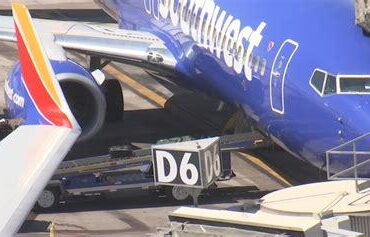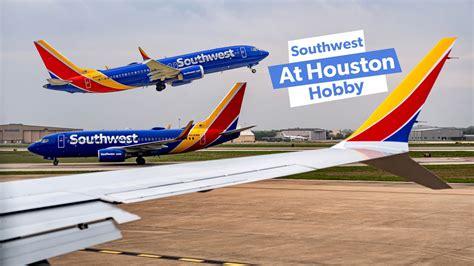
A reported bomb threat at Houston Hobby Airport (HOU) triggered a major security response Saturday evening, leaving passengers aboard multiple Southwest Airlines flights stuck on the ground for extended periods while police investigated. The airport remained operational during the incident, but the security investigation created significant delays as officers, Transportation Security Administration (TSA) personnel, and explosives-detection K9 units worked to determine whether the reported threat represented a genuine danger.
The incident began at approximately 7:30 p.m. local time, when Houston police received a call categorized as a general hazard. Authorities did not immediately identify the Southwest flight connected to the report or disclose what prompted the threat. That lack of information left passengers waiting for answers while law enforcement treated the situation as a potentially serious aviation-security matter.
For travelers already aboard aircraft, the uncertainty translated into hours spent waiting on the tarmac. One Southwest flight bound for Nashville reportedly remained on the ground for more than two hours before passengers were permitted to leave in small groups. Another traveler aboard a flight headed for Tucson said police officers were moving between gates and coordinating with TSA personnel as the investigation continued.
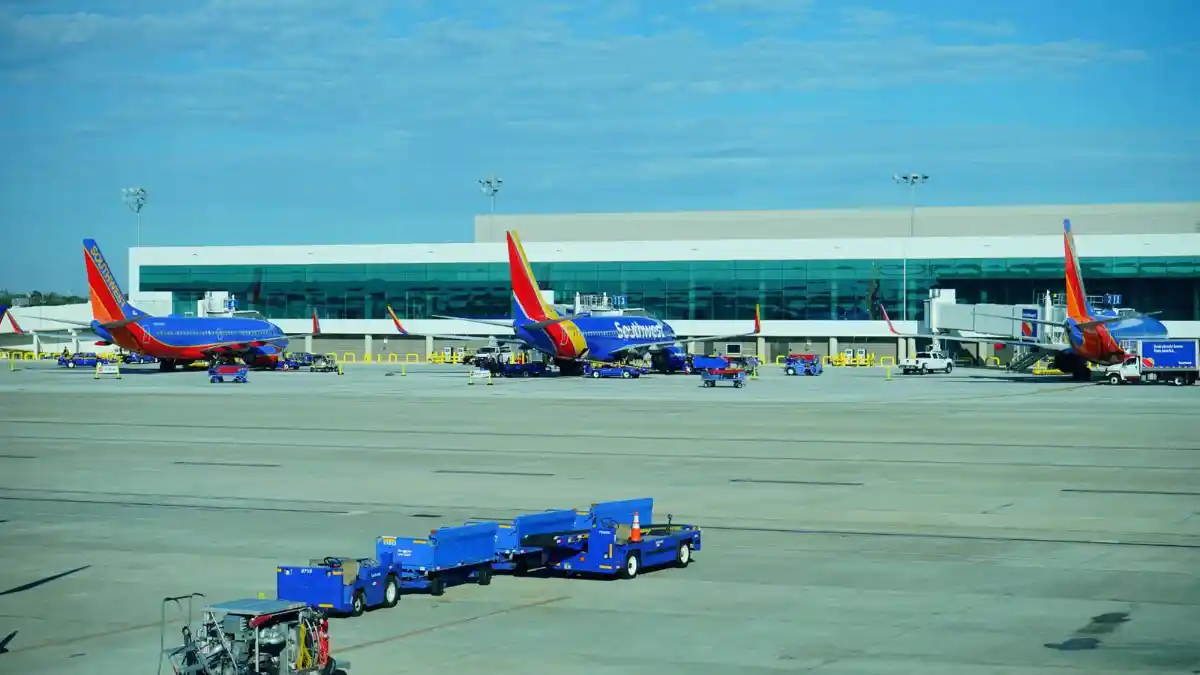
Southwest Airlines Passengers Face Hours of Ground Delays at Houston Hobby
Southwest Airlines confirmed that some flights experienced brief ground delays after local law enforcement requested a security screening involving one aircraft. While the airline described the operational impact as limited in its official characterization, passenger accounts illustrated how disruptive the investigation became for people confined aboard aircraft.
The Nashville-bound flight presented one of the clearest examples. Passengers reportedly waited for more than two hours before being allowed to disembark, with travelers leaving the aircraft in groups of five. Police and K9 teams subsequently examined baggage as part of the security response, adding another layer of delay before normal airport activity could resume.
For passengers, being held aboard an aircraft without knowing exactly what is happening can be particularly frustrating. Yet aviation security procedures are deliberately cautious because investigators cannot simply assume that a reported threat is harmless. Even when authorities have no immediate evidence of an explosive device, aircraft, luggage, passengers, and surrounding facilities may need to be checked before operations return to normal.
Houston’s airport police resources are designed for precisely these circumstances. The airport police division provides around-the-clock support for incidents involving bomb threats, weapons, suspicious activity, and other potential threats to passenger safety. Officers patrol areas including gates and screening locations and can coordinate with specialized units when an investigation requires additional security measures.
Why a Reported Bomb Threat Can Disrupt an Entire Airport
A bomb threat involving one aircraft can quickly become an airport-wide operational problem because modern airports function as tightly connected systems. Aircraft share gates, taxiways, baggage facilities, crews, and passenger flows. When law enforcement needs to inspect an aircraft or luggage, the resulting restrictions can affect flights that are not directly connected to the original incident.
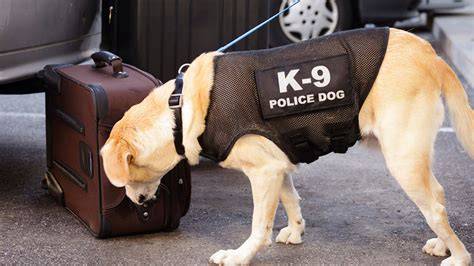
The presence of explosives-detection K9 units demonstrated the seriousness of Saturday’s response. Specialized police teams can examine aircraft and baggage for potential explosive materials, while TSA personnel remain responsible for passenger and baggage screening within the airport security system. Investigators must establish whether a reported threat concerns a specific aircraft, passenger, piece of baggage, or another location before authorities can safely release affected areas.
This process explains why a threat can produce substantial delays even when no explosive device is ultimately discovered. Aviation security operates on the principle that authorities must investigate first and resume normal operations only after the relevant risk has been assessed.
Houston Hobby Airport Is Particularly Important to Southwest Airlines
The disruption at Hobby Airport carried added operational significance because HOU is an important Southwest Airlines base and a major Texas airport for the carrier. Southwest operates an extensive network from Houston, connecting passengers with destinations throughout the United States.
That network means a security investigation involving a single aircraft can have consequences beyond the immediate flight. Aircraft may be unable to depart, arriving planes may have difficulty accessing gates, crews can be displaced from their planned schedules, and passengers connecting through the airport can face cascading delays.
The incident also demonstrates why airports can remain technically open while individual travelers experience lengthy disruptions. Airport operations do not necessarily stop completely during a security investigation. Instead, authorities can isolate particular aircraft, gates, baggage areas, or passenger groups while other portions of the airport continue operating.
Similar Bomb Threat Incident Recently Affected Houston’s Other Major Airport
Saturday’s events came shortly after another security scare at Houston George Bush Intercontinental Airport (IAH). A Frontier Airlines flight there was evacuated following a reported bomb threat, prompting authorities to conduct a security sweep. Passengers were safely removed from the aircraft, and investigators ultimately found no threat or suspicious item, according to the Houston Chronicle.
The two incidents highlight an important reality of aviation security: a threat does not need to prove credible before authorities respond. Police cannot safely dismiss a reported bomb threat simply because the circumstances initially appear questionable. The potential consequences of failing to investigate a genuine threat are far greater than the inconvenience created by a precautionary delay.
Southwest Has Experienced Previous Security Scares at Hobby Airport
Houston Hobby has dealt with similar incidents involving Southwest aircraft in the past. In August 2012, authorities investigated a reported bomb threat involving Southwest Flight 24 from El Paso to Houston after a handwritten note was reportedly discovered aboard the aircraft. Investigators later determined that the threat was not credible, but the aircraft was still inspected before passengers could continue their journey.
Another incident occurred in 2020, when authorities investigated a reported threat involving a Southwest flight arriving at Hobby. A passenger reportedly claimed that a bomb was inside a bag, although the individual did not board the aircraft. Police later searched the bag after it arrived in Houston and found golf clubs and other belongings rather than an explosive device.
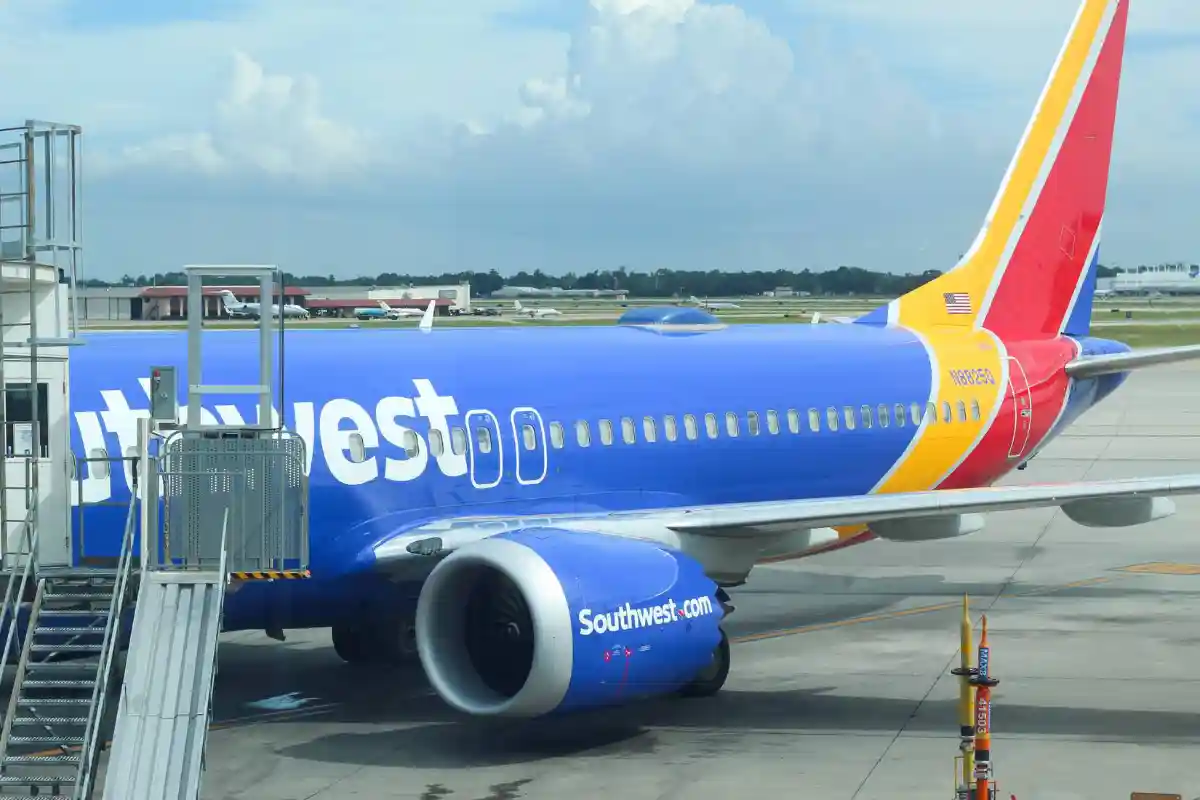
Why Passengers May Have to Wait Even When No Bomb Is Found
These previous cases help explain why Saturday’s passengers faced such an extended wait. Aviation security procedures are designed around caution rather than convenience. Once authorities receive information suggesting a potential explosive threat, investigators may need to inspect baggage, aircraft interiors, surrounding areas, and relevant passengers before determining that operations can safely continue.
For travelers, hours on the tarmac can feel excessive, particularly when there is little information available. From the perspective of law enforcement, however, the delay reflects the need to establish facts before releasing an aircraft or reopening an affected area.
The Houston Hobby incident ultimately illustrates how quickly a single security report can ripple through a busy airport. Although the airport continued operating and authorities had not announced evidence of an actual explosive device, Southwest passengers experienced lengthy delays while police and K9 teams completed their investigation. Until officials determine that a reported threat poses no credible danger, normal schedules inevitably become secondary to passenger safety.