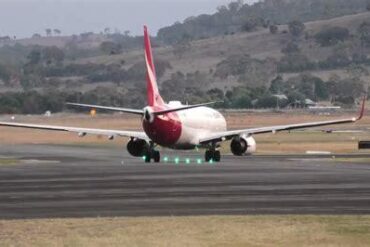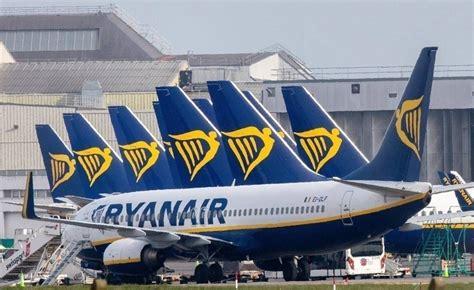
The phrase “ghost flight” rarely escapes aviation folklore, yet on April 14 it became a stark operational reality at Chalons Vatry Airport. A scheduled Ryanair Flight 4408 bound for Marrakech departed France without a single passenger onboard, leaving 192 bewildered travelers stranded inside a terminal that had effectively ground to a halt. What unfolded was not a technical failure or weather disruption, but a human resource collapse so complete that it rendered the airport’s core function—security screening—nonexistent.
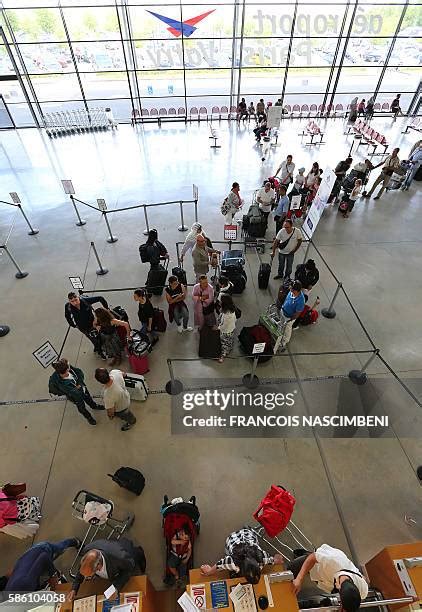
Chalons Vatry Airport (XCR), a modest regional facility east of Paris, found itself at the center of a logistical breakdown when every member of the contracted security team failed to report for duty, reportedly calling in sick simultaneously. Passengers had already begun the check-in process when the severity of the situation became clear. Without certified personnel to operate screening checkpoints, the airport was legally unable to process any outbound travelers, instantly freezing operations.
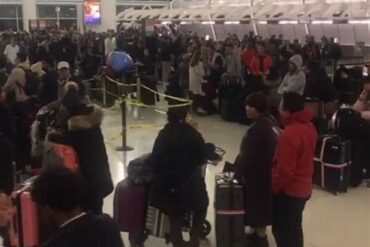
For families traveling with children, elderly passengers, and tourists anticipating a smooth journey to Morocco, the disruption quickly turned into hours of confusion and uncertainty. Airline staff and airport representatives scrambled to manage expectations while attempting to arrange alternative departures, but the absence of security clearance meant that no immediate solution was possible within the confines of the airport itself.

Why Ryanair Had No Choice but to Fly Empty
Despite the optics of sending an empty aircraft across the Mediterranean, Ryanair’s decision was driven by regulatory necessity and operational survival. European Union aviation law strictly prohibits boarding passengers onto any flight that has not undergone proper security screening. With no security staff available, the airline had no legal pathway to board even a single traveler.
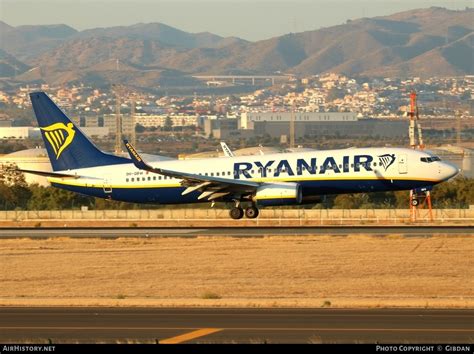
The aircraft assigned to the route, a Boeing 737-800 registered as 9H-QBW, faced additional constraints beyond passenger logistics. Aviation scheduling operates on tightly synchronized slots, particularly at busy destinations like Marrakech Menara International Airport (RAK). Missing a landing slot could cascade into widespread delays, disrupting multiple flights across the airline’s network.
Equally critical were crew duty time limitations. Pilots and cabin crew are bound by strict legal limits on how long they can remain on duty. Waiting indefinitely for a security team that might not arrive risked exceeding those limits, which would have grounded the aircraft entirely and triggered even greater operational fallout. In this context, flying empty was not wasteful—it was the least damaging option available.
Inside the Airport Breakdown: A System Without Redundancy
The incident exposed a fragile dependency within smaller airports like Vatry. Security operations at the facility were handled by SECURUS, a private contractor responsible for staffing checkpoints. When the entire team failed to appear, there was no immediate backup system or contingency workforce to step in.
Fabrice Pauquet, director of Vatry Airport, summarized the shock succinctly: the airport only realized the full extent of the issue after check-in had already opened. By then, passengers were already committed to their travel plans, luggage processed, and expectations set. The absence of redundancy turned what might have been a delay into a complete operational standstill.
Unlike major international hubs, regional airports often operate with lean staffing models. While efficient under normal conditions, such structures can collapse quickly when even a single critical function fails. In this case, security screening became the single point of failure that shut down the entire departure pipeline.
What Happens to 192 Stranded Passengers?
For the passengers left behind, the immediate concern shifted from departure times to rights, compensation, and rebooking. Under EU Regulation 261/2004, travelers facing long delays or cancellations are entitled to care and, in many cases, financial compensation. Given the flight distance of over 2,000 kilometers, payouts could reach several hundred euros per passenger.
However, the situation enters a legal gray area. Airlines are not obligated to pay compensation if the disruption is caused by “extraordinary circumstances” beyond their control. Ryanair could argue that the sudden and total absence of airport security staff falls squarely within that definition.
Yet the law also enforces a “duty of care”, requiring airlines to assist affected passengers regardless of fault. This includes providing meals, accommodation if necessary, and arranging alternative transportation. Even if direct compensation is contested, the airline remains responsible for ensuring passengers eventually reach their destination or receive refunds.
The Economics Behind a “Ghost Flight” Decision
From a financial standpoint, flying an empty aircraft might appear counterintuitive. Fuel, airport fees, and crew costs accumulate regardless of passenger presence. However, within the broader framework of airline economics, the cost of disrupting an entire flight network can far exceed the loss of a single empty leg.
Ryanair’s operational model depends on rapid aircraft rotation, where each plane completes multiple flights per day across different cities. A delay in one location can ripple across dozens of routes, affecting thousands of passengers and incurring cascading compensation claims. By keeping aircraft 9H-QBW in motion, the airline preserved the integrity of its wider schedule.
In the days following the incident, the same aircraft continued its rotations across Europe and North Africa, underscoring a key principle of low-cost aviation: aircraft utilization is paramount, and downtime is the true enemy.
A Rare but Revealing Aviation Incident
The Ryanair ghost flight from Chalons Vatry to Marrakech stands as a rare example of how non-technical failures can disrupt modern aviation just as profoundly as mechanical issues or weather events. It highlights the intricate interdependence between airlines, airport operators, and third-party service providers—each essential, each vulnerable.
For passengers, it serves as a reminder that even in a highly regulated industry, unexpected breakdowns can still occur in the most unlikely ways. For the aviation sector, the incident raises a pressing question: how resilient are smaller airports when critical systems fail without warning?
In the end, Flight 4408 did reach Marrakech—just without the people it was meant to carry. And for 192 travelers left behind in France, the journey became a lesson in how quickly certainty can vanish at 35,000 feet—before the plane even leaves the ground.