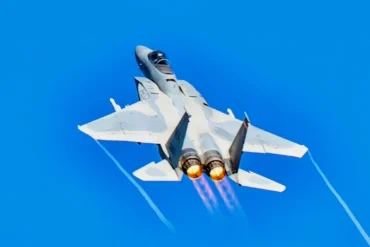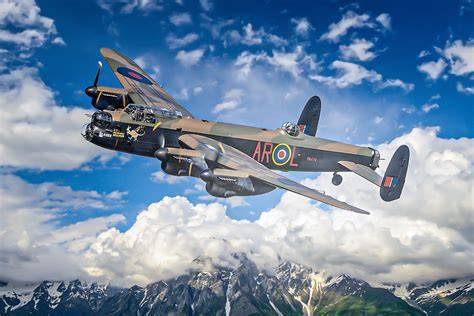
Strategic bombers are built around a difficult contradiction: they must remain relevant against rapidly evolving defenses while carrying airframes and engineering concepts that can span several generations. Today, that contradiction is especially striking. The United States, Russia, and China are the only three countries operating active strategic bomber forces, and all three continue to rely heavily on aircraft whose origins reach deep into the Cold War.
Some of these bombers have survived because their airframes proved remarkably durable. Others remain in service because their planned replacements arrived late, were canceled, or became too expensive to procure in sufficient numbers. In several cases, modernization has effectively transformed an old aircraft into a new weapons platform without replacing its basic structure.
The result is an unusual collection of aircraft that were never expected to remain frontline combat assets for so long. The Boeing B-52 Stratofortress is approaching an extraordinary century of potential service, while China’s Xi’an H-6 remains rooted in a design that first flew in 1952. Russia continues to operate the Tu-95 Bear and Tu-22M, while the United States is extending the careers of the B-1B and B-2 as the B-21 Raider enters service.
Boeing B-52 Stratofortress: More Than 40 Years Beyond Its Intended Retirement
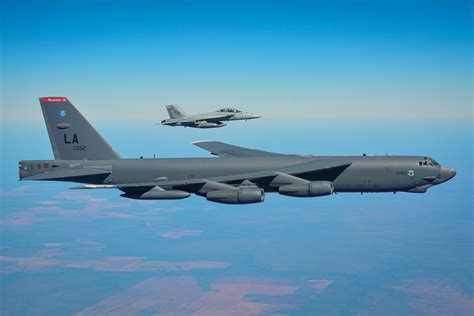
Few military aircraft have demonstrated the value of longevity like the Boeing B-52 Stratofortress. The bomber entered United States Air Force service in 1955 and was originally conceived for a strategic environment dominated by the Soviet Union and the threat of nuclear confrontation. Yet the aircraft has repeatedly outlived the systems intended to replace it.
The B-52H fleet flying today consists of airframes produced during the 1960s. That means many aircraft are approaching seven decades since they left the factory, yet the basic platform continues to provide long-range strike capability. Rather than replacing the airframe, the United States is investing heavily in modernizing it.
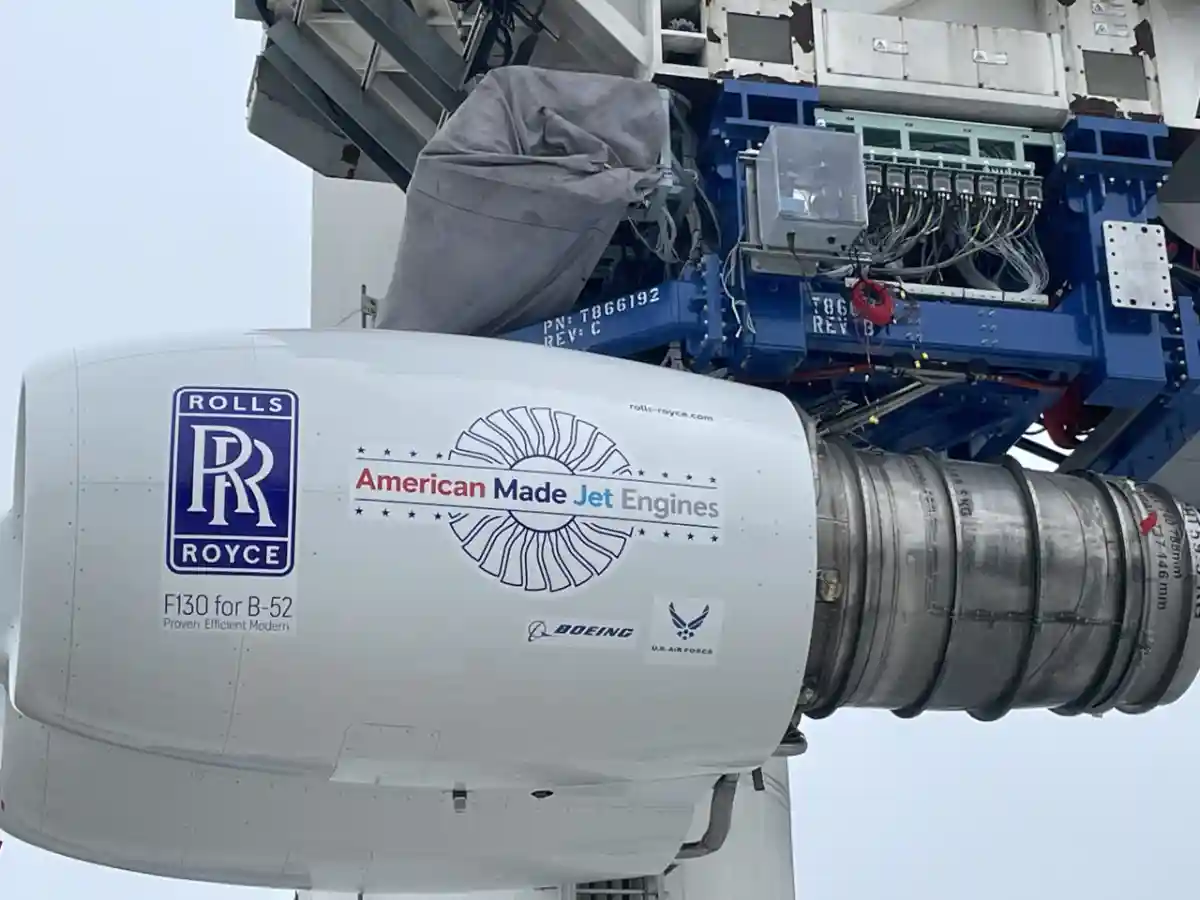
The most important transformation is the Commercial Engine Replacement Program, which will replace the aging Pratt & Whitney TF33 engines with Rolls-Royce F130 turbofans. The original engines have been increasingly difficult and expensive to sustain, with long-term support expected to become problematic after 2030. New engines should improve reliability and sustainment while reducing some of the logistical burden associated with operating the aircraft.
The modernization goes far beyond propulsion. The future B-52J will receive updated avionics, communications, weapons integration, and other systems intended to keep the bomber relevant in a highly contested battlespace. The Pentagon has estimated that multiple B-52 modernization programs could collectively cost tens of billions of dollars.
The original B-52 was expected to give way to more advanced aircraft, including the Mach 3-class XB-70 Valkyrie and eventually the B-1. Neither development followed the original path. The B-52 survived because its combination of range, payload, weapons flexibility, and upgrade potential remained difficult to replace economically.
Today, the aircraft is expected to remain operational into the 2050s, potentially giving individual airframes close to a century of service. That is not merely an impressive aviation statistic. It demonstrates how a proven airframe can become a long-term military asset when its sensors, engines, communications systems, and weapons continue evolving.
Xi’an H-6: China’s Cold War Bomber That Refused to Disappear
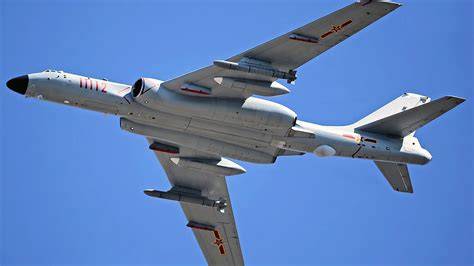
China’s Xi’an H-6 represents another extraordinary example of extended bomber service. The aircraft is a Chinese-built derivative of the Soviet Tupolev Tu-16 Badger, which first flew in 1952. China’s first domestically produced H-6 assembled entirely from Chinese components flew in 1968, but the production family remained active for decades afterward.
The H-6 was never supposed to become China’s enduring strategic bomber. Yet successive versions have changed its role dramatically. Modern variants are far removed from the basic Cold War bomber concept, incorporating improved engines, avionics, electronic warfare systems, sensors, and long-range weapons.
The H-6K has become a major conventional strike platform, while the H-6N provides a nuclear-capable role and incorporates substantial structural changes. Other variants have supported maritime strike, reconnaissance, electronic warfare, and specialized missions.
China’s continued reliance on the H-6 is closely connected to the development of the H-20 stealth bomber. The H-20 is intended to provide a much more survivable long-range strike capability, but its exact specifications, production schedule, and operational timeline remain closely guarded.
The technological challenge is considerable. A large stealth aircraft requires engines capable of providing substantial thrust while supporting long-range performance and low observability. China has made major progress in stealth fighters, but developing propulsion suitable for a large intercontinental-range flying-wing bomber is a substantially different engineering challenge.
Until the H-20 becomes operational in meaningful numbers, the H-6 remains an essential component of China’s long-range strike architecture. Its longevity is therefore less a sign of technological stagnation than evidence of how extensively an old design can be reinvented.
Tupolev Tu-95 Bear: A 1950s Design Still Flying Strategic Missions
The Tupolev Tu-95 Bear is one of the most recognizable aircraft in Russian military aviation. It first flew in 1952 and entered service in 1956, making its underlying design more than seven decades old.
Unlike most modern strategic bombers, the Tu-95 relies on turboprop propulsion. That decision was driven by the aerodynamic and propulsion technology available when the aircraft was developed, but the resulting aircraft proved exceptionally useful. Its enormous range, endurance, and ability to carry long-range weapons have allowed it to remain relevant long after its original mission requirements changed.
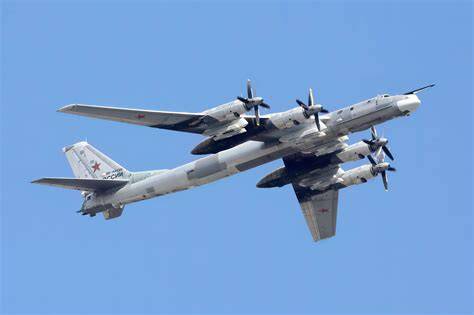
The Bear is particularly familiar to North American and NATO air forces because Russian aircraft regularly operate near the edges of NATO and North American airspace. Interceptions involving fighter aircraft have become a recurring feature of the strategic aviation environment around the Arctic and Alaska.
The Tu-95 was expected to be replaced by faster bombers during the late Cold War. Instead, Russia repeatedly modernized existing aircraft. Modern variants can employ sophisticated cruise missiles, transforming the Bear from a relatively old bomber into a long-range missile carrier.
The number of combat-capable aircraft is far smaller than the total number built throughout its history. Attrition, maintenance demands, retirement, and disposal have reduced the operational fleet, but the surviving aircraft remain strategically important.
The lesson from the Tu-95 is particularly clear: speed is not always the deciding factor in strategic aviation. If an aircraft can remain airborne for long periods and launch weapons from hundreds or thousands of miles away, it does not necessarily need to penetrate enemy airspace itself.
Tupolev Tu-22M Backfire: A Bomber That Outlived Its Industrial Base
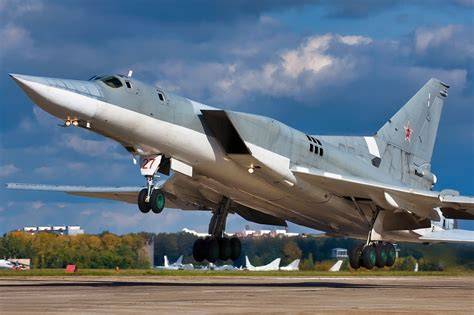
The Tupolev Tu-22M, particularly the Tu-22M3, occupies a different position from the B-52 and Tu-95. First flown in 1969, it was considerably newer than the other Soviet bomber designs discussed here. Yet the aircraft’s production ended decades ago, leaving Russia with an aging fleet and little opportunity to manufacture replacements at scale.
The Tu-22M was intended to provide a faster and more capable successor to earlier Soviet bombers. Its variable-sweep wings, high-speed performance, and substantial weapons capacity made it an important component of Soviet long-range aviation.
Production ultimately ended in the 1990s without a direct successor entering service in sufficient numbers. That decision became increasingly consequential as Russia’s remaining fleet aged.
The aircraft has also suffered losses during the war in Ukraine. Drone attacks against Russian air bases have reportedly damaged or destroyed multiple Tu-22M aircraft, placing additional pressure on a fleet that was already constrained by age and limited industrial support.
The Backfire’s continued service illustrates one of the most difficult problems facing aging military aircraft: even when the aircraft itself remains useful, the ecosystem supporting it can disappear. Engines, structural components, specialized tooling, maintenance expertise, and replacement parts become progressively harder to sustain.
Rockwell B-1B Lancer: The Supersonic Bomber That Keeps Getting a Reprieve
The B-1B Lancer was supposed to be a relatively temporary solution in the United States’ strategic bomber fleet. Instead, the aircraft has repeatedly received extensions as changing operational requirements have made its speed, range, payload, and endurance valuable.
The B-1 first flew in 1974, while the B-1B entered operational service in 1986. Its variable-sweep wings allow it to combine high-speed flight with efficient long-range operations, while its large weapons capacity makes it particularly useful for conventional missions.
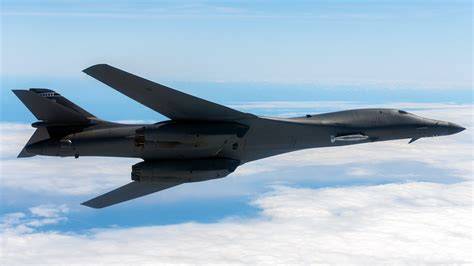
Unlike the B-52 and B-2, the B-1B no longer serves as a nuclear deterrent aircraft. Its importance has instead centered on conventional strike. The combination of heavy payload, long endurance, rapid repositioning, and the ability to return to base for rearming made the Lancer particularly valuable during extended combat operations.
The arrival of the B-21 Raider was expected to accelerate the B-1’s retirement. Yet force-structure pressures have complicated that transition. The United States has been reducing its overall aircraft inventory while simultaneously confronting the need to maintain sufficient combat power.
Two B-1s have even been returned to service from storage, illustrating how quickly military planning can change when operational demand collides with fleet reductions.
The B-1’s future is therefore tied directly to the pace of the B-21 program. Until enough Raiders are available, the Lancer remains an expensive but highly capable bridge between Cold War-era aviation and America’s next-generation bomber force.
Tupolev Tu-160 Blackjack: Russia’s Supersonic Strategic Heavyweight
The Tupolev Tu-160 Blackjack is the youngest aircraft on this list from the original Soviet design generation, yet it too has outlived the timeline envisioned for the end of the Cold War.
The Tu-160 first flew in 1981 and entered operational service in 1987. Designed as a response to the American B-1, it combined variable-sweep wings with supersonic performance and a very large weapons load.
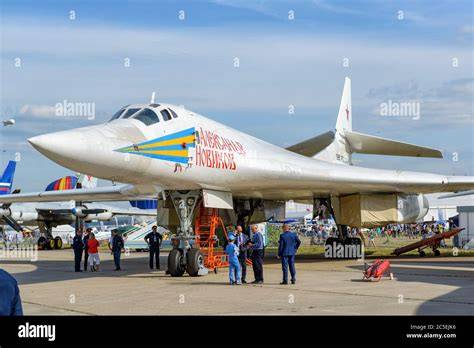
The collapse of the Soviet Union severely disrupted production. Russia later announced a restart of Tu-160 manufacturing, with ambitious plans for dozens of aircraft. Actual deliveries have been much slower, however, meaning the Russian strategic bomber fleet still depends heavily on Soviet-era airframes.
Russia has also been cautious about exposing the Tu-160 to modern Ukrainian air defenses. Rather than flying deep into contested airspace, these aircraft can launch long-range cruise missiles from positions far inside Russian territory or from areas such as the Caspian region.
That operational concept highlights the central transformation of strategic bombing. The bomber no longer necessarily needs to penetrate enemy airspace. Instead, it can act as a mobile missile launch platform, exploiting long-range weapons to keep the aircraft far from modern surface-to-air missile systems.
The Tu-160M modernization program is intended to preserve that capability while integrating newer weapons and avionics. It remains one of Russia’s most capable strategic aircraft, despite its Cold War origins.
Northrop Grumman B-2 Spirit: Stealth Keeps an Aging Bomber Valuable
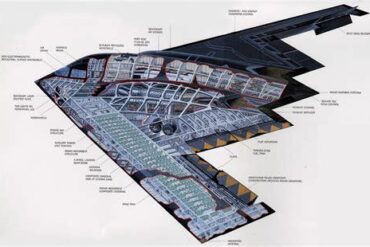
The B-2 Spirit is the youngest conceptual leap on this list, even though its operational career is already approaching the point where its replacement is becoming essential. Developed under the Advanced Technology Bomber program, the B-2 introduced a radically different approach to strategic bombing through its flying-wing configuration and low-observable design.
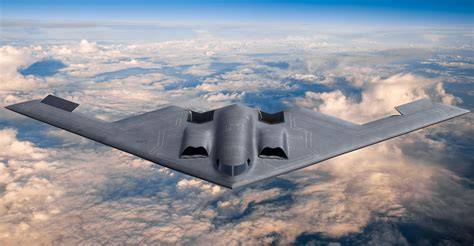
The original plan called for 132 aircraft, but the end of the Cold War dramatically reduced the requirement. Only 21 B-2s were ultimately built, leaving the Air Force with an exceptionally small and expensive fleet.
That limited production run has made every surviving aircraft disproportionately valuable. The B-2’s ability to penetrate sophisticated air-defense networks provides a capability that cannot simply be replaced by adding more conventional bombers.
The United States is therefore continuing to invest in the aircraft while the B-21 Raider enters service. Major upgrades are intended to extend the B-2’s operational relevance, potentially keeping portions of the fleet active into the 2030s or even around 2040.
The B-2’s eventual retirement will be determined less by its age than by the number and capability of B-21s available to replace it. The transition is expected to take years, creating an unusual period in which two generations of stealth bombers will coexist.
Why These Bombers Keep Flying
The survival of these seven aircraft is not accidental. In almost every case, retirement plans collided with the realities of defense budgets, replacement delays, changing threats, or the unexpectedly long useful life of an existing platform.
A bomber can remain valuable even when its original design is decades old if its weapons, sensors, engines, communications, and mission systems are continuously modernized. The airframe becomes the foundation rather than the complete weapon system.
The B-52 provides the clearest example. Its basic structure dates from an era when nuclear bombs were the central mission, yet modern long-range missiles, digital systems, new engines, and networked operations have transformed its battlefield role.
The same principle applies to the H-6 and Tu-95. Their ability to launch long-range weapons means they do not necessarily need to penetrate the most dangerous areas of a modern battlefield.
The B-2 and B-1 demonstrate a different problem: replacement aircraft are technologically superior but difficult to produce quickly and affordably. When only a small number of sophisticated aircraft exist, retiring them before their replacements are available can create a dangerous capability gap.
That is why intended retirement dates are rarely absolute in strategic aviation. A bomber can be obsolete in one dimension while remaining uniquely useful in another.
The B-21 Raider and the End of the Cold War Bomber Era
The arrival of the B-21 Raider will eventually reshape the American bomber fleet. Designed from the beginning for modern contested environments, the Raider is intended to replace both the B-1B and B-2 while complementing the long-serving B-52.
The first combat-ready B-21 is expected to arrive at Ellsworth Air Force Base in 2027, with production intended to expand as the program matures. The transition will take years rather than months.
That gradual replacement process explains why aircraft that were supposedly nearing retirement continue to fly combat and deterrence missions. Modern air forces cannot simply remove an entire bomber capability while waiting for a new aircraft to become available.
Russia and China face similar pressures. Russia is developing the PAK DA, while China continues work toward the H-20. Neither replacement program has yet eliminated the need for the aircraft currently available.
The seven bombers on this list therefore represent more than aging military hardware. They show how strategic aviation evolves through adaptation rather than simple replacement. From the B-52’s new engines to the H-6’s advanced missile arsenal, old airframes can remain formidable when nations continue investing in the systems surrounding them.
Some of these aircraft may eventually disappear from frontline service within the next decade. Others, remarkably, may continue flying for decades more. The B-52 could approach its 100th birthday in uniform—a milestone that would be almost unimaginable for any other major combat aircraft.
What began as a collection of Cold War designs has become a lesson in military aviation longevity: the airframe may age, but the mission does not necessarily have to.