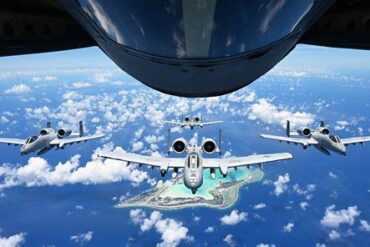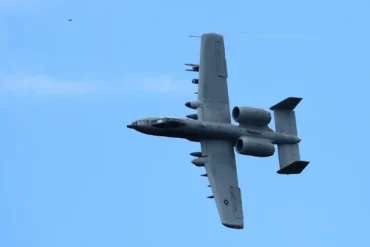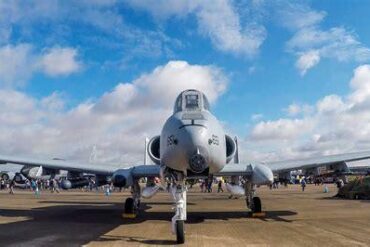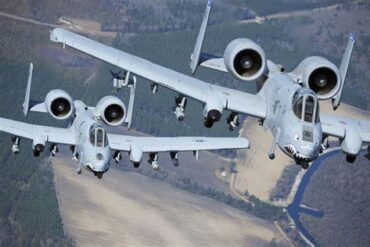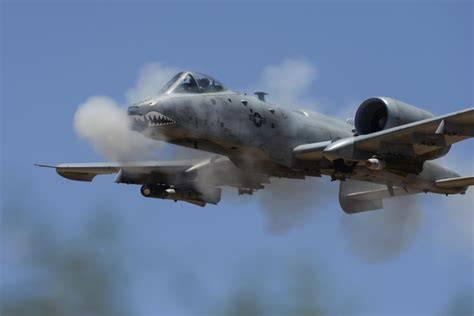
For more than four decades, the Fairchild Republic A-10 Thunderbolt II has occupied a peculiar position inside the US Air Force. Designed during the Cold War to destroy Soviet tanks and support NATO ground forces, the A-10 was built around a simple philosophy: absorb punishment, stay low and slow, and deliver enormous firepower exactly where troops needed it. Yet the aircraft that was once expected to fight massed armored formations in Europe has now found an unexpected reason to remain in service. The Air Force is extending the A-10’s retirement timeline to 2030, giving the aging Warthog several additional years to perform missions that its designers could never have anticipated.
The decision is not simply a sentimental reprieve for one of America’s most recognizable combat aircraft. It reflects a broader question confronting the Air Force: how much value remains in a specialized platform when the strategic environment has changed dramatically? The A-10 fleet is old, expensive to maintain and increasingly difficult to justify against newer aircraft such as the F-35A Lightning II. At the same time, recent operations have demonstrated that the Warthog’s unusual combination of endurance, low-speed handling, weapons flexibility and ruggedness can still provide useful capabilities in situations where modern fast jets are not necessarily the most economical answer.
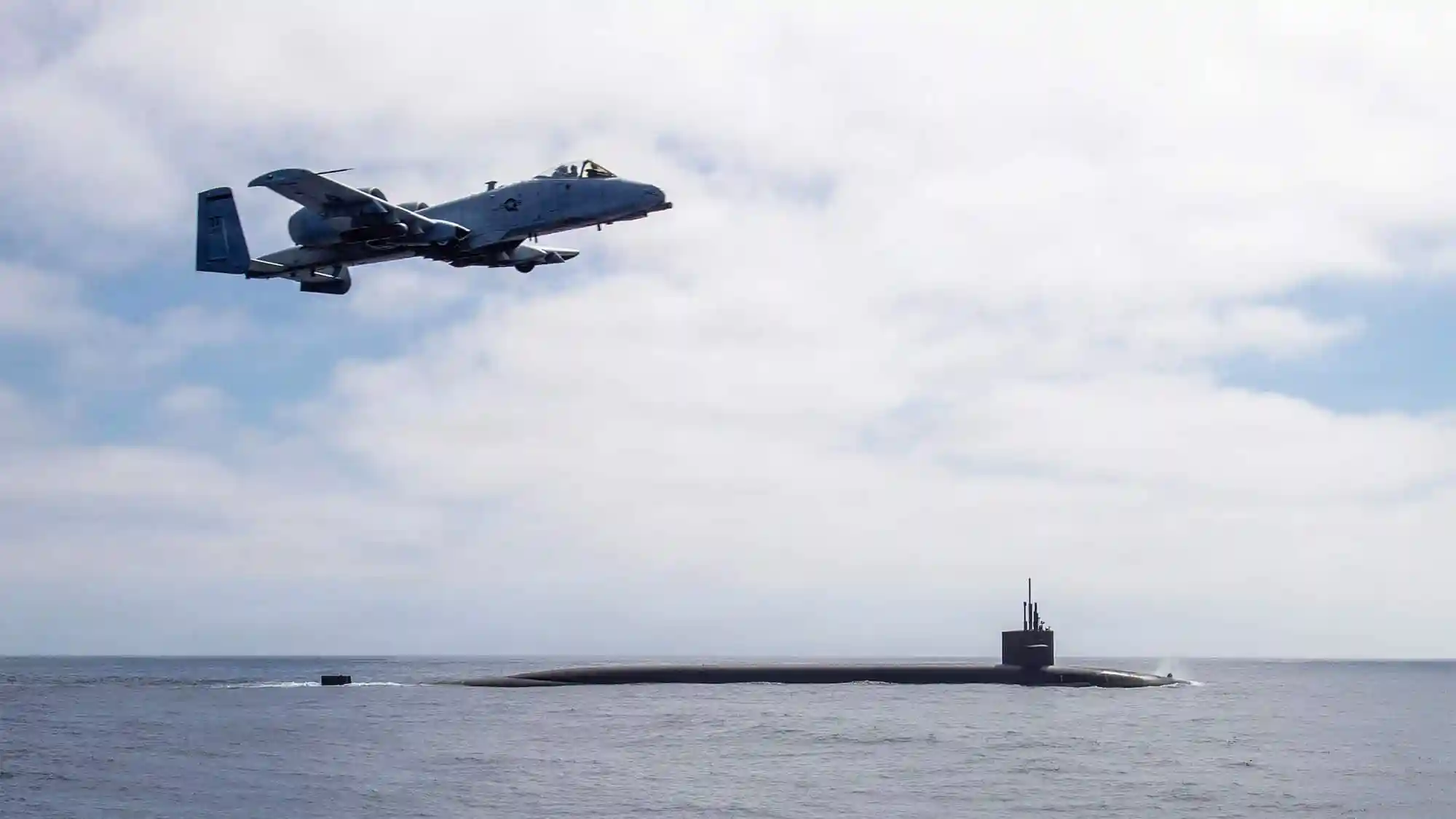
The aircraft’s emerging maritime mission illustrates that point particularly well. In recent years, A-10s have been observed conducting maritime overwatch for US Navy Ohio-class ballistic missile submarines, including operations in the Pacific Northwest and the Pacific Ocean. The pairing sounds strange at first: an aircraft created to kill tanks protecting some of America’s most important nuclear assets at sea. But once the requirements of the mission are examined, the logic becomes considerably clearer. The A-10 is particularly comfortable operating slowly, remaining overhead and reacting to small surface threats, characteristics that can become valuable when a submarine is temporarily exposed.
Why Ohio-Class Submarines Need Additional Protection
The Ohio-class SSBN fleet forms the sea-based component of the United States nuclear triad. Fourteen ballistic missile submarines remain in service, providing a highly survivable nuclear deterrent because their ability to remain concealed beneath the ocean makes them extraordinarily difficult for an adversary to locate and target. Each submarine can carry up to 20 Trident II D5 ballistic missiles, giving the fleet an enormous strategic role even when individual submarines are operating far from public attention.
The strength of an SSBN is its ability to disappear beneath the ocean. The vulnerability comes when that advantage is temporarily lost. During movements into or out of port, navigation through constrained waters or other surface operations, a submarine becomes much easier to observe. Its visual, radar and infrared signatures become more apparent, while its ability to maneuver and remain concealed is fundamentally reduced. Protecting the submarine during these periods therefore becomes an important part of maintaining the credibility and survivability of the broader nuclear deterrent.
Traditionally, surface support vessels have provided protection and assistance during these movements. But the proliferation of inexpensive drones, fast attack craft and other asymmetric maritime threats has changed the security equation. The 2000 attack on USS Cole demonstrated how comparatively small vessels could inflict catastrophic damage against a major American warship. More recently, drone boats have shown in Ukraine that inexpensive maritime systems can threaten considerably larger and more sophisticated naval platforms.
That evolving threat environment gives the A-10 a surprisingly relevant niche. The Warthog does not need to operate at high speed to perform maritime overwatch. Instead, it can remain near the protected vessel, observe the surrounding area and respond quickly if a suspicious craft approaches. Its low stall speed and strong low-altitude handling provide a degree of flexibility that can be difficult to reproduce with high-performance tactical aircraft.
The A-10’s Unexpected Maritime Overwatch Mission
The Warthog’s transition from tank killer to maritime guardian did not happen overnight. In 2024, A-10s were observed conducting practice overwatch sorties for a nuclear submarine transiting the Strait of Juan de Fuca, the strategically important waterway separating Washington State from Vancouver Island. Several months later, six Warthogs conducted an overwatch mission involving USS Wyoming (SSBN-742).
The activity continued. On July 28, 2026, an A-10 was reportedly spotted escorting USS Nebraska (SSBN-739) during an operation in the Pacific Ocean. These activities suggest that maritime security is no longer merely an unusual experiment for the Warthog. Instead, the Air Force and Navy appear to be exploring how the aircraft can contribute to protecting high-value naval assets against emerging surface threats.
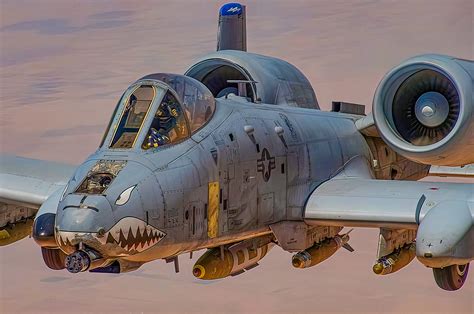
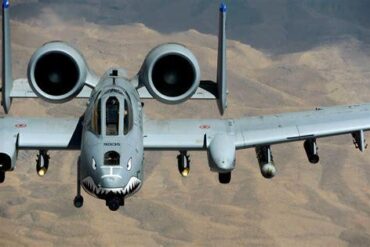
The aircraft’s weapons configuration also demonstrates why it can be useful in this role. Images associated with the maritime missions have shown an A-10 equipped with a LITENING targeting pod, AGM-65 Maverick air-to-surface missiles, AIM-9M Sidewinder air-to-air missiles and a LAU-131 rocket launcher carrying Hydra 70 rockets. All of those weapons supplement the aircraft’s famous GAU-8/A Avenger 30mm cannon, giving the Warthog multiple options for responding to different types of threats.
A fast attack craft can potentially be engaged with guided missiles, rockets or cannon fire depending on the circumstances. Smaller targets could potentially be addressed using the aircraft’s cannon or rockets, while the Sidewinders provide a limited ability to respond to airborne threats. The LITENING pod further enhances the aircraft’s ability to identify and engage targets. In other words, the A-10’s weapons suite provides considerably more flexibility than its reputation as a single-purpose close-air-support aircraft might suggest.
From Cold War Tank Killer to Modern Maritime Defender
The A-10’s original mission explains much of its unusual effectiveness today. It was designed to operate close to the ground, where pilots needed exceptional visibility and precise control. Its designers prioritized survivability, loiter time and weapons capacity rather than raw speed. Those decisions made sense when the principal threat was a Soviet armored offensive, but the same qualities can now be applied to a very different battlefield.
A maritime overwatch aircraft must be able to remain on station for extended periods without constantly racing through the patrol area. It must also be capable of identifying relatively small targets and reacting to rapidly changing circumstances. The A-10’s low-speed maneuverability and long endurance fit those requirements naturally. The aircraft can fly a comparatively slow orbit around a protected vessel while retaining the ability to reposition quickly when a potential threat appears.
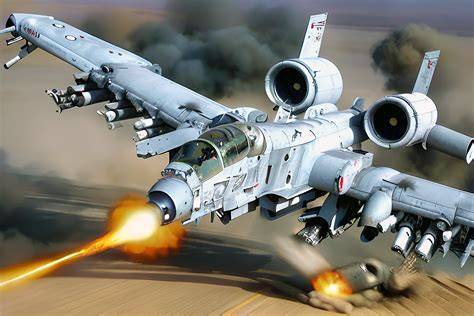
The Warthog has also demonstrated an ability to operate against maritime targets in other circumstances. General Dan Caine has described A-10 operations on the southern flank in which the aircraft hunted fast attack watercraft in the Strait of Hormuz. That experience is significant because it demonstrates that the aircraft’s maritime utility is not entirely theoretical. Its cannon, rockets and guided weapons can provide a formidable response against small surface craft in an environment where conventional airpower may be unnecessarily expensive to employ.
Why the Air Force Still Wants to Retire the A-10
Despite these new missions, extending the A-10 to 2030 does not mean the Air Force has changed its long-term position. The service has spent years seeking to retire the Warthog as it redirects resources toward aircraft designed for increasingly contested airspace.
The central problem is age. Many A-10s are more than 43 years old, and maintaining an aging fleet requires increasing amounts of money, manpower and specialized expertise. Older aircraft can demand more inspections, repairs and replacement components simply to remain airworthy. Every dollar and technician allocated to keeping the Warthog operational is a resource that cannot simultaneously support newer systems.
The 2026 budget illustrates the financial argument. The Air Force estimated that retiring the A-10 fleet could save more than $400 million. Those savings could instead support modernization programs involving the F-35A, the B-21 Raider, advanced weapons and future sixth-generation capabilities. From this perspective, the A-10 is competing not merely with another aircraft but with the future structure of American airpower.
There is also a fundamental survivability problem. The A-10 was never designed to penetrate heavily defended modern airspace dominated by sophisticated surface-to-air missile systems and advanced fighter aircraft. In a major conflict against a technologically capable opponent, sending the Warthog into contested environments could expose it to risks that newer stealth aircraft are specifically designed to reduce.
Why 2030 Represents a Delay, Not a Reversal
The decision to extend the A-10 program to 2030 therefore appears to be best understood as a delay in retirement rather than a permanent reprieve. Air Force Secretary Troy E. Meink has indicated that the Warthog program will continue through the end of the decade, giving commanders additional time to exploit its remaining capabilities while the service transitions toward newer platforms.
That extension nevertheless matters. It means the Air Force has recognized that the A-10 can still perform useful missions that are not necessarily central to its original purpose. The aircraft’s unexpected role around ballistic missile submarines is a particularly striking example. Rather than asking whether the A-10 can continue doing exactly what it was designed to do in 1970s Europe, planners can ask a more useful question: what missions can this aircraft perform effectively today?
The answer appears to include maritime security, fast-boat interdiction and protection of high-value assets. Those missions do not eliminate the A-10’s shortcomings, but they can make the final years of its service more productive.
The A-10’s Second Life May Still Have an Expiration Date
The Warthog’s unexpected second life demonstrates why military aircraft sometimes survive far beyond their original assumptions. The A-10 began life as a specialized Cold War tank killer. It subsequently became one of the world’s best-known close-air-support aircraft, fought in multiple conflicts and eventually found itself protecting nuclear-powered ballistic missile submarines from fast maritime threats.
Yet there is an important distinction between remaining useful and remaining optimal. The A-10 may be exceptionally well suited to certain low-speed maritime overwatch missions, but helicopters, unmanned aircraft and future fixed-wing platforms could eventually perform those tasks more efficiently or with lower risk. Attack helicopters, for example, can hover, operate at very low speeds and remain close to a protected vessel, while unmanned systems can potentially provide persistent surveillance without placing a pilot in danger.
For now, however, the Warthog still has work to do. Extending its retirement to 2030 gives the Air Force time to extract additional value from an aircraft that has already exceeded the expectations of its original designers. Its future may no longer be defined by Soviet tanks in Europe, but the A-10’s ability to loiter, maneuver, observe and deliver substantial firepower remains relevant against a new generation of asymmetric threats.
The final chapter of the A-10 story is therefore unlikely to be about whether the aircraft can defeat the threats of the Cold War. It is about whether an aging but remarkably adaptable platform can continue finding useful missions in an era built around stealth, drones and sixth-generation technology. The Warthog may be approaching retirement, but 2030 shows that its distinctive capabilities are not yet ready to disappear.