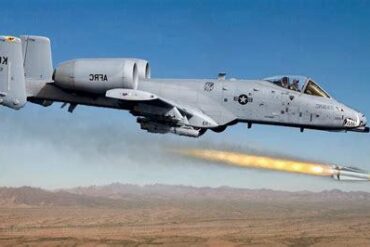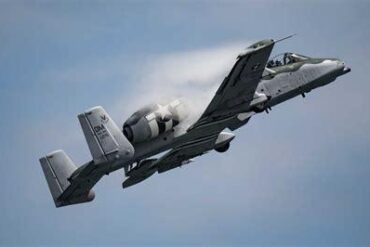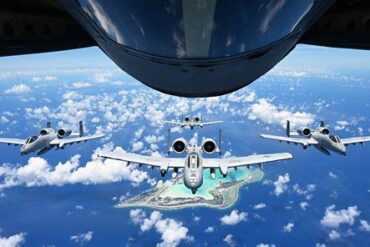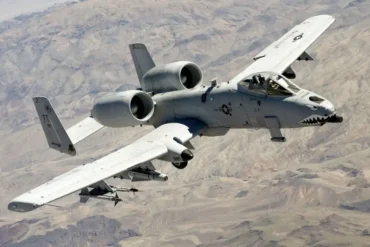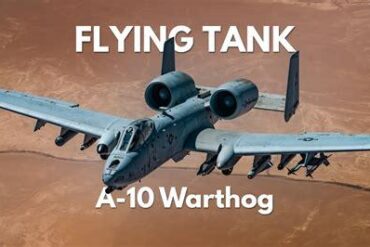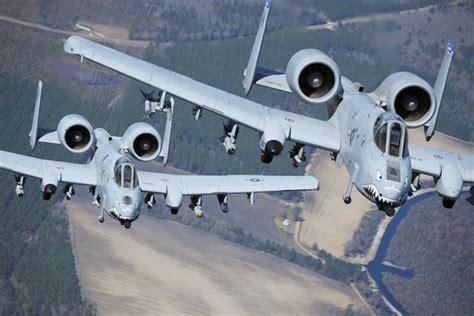
The U.S. Air Force (USAF) has announced plans to retire its entire fleet of A-10 Thunderbolt II aircraft, more famously known as the A-10 Warthog, by the end of Fiscal Year 2026. This marks the end of an era for one of the most revered close air support aircraft in military aviation history. But amid the nostalgia and strategic debates, a provocative question emerges: Should the U.S. transfer these battle-hardened warplanes to Taiwan?
The Warthog’s Final Mission: Retirement
With over four decades of service, the A-10 Warthog has etched its place in military history as a symbol of battlefield resilience and firepower. Developed during the Cold War to counter Soviet armored formations, the A-10 was introduced into service in 1976 and quickly became a mainstay in American combat operations across multiple theaters—from Operation Desert Storm to counterinsurgency campaigns in Afghanistan and Iraq.
By 2026, the Air Force intends to phase out 162 remaining A-10 aircraft, forming nearly half of the 340 total aircraft retirements planned for that fiscal year. These figures highlight how pivotal the Warthog has been to U.S. air operations, even as its strategic relevance has diminished in the age of fifth-generation stealth fighters and high-end peer competition.
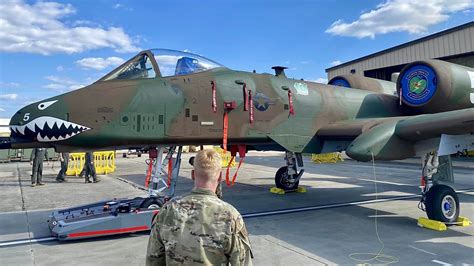
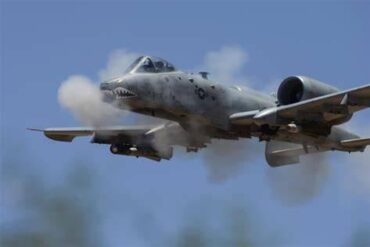
The $57 million decommissioning budget for the Warthog fleet includes disbanding aircraft that have long served in conflicts where precision and survivability were paramount. The A-10’s GAU-8 Avenger cannon, capable of firing 65 rounds per second, and its titanium-armored cockpit, made it a veritable flying tank—earning nicknames like “Tank Buster,” “Flying Gun,” and “Warthog.”
Yet, USAF officials argue that despite its storied legacy, the A-10 lacks the survivability and technological adaptability for contested modern airspaces—especially against the advanced anti-aircraft systems deployed by China and Russia.
A Platform Built for Carnage, Not Obsolescence
The A-10’s value lay in its unmatched ability to deliver close air support under extreme conditions. Its low-speed maneuverability, short takeoff and landing capabilities, and extensive weapons loadout made it ideal for battlefield environments requiring high-precision, low-altitude fire support.
Its mission flexibility was further proven when the A-10 adapted to maritime and counter-insurgency roles. In 2011, the aircraft targeted Libyan coastal boats, and by 2017, they were participating in simulated attacks against small, fast-moving vessels—demonstrating potential utility against Chinese invasion fleets or Iranian swarm tactics.
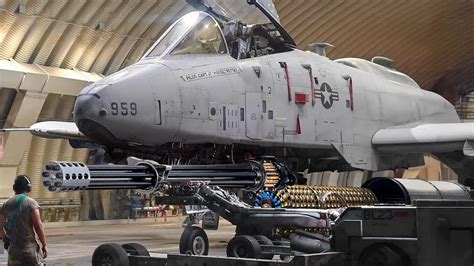
Yet despite these innovations, the USAF has been clear: future warfare will not tolerate slow, non-stealthy platforms, no matter how lethal they were in past decades. The proliferation of long-range surface-to-air missiles (SAMs) and advanced radar makes flying an A-10 in peer conflict zones increasingly suicidal.
Could Taiwan Be the A-10’s Next Battlefield?
While some in the U.S. military establishment have accepted the A-10’s retirement as inevitable, strategic thinkers in Asia are sounding the alarm—and offering alternatives.
An editorial in Asia Times boldly proposed that instead of letting the A-10s rot in the desert graveyard at Davis-Monthan Air Force Base, they should be transferred to Taiwan. The logic is compelling: Taiwan faces the looming threat of amphibious invasion by China’s People’s Liberation Army (PLA). In such a conflict, close air support and ship-destroying firepower would be decisive.
Taiwan’s current fighter fleet, while technologically impressive with F-16Vs, lacks a platform like the A-10 that can hover over beaches and coastal waters, ripping through landing craft and armored columns. The A-10’s durability—able to fly even with one engine and significant fuselage damage—could offer a survivability edge that Taiwan’s indigenous jets cannot match.
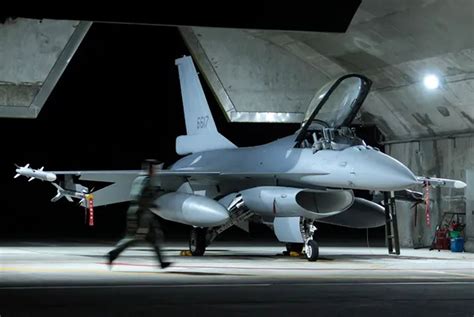
Moreover, the A-10’s slower flight speed, often seen as a liability, could actually be an asset in drone interception missions, especially as PLA drone swarms are expected to play a major role in any cross-strait conflict. The Warthog’s ability to loiter and deliver sustained fire could overwhelm smaller aerial threats in scenarios where fast-moving fighters would struggle.
Not Just Nostalgia: Strategic Logic Behind a Transfer
The call to transfer A-10s to Taiwan is more than just a symbolic gesture. It aligns with broader U.S. strategic interests in deterring Chinese aggression across the First Island Chain. By giving Taiwan access to durable ground-attack aircraft, the U.S. enhances the island’s denial capabilities without directly stationing American forces there.
Importantly, these aircraft are already deemed obsolete by the U.S. military, meaning their transfer carries minimal operational cost and avoids triggering concerns over technology leakage. Additionally, training and maintenance for the A-10 are simpler and cheaper than for high-end platforms like the F-35, making them a more sustainable choice for Taiwan’s defense budget.
Historical Combat Legacy: From Gulf Sands to Pacific Tides
The A-10 has already proven its capacity to influence the outcome of asymmetric and large-scale battles. In Operation Desert Storm, A-10s destroyed more than 900 Iraqi tanks, 2,000 other military vehicles, and 1,200 artillery pieces—without a single combat loss from ground fire in its first four days of combat.
Such statistics should not be brushed aside in future planning. In a potential cross-strait invasion, China would deploy hundreds of amphibious landing craft, armor divisions, and mobile artillery. The A-10 could disrupt such formations with pinpoint strikes, buying time for Taiwan’s forces and regional allies to mount an effective defense.
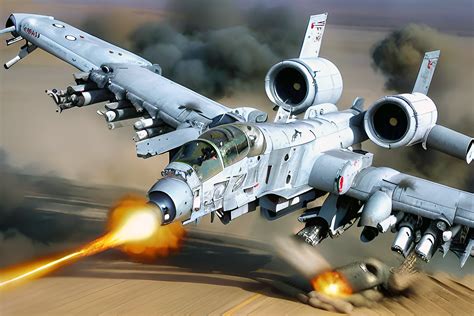
In addition to its kinetic power, the A-10 has played roles in intelligence gathering, combat search and rescue (CSAR), and even drone detection missions. Its multirole capability suggests that Taiwan could use the aircraft in a variety of roles well beyond shoreline defense.
Political and Operational Hurdles Remain
Despite the strategic rationale, significant political barriers may hinder a transfer. Any U.S. move to equip Taiwan with more offensive weaponry risks provoking Beijing, which regards such arms transfers as violations of the One China Policy. China could respond with escalatory moves across diplomatic, cyber, and economic fronts.
Moreover, the logistical requirements of operating A-10s—spare parts, specialized maintenance, pilot training—pose immediate challenges. Taiwan would need at least a year to build the infrastructure and institutional knowledge to integrate the A-10 effectively.
Yet none of these issues are insurmountable. The A-10 has been exported in limited forms before (to U.S. allies for exercises), and much of its support equipment remains abundant. With sufficient will, the Pentagon could fast-track the transition process, especially if framed as a defensive measure.
F-22 Raptor: Staying In, For Now
Interestingly, while the USAF plans to retire a wide range of legacy aircraft—including 62 F-16s, 21 F-15Es, and 14 C-130H Hercules transports—it has refrained from retiring its 32 Block 20 F-22A Raptors, despite long-standing cost concerns. Though these jets are non-combat coded and used primarily for training, their $485 million annual upkeep suggests that strategic flexibility remains paramount.
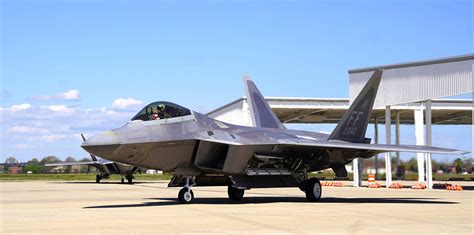
USAF leadership, including LTG Richard Moore, has stated clearly that these Block 20 Raptors “will never be a part of the combat force,” yet their retention signals that the Air Force is not yet willing to surrender air superiority options as global tensions rise.
Conclusion: A Farewell, or a New Frontline?
The retirement of the A-10 Warthog is not just an administrative milestone—it is a moment of deep strategic introspection. As the USAF looks ahead to a future defined by stealth, speed, and electronic warfare, it leaves behind an aircraft that symbolized grit, power, and mission focus.
Yet this retirement could open a new chapter, especially if U.S. policymakers choose to leverage the Warthog’s legacy in service of a critical ally. Taiwan, facing the specter of invasion, may benefit greatly from a war machine once built to hold the Fulda Gap against Soviet tanks.
The question remains: will these aircraft be mothballed in the Arizona sun—or find new life patrolling the skies over the Taiwan Strait?
If strategic imagination prevails, the A-10 Warthog may not be flying its last mission—but merely changing theaters in the fight for freedom.