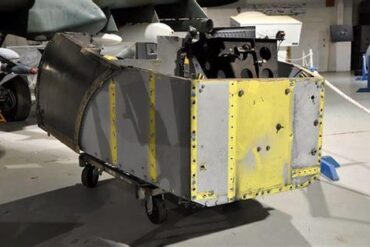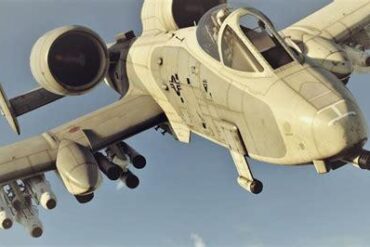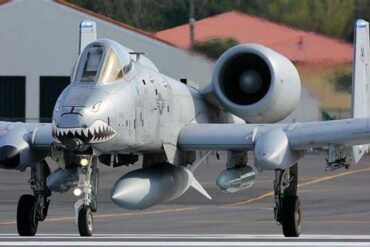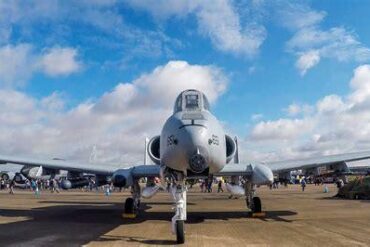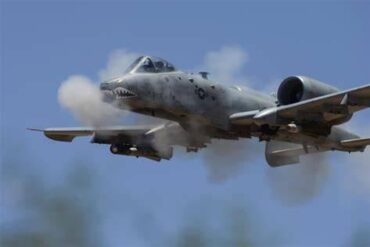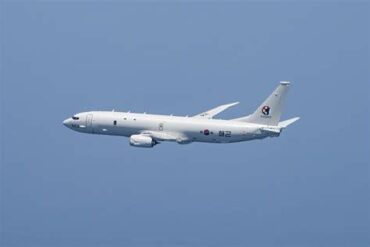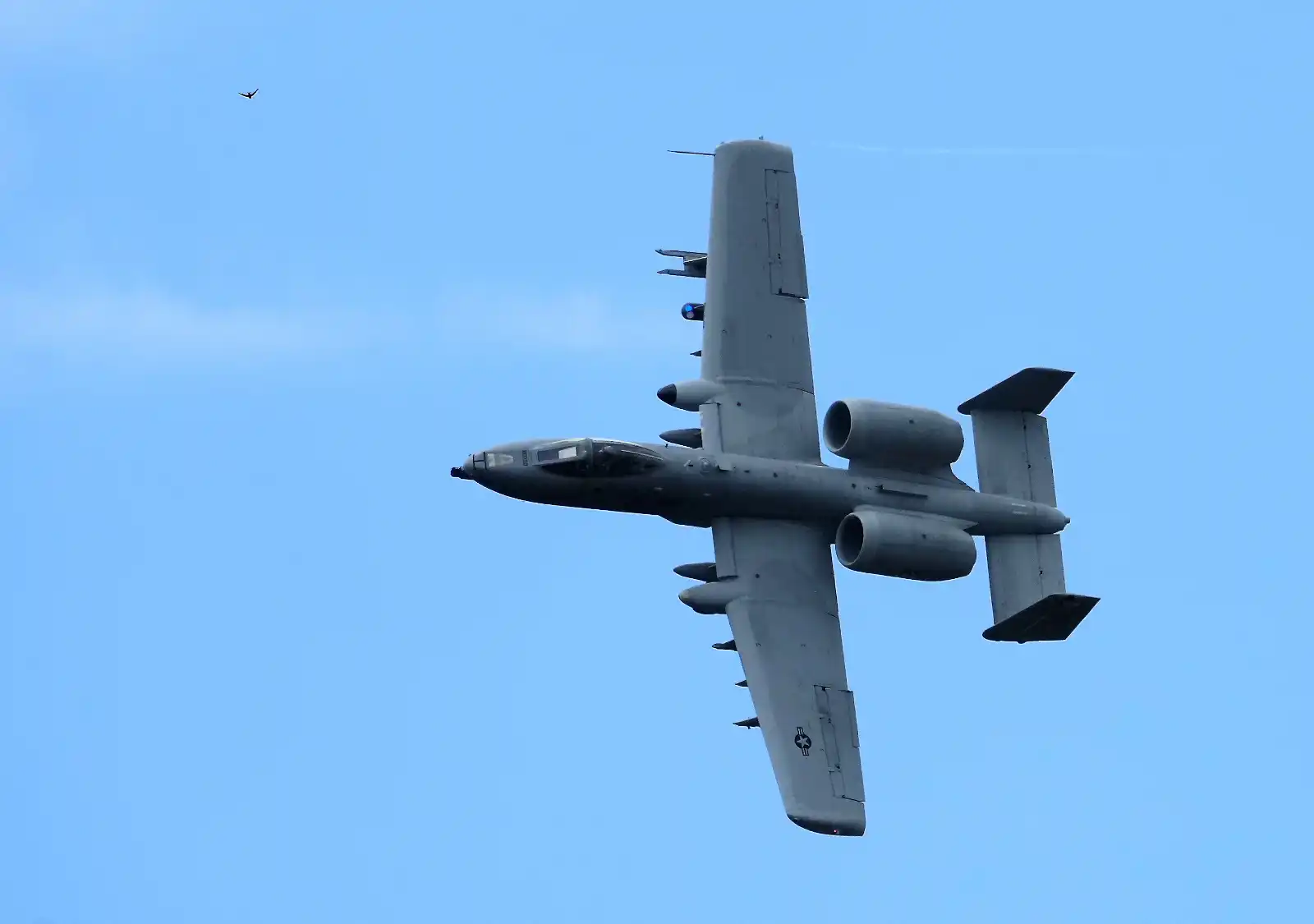
The withdrawal of the A-10 Thunderbolt II “Warthog” from South Korea marks more than a routine force rotation. It signals a deliberate shift in how the United States Air Force is preparing for a very different kind of war. For decades, the A-10 represented the most recognizable embodiment of Close Air Support (CAS)—a low, slow, brutally effective aircraft designed to survive punishment while delivering overwhelming firepower in support of ground troops. Its departure from the Korean Peninsula in 2025 closes a chapter shaped by Cold War deterrence and post-9/11 counterinsurgency realities.
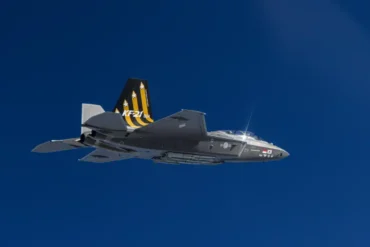
What replaces it is not a like-for-like successor but a layered mix of platforms optimized for speed, survivability, and multi-domain integration. The F-16 Fighting Falcon now assumes much of the day-to-day forward presence role, while the F-35A Lightning II and emerging unmanned systems take on deeper strike and contested-environment responsibilities. This transition reflects a broader doctrinal evolution: the Air Force is no longer optimizing primarily for permissive skies, but for peer conflict against advanced integrated air defenses, particularly in the Indo-Pacific theater.
At the same time, the retirement of the A-10 from Korea exposes a quiet tension inside U.S. military planning. CAS has not disappeared, but the conditions under which it can be executed are changing rapidly. The aircraft that once defined battlefield reassurance for ground troops is being replaced by systems that are faster, stealthier, and more networked—but also less visually present and arguably less emotionally reassuring in the heat of combat.
The last Warthogs leaving South Korea do not represent an end to close air support. They represent the end of a specific era in which CAS was delivered by a heavily armored, gun-centric aircraft flying low over the battlefield with near-impunity.
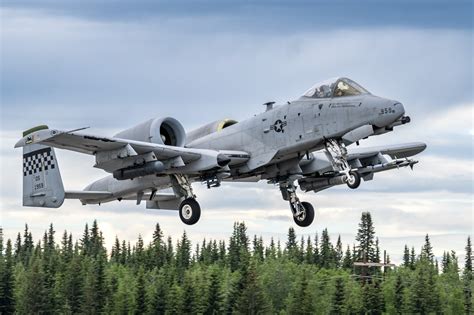
The Strategic Withdrawal of the A-10 From the Korean Peninsula
The A-10’s withdrawal from South Korea is best understood as part of a broader Indo-Pacific force restructuring rather than a symbolic retirement ceremony. For years, the aircraft had been stationed in Korea as a visible deterrent against armored aggression from the north. Its presence was as much psychological as tactical, reinforcing the idea that any large-scale ground incursion would face immediate and devastating air-delivered firepower.
However, the operational environment has evolved. North Korea’s expanding missile arsenal, improved radar coverage, and hardened air defense systems have made low-altitude CAS operations increasingly risky. While the A-10 was designed to absorb significant damage, survivability in a modern, layered air defense environment is no longer guaranteed by armor alone. The Air Force’s shift toward more survivable platforms reflects a recognition that access, not firepower, is now the central constraint in modern air operations.
The replacement of A-10 squadrons with F-16 units in Korea is not a downgrade in capability but a repositioning of priorities. The F-16 offers greater speed, higher-altitude survivability, and compatibility with modern precision weapons. It is less specialized for CAS in the traditional sense, but far more flexible in a contested airspace where targets may be fleeting and defenses highly lethal.
This transition also reflects logistics and readiness considerations. Maintaining legacy A-10 fleets overseas requires specialized infrastructure and supply chains that are increasingly difficult to justify as budgets shift toward next-generation systems and unmanned capabilities.
F-16 and F-35: Redefining Close Air Support in a Peer Conflict Era
The F-16 Fighting Falcon now carries much of the visible burden left by the A-10’s departure, but it does so in a fundamentally different way. Rather than loitering over a battlefield at low altitude, the F-16 delivers precision strikes from safer standoff distances, relying on advanced targeting pods and networked data links. Its role in CAS is more about responsiveness and flexibility than brute-force presence.
The F-35A Lightning II takes this evolution further. Designed as a multi-role stealth platform, it operates inside heavily defended airspace where older CAS platforms would be quickly lost. Its sensor fusion capabilities allow it to locate, track, and engage targets while sharing real-time data with ground forces and other aircraft. In theory, this creates a more integrated CAS ecosystem. In practice, it also changes the feel of battlefield air support, shifting it from a visible, roaring presence to a more distributed and digital function.
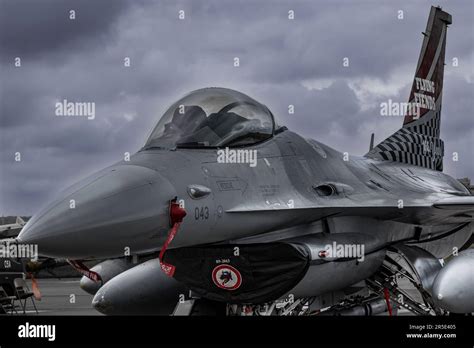
The key trade-off is visibility versus survivability. The A-10 could remain overhead for extended periods, visually reassuring ground troops while delivering sustained fire. The F-35 and F-16 cannot safely replicate that behavior in a high-threat environment. Instead, they rely on speed, stealth, and precision to reduce exposure time. This shift is not simply technological—it is doctrinal. CAS is becoming less about continuous overhead support and more about rapid, network-enabled strike orchestration.
This transformation raises difficult questions about perception on the ground. Soldiers historically associated CAS with immediate auditory and visual confirmation of support. Modern systems, while more capable in many respects, may not provide the same psychological assurance, even if they are more lethal and survivable.
The Emerging Close Air Support Gap and Its Operational Reality
Despite official messaging emphasizing continuity, there is a growing recognition that a true Close Air Support gap is emerging, particularly in high-intensity warfare scenarios. The A-10 was uniquely suited to environments where air defenses were weak and ground troops required persistent overhead protection. In a peer conflict, those conditions are unlikely to exist.
The F-35 and F-16 can perform CAS missions, but they do so under tighter constraints. They must balance survivability with proximity, often pushing engagements further from the front line. This reduces the immediacy that defined traditional CAS doctrine. At the same time, adversaries are deploying more short-range air defense systems, making low-altitude strafing runs increasingly dangerous.
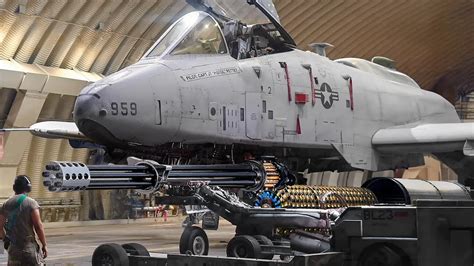
Another dimension of the gap is munitions dependency. Unlike the A-10, which was heavily associated with its GAU-8/A Avenger cannon, modern fighters rely primarily on precision-guided weapons. While these are highly accurate, they are also finite and require more complex targeting chains. In fast-moving ground engagements, the latency between target identification and weapon release becomes a critical factor.
This creates a paradox: airpower is more precise than ever, but potentially less persistent. The ability to stay with ground forces over extended periods—one of the A-10’s defining traits—is difficult to replicate without exposing aircraft to unacceptable risk.
The Apache’s Changing Role in Army Air-Ground Operations
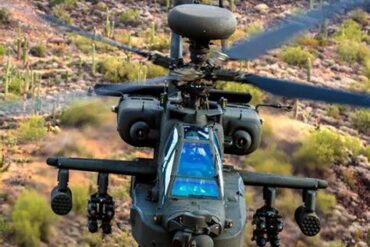
While much attention is placed on the Air Force’s retirement of the A-10, the U.S. Army is simultaneously reshaping the role of its AH-64 Apache attack helicopters. Traditionally viewed as a complementary CAS platform, the Apache has long filled gaps where fast jets were unavailable or impractical.
However, the modern battlefield is forcing a reassessment. Advances in man-portable air defense systems (MANPADS), radar-guided short-range missiles, and electronic warfare capabilities have made low-altitude helicopter operations significantly more hazardous. As a result, Apache doctrine is gradually shifting away from sustained close support toward deep strike, reconnaissance, and distributed attack roles.
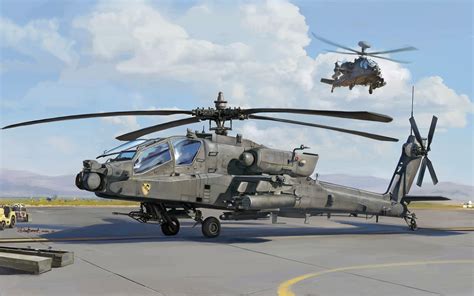
This does not mean the Apache is being phased out of CAS entirely. Instead, it reflects a redefinition of how and when it is used. Rather than hovering near frontline troops, Apaches are increasingly employed in coordinated standoff engagements, often integrated with unmanned systems and artillery networks.
The parallel evolution of both the A-10 and Apache highlights a broader truth: traditional CAS platforms are being pushed out of their historical operating envelope by modern air defense density. The battlefield is becoming too dangerous for slow, low-flying persistence.
Drones, Attritable Systems, and the Future of Battlefield Support
The most significant transformation in CAS is not occurring in manned aviation but in the rapid expansion of unmanned and attritable systems. Drones, loitering munitions, and collaborative combat aircraft (CCA) concepts are increasingly seen as the future backbone of battlefield support.
Unlike legacy platforms, these systems are designed to be expendable or semi-expendable. They can loiter over contested areas, absorb losses, and still maintain operational tempo. This changes the economics of CAS. Instead of preserving high-value aircraft at all costs, commanders can employ distributed systems that accept attrition as part of operational design.
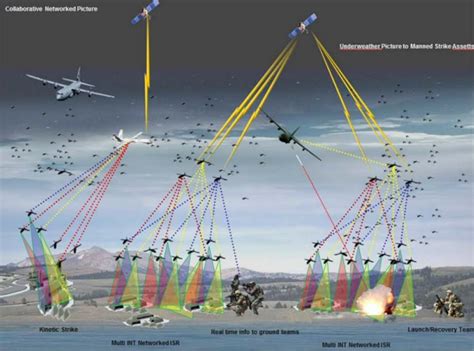
The advantage is persistence under risk. Swarms of smaller systems can maintain presence over a battlefield where a manned aircraft would be vulnerable within minutes. Combined with real-time data links and satellite integration, these systems can provide continuous situational awareness and rapid strike capability.
Still, this evolution comes with limitations. Autonomous systems struggle with complex identification problems in cluttered environments. Rules of engagement, collateral risk assessment, and dynamic battlefield judgment remain areas where human pilots still play a critical role. As a result, the near-term future of CAS is likely to be a hybrid model rather than a full replacement.
The End of the Warthog Era and the Reinvention of CAS
The retirement of the A-10 from South Korea is best understood not as an ending but as a transition point in the evolution of airpower. The aircraft itself was born out of a specific set of Cold War assumptions: massed armored warfare, relatively predictable front lines, and permissive airspace conditions for low-altitude operations.
Those assumptions no longer hold. Modern warfare is faster, more distributed, and far more lethal in the air domain. As a result, CAS is being redefined around survivability, precision, and network integration rather than presence and endurance.
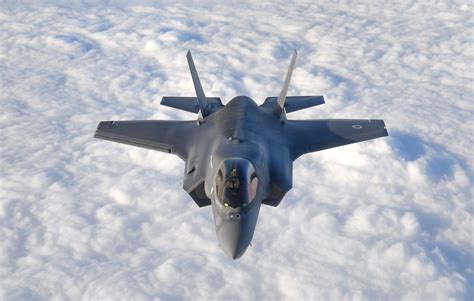
What replaces the A-10 is not a single aircraft but a system of systems: stealth fighters, multirole jets, attack helicopters operating at standoff ranges, and increasingly autonomous drones. Each contributes a piece of the CAS mission, but none replicate the A-10’s unique combination of simplicity, armor, and psychological impact.
The legacy of the Warthog will persist not because of its speed or stealth, but because of what it represented—a guarantee of visible, overwhelming support for troops under fire. The challenge for modern air forces is to translate that guarantee into a new technological and doctrinal language that can survive the realities of peer conflict.