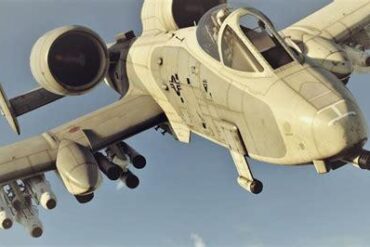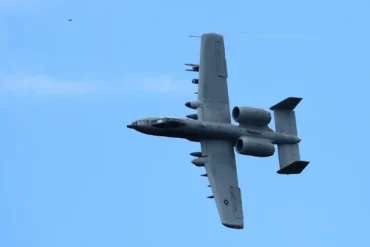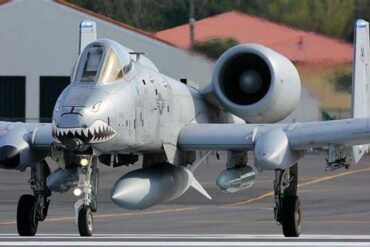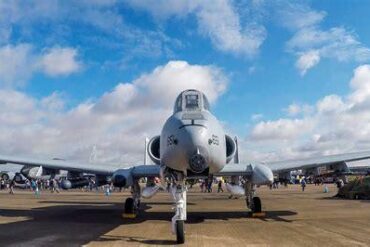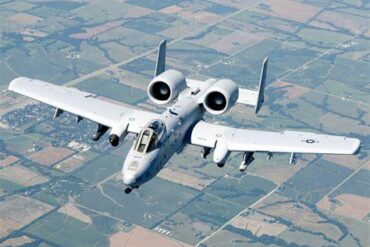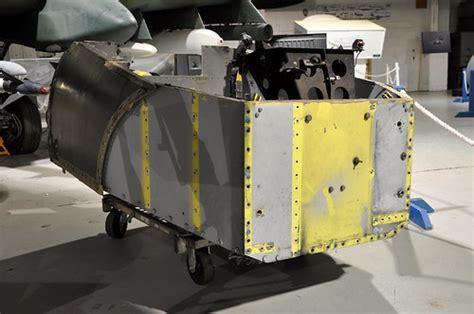
The Fairchild Republic A-10 Thunderbolt II, better known as the Warthog, was never designed to be elegant. It was engineered to survive. In the unforgiving environment of low-altitude combat—where anti-aircraft fire rises like a wall of steel—the A-10 does something few aircraft dare attempt: it flies directly into danger and keeps going. At the heart of that defiance sits one of the most extraordinary pieces of military engineering ever built—the titanium bathtub, a literal armored shell that transforms the cockpit into a fortress.
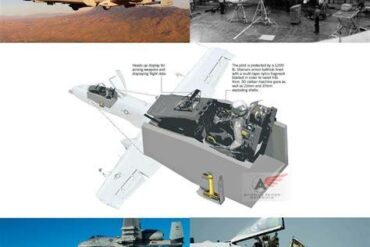
This is not metaphor. The pilot of an A-10 sits inside a 1,200-pound titanium enclosure, bolted together with surgical precision and hardened to withstand the brutal physics of ground-level warfare. While most aircraft rely on speed, stealth, or altitude for survival, the A-10 embraces a radically different philosophy: absorb the hit, endure the damage, and finish the mission.
The Titanium Bathtub: A Fortress Forged for Survival
The titanium bathtub is not simply armor plating—it is a structural sanctuary. Constructed from high-grade titanium alloy, the enclosure wraps around the cockpit like a shell, forming a protective cocoon that isolates the pilot from the chaos outside. In some sections, the armor reaches 1.5 inches in thickness, a staggering figure in aviation design where weight is always the enemy.
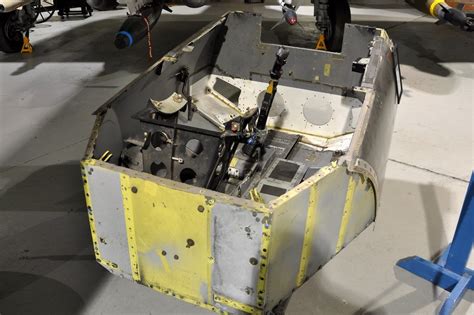
What makes titanium ideal is its exceptional strength-to-weight ratio. Compared to steel, it delivers similar ballistic resistance at roughly 60% of the weight, allowing the A-10 to carry heavy armor without sacrificing its ability to loiter over battlefields for extended periods. This balance is critical because the aircraft’s mission—Close Air Support (CAS)—demands endurance as much as durability.
Unlike traditional fuselage designs, where armor is layered externally, the bathtub is integrated into the aircraft’s core structure. It is not an add-on; it is the backbone of the A-10’s survivability. The pilot doesn’t sit behind armor—the pilot sits inside it.
Defeating Ballistics: How the Bathtub Stops Deadly Fire
Low-altitude attack runs place the A-10 squarely in the engagement envelope of heavy machine guns, anti-aircraft artillery, and shoulder-fired missiles. These threats are not hypothetical—they are the expected environment. The titanium bathtub is specifically engineered to counter them.
The armor is rated to withstand direct hits from 23mm armor-piercing and high-explosive rounds, a benchmark chosen because of their widespread use in Soviet-designed anti-aircraft systems. When such rounds strike the titanium surface, the material doesn’t simply resist penetration—it actively deforms the projectile, dispersing its energy and reducing its lethal capability before it can breach the cockpit.
Small arms fire, including 12.7 mm (.50 caliber) armor-piercing rounds, is effectively meaningless against the bathtub. These rounds, capable of slicing through conventional aircraft aluminum like paper, are either flattened on impact or deflected entirely. The result is a cockpit that remains intact even as the surrounding airframe absorbs punishment.
A Shield Against the Invisible Threat: Shrapnel and Airburst Fragments
Direct hits are only part of the danger. In modern battlefields, proximity explosions—from surface-to-air missiles or anti-aircraft shells—create clouds of high-velocity shrapnel designed to shred aircraft and incapacitate pilots.
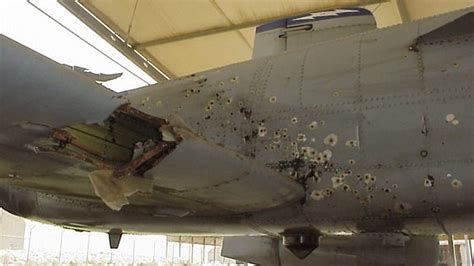
The titanium bathtub excels in this environment. Acting as a 360-degree shield, it intercepts and absorbs fragments that would otherwise penetrate the cockpit. Even when explosions occur nearby, sending razor-sharp metal fragments in all directions, the pilot remains enclosed within a hardened shell.
Inside the cockpit, an additional layer of protection comes from multi-layer ballistic nylon lining. This seemingly understated feature addresses a critical phenomenon known as spalling, where the internal surface of armor can fracture into deadly shards upon impact. The nylon lining captures these fragments, preventing them from ricocheting inside the cockpit and injuring the pilot.
This dual-layer defense—external titanium and internal ballistic fabric—creates a system that protects against both external penetration and internal fragmentation, a detail that separates survival from catastrophe.
Engineering Integrity: Bolted Strength and Structural Resilience
The bathtub is held together by over 1,100 high-strength titanium bolts, a design choice that prioritizes modular resilience. Instead of relying solely on welded seams, the bolted construction allows the structure to maintain integrity even when sections are damaged or deformed.
This approach ensures that localized damage does not compromise the entire protective system. Even after sustaining hits, the bathtub continues to shield not just the pilot, but also the critical flight-control systems routed beneath the cockpit.
This is where the design becomes truly strategic. The bathtub doesn’t just protect a human—it safeguards the aircraft’s ability to function.
Protecting the Aircraft’s Nervous System
Beneath the pilot’s seat lies a network of flight-control linkages, cables, and backup systems that serve as the A-10’s mechanical lifeline. These components are deliberately routed through the titanium enclosure, ensuring they remain protected even when the rest of the aircraft is compromised.
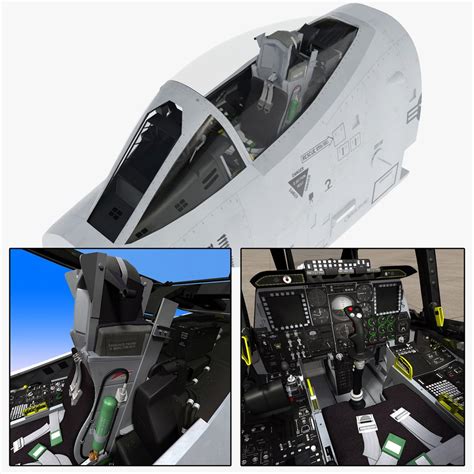
In the event of catastrophic damage—such as the loss of hydraulic systems—the A-10 can switch to Manual Reversion mode. This backup system allows the pilot to control the aircraft using purely mechanical linkages, bypassing damaged hydraulics entirely. It is physically demanding, requiring significant effort to maneuver the aircraft, but it provides something invaluable: a second chance to get home.
Most modern jets, dependent on fly-by-wire systems, would be rendered uncontrollable under similar circumstances. The A-10, by contrast, remains stubbornly operational.
Absorbing Violence: The Bathtub as a Stability Anchor
The A-10’s survivability extends beyond armor and redundancy. The titanium bathtub also plays a crucial role in stabilizing the aircraft during its most violent operations.
When the GAU-8 Avenger cannon fires, it generates up to five tons of recoil force—enough to noticeably slow the aircraft mid-flight. This immense force produces vibrations that could disorient the pilot or disrupt targeting systems.
The mass of the titanium bathtub acts as a dampening anchor, absorbing these vibrations and maintaining a stable platform. This allows the pilot to keep eyes locked on the Head-Up Display (HUD) and deliver precise fire even under extreme mechanical stress.
Surviving Shockwaves and Battlefield Chaos
Combat is not limited to bullets and missiles. The A-10 frequently operates in close proximity to explosions from its own weapons or friendly artillery, exposing it to intense shockwaves and pressure changes.
The rigid geometry of the titanium bathtub prevents the cockpit from flexing under sudden pressure preserving structural integrity and shielding the pilot from disorienting concussive forces. This stability ensures that even in the middle of overlapping explosions, the pilot retains situational awareness and control.
At low altitudes—sometimes as low as 100 feet at 300 knots—the aircraft also faces risks from bird strikes and airborne debris. While the canopy’s ballistic glass handles frontal impacts, the titanium structure reinforces the surrounding frame, preventing catastrophic deformation that could intrude into the cockpit space.
Redundancy Beyond Armor: A Philosophy of Survival
The titanium bathtub is the centerpiece of a broader design philosophy built around redundancy and resilience. The A-10 features dual hydraulic systems, backed by mechanical controls, ensuring that no single failure results in total loss.
Its wings are constructed with three massive spars, allowing them to remain structurally sound even after sustaining severe damage. The engines are spaced widely apart, reducing the likelihood that a single hit will disable both.
This layered approach transforms the aircraft into a system that does not merely resist damage—it expects it.
Battle-Tested Reality: When Engineering Meets War
The true measure of the titanium bathtub is not in specifications, but in combat.
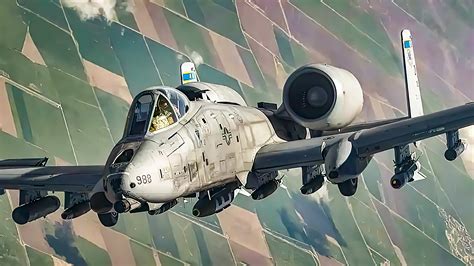
During Operation Iraqi Freedom in 2003, an A-10 piloted by Captain Kim Campbell suffered a devastating missile strike that shredded the aircraft’s tail and destroyed its hydraulic systems. With the aircraft becoming uncontrollable, she engaged Manual Reversion, relying entirely on the protected mechanical linkages inside the titanium enclosure.
For over an hour, she wrestled the crippled aircraft back to base, eventually landing without brakes, flaps, or normal control systems. The cockpit remained intact. The pilot survived.
This was not an isolated incident. Across multiple conflicts, A-10s have returned with missing wings, riddled fuselages, and catastrophic damage—yet with their pilots alive, shielded by the titanium bathtub.
A Contrast in Philosophy: A-10 vs. Modern Stealth Fighters
As the A-10 gradually gives way to aircraft like the F-35 Lightning II, the contrast in design philosophy becomes stark. The A-10 is built to survive being hit. The F-35 is built to avoid being hit at all.
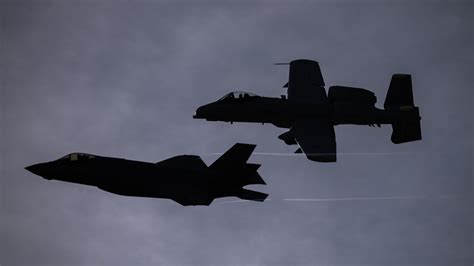
Stealth technology reduces detection, minimizing exposure to threats. However, it also introduces vulnerabilities—sensitive coatings, complex electronics, and less emphasis on physical armor. In scenarios where an aircraft does take damage, the consequences can be more severe.
The A-10, by comparison, is often described as a “flying tank.” Its survivability is localized but brutally effective. The pilot is protected, the controls are redundant, and the aircraft can endure punishment that would destroy more advanced platforms.
The Legacy of the Titanium Bathtub
The titanium bathtub represents more than an engineering solution—it embodies a philosophy of warfare that prioritizes pilot survival and mission persistence above all else. It acknowledges a harsh truth: in close air support, avoidance is not always possible. Sometimes, survival depends on enduring the unthinkable.
As the A-10 approaches retirement, its legacy remains unmatched. No other aircraft combines heavy armor, redundant systems, and battlefield endurance in quite the same way. The titanium bathtub stands as a symbol of that legacy—a reminder that sometimes the most advanced technology is not the most invisible, but the most unbreakable.
In an era increasingly defined by stealth and precision, the A-10’s armored cockpit feels almost defiant. It does not hide. It does not run. It absorbs, survives, and returns—again and again—proving that in the harshest corners of combat, strength still matters.