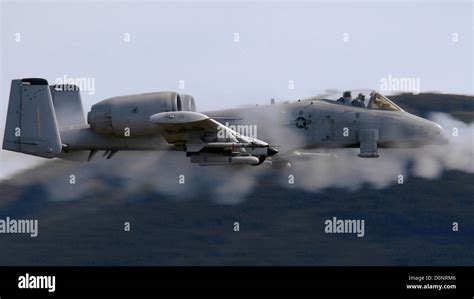
The Fairchild Republic A-10 Thunderbolt II, better known as the A-10 Warthog, was designed around a simple but demanding battlefield requirement: survive where other aircraft would struggle to operate. Built for close air support missions, the A-10 was expected to fly low, slow, and directly into some of the most dangerous airspace on Earth. Its pilots would often attack enemy armor and ground positions while facing intense fire from anti-aircraft guns, missiles, and small arms. To survive this environment, engineers created one of the most famous features in military aviation history: the A-10’s titanium armored cockpit bathtub.
Unlike many modern combat aircraft that rely primarily on speed, stealth, and electronic warfare to avoid damage, the A-10 was designed with the assumption that it would eventually be hit. The aircraft’s philosophy was not simply to avoid enemy fire but to absorb punishment and continue flying. At the heart of this strategy is a massive titanium shell surrounding the pilot, creating a protective capsule capable of resisting powerful ground-level ballistic threats.
The A-10’s armored cockpit is more than just a thick layer of metal. It is an integrated survival system that protects the pilot, shields critical flight-control components, reduces battle damage effects, and gives the aircraft the ability to return home after suffering damage that would destroy many other jets.
The Engineering Behind the A-10 Warthog’s Titanium Bathtub Armor
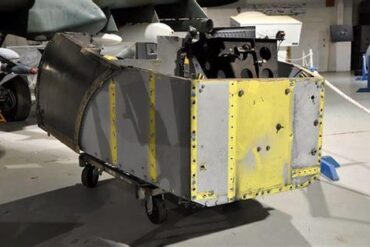
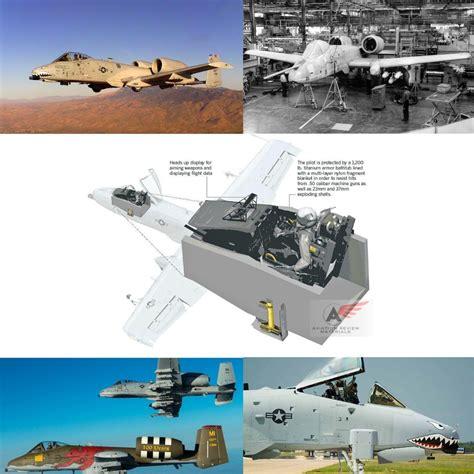
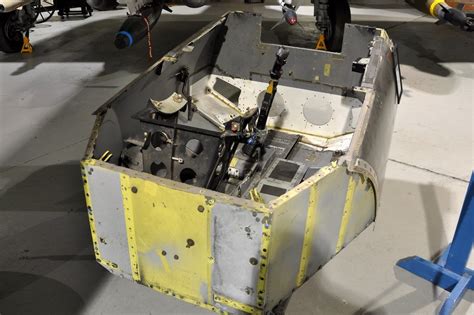
The most recognizable element of the A-10’s survivability design is its 1,200-pound titanium bathtub, a heavily armored enclosure surrounding the cockpit. This structure forms a protective shell around the pilot, with some sections reaching nearly 1.5 inches thick. The armor is made from titanium alloy because it provides an exceptional balance between protection and weight.
Titanium was the ideal material choice because it offers the strength of steel while weighing significantly less. For an aircraft operating at low altitude, where every pound affects performance and fuel efficiency, traditional steel armor would have made the aircraft too heavy and inefficient. Titanium allowed engineers to create a protective barrier without sacrificing the aircraft’s ability to maneuver and remain airborne.
The bathtub is constructed from multiple titanium plates carefully shaped around the cockpit area. Instead of acting like a simple shield attached to the aircraft’s exterior, it forms the structural foundation of the pilot’s survival space. The design creates a reinforced compartment capable of absorbing enormous impact forces from battlefield threats.
The armor’s purpose is not only to stop incoming projectiles but also to manage the energy created during impact. When a high-speed projectile strikes the titanium surface, the material deforms and absorbs much of the kinetic energy. This reduces the chance that the projectile will penetrate into the cockpit area and injure the pilot.
The A-10’s armored cockpit demonstrates a different approach to aircraft design. Many fighters prioritize reducing radar visibility or increasing speed, while the Warthog prioritizes battlefield endurance. The titanium bathtub represents a design philosophy built around survival under extreme conditions.
How Titanium Protects A-10 Pilots From Ground-Level Ballistic Threats
During close air support operations, the A-10 frequently operates only hundreds of feet above the battlefield. This puts it within range of weapons designed specifically to attack low-flying aircraft. Machine guns, anti-aircraft cannons, and missile systems can all pose serious threats to an aircraft moving slowly over enemy positions.
The titanium bathtub provides protection against many of these dangers. The armor is designed to withstand impacts from armor-piercing rounds, including threats from heavy machine guns and some medium-caliber anti-aircraft weapons. The structure is officially rated to protect against direct hits from 23mm armor-piercing and high-explosive rounds, which were common in Soviet-designed air defense systems.
For conventional aircraft constructed mainly from lightweight aluminum alloys, these weapons can be devastating. A high-velocity projectile can easily penetrate thin aircraft structures, damage flight systems, and create catastrophic failures. The A-10’s titanium armor changes that equation by creating a barrier between the battlefield and the pilot.
When an armor-piercing round strikes the bathtub, the titanium absorbs and redirects the impact energy. Instead of allowing the projectile to continue toward the pilot, the armor either stops the round or significantly reduces its destructive force. The result is a cockpit environment where the pilot has a far greater chance of survival.
This protection is especially valuable because the A-10’s mission profile places it directly in danger. The aircraft does not simply fly over a battlefield at high speed and leave. It can remain in the combat zone for extended periods, searching for targets and providing continuous support to ground forces.
The Titanium Shell Protects Against More Than Direct Hits
The genius of the A-10’s bathtub design becomes even clearer when considering battlefield conditions. Aircraft are not only threatened by direct hits. Explosions from missiles, artillery shells, and anti-aircraft weapons can produce clouds of high-speed fragments capable of damaging aircraft from every direction.
The titanium enclosure acts as a protective barrier against this deadly fragmentation. When an explosion occurs near the aircraft, thousands of metal fragments can travel outward at extreme speeds. These fragments can tear through wings, engines, and conventional aircraft structures. However, the thick titanium armor around the cockpit provides a much stronger defense.
The bathtub surrounds the lower portion of the cockpit, protecting the pilot even when the aircraft’s outer skin suffers significant damage. The canopy may crack, the fuselage may contain dozens or hundreds of holes, and external systems may fail, but the pilot remains inside a reinforced survival compartment.
Another important feature is the ballistic nylon lining inside the cockpit. When a projectile strikes armor, the inside surface of the metal can sometimes break apart and produce dangerous fragments known as spalling. These small pieces of metal can become secondary projectiles inside the cockpit.
The ballistic liner works like a protective net, catching these fragments before they reach the pilot. This additional layer demonstrates how the A-10’s survivability was created through multiple overlapping systems rather than a single piece of armor.
The bathtub is also held together using more than 1,100 high-strength titanium bolts. This mechanical fastening system ensures that the protective structure remains intact even after suffering severe impacts. If one area of armor becomes damaged, the entire cockpit protection system does not immediately fail.
The Armored Cockpit Also Protects the A-10’s Critical Flight Systems
The A-10’s titanium bathtub does not only protect the person sitting inside the cockpit. It also protects some of the aircraft’s most important mechanical systems.
Hidden beneath the cockpit are critical flight-control components, including backup mechanical cables. These systems are essential because they allow the A-10 to continue flying even after losing hydraulic power.
Most modern combat aircraft rely heavily on complex electronic and hydraulic systems. If these systems are damaged, the aircraft can become uncontrollable. The A-10 was designed differently. Its engineers included redundancy throughout the aircraft, ensuring that damage to one system would not automatically mean mission failure.
The armored bathtub protects these vital components from battlefield damage. By keeping flight controls operational, the aircraft can sometimes remain flyable even after suffering severe structural damage.
This philosophy extends throughout the entire aircraft. The A-10 has two widely separated engines mounted high on the rear fuselage. This placement reduces the chance that a single hit will destroy both engines simultaneously. The aircraft also uses a three-spar wing structure, allowing it to maintain strength even after suffering significant damage.
The titanium bathtub is therefore only one part of a larger survival system. It works together with redundancy, reinforced structures, and careful component placement to create an aircraft capable of absorbing extraordinary punishment.
The A-10 Titanium Bathtub Helps Stabilize the Aircraft During Combat
The A-10’s armor also contributes to the aircraft’s combat effectiveness in another unexpected way. The titanium bathtub provides mass and structural rigidity that help stabilize the aircraft during weapons employment.
The aircraft’s enormous GAU-8 Avenger 30mm cannon produces tremendous recoil forces when fired. The weapon generates approximately five tons of recoil force, creating powerful vibrations throughout the aircraft. Without careful engineering, these vibrations could affect pilot control, targeting accuracy, and instrument performance.
The heavy titanium cockpit structure helps absorb some of these forces. Acting almost like a structural anchor, the bathtub reduces vibration and provides a stable platform for the pilot while engaging ground targets.
This stability is especially important because the A-10 often performs attacks at extremely low altitudes. Pilots must maintain precise control while flying through hostile environments, avoiding terrain, identifying targets, and delivering weapons accurately.
The armored cockpit also protects against shock waves created by nearby explosions. In close air support operations, aircraft may fly near friendly artillery impacts or their own weapon explosions. The reinforced cockpit helps prevent sudden pressure changes and structural flexing from overwhelming the pilot.
Combat History Proves the A-10 Warthog’s Incredible Survivability
The A-10’s reputation for toughness is not just based on engineering theory. Combat history has repeatedly demonstrated the aircraft’s ability to survive extreme damage.
During Operation Iraqi Freedom in 2003, Captain Kim Campbell’s A-10 suffered severe damage after being struck by a surface-to-air missile over Baghdad. The aircraft’s rear section was heavily damaged, with extensive holes throughout the fuselage and major damage to control systems.
Despite the destruction, Campbell managed to fly the damaged aircraft back to base. After losing hydraulic control, she switched to Manual Reversion mode, using the A-10’s mechanical backup controls to operate the aircraft. She successfully landed after flying nearly 100 miles while controlling a severely damaged jet.
Another A-10 damaged during the same conflict was flown back safely after suffering major combat damage. Earlier, during the 1991 Gulf War, an A-10 famously returned after losing a large portion of its wing following a missile strike.
These incidents highlighted the aircraft’s unique ability to survive situations that would likely be fatal for many other combat aircraft.
Why the A-10’s Titanium Bathtub Remains Legendary
The A-10 Warthog represents a unique era of military aircraft design. It was built around the belief that survivability came from strength, redundancy, and the ability to continue fighting after damage.
The titanium bathtub remains one of the most impressive examples of aircraft armor engineering ever created. It protects pilots from battlefield threats, shields critical systems, absorbs punishment, and allows the aircraft to continue operating in environments where many aircraft would be forced to withdraw.
Modern aircraft such as the Lockheed Martin F-35 Lightning II approach survivability differently. Instead of absorbing hits, stealth fighters aim to avoid detection and prevent attacks before they happen. This represents a different philosophy shaped by modern warfare.
However, the A-10’s armored cockpit continues to symbolize a powerful engineering concept: sometimes the best defense is the ability to survive the hit. For decades, the titanium bathtub has protected Warthog pilots flying directly into danger, making it one of the most famous survival features in aviation history.