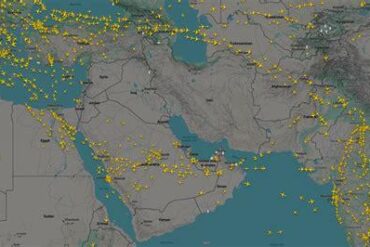
Over the past two decades, Qatar Airways has transformed from a relatively small regional airline into one of the most powerful long-haul carriers in the world. Operating from Hamad International Airport in Doha, the airline sits at a geographical crossroads connecting Europe, Asia, Africa, Oceania, and the Americas. While location is a strategic advantage, geography alone cannot build a world-class global airline. The real engineering behind Qatar Airways’ success lies in its fleet strategy, which carefully balances aircraft size, range, and capacity to serve hundreds of routes with remarkable precision.
The airline’s aircraft portfolio reflects a deliberate approach to network design. Rather than relying heavily on a single aircraft type, Qatar Airways operates a diverse mix of narrowbody, widebody, and freighter aircraft, each fulfilling a specific operational role. This layered fleet allows the airline to adjust capacity to market demand, maintain high flight frequencies, and support its hub-and-spoke system without unnecessary inefficiencies.
As global aviation markets shift rapidly due to economic cycles, passenger demand, and cargo trends, airlines must remain adaptable. Qatar Airways’ fleet mix gives it a rare level of operational flexibility, enabling the airline to scale routes, introduce new destinations, and maintain global connectivity even when conditions change.
Qatar Airways: A Rapidly Expanding Global Airline
Founded in 1993 and relaunched in 1997 under the Qatari government, Qatar Airways quickly evolved into a flagship aviation brand representing the country’s ambitions in global connectivity. Within two decades, the airline expanded from a small regional operation to a major intercontinental carrier serving more than 170 destinations across six continents.
Operating from Doha’s Hamad International Airport, the airline has built a powerful hub linking major world cities through efficient connections. A traveler flying from Manchester to Bangkok, for example, can transit through Doha with a relatively short layover. The same hub enables connections between markets that might otherwise lack direct flights, such as Stockholm to Cape Town or Osaka to São Paulo.
Membership in the oneworld alliance further expands the airline’s reach. Partnerships with major airlines such as American Airlines, British Airways, and Qantas allow Qatar Airways to offer seamless connections across hundreds of additional destinations beyond its own network.
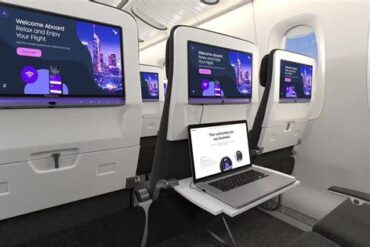
The airline has also gained global recognition for its premium passenger experience. Its Qsuite business class, with sliding doors and convertible double beds, is frequently ranked among the best airline business-class products in the world. Combined with a modern cabin design and award-winning service, the airline consistently ranks near the top of international airline quality surveys such as the Skytrax World Airline Awards.
Yet behind the premium passenger experience lies a far more technical advantage: one of the most sophisticated widebody fleets in commercial aviation.
A Fleet Designed Around Long-Haul Connectivity
Qatar Airways operates a fleet structure specifically designed to support long-haul global connectivity through Doha. Because the airline’s hub sits within eight hours of most of the world’s population, its strategy focuses heavily on intercontinental flights operated by widebody aircraft.
These large aircraft form the backbone of the airline’s operations, allowing it to transport large numbers of passengers and cargo between continents.
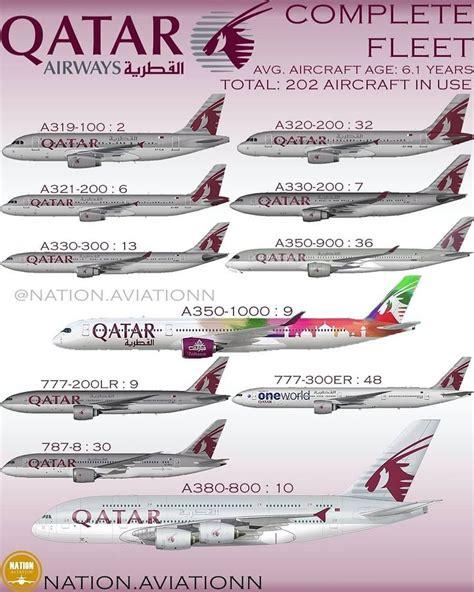
Key Widebody Aircraft In The Qatar Airways Fleet
The airline operates several advanced widebody models that support its global route network:
- Airbus A350-900
- Airbus A350-1000
- Boeing 777-300ER
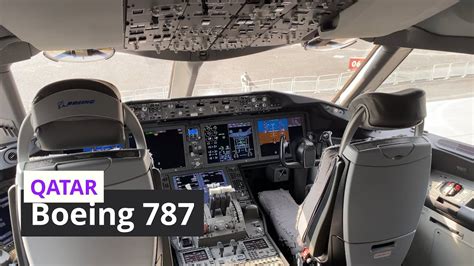
- Boeing 787-8 and 787-9 Dreamliner
- Airbus A380
Each aircraft family fulfills a different role within the network, allowing Qatar Airways to match aircraft size and range with passenger demand.
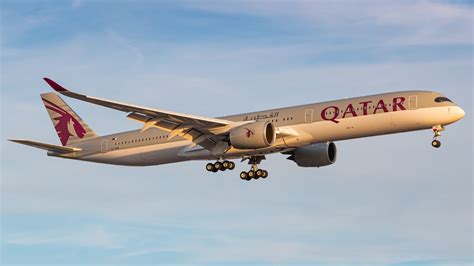
For example, the Airbus A350-1000 is one of the largest and most advanced aircraft in the airline’s fleet. With long-range capabilities exceeding 8,000 nautical miles, it serves high-demand routes such as Doha to London, New York, Sydney, and Los Angeles. These flights require both high passenger capacity and extended range.
Meanwhile, the Boeing 787 Dreamliner family offers a slightly smaller capacity but exceptional fuel efficiency. These aircraft are ideal for routes with moderate demand where a larger aircraft might be inefficient.
The Boeing 777-300ER, another key component of the fleet, remains one of the most capable long-haul aircraft ever built. With seating for more than 350 passengers in some configurations and massive cargo capacity, the aircraft is frequently deployed on the airline’s busiest global routes.
By operating multiple aircraft types with overlapping capabilities, Qatar Airways gains an advantage: it can fine-tune aircraft deployment across hundreds of routes without disrupting the broader network structure.
Regional Connectivity With Narrowbody Aircraft
While widebody aircraft dominate Qatar Airways’ fleet, the airline also operates narrowbody aircraft that play a critical role in feeding passengers into the Doha hub.
Aircraft such as the Airbus A320 and Airbus A321neo serve shorter routes across the Middle East, South Asia, Eastern Europe, and parts of North Africa. These routes typically involve flight times of two to five hours, making smaller aircraft more economically efficient.
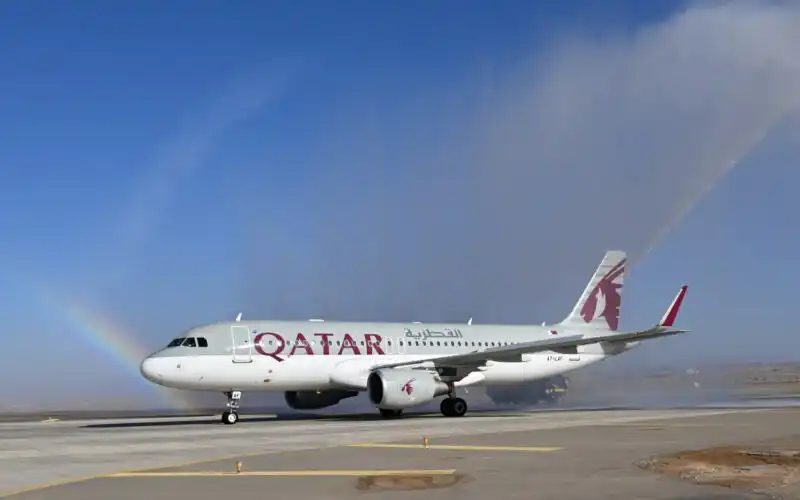
Regional flights bring passengers from secondary cities into Doha, where they can connect to long-haul flights heading to Europe, Asia, or the Americas. This system forms the backbone of the hub-and-spoke model used by most global airlines.
For example, a traveler from Muscat, Tbilisi, or Amman may board a narrowbody aircraft to Doha and then connect to a widebody flight heading to Paris, Tokyo, or Toronto. Without these feeder routes, filling long-haul flights consistently would be far more difficult.
The upcoming Airbus A321neo will further strengthen this regional strategy. The aircraft offers improved fuel efficiency and greater range compared with older A320 models, allowing the airline to expand its regional network while reducing operating costs.
Cargo Power: A Global Freight Operation
Passenger flights are only part of Qatar Airways’ strategy. The airline also operates one of the largest cargo operations in the aviation industry, known as Qatar Airways Cargo.
Cargo demand has grown dramatically in recent years due to the expansion of e-commerce, pharmaceutical shipments, and high-value electronics logistics. To capitalize on this demand, Qatar Airways maintains a powerful fleet of dedicated freighter aircraft.
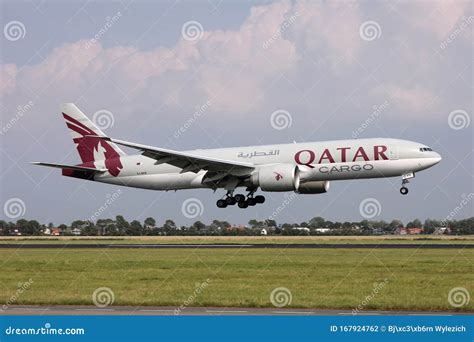
At the heart of the cargo division are Boeing 777-200F freighters, capable of carrying more than 100 metric tons of cargo across intercontinental distances. These aircraft operate major logistics routes linking manufacturing hubs in Asia with consumer markets in Europe and North America.
However, the cargo strategy does not rely solely on freighter aircraft. Passenger aircraft also carry significant freight in their belly cargo holds, allowing Qatar Airways to transport goods on nearly every passenger flight in its network.
This dual-capacity system allows the airline to move cargo quickly and efficiently while maximizing aircraft utilization.
Looking ahead, the airline has ordered 34 Boeing 777-8F freighters, which will eventually replace older cargo aircraft while expanding overall freight capacity. These next-generation freighters promise greater range, improved fuel efficiency, and larger payload capabilities, strengthening Qatar Airways’ position in global logistics.
Layered Aircraft Capabilities Create Operational Flexibility
The most significant advantage of Qatar Airways’ fleet strategy is its layered structure of aircraft capabilities. Rather than focusing on a single aircraft size, the airline operates multiple widebody types with overlapping ranges and capacities.
This creates a flexible system in which aircraft can be reassigned depending on market conditions.
For example:
- Boeing 787-9 and Airbus A350-900 handle long-haul routes with moderate demand.
- Airbus A350-1000 and Boeing 777-300ER serve high-density intercontinental routes.
- Airbus A320 and A321neo feed regional traffic into the Doha hub.
Because these aircraft share similar long-range capabilities, Qatar Airways can adjust capacity without eliminating routes.
If demand on a particular route grows, the airline can upgrade the aircraft type. If demand declines temporarily, it can deploy a smaller aircraft while maintaining the route’s presence in the network.
This flexibility becomes especially valuable during periods of economic uncertainty or seasonal travel fluctuations. Airlines with rigid fleets often struggle to adapt, but Qatar Airways can shift aircraft deployment with relative ease.
The Role Of Hamad International Airport
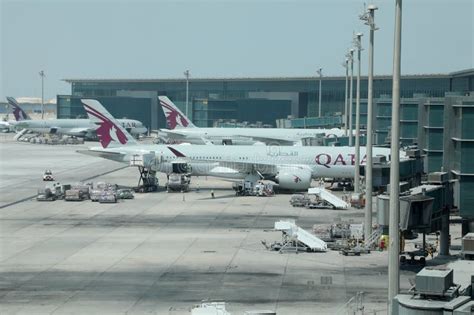
Fleet flexibility works best when combined with an efficient hub. Hamad International Airport, opened in 2014, was designed specifically to support Qatar Airways’ global expansion.
The airport’s layout allows for rapid aircraft turnaround times and efficient passenger transfers, enabling travelers to connect between flights quickly.
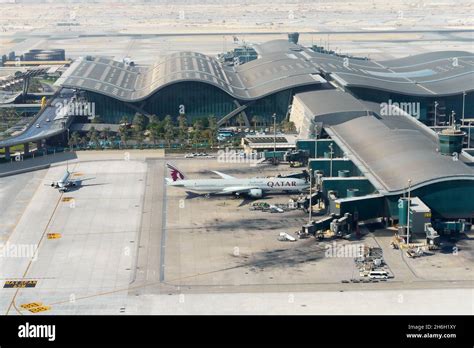
This infrastructure supports the airline’s hub strategy. Dozens of flights arrive within narrow time windows, allowing passengers to transfer between routes heading in multiple directions.
For instance, flights arriving from Europe may connect to departures heading toward Asia or Australia, while passengers arriving from Africa can transfer to flights bound for North America.
Because most of the airline’s aircraft are widebodies capable of long-distance travel, the hub can link nearly any global city pair with a single stop in Doha.
Future Fleet Growth With The Boeing 777X And 787-10
Qatar Airways has placed significant aircraft orders to further enhance its fleet strategy over the next decade. Two aircraft types stand out as central to the airline’s future growth: the Boeing 777-9 and the Boeing 787-10.
The Boeing 777-9, part of Boeing’s new 777X family, will become one of the largest aircraft in the airline’s fleet once deliveries begin. Featuring advanced composite wings, folding wingtips, and highly efficient engines, the aircraft promises significant improvements in fuel efficiency compared with the current 777-300ER.
For Qatar Airways, this aircraft will be ideal for high-demand intercontinental routes, such as connections between Doha and major global hubs including London, New York, Singapore, and Sydney.
Alongside the 777X, the airline has ordered the Boeing 787-10, the largest variant of the Dreamliner family.
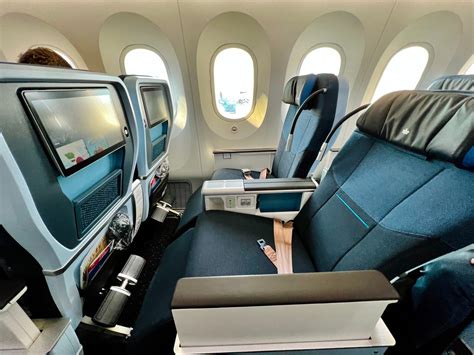
The aircraft offers increased passenger capacity compared with the 787-8 and 787-9 while maintaining excellent fuel efficiency. Although it has slightly less range than smaller Dreamliner variants, it is perfectly suited for medium-to-long-haul routes where passenger demand is strong but not high enough for larger aircraft like the A350-1000.
Together, these aircraft will allow Qatar Airways to fine-tune capacity across its network, ensuring that the right aircraft serves each route.
Why Fleet Diversity Gives Qatar Airways A Competitive Edge
Many airlines rely heavily on a small number of aircraft types to simplify maintenance and training costs. Qatar Airways has taken a different approach by building a broad and versatile fleet that covers nearly every segment of long-haul aviation.
This diversity allows the airline to:
- Match aircraft capacity precisely with passenger demand
- Expand into new markets without overcommitting large aircraft
- Adjust operations quickly during market disruptions
- Maintain strong cargo capabilities alongside passenger service
Combined with its strategic location in the Middle East and the efficiency of Hamad International Airport, this fleet strategy enables Qatar Airways to operate one of the most adaptable global airline networks in the industry.
In the constantly evolving world of international aviation, flexibility often determines which airlines thrive and which struggle. By investing in a diverse fleet of technologically advanced aircraft, Qatar Airways has built an operational framework capable of responding to shifting demand across continents.
The result is an airline that can connect cities across the world with remarkable efficiency—one aircraft, one route, and one carefully calibrated fleet decision at a time.