Indonesia’s rapid shift from slow-moving modernization to one of Asia’s boldest weapons-acquisition campaigns signals a transformative moment in the region’s military balance. The country is no longer satisfied with incremental updates or low-risk procurement. Instead, it is aggressively assembling a roster of combat-tested systems that proved their worth during the intense May 2025 India–Pakistan clash. This unique appetite, centering on the BrahMos, J-10C, PL-15, and Rafale–Meteor ecosystem, illustrates Jakarta’s resolve to establish a deterrent blueprint unlike anything in Southeast Asia.
Indonesia’s modernization efforts have historically struggled under budget limits, bureaucratic hesitation, and procurement delays. That cycle was decisively broken when President Prabowo Subianto took office in late 2024. His administration thrust the long-discussed Minimum Essential Force roadmap into a long-overdue acceleration, prioritizing airpower, naval strike systems, and archipelagic defense layers capable of responding to multi-domain threats.
Jakarta’s planners concluded that the India–Pakistan conflict offered a rare real-world laboratory. Instead of ideological alignment or supplier loyalty, the new doctrine favors battlefield performance above all else. That is why Indonesia is simultaneously pursuing systems used by both sides during the May 2025 clash: India’s BrahMos and Rafale, and Pakistan’s Chinese-built J-10C armed with PL-15 missiles. In Jakarta’s eyes, proven capability matters more than geopolitical narrative.
The BrahMos: Indonesia Eyes a Missile That Dominated Operation Sindoor
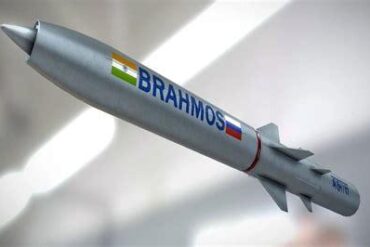
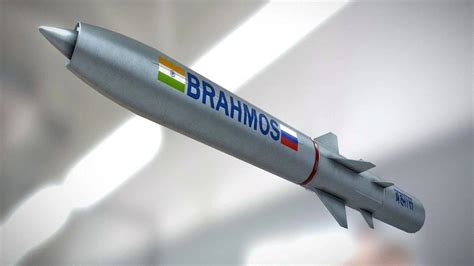
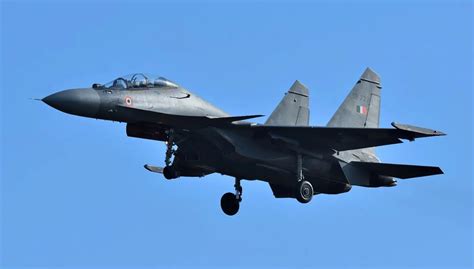
Few weapons caught global attention like the BrahMos during the four-day India–Pakistan exchange. When India reportedly launched 15–19 BrahMos missiles, observers noted that none were intercepted—a record that electrified defense analysts across Asia. Operation Sindoor marked the missile’s first real combat use, revealing a combination of Mach-3 speed, terrain-skimming flight profiles, and pinpoint accuracy that overwhelmed Pakistani defenses.
Developed jointly by India’s DRDO and Russia’s NPO Mashinostroyenia, the BrahMos was already respected as one of the world’s fastest cruise missiles. What Operation Sindoor demonstrated was its reliability under wartime pressure. Indian commanders even confirmed strikes on major military bases, including the Nur Khan Airbase near Rawalpindi, leading the Indian Air Force chief to call the BrahMos a decisive “game-changer.” That label resonated deeply in Jakarta.
For Indonesia, the deal—valued at roughly US$450 million—is almost complete pending Moscow’s sign-off, since the weapon is a joint India–Russia product. If approved, Indonesia will become the second export customer after the Philippines. Indonesian officials have held years of technical discussions with BrahMos Aerospace, exploring shore-based, ship-based, and air-launched variants. The air-launched version is especially compelling because Indonesia already operates Su-30 Flanker fighters capable of carrying the BrahMos-A.
Why the BrahMos Fits Indonesia’s Archipelagic Warfighting Needs
Indonesia is an archipelagic state stretching across more than 17,000 islands, making long-range precision-strike capability essential for protecting sea lanes and deterring maritime coercion. The BrahMos, with its “fire-and-forget” guidance, ramjet propulsion, and extremely low radar visibility, allows Indonesia to neutralize targets across land and sea without overexposing its fleet.
Strategists in Jakarta believe shore-based BrahMos batteries positioned along choke points—particularly in the Natuna Sea—could create a barrier powerful enough to dissuade hostile incursions. In this sense, Indonesia’s motivation mirrors India’s own doctrine: combining missile speed and lethality with flexible deployment.
The J-10C: Jakarta’s Second Big Prize From the Sindoor Battlefield
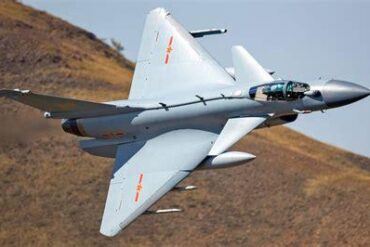
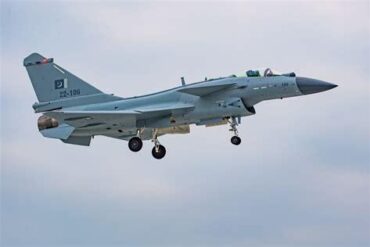
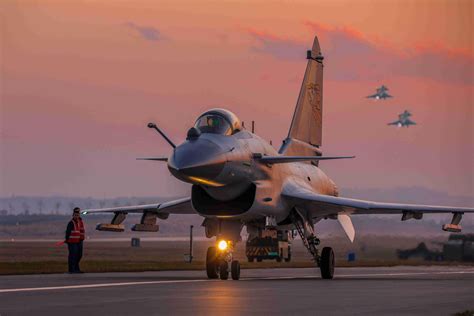
Jakarta has also moved forward with plans to purchase 42 J-10C fighters, despite already signing deals for France’s Rafale. China pitched the J-10C within weeks of the Indo–Pak clash, leveraging headlines about its strong BVR (beyond visual range) performance and its integration with the PL-15 long-range missile.
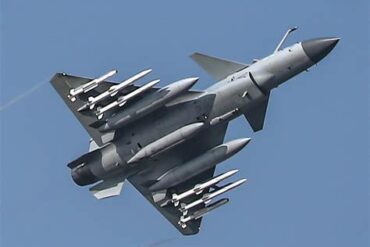
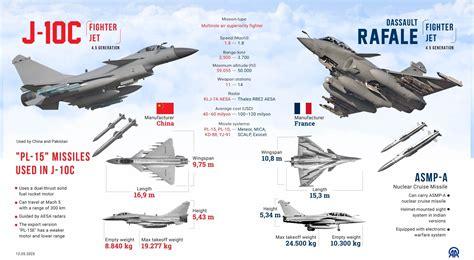
Chinese analysts touted that a J-10C shot down an Indian Rafale using the PL-15 during the conflict, a claim India strongly denies. Regardless of the contested narrative, what resonated with Indonesia was the J-10C’s combination of AESA radar, modern avionics, and PL-15 compatibility, making it an efficient and relatively affordable high-end fighter.
If Indonesia goes ahead with the J-10C purchase, the export variant of the PL-15—reportedly capable of striking targets up to 150 km away—would become a core part of its new air-defense network. Even the alternative, the cheaper J-10B, gives Jakarta a versatile multi-role aircraft, though its capabilities fall short of the C variant.
Why Indonesia Wants Both: Rafale–Meteor and J-10C–PL-15 as a Dual Airpower Ecosystem
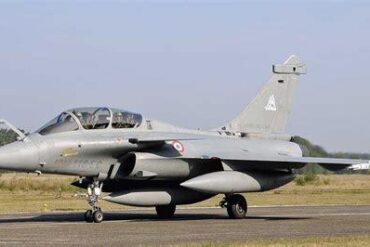
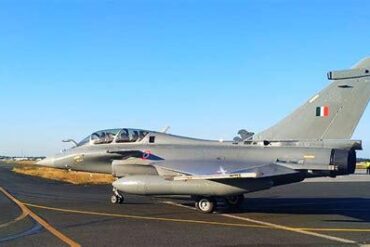
The decision to acquire both the Rafale and the J-10C is not a contradiction—it is the purest expression of Prabowo’s diversification doctrine. The Rafale sits at the premium tier of global fighters, especially when paired with the Meteor BVRAAM, one of the world’s most advanced air-to-air missiles. The J-10C, meanwhile, offers a cost-effective platform for high-volume air-defense coverage.
Indonesia is building a layered doctrine: Rafales for long-range penetration, air dominance, and strategic missions, while J-10Cs serve as rapid-response interceptors across the archipelago. Jakarta’s geography demands this kind of multi-layered approach. A premium-only fleet would be too small; a budget-only fleet would be outclassed. Combining the two gives Indonesia scalability, reach, and resilience.
The Rafale’s Rising Influence After Operation Sindoor
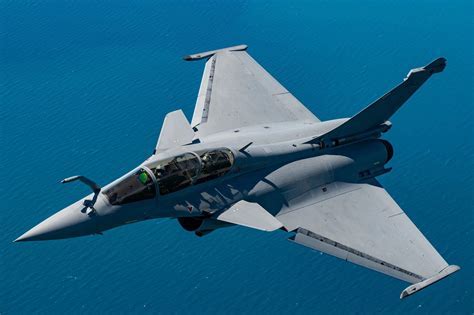
Indonesia’s interest in the Rafale predates Operation Sindoor, but the jet’s role in India’s retaliatory missions elevated its profile in Jakarta. India’s Rafales were used to execute long-range strikes on militant sites deep inside Pakistan, demonstrating both operational stealth and precision under harsh radar and missile-threat environments.
France sweetened the deal during President Emmanuel Macron’s post-conflict visit to Jakarta, where Indonesia signed a Letter of Intent for additional Rafales and naval platforms such as Scorpene submarines. For Jakarta, the Rafale package includes access to the Meteor missile—a major force multiplier.
A Rare Defense Strategy in Southeast Asia: Radical Supplier Diversification
Indonesia stands out as the only Southeast Asian nation actively building a mixed fleet spanning Russian, Chinese, American, French, Turkish, and Korean platforms. This approach introduces logistical challenges, including complex maintenance chains and uneven interoperability. Yet Jakarta views these headaches as acceptable costs for a bigger strategic payoff: resilience.
The country’s planners vividly recall past sanctions that grounded Indonesian aircraft for lack of spare parts. Diversifying suppliers avoids the vulnerability of depending on a single nation’s political goodwill. In the age of great-power rivalry in the Indo-Pacific, Indonesia prefers to keep its options open and its procurement portfolio wide.
Indonesia’s Mixed Arsenal Is Becoming a Blueprint for Medium-Power Autonomy
Indonesia’s acquisition of the BrahMos, Rafale, and J-10C—three systems tied to competing geopolitical blocs—signals a new concept emerging in the Indo-Pacific: the autonomous middle power. These countries may not match the United States or China in scale, but they refuse to be absorbed into any single military orbit.
Jakarta’s strategy blends the best technologies from multiple suppliers to form a hybrid defensive ecosystem. It is a carefully hedged position—one that reduces external dependency while maximizing capability.
The Regional Impact: A Subtle But Significant Power Recalibration
Indonesia does not seek confrontation, but its rising military capability inevitably reshapes Southeast Asia’s balance. The BrahMos alone introduces a powerful deterrent to any naval adventurism near Indonesia’s waters. Meanwhile, dual-tier air fleets comprising Rafale–Meteor and J-10C–PL-15 combinations provide coverage across thousands of kilometers of sea and airspace.
This approach allows Indonesia to defend its sovereignty with greater confidence while signaling to major powers that Jakarta intends to stand independently in its defense decisions.
A New Military Reality Begins to Take Shape
As long as Prabowo’s modernization momentum continues, Indonesia will emerge with one of the most eclectic yet formidable arsenals in Asia. Acquiring weapons used in the India–Pakistan conflict is not merely opportunistic—it is strategic pragmatism. Combat-tested systems reduce uncertainty, and Indonesia is investing in capabilities that have already proven their deterrent value under the harshest conditions.
The trend points toward a long-term transformation in Indonesia’s military identity: a force that blends affordability with elite capability, speed with precision, and global procurement with local autonomy. With each new acquisition, Southeast Asia’s largest archipelagic nation positions itself not just as a guardian of its waters but as a rising regional power shaping its own strategic fate.