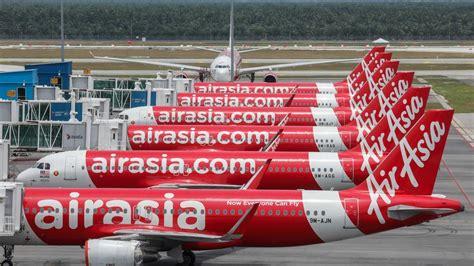
In the rapidly evolving landscape of Southeast Asia’s aviation sector, nations such as Singapore, Malaysia, and Vietnam are igniting a fierce competition among budget airlines. This high-stakes expansion war is driven by soaring travel demand, but it also comes at a time when the industry faces unprecedented challenges from rising operational costs. With leading budget carriers like AirAsia, VietJet, and Cebu Pacific aggressively expanding their fleets, the stakes couldn’t be higher for these airlines aiming to secure a dominant position in what is projected to be the world’s fastest-growing air travel market.
The past two decades have seen a remarkable transformation within Southeast Asia’s low-cost aviation sector. The region’s rapid economic growth, increasing disposable incomes, and a surge in travel demand, particularly from China, have fueled this expansion. However, as airlines ramp up their operations, they confront an environment marked by escalating fuel prices, labor costs, and a persistent shortage of aircraft, all of which threaten their profitability. According to the International Air Transport Association (IATA), the Asia-Pacific airlines are projected to achieve a meager net profit margin of just 1.9% in 2025, significantly trailing the global average of 3.7%. This stark reality underscores the precarious balance between expansion and sustainability in the region’s aviation sector.
As budget airlines push forward with their ambitious growth plans, they are doing so amidst a backdrop of tightening profit margins. In 2024 alone, international airfares in Asia fell by 12% compared to the previous year, driven largely by increased competition and an influx of new seats into the market. The largest budget airline in Southeast Asia, AirAsia, reported a 9% dip in average fares during the first quarter of 2025. While lower fuel prices have allowed airlines to pass some savings onto consumers, these gains are being offset by rising labor costs, airport charges, and a global aircraft shortage that is inflating leasing and maintenance fees. The situation has already led to significant repercussions, exemplified by Qantas Airways‘ decision to shutter its Singapore-based subsidiary, Jetstar Asia, after two decades of operation. This decision reflects the harsh reality that without sufficient scale and cost efficiency, survival in this competitive environment becomes increasingly difficult.
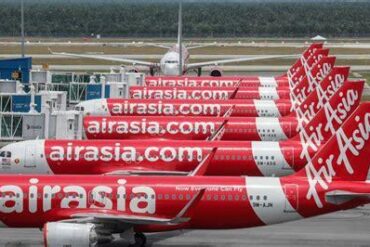
The crux of the matter lies in the concept of scale. Budget airlines thrive on cost-efficiency, achieved through standardized fleets and streamlined operations. Jetstar Asia, with its modest fleet of just 13 aircraft, struggled to keep pace with larger regional rivals boasting far more substantial operations. For instance, Singapore Airlines’ Scoot operates 53 planes, AirAsia commands a fleet of 225, and VietJet manages 117 aircraft, including those operated by its Thai division. The Philippine carrier Cebu Pacific also maintains a fleet of 99 aircraft. Each of these major players is actively pursuing aggressive growth strategies, recognizing that in this cutthroat market, the mantra is clear: “Scale or exit.”
VietJet, a frontrunner in the budget airline space, has recently made headlines by signing a provisional agreement at the Paris Airshow to acquire up to 150 Airbus single-aisle aircraft. This move follows a significant order of 20 A330neo wide-body jets and an outstanding order for 200 Boeing 737 MAX planes. Similarly, AirAsia is not resting on its laurels; it has at least 350 aircraft on order and is currently negotiating for an additional 50 to 70 long-range single-aisle planes. The airline is also exploring the acquisition of 100 regional jets to tap into underserved secondary markets and expand its network footprint.
This drive for expansion is underpinned by compelling data. According to the CAPA Centre for Aviation, nearly two-thirds of international airline seats in Southeast Asia this year are operated by low-cost carriers—a figure that is nearly double the global average of around one-third. This exceptional concentration creates a uniquely lucrative yet fiercely competitive environment.
As the budget airline sector in Southeast Asia continues to burgeon, the long-term growth prospects appear promising. However, the immediate outlook is fraught with uncertainty, primarily due to rising operational expenses and the ongoing fare wars that make profitability elusive. For budget airlines navigating this intricate landscape, the imperative is clear: scale fast or risk being grounded.
In conclusion, the battle for supremacy among budget airlines in Southeast Asia represents not just a struggle for market share, but a critical juncture for the entire industry. As airlines like AirAsia, VietJet, and Cebu Pacific vie for dominance, they are not merely expanding fleets; they are redefining the future of air travel in a region poised for exponential growth. The ultimate question remains—will these airlines successfully navigate the turbulent skies ahead, or will the weight of rising costs and fierce competition force them to retreat? Only time will tell, but the urgency to adapt and innovate has never been more paramount for the region’s budget carriers.
As we observe this unfolding saga, it is essential for stakeholders—be it travelers, investors, or industry analysts—to closely monitor the developments in this dynamic sector. The decisions made today will undoubtedly shape the future of air travel in Southeast Asia, making it a critical area of focus for those invested in the aviation industry. Whether through strategic partnerships, innovative service offerings, or enhanced customer experiences, the players in this market must remain agile and responsive to both opportunities and threats, ensuring that they are not left behind in this fast-paced, high-stakes environment.