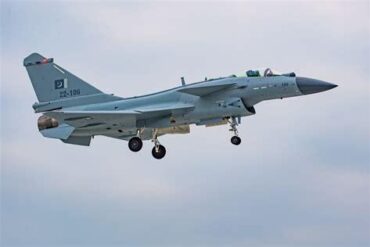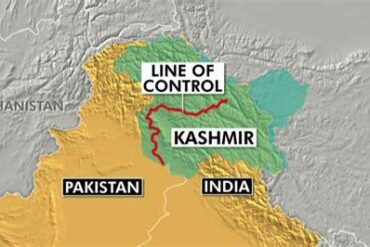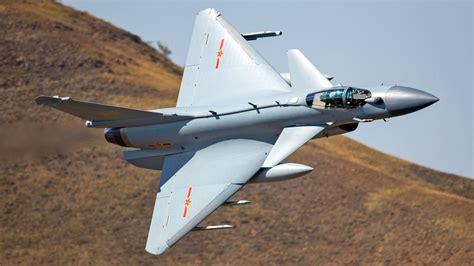
Tensions reignited over Kashmir last week in what defense analysts are calling the largest aerial confrontation since World War II, as more than 125 combat aircraft from India and Pakistan clashed in the contested airspace. Emerging from the chaos was a surprising victor: the Chinese-built J-10C Vigorous Dragon, flown by Pakistan Air Force (PAF) pilots, which reportedly outmaneuvered and overwhelmed several Indian Air Force (IAF) fighters, including the much-celebrated Dassault Rafale.
The Kashmir Air Battle: A Modern-Day Sky War
The high-altitude skies above Kashmir erupted into a massive dogfight following escalating tensions between the two nuclear-armed neighbors. What began as routine patrols spiraled into a fierce air battle involving fourth- and 4.5-generation fighters from both nations.
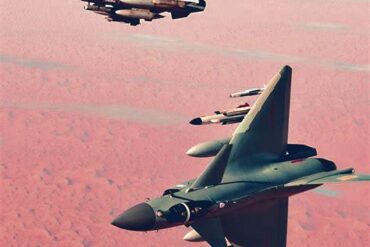
Reports indicate that Pakistan’s frontline squadron of J-10C fighters, supported by early warning aircraft and precision jamming systems, engaged IAF formations composed of Rafales, Mirage 2000s, MiG-29s, and Su-30MKIs. In the ensuing combat, the J-10C is believed to have successfully jammed the Rafale’s radar and communication systems, leaving the Indian fighters exposed and disoriented.
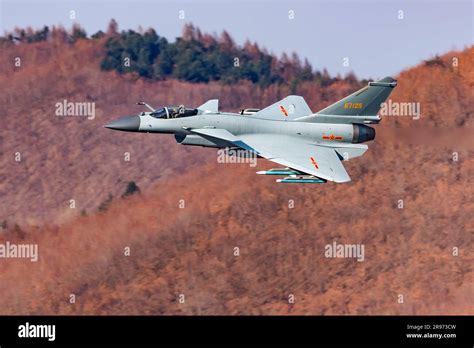
Pakistan claims the J-10C scored confirmed hits on a Rafale and a Mirage 2000, while Indian sources have hinted at additional losses, including a MiG-29 and a Su-30MKI, though these have not been officially acknowledged. The Indian Air Force admitted on Monday that “losses are a part of combat,” suggesting that multiple aircraft may indeed be unaccounted for. However, India emphasized that all its pilots returned safely—a statement that does not negate potential hardware losses.
The J-10C Vigorous Dragon: Combat Debut and Tactical Edge
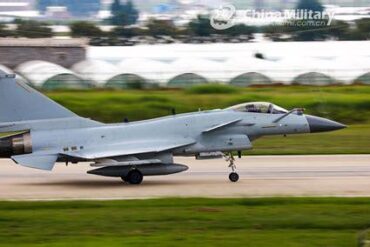
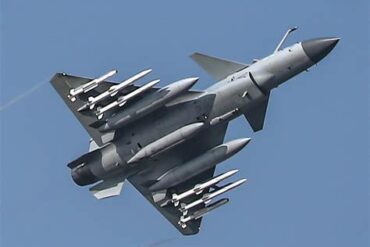
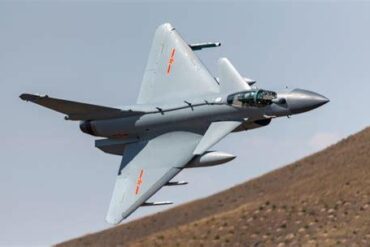
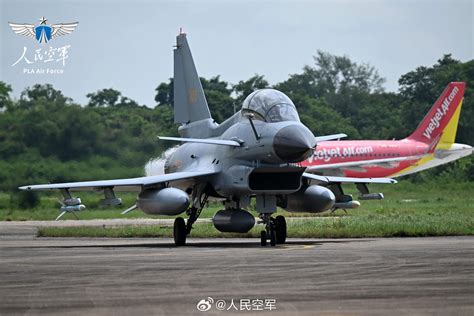
The J-10C, known as the Vigorous Dragon, is China’s most advanced single-engine multirole fighter. Designed and manufactured by the Chengdu Aircraft Industry Group, the J-10C incorporates a modern airframe with Active Electronically Scanned Array (AESA) radar, infrared search and track (IRST), and electronic warfare suites that provide superior situational awareness and survivability.
Despite being a single-engine aircraft, the J-10C’s performance during the Kashmir dogfight demonstrates the potency of high-end avionics and network-centric warfare capabilities. By jamming the Rafale’s radar, the J-10C essentially blinded the IAF’s most prized fighter, undermining its ability to track and engage threats effectively.
Critically, this was the first known combat deployment of the J-10C, marking a significant milestone in China’s ambitions to export its indigenous military hardware. While the aircraft has been offered on the open market, Pakistan remains its only confirmed operator, having inducted the type in 2022 to bolster its air defense posture against India’s growing Rafale fleet.
Rafale’s First Combat Loss? An Embarrassment for India
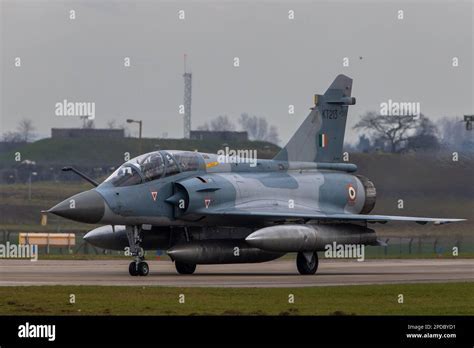
The Dassault Rafale, hailed as a “game changer” by Indian defense circles, was expected to provide India with a technological edge over Pakistan. Developed by French aerospace giant Dassault Aviation, the twin-engine, delta-wing fighter boasts an impressive combat range, advanced Spectra electronic warfare systems, and the ability to carry over 9 tons of armament, including nuclear-capable cruise missiles.
However, despite its reputation, the Rafale may have suffered its first confirmed loss in aerial combat during the recent clash. If verified, this would represent a stunning blow to the Rafale’s combat prestige, especially considering the aircraft’s procurement cost—India spent nearly $8.7 billion to acquire 36 of the fighters in a high-profile deal finalized in 2016.
India’s reluctance to confirm or deny the Rafale’s loss has only fueled speculation. Meanwhile, Pakistani officials were quick to tout the J-10C’s success as a vindication of their air force’s modernization efforts and their trust in Chinese aerospace technology.
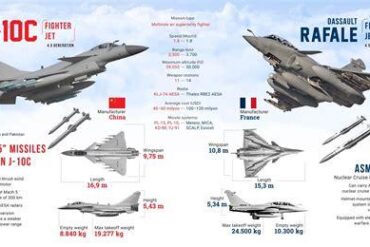
Comparative Analysis: Rafale vs. J-10C
Though both aircraft are classified as 4.5-generation fighters, their design philosophies and capabilities differ considerably.
Dassault Rafale:
- Twin-engine for better survivability and redundancy
- Superior range: approx. 3,700 km with external tanks
- Weapons payload: 9.5 tons
- Advanced SPECTRA EW suite
- Operated by multiple countries including Egypt, Greece, UAE, Qatar, Indonesia, and India
Chengdu J-10C:
- Single-engine, lighter platform
- AESA radar with advanced ECM capabilities
- Range: approx. 2,000 km
- Payload: ~6 tons
- Smaller radar cross-section due to design
- Deployed by Pakistan exclusively (so far)
In pure kinematic terms, the Rafale outranges and outguns the J-10C, but in modern aerial warfare, sensors and electronic warfare can often determine the victor long before missiles are fired. The J-10C’s ability to jam enemy radar and disrupt networks appears to have proven decisive in this engagement.
Geopolitical Implications: China’s Shadow Over South Asia
The Kashmir dogfight not only exposed gaps in Indian air defense readiness but also highlighted China’s indirect involvement in the region’s military balance. The J-10C’s performance under combat conditions gives Beijing a propaganda win and opens the door for future defense exports to other nations seeking alternatives to Western jets.
Moreover, the battle has shifted perceptions within India, where critics are questioning the efficacy of the Rafale program and demanding answers about the IAF’s preparedness. The performance of the J-10C may embolden Pakistan to further invest in Chinese platforms and enhance bilateral defense cooperation under the China-Pakistan strategic axis.
For India, this incident may spur accelerated integration of homegrown fighters like the HAL Tejas Mk1A and advanced air defense systems to counter both Pakistani and Chinese threats.
The Future of Air Dominance in South Asia
If confirmed, the J-10C’s combat success in the skies over Kashmir could mark a paradigm shift in South Asian air power dynamics. The age-old assumption that technological superiority belongs to Western aircraft may no longer hold when faced with digitally agile, cost-effective, and ECM-heavy fighters like the Vigorous Dragon.
India now faces the challenge of reevaluating its rules of engagement, pilot training, and electronic warfare doctrine in response to emerging threats. Meanwhile, Pakistan will likely continue investing in long-range sensors, satellite integration, and stand-off munitions to maintain its edge without engaging in full-scale conflict.
Conclusion: A Battle That Changed the Narrative
The air clash over Kashmir has not only reignited tensions in a volatile region but also rewritten expectations about air combat supremacy. The J-10C’s battlefield debut served as a reality check to those who believed aircraft price tags and Western engineering were enough to dominate the skies.
In this new era of electronic warfare, information disruption, and real-time battlefield adaptability, the victor may not be the aircraft with the largest arsenal, but the one that sees first, strikes fast, and evades detection. The Vigorous Dragon, for now, has lived up to its name—and perhaps changed the balance of power in the region.
India must now reassess not only its aircraft acquisitions but also its strategic doctrines to ensure that its next aerial encounter does not end with similar headlines. The Rafale remains a powerful platform, but its mystique has been irrevocably challenged.