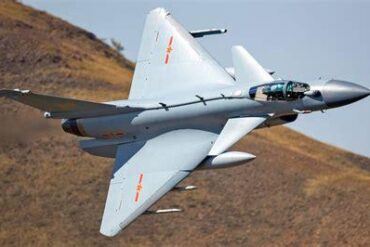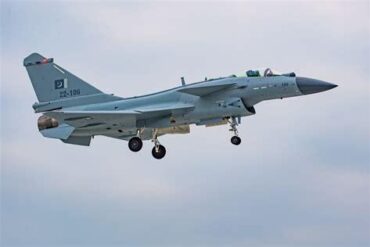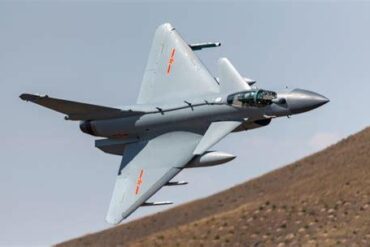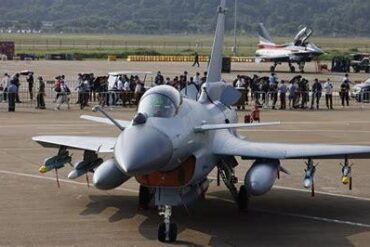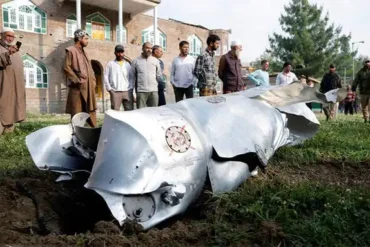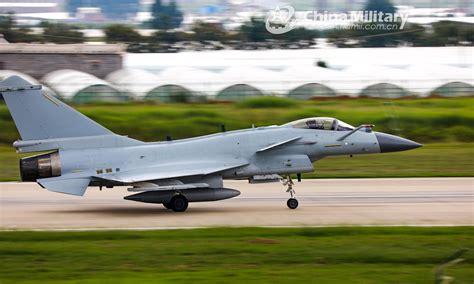
The recent India-Pakistan military skirmish has exposed a significant milestone in international defense dynamics. As the two nuclear-armed states exchanged missiles and drone fire, Pakistan’s deployment of Chinese-made J-10C fighter jets equipped with PL-15 long-range missiles marked a pivotal moment—not only in South Asian geopolitics but in global assessments of Chinese military hardware.
Pakistani officials confirmed that the J-10Cs were used to shoot down Indian Air Force (IAF) Rafale jets, marking the first recorded combat use of the J-10C and PL-15 missile system anywhere in the world. This direct engagement with a Western-made aircraft has caught the attention of global defense analysts and elevated concerns among regional adversaries, especially Taiwan and its allies.
A Combat Debut That Reshapes Strategic Calculus
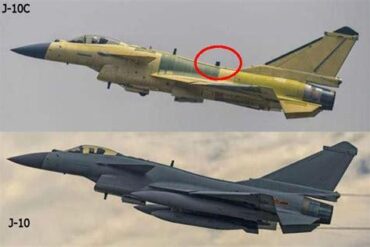
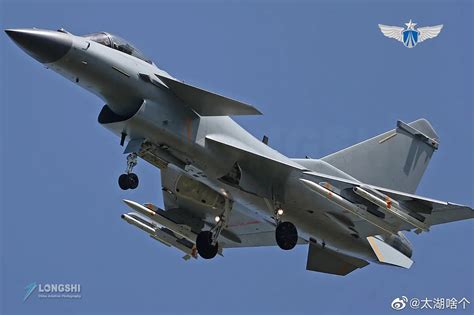
The deployment of the J-10C Vigorous Dragon, manufactured by Chengdu Aircraft Industry Group, presents the first hard evidence of its real-world effectiveness. The Pakistani air force, long dependent on a mix of American and Chinese aircraft, has now operationalized an advanced fourth-generation platform that is networked, radar-capable, and armed with beyond-visual-range (BVR) capabilities.
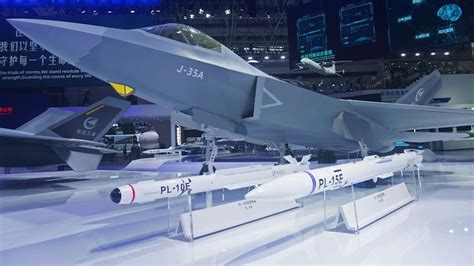
The PL-15 missile, central to this strike, is particularly noteworthy. Armed with an active radar seeker and believed to have a range exceeding 200 kilometers in some versions, the PL-15 directly challenges the superiority of U.S. and European air-to-air missile systems like the AIM-120D AMRAAM and the Meteor.
According to Ishaq Dar, Pakistan’s foreign minister, the Chinese government was informed of the J-10C’s success and was “pleased.” State-run Chinese media and military bloggers echoed this sentiment, celebrating the milestone as a validation of China’s rapidly evolving defense manufacturing sector.
China’s Strategic Gain: A Live Weapons Showcase
The clash provides an unfiltered testbed for Chinese defense systems under live combat conditions—something no simulation or wargame can match. According to Andrew Small, a senior fellow at the German Marshall Fund, such engagements allow Beijing to analyze not only aircraft performance but also the integrated use of its broader military ecosystem, including radar arrays, satellite communications, and electronic warfare systems.
This engagement was not simply aircraft vs. aircraft. It was a trial of systems integration, and China emerged favorably. The Indian Rafales, equipped with French radar and electronic countermeasures, are among the most sophisticated fighters in South Asia. That Pakistan’s Chinese-built jets could engage and eliminate them speaks volumes about the capability leap Beijing’s military technology has achieved.
Pakistan as Beijing’s Military Vanguard
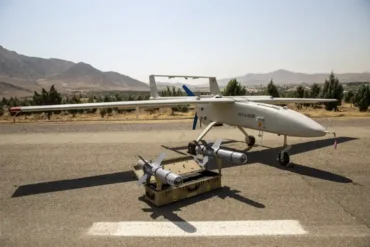
Pakistan has long served as a proxy proving ground for Chinese military exports, with over 80% of its weapons imports sourced from China, according to the Stockholm International Peace Research Institute (SIPRI). From submarines to unmanned aerial vehicles, and now advanced fighter aircraft, Pakistan’s military modernization is increasingly China-dependent.
This arrangement is mutually beneficial. For China, Pakistan offers a live battlefield without risking direct entanglement. For Islamabad, it secures a constant pipeline of relatively affordable, advanced technology insulated from Western sanctions and diplomatic backlash. The J-10C’s performance will likely bolster Chinese ambitions to penetrate new markets, especially in Africa, Latin America, and the Middle East, where countries are increasingly wary of U.S. arms conditionality.
A Wake-Up Call for India—and the World
India, while not deploying U.S. aircraft in this particular exchange, is heavily supported by both Washington and Moscow. With Russia accounting for 36% of Indian arms imports, and the U.S. acting as a strategic counterweight to China, the success of Chinese air assets against Indian forces carries symbolic and operational weight.
Military observers, including Shu Hsiao-Huang of Taiwan’s Institute of National Defense and Security Research, warn that the J-10C’s successful strike underscores a broader need to reassess the PLA’s aerial combat capabilities. China’s 2027 military roadmap—emphasizing readiness for a possible Taiwan invasion—may no longer be theoretical.
In Taiwan’s defense community, the Pakistan-India confrontation is seen as a proxy litmus test for future regional conflicts. Even if India didn’t use American fighters this time, the underlying tech parity (or superiority) hinted at by China’s victory is causing alarm. The implications are profound: if Chinese air assets can neutralize French-built jets, could they also withstand or outmatch American platforms like the F-35 or F-22 in regional theaters?
Missile Capabilities: The PL-15’s Strategic Edge
Perhaps the most disruptive element of this encounter is the PL-15 missile itself. Unlike earlier Chinese BVR missiles, the PL-15 integrates advanced active radar guidance, dual-pulse motor propulsion, and networked combat capability. Rumors suggest that Pakistan may have received an extended-range variant, surpassing the standard 200-kilometer envelope exported to other nations.
Such capabilities drastically alter the rules of engagement in South Asia. While the Indian Air Force continues to develop indigenous systems like the Astra missile and procure European weapons, the PL-15 has introduced a variable that was previously theoretical.
Stock Market and Soft Power Impacts
Following reports of the J-10C’s successful deployment, the stock price of Chengdu Aircraft Corporation surged. While Chinese authorities offered muted public responses, refraining from either denying or glorifying the event, military circles and state-adjacent influencers have already woven this episode into a broader narrative of Chinese ascendancy in global defense exports.
China’s arms export industry, although ranked fourth globally, faces significant hurdles—chiefly U.S. sanctions and skepticism over the battlefield reliability of its weapons. This incident undercuts such doubts and strengthens Beijing’s pitch to prospective buyers.
Caveats Amid Triumph: Limited Scope, Ongoing Corruption
Despite the fanfare, military researchers urge caution. As Siemon Wezeman of SIPRI notes, the skirmish was limited in scope and insufficient to fully benchmark China’s military capabilities. “Combat is the ultimate test, but not the only test,” he said, pointing out that systemic corruption and logistical issues continue to plague the People’s Liberation Army (PLA).
Moreover, while this incident improves the perception of Chinese arms in asymmetrical conflicts, full-scale war scenarios—like a potential invasion of Taiwan—would demand far greater coordination across air, sea, and ground forces. This is a domain in which China remains untested.
Geopolitical Reverberations Beyond South Asia
Beijing’s quiet confidence, paired with the tactical success of the J-10C, sends a message far beyond the Himalayas. Vice-Foreign Minister Sun Weidong’s meeting with Pakistan’s ambassador came laced with diplomatic overtones but was clear in intent: China supports regional stability, but under terms that favor its strategic clients.
The world is watching closely. Whether this event triggers an arms race in South Asia, provokes a doctrinal shift in Taiwan’s defense posture, or fuels further polarization between U.S. and Chinese defense ecosystems remains to be seen. But one fact is now undeniable: China’s defense technology has entered the global stage not just as a competitor, but as a combat-tested player.
Conclusion: A Turning Point in Military Dynamics
The success of Pakistan’s Chinese-supplied J-10Cs and PL-15 missiles has implications that go far beyond immediate battlefield victories. It’s a signal to allies and adversaries alike that Beijing’s defense export model is viable, integrated, and now, proven under fire. As defense analysts recalibrate their assessments, one truth emerges: the age of Chinese military parity is no longer speculative. It is already unfolding, jet by jet, missile by missile.