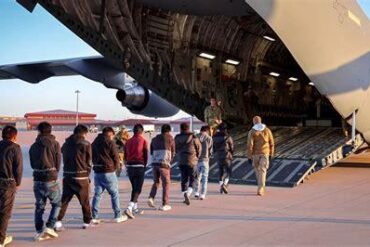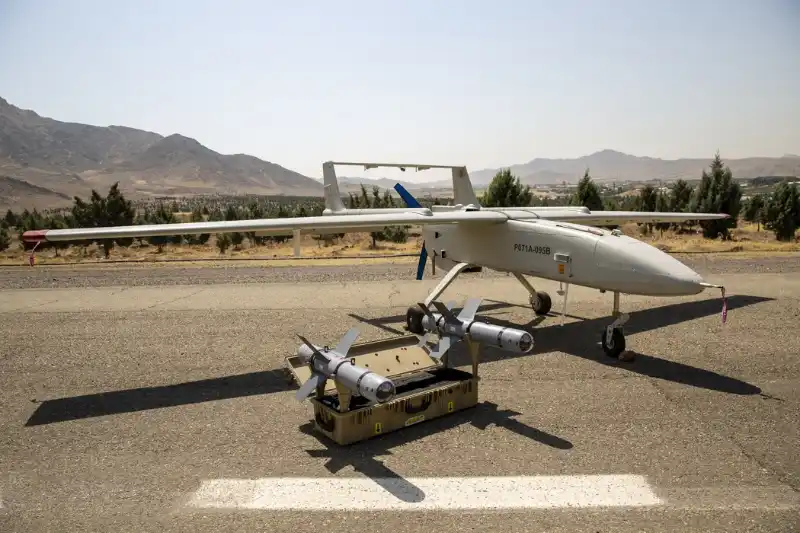
Iran’s growing export of unmanned aerial vehicles (UAVs) has taken a provocative turn with their deployment in Venezuela, a development that heightens tensions not only in Latin America but across the broader Western Hemisphere. This evolution follows the well-documented pattern of Iranian drone proliferation in conflict zones like Ukraine and Yemen. With Mohajer-series drones now appearing on South American soil, Washington faces a pressing question: Is Tehran using drone diplomacy as a strategic lever against the United States in its own geopolitical backyard?
Iranian UAV Footprint in Venezuela: A Strategic Nexus
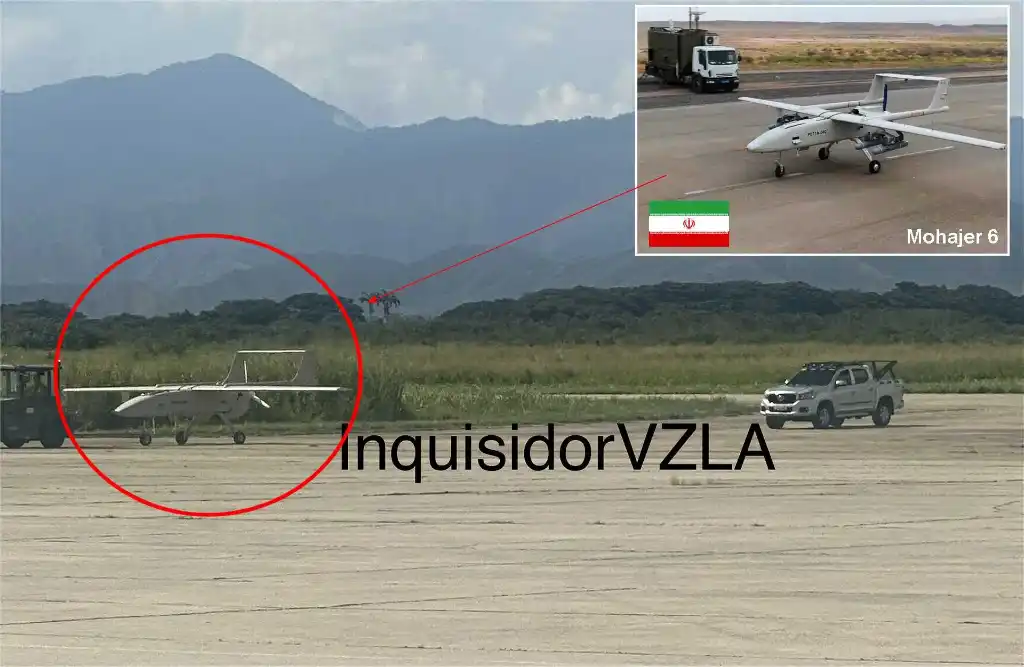
The recent US Treasury sanctions on Venezuelan firm Empresa Aeronautica Nacional SA (EANSA) underscore the growing alarm in Washington. Accused of overseeing the assembly of Iranian Qods Aviation Industries (QAI) drones, including the combat-proven Mohajer-6 and Mohajer-2 platforms, EANSA represents a critical node in the transcontinental weapons network Tehran is building. The firm’s chief, Jose Jesus Urdaneta Gonzalez, was also personally sanctioned for orchestrating deals with Iranian and Venezuelan authorities, indicating a high-level commitment to this military-industrial partnership.
The rebranding of Iranian drones as ANSU-series UAVs in Venezuela is more than symbolic. It points to a concerted effort to indigenize the production and possibly mask the origin of these systems. While the US Treasury highlights the Mohajer-2’s transformation into the Arpia (ANSU-100)—capable of firing Qaem guided bombs—it’s the presence of the Mohajer-6, an ISR-capable drone with expanded combat utility, that carries far greater strategic weight.
Geopolitical Backlash: Sanctions, Surveillance, and Strategic Messaging
The imposition of sanctions on 10 Iranian and Venezuelan individuals and entities sends a clear signal: the US is recalibrating its deterrence mechanisms against both adversaries. Yet, the tactical proliferation of these drones cannot be isolated from broader shifts. The shared defiance of sanctions by Iran and Venezuela, united in their rejection of US hegemony, adds a layer of ideological camaraderie to an otherwise transactional arms partnership.
John K. Hurley, Treasury’s Under Secretary for Terrorism and Financial Intelligence, described the UAV proliferation as “aggressive and reckless.” This language reflects not just outrage but a sense of encroachment. The Western Hemisphere, long considered under US strategic influence, now sees Iranian aerospace hardware operational just a few thousand miles from Florida. It’s a tangible expression of power projection that Washington finds difficult to ignore.
Fueling Regional Instability: The Drone as an Asymmetric Weapon
The Mohajer-6 is not a toy. Its value lies in its dual utility for both surveillance and precision strikes, making it particularly suited for asymmetric warfare. Venezuela’s integration of such drones into its military doctrine—especially under a regime accused of harboring narco-terrorist networks—raises the specter of these platforms being used for unconventional operations across the Caribbean and beyond.
Moreover, these drones serve as force multipliers. They offer Venezuela a cost-effective alternative to manned air operations, particularly in low-intensity conflicts or border monitoring. In scenarios where Venezuelan forces confront non-state actors, such as the Tren de Aragua, drones provide not just tactical oversight but the ability to strike swiftly, with plausible deniability.
The American Response: Firepower, Blockades, and Blowback
The Biden administration’s initial restraint has given way to the Trump administration’s aggressive military posture, underscoring the bipartisan unease over Venezuela’s trajectory. In late 2025, President Trump authorized a direct land strike on a dock facility believed to be used by the Tren de Aragua cartel for drug loading. Though unconfirmed, the CIA’s involvement was strongly implied. This marked a sharp escalation, shifting US engagement from indirect containment to overt interdiction.
Simultaneously, the US launched a “total and complete blockade” of Venezuelan oil tankers—some of which attempted to evade detection by painting Russian flags on their hulls. The UN swiftly condemned these actions as violations of international law, but Washington remains unrepentant. The mood in Washington circles has shifted: drone diplomacy and narcotics terrorism are now viewed as two prongs of a hybrid threat architecture.
Iran’s Global Drone Doctrine: Russia, Yemen, and Now Caracas
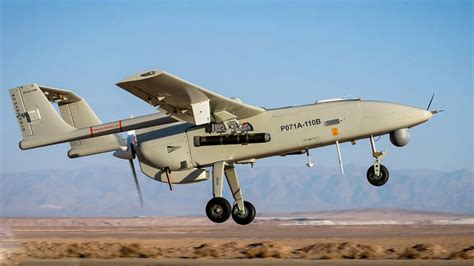
Iran’s UAV exports are not a scattershot strategy. They form part of a global asymmetric doctrine aimed at undermining conventional Western military dominance. Since 2022, Iran has supplied Shahed-131/136 loitering munitions and Mohajer-6 drones to Russia, which have seen widespread use in Ukraine’s contested airspace. Meanwhile, Iranian drones operated by the Houthis in Yemen have attacked commercial vessels in the Red Sea, prompting rerouting of global shipping lanes and costly delays.
The impact of these exports is threefold:
- Operational effectiveness: These drones have proven lethal in modern conflict zones.
- Cost asymmetry: Iran manufactures them at a fraction of the cost of Western equivalents.
- Political leverage: Their proliferation enhances Tehran’s ability to act as a spoiler.
Legal and Strategic Repercussions: US Leans on National Security Doctrine
The sanctions against Iran and Venezuela fall under the National Security Presidential Memorandum 2 (NSPM-2), which seeks to restrict Iran’s access to ballistic and asymmetric weapons capabilities. The linkage between Iran’s UAV exports and its broader military-industrial complex, including the Islamic Revolutionary Guard Corps (IRGC), was a key basis for the designation.
What sets the Venezuela case apart is geography. The deployment of Iranian drones in Latin America carries a psychological impact reminiscent of the Cold War, evoking images of the Cuban Missile Crisis but through modern means. Instead of intercontinental missiles, Tehran’s gambit involves cheap, mobile, and effective drones—weapons well-suited for both counterinsurgency and propaganda.
A Proxy War Template: Lessons from the Iran-Russia Axis
Tehran’s partnership with Moscow in the Ukraine conflict has effectively served as a proving ground for its UAV capabilities. The drone infrastructure now appearing in Venezuela borrows heavily from lessons learned on the Ukrainian front:
- Swarm tactics using Shahed drones to overwhelm air defenses
- Use of drones as ISR assets preceding missile strikes
- Deployment of decoy drones to mask true targets
If Venezuela adopts even a fraction of these doctrines, the security calculus for the US Southern Command and regional allies such as Colombia and Brazil could become significantly more complex.
Washington’s Dilemma: Diplomacy, Deterrence, or Denial?
The United States now faces a multi-vector challenge. It must simultaneously contain Iran’s military-industrial ambitions, deter Venezuela’s regional adventurism, and reassure jittery Latin American partners of its commitment to hemispheric stability. The existing military-to-military partnerships in the region, including joint training programs and counter-narcotics operations, may no longer be sufficient.
There are three likely vectors of American response:
- Expanded economic sanctions on facilitators, including offshore banking and logistics networks.
- Covert disruption campaigns targeting UAV assembly sites and supply chains in Venezuela.
- Deployment of electronic warfare units and counter-UAV systems to partner nations.
None of these options is without risk. Escalation could provoke broader anti-US sentiment in the region and entrench the Iran-Venezuela axis further.
Conclusion: A Drone Bridgehead in the Backyard
The entry of Iranian UAVs into Venezuela is not an isolated event but a continuation of Tehran’s ambition to project asymmetric military influence beyond its traditional theaters. For Washington, this marks a new phase in the struggle against state-sponsored drone proliferation. The stakes are higher than ever: not just because of the technology itself, but because of the strategic breach it represents.
In this battle of attrition, drones are not just flying machines—they are flying flags. And the one now hovering over the jungles of Venezuela may soon redefine the contours of power in the Western Hemisphere.