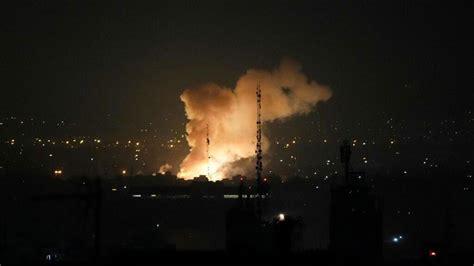
In a startling turn of events, Iran has confirmed that its nuclear facilities were “seriously and severely” damaged following a coordinated U.S. B-2 bomber strike. Despite the destruction, Tehran has pledged to immediately rebuild its uranium enrichment infrastructure, plunging the world back into a state of nuclear uncertainty.
Iran’s Defiant Response to Nuclear Facility Bombings
During an exclusive interview with Fox News, Iranian Foreign Minister Abbas Araghchi stunned the international community by acknowledging the extent of the damage. “It is stopped, yes, damages are serious and severe,” he admitted, referring to the obliteration of key nuclear sites. Still, he emphasized that Iran would “never give up” uranium enrichment, framing it as a matter of “national pride.”
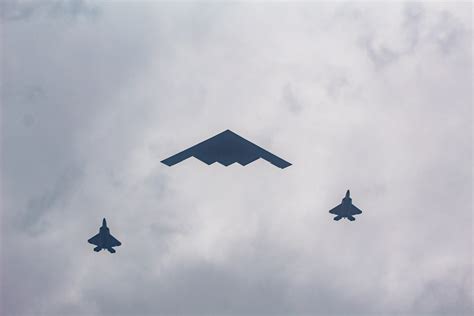
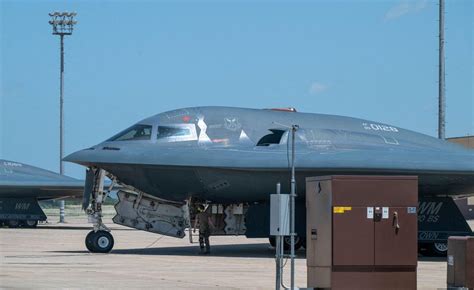
Araghchi’s declaration laid bare Iran’s unwavering commitment to its nuclear program despite the strategic precision of U.S. airpower. The strikes, which involved the B-2 Spirit stealth bomber and were supported by F-22 Raptors, targeted underground facilities believed to house advanced centrifuge arrays and enriched uranium stockpiles.
Rapid Recovery and Enrichment Timeline Raises Alarm
The International Atomic Energy Agency (IAEA) has warned that Iran could resume uranium enrichment within months, in spite of the recent devastation. Director General Rafael Grossi told CBS News, “One cannot claim that everything has disappeared… They can have a few cascades of centrifuges spinning and producing enriched uranium soon.”
This capability to bounce back quickly, even under crippling military pressure, speaks volumes about Iran’s technical resilience and its long-term nuclear ambitions. Though Grossi did not specify which facilities were least affected, he hinted that Iran’s Natanz and Fordow complexes may still have operational capacity.
A Pattern of Duplicity: Nuclear Fatwa vs. Secret Programs
Iran has long maintained its commitment to the Nuclear Non-Proliferation Treaty (NPT), signed in 1970, and frequently cites a fatwa by Supreme Leader Ayatollah Ali Khamenei banning nuclear weapons. Iranian diplomats often point to this as moral proof that the Islamic Republic harbors no nuclear weapon ambitions.
However, intelligence and IAEA findings contradict this narrative. Both U.S. agencies and the IAEA believe that Iran covertly operated a nuclear weapons program—dubbed the AMAD Project—until at least 2003. Documents seized in 2018 from a Tehran warehouse by Israeli intelligence revealed details of warhead design, high-explosive tests, and efforts to fit nuclear payloads onto ballistic missiles.
Escalation After the JCPOA Collapse
The 2015 Joint Comprehensive Plan of Action (JCPOA) temporarily froze much of Iran’s enrichment activity in exchange for sanctions relief. However, following the U.S. withdrawal in 2018 under President Donald Trump and subsequent Iranian violations of enrichment limits, the deal effectively collapsed.
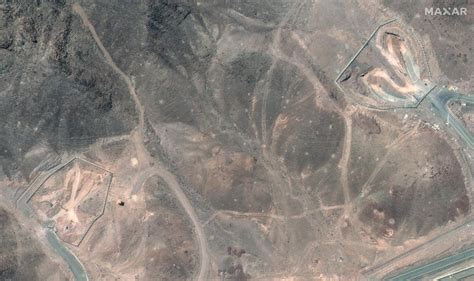
Since then, Iran has dramatically accelerated uranium enrichment, installing advanced IR-6 centrifuges and enriching uranium to levels as high as 60% purity, dangerously close to the 90% weapons-grade threshold. The destruction of its facilities has not altered its resolve; instead, it appears to have hardened it.
Tehran’s Diplomatic Tightrope: Promises vs. Provocations
Araghchi insisted that Iran is open to diplomatic solutions. “If the goal is to make sure that Iran will never have nuclear weapons, that is achievable,” he said. Yet such statements ring hollow to many in the West, particularly given the regime’s history of clandestine enrichment, restricted IAEA access, and delayed transparency.
Recent reports indicate that Iran has further reduced cooperation with the IAEA, denying access to surveillance footage and delaying inspector visits. European diplomats warn that Iran’s actions could trigger a return to pre-2015 U.N. and EU sanctions, further isolating the country economically and diplomatically.
Military Deterrence and Strategic Calculus
The deployment of stealth B-2 bombers in the recent airstrikes signals a profound shift in U.S. strategy. These aircraft, designed for deep penetration and nuclear delivery, have only been used in the most sensitive and high-stakes scenarios. Accompanied by F-22 Raptors, the operation also signaled America’s ability to impose air superiority even in hardened, hostile airspace.
Military analysts believe the mission aimed to disrupt Iran’s nuclear timeline rather than eliminate its entire capacity. Given the dispersal and redundancy built into Iran’s nuclear program, a full dismantlement would require a sustained campaign.
International Fallout: Allies Caught in the Crossfire
The renewed nuclear crisis has deeply unsettled Middle Eastern nations. Israel, Saudi Arabia, and the UAE have all expressed support for decisive actions to prevent Iran from becoming a nuclear state. Israel’s Prime Minister has doubled down on preemptive strike policies, suggesting unilateral action remains on the table.
Meanwhile, Russia and China have condemned the strikes, accusing the United States of escalating tensions and undermining diplomatic pathways. Beijing, in particular, warned that regional stability is at risk and offered to mediate new nuclear talks, although their neutrality is questioned given economic ties with Tehran.
What’s Next: The Fragile Road Ahead
Despite the destruction of physical infrastructure, Iran’s technical knowledge and weaponization experience cannot be bombed away. Experts agree that the most dangerous element of Iran’s nuclear ambition lies not in centrifuge halls but in institutional memory and scientific capability.
The next few months will be critical. If Iran resumes enrichment at even a fraction of its previous capacity, the region may edge closer to an irreversible nuclear threshold. International powers now face the impossible dilemma: trust diplomacy, or prepare for further military engagement.
Conclusion: A Nightmare Rekindled
Iran’s renewed commitment to uranium enrichment, in defiance of U.S. military action and international warnings, has reopened what many had hoped was a closed chapter. As its scientists race to rebuild centrifuge cascades, and Western governments brace for the fallout, the Iran nuclear nightmare is no longer hypothetical—it is back on, in full force.
Unless new diplomatic breakthroughs emerge quickly, the world may once again face the most volatile equation in international affairs: a regime with the knowledge, the will, and soon—perhaps—the means to build a nuclear weapon.