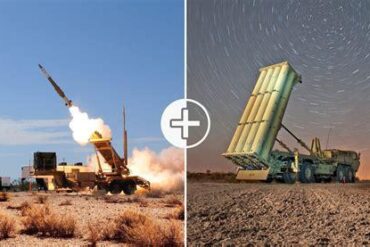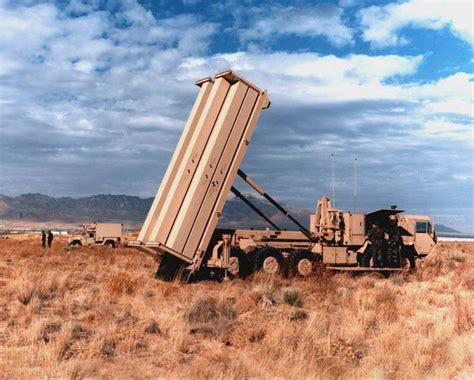
The United States has approved a $4.5 billion THAAD radar and command package for the United Arab Emirates, marking one of the most strategically focused missile defense upgrades in recent Gulf history. Cleared under emergency authority, the deal bypasses the traditional congressional review timeline, underscoring the urgency created by recent Iran-linked missile and drone strikes that exposed critical weaknesses in the UAE’s air defense network.
Rather than expanding offensive capabilities or increasing interceptor stockpiles, this package zeroes in on a far more decisive layer of modern warfare: sensor dominance and battle network resilience. The decision reflects a clear operational lesson emerging from current conflicts—missile defense systems are only as effective as the radar and command architecture that supports them.
At its core, the sale is designed to restore and enhance the UAE’s ability to detect, track, and coordinate engagements against complex aerial threats, especially in an environment where adversaries increasingly target radar infrastructure itself.
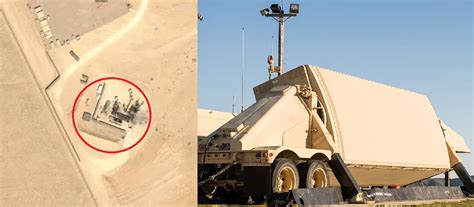
Why the THAAD Radar Upgrade Matters More Than New Missiles
A striking aspect of this deal is what it deliberately excludes. There are no new THAAD launchers included, despite their central role in intercepting ballistic threats. This omission is not a limitation—it is a calculated choice.
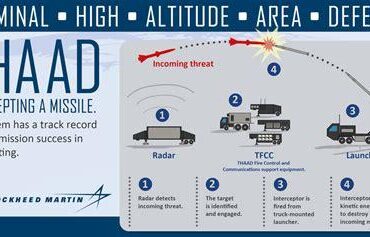
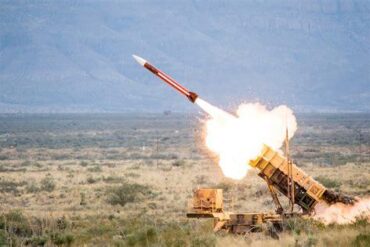
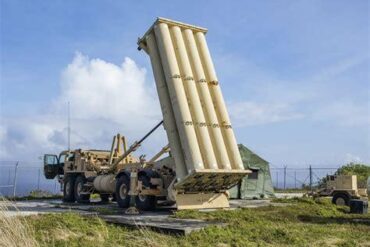
The UAE already operates two active THAAD batteries, each capable of launching hit-to-kill interceptors against short-, medium-, and intermediate-range ballistic missiles. However, without functional radar systems and command nodes, these launchers lose their effectiveness entirely. In practical terms, a missile defense battery without sensors is blind, slow, and ultimately irrelevant in high-speed engagements.
This package prioritizes:
- Long-range discrimination radar systems
- THAAD fire-control and command nodes
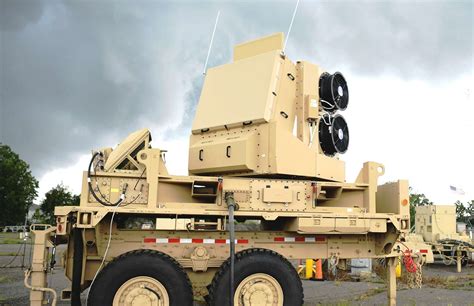
- Sentinel A4 uplink and integration components
- Advanced processing, power, and cooling infrastructure
The emphasis reveals a strategic pivot: instead of building more firepower, the UAE is reconstructing the “eyes and brain” of its missile defense network.
Iran Conflict Exposes a Critical Weakness: Radar Vulnerability
Recent strikes attributed to Iran and its regional proxies have highlighted a critical vulnerability across Gulf defense systems—the fragility of radar and sensor infrastructure under sustained attack.
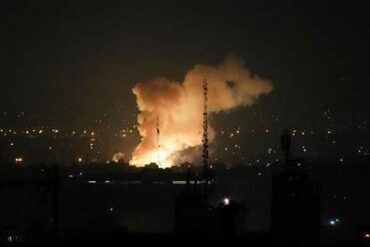
Open-source reporting and defense assessments indicate that key sites such as Al Dhafra Air Base and locations near Ruwais and Al Sader have experienced radar-related damage or disruption. These incidents did not necessarily destroy interceptor systems, but they achieved something arguably more impactful: they degraded the UAE’s ability to see incoming threats in time to respond effectively.
This reflects a broader doctrinal shift in modern warfare. Adversaries are no longer focused solely on overwhelming missile defenses with volume; instead, they aim to blind those defenses first, creating gaps in detection and forcing inefficient or delayed responses.
The U.S. response through this package signals recognition of that shift. By restoring radar coverage and strengthening command networks, the UAE regains what military planners consider the most decisive advantage: situational awareness under pressure.
Inside the $4.5B Package: Building a 360-Degree Defense Shield
The technical scope of the approved package suggests a significant evolution beyond traditional THAAD radar configurations. According to official details, the system will include:
- Array faces and subarray suites
- Advanced radar processors and synthesizer cabinets
- Energy storage and power conversion systems
- Large-scale cooling units, including 500-ton chillers
- Mission processing and fire-control integration hardware
Most notably, the package is designed to expand radar coverage to 360 degrees, a substantial upgrade over earlier sector-focused radar deployments.
This shift toward full azimuth coverage has profound operational implications. Instead of relying on fixed-direction radar orientation, the UAE will gain the ability to:
- Detect threats approaching from multiple vectors simultaneously
- Maintain tracking continuity during complex, multi-axis attacks
- Reduce blind spots that adversaries could exploit
In effect, the UAE is transitioning from a static defensive posture to a dynamic, all-direction sensing architecture capable of handling modern saturation attacks involving ballistic missiles, cruise missiles, and drones.
Sentinel A4 Integration: Closing the Low-Altitude Gap
While THAAD specializes in high-altitude ballistic missile interception, modern threats increasingly exploit lower altitudes. Cruise missiles and one-way attack drones are designed to fly beneath traditional radar coverage, creating a dangerous gap in layered defenses.
This is where the inclusion of Sentinel A4 uplink systems becomes critical.
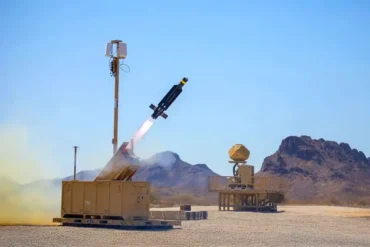
The Sentinel A4 is engineered to detect and track:
- Cruise missiles
- Unmanned aerial systems (UAS)
- Rotary- and fixed-wing aircraft
- Rocket, artillery, and mortar threats
Within the UAE’s defense ecosystem, these systems act as a bridge between high-altitude THAAD tracking and lower-tier air defense systems such as Patriot or short-range interceptors.
By integrating Sentinel A4 nodes, the UAE can fuse data from multiple altitudes into a unified operational picture, ensuring that low-flying threats no longer slip through unnoticed.
Rebuilding a Layered Defense Network Across Critical Infrastructure
Operationally, the upgraded system will be deployed to protect the UAE’s most vital economic and strategic assets. These include:
- Abu Dhabi’s urban and financial centers
- Al Dhafra Air Base
- Western energy infrastructure and oil corridors
- Ports, desalination plants, and logistics hubs
- Civil aviation approach routes
The goal is not simply to defend isolated sites but to reconstruct an interconnected defensive grid capable of maintaining functionality even under attack.
The inclusion of secure communications systems, encryptors, and distributed command nodes ensures that if one part of the network is disrupted, others can continue operating. This concept—known as network resilience—is becoming the defining feature of next-generation air and missile defense systems.
In a contested environment, survival depends less on avoiding damage entirely and more on absorbing attacks while continuing to function.
Combat-Proven Foundations: UAE’s THAAD Experience
The UAE is not new to THAAD operations. It was the first international customer to acquire the system in 2011, with initial deliveries completed in 2015. Since then, the country has built one of the most advanced missile defense architectures in the region.
Crucially, Emirati forces achieved a milestone in January 2022, when a THAAD battery successfully intercepted a hostile medium-range ballistic missile. This marked the system’s first confirmed combat use globally, demonstrating both capability and operational readiness.
This experience shapes the current upgrade. The UAE is not experimenting with new technology—it is enhancing a combat-tested system by reinforcing its weakest link: the sensor network.
Strategic Implications: The Shift Toward Sensor-Centric Warfare
The approval of this package reflects a broader transformation in military strategy. In the past, missile defense was often measured by the number of interceptors available. Today, the decisive factor is how effectively a system can detect, classify, and prioritize threats in real time.
Iran’s approach—and that of its regional partners—has accelerated this shift. By targeting radar sites, communication links, and command nodes, adversaries aim to fragment defensive networks rather than overwhelm them outright.
The U.S.-UAE deal directly addresses this challenge. It prioritizes:
- Sensor survivability under attack
- Distributed detection capabilities
- Integrated command and control
- Seamless coordination across multiple defense layers
This approach ensures that even in a degraded environment, the system can continue to function as a cohesive whole rather than collapsing into isolated components.
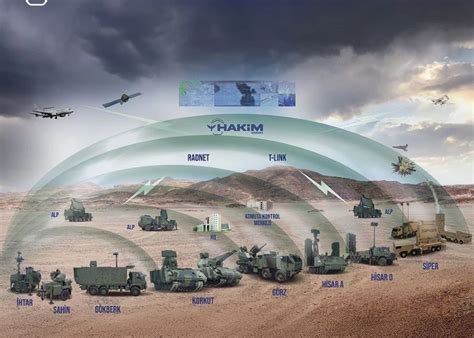
A New Phase in Gulf Air Defense Evolution
The $4.5 billion THAAD radar package represents more than a recovery effort—it signals the next phase of air and missile defense evolution in the Gulf region.
Instead of focusing solely on interceptors, defense planners are now investing in:
- Redundant and distributed sensor architectures
- Multi-layer integration across altitudes and threat types
- Rapid recovery capabilities after infrastructure damage
- Real-time data fusion across platforms and services
For the UAE, this means transforming its missile defense from a collection of advanced systems into a resilient, adaptive network capable of withstanding sustained, multi-domain attacks.
The implications extend beyond national defense. As Gulf states continue to modernize their military capabilities, this model of sensor-centric, network-driven defense is likely to become the regional standard.
In a conflict environment defined by speed, complexity, and precision, the ability to see clearly, decide quickly, and respond cohesively is no longer an advantage—it is a necessity.