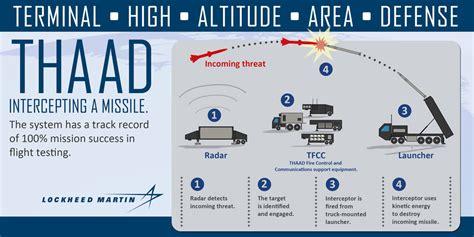
The balance of power in the Persian Gulf has long depended on technology—particularly the sophisticated missile defense networks designed to shield wealthy Gulf states from regional threats. Recent claims by Iran’s Islamic Revolutionary Guard Corps (IRGC) that it destroyed two Terminal High Altitude Area Defense (THAAD) batteries in the United Arab Emirates (UAE) have injected new uncertainty into that balance. If verified, the strikes could represent one of the most consequential blows ever dealt to the United States’ layered missile defense architecture in the Middle East.
Iranian state-linked outlets reported that precision-guided missiles targeted and destroyed critical components of the THAAD anti-ballistic missile system, widely considered one of the world’s most advanced and expensive defensive platforms. Tehran also claimed earlier strikes against the AN/TPY-2 radar associated with the system and against a strategic AN/FPS-132 early warning radar located in Qatar. Taken together, these alleged attacks suggest a systematic attempt to blind and weaken the regional defense network protecting Gulf states and U.S. military installations.
If the claims are accurate, the consequences extend far beyond a single weapons platform. The Gulf’s missile defense structure functions as a layered system, where radar networks, early-warning sensors, and interceptors must work in concert. Disabling even one component can compress reaction times, reduce interception probability, and open windows for ballistic missile penetration.
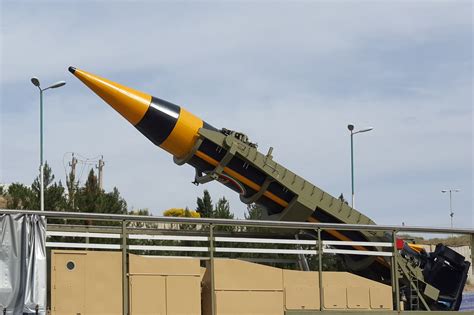
The Strategic Importance of THAAD in Gulf Missile Defense
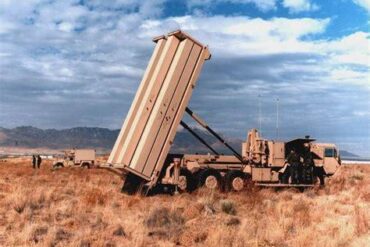
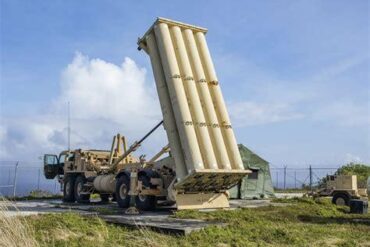
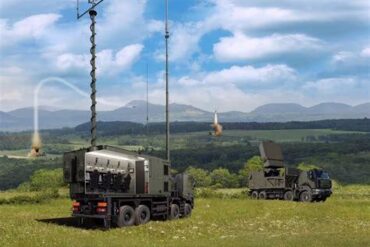
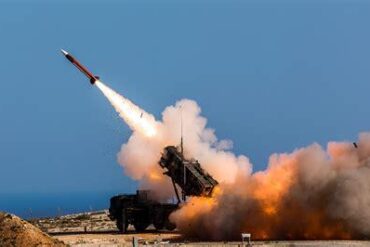
The Terminal High Altitude Area Defense (THAAD) system represents the pinnacle of U.S. missile defense technology designed to counter short-, medium-, and intermediate-range ballistic missiles. Unlike older interceptors that operate primarily in the lower atmosphere, THAAD can destroy incoming missiles both inside and outside the atmosphere, dramatically expanding the engagement envelope.
Each THAAD battery is a complex system composed of multiple elements:
- Interceptor launchers capable of firing hit-to-kill missiles
- The AN/TPY-2 high-resolution radar, which tracks incoming threats
- Fire control and communications systems that integrate with broader defense networks
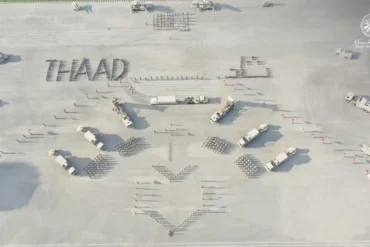
The cost reflects this complexity. A single battery can range from $1 billion to $2.7 billion, depending on configuration. Only ten THAAD batteries have ever been produced globally. The United States operates seven, while the UAE and Saudi Arabia each acquired limited deployments to shield critical infrastructure.
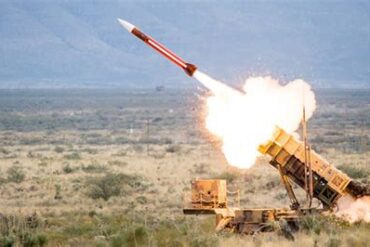
The UAE holds a unique place in the history of the system. It became the first foreign country to purchase THAAD, investing heavily in layered defenses that also include Patriot missile batteries and advanced radar networks. The acquisition symbolized Abu Dhabi’s determination to build a technological shield capable of countering regional missile threats.
Iran’s Alleged Precision Strikes on UAE THAAD Batteries
Iranian media outlets claim that both THAAD batteries deployed in the UAE have now been neutralized. One battery was reportedly located near Al-Ruwais Industrial City, an area critical to the UAE’s energy sector, while another was positioned closer to Abu Dhabi to protect key government and economic centers.
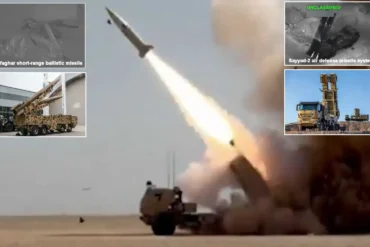
According to the IRGC, the strike was executed using precision-guided ballistic missiles, specifically targeting radar and command components. Satellite imagery circulated by Iranian-affiliated sources allegedly shows damaged structures at the Al-Ruwais defense site.
Iranian Fars News Agency: Satellite images of the precision strikes by Iranian missiles on the world’s most expensive air defense system
The THAAD anti-ballistic defense site in Al-Ruwais, UAE, was destroyed by precision missiles from Iran’s IRGC.
Exclusive satellite images… pic.twitter.com/N9lFkaOLho
— Aditya Raj Kaul (@AdityaRajKaul) March 3, 2026
While independent confirmation remains limited, open-source intelligence analysts have noted signs consistent with an impact at radar facilities. If the radar portion of the system was destroyed, the effectiveness of the entire battery would be compromised. Without radar tracking, interceptors cannot calculate the trajectory needed to collide with an incoming missile traveling several kilometers per second.
Such strikes highlight a fundamental reality of modern missile defense: radar and sensor systems are often the most vulnerable components. Destroying them effectively blinds the interceptor network, creating gaps that even advanced missiles cannot compensate for.
The Critical Role of Qatar’s AN/FPS-132 Early Warning Radar
The alleged THAAD strikes did not occur in isolation. Days earlier, Iran reportedly targeted the AN/FPS-132 Block 5 Upgraded Early Warning Radar (UEWR) located at Al Udeid Air Base in Qatar. Unlike tactical radars tied to individual missile batteries, the UEWR functions as a strategic sensor, detecting ballistic missile launches thousands of kilometers away.
Only a handful of these radars exist worldwide. They are deployed at:
- Beale Air Force Base in California
- Pituffik Space Base in Greenland
- RAF Fylingdales in the United Kingdom
- Al Udeid Air Base in Qatar
The Qatari installation, built for roughly $1.1 billion, was designed to provide early detection of missile launches across the Middle East and beyond.
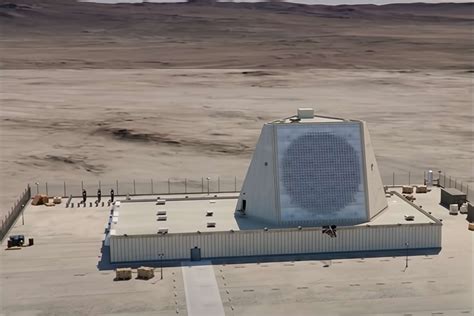
Unlike traditional rotating radar dishes, the AN/FPS-132 uses a fixed phased-array design. Thousands of electronic antenna elements steer the radar beam electronically rather than mechanically. This allows the system to shift focus within milliseconds, scanning vast areas of sky without moving parts.
Its range is formidable. The radar can detect ballistic missile launches over 5,000 kilometers away, feeding trajectory data to interceptor systems such as Patriot, Aegis, and THAAD. In practical terms, it acts as the central nervous system of regional missile defense, enabling multiple systems to respond quickly to incoming threats.
Damage to this radar would dramatically reduce the warning time available to defenders across the Gulf.
A Wave of Iranian Missile and Drone Attacks
The strategic stakes of these strikes become clearer when viewed against the scale of Iranian attacks in the current conflict. According to available reports, Iran has launched hundreds of missiles and drones across the region, with the UAE facing the most intense pressure.
In the first days of the war alone:
- 863 missiles and drones targeted the UAE
- 562 attacks struck Kuwait
- 162 attacks targeted Qatar
- 113 were directed toward Israel
The disproportionate focus on the UAE is striking. Iranian strikes against Emirati targets outnumber those against Israel by nearly eight to one, suggesting that Tehran sees the Gulf state as a primary strategic target.
Several factors explain this focus. The UAE hosts critical energy infrastructure, major logistics hubs, and financial centers. Cities like Dubai and Abu Dhabi have evolved into global business capitals, attracting international companies, tourists, and investors.
A successful strike against these centers carries enormous symbolic and economic impact.
Why the UAE Is Particularly Vulnerable
Beyond the loss of specific defense systems, the UAE’s vulnerability lies in its economic structure. Over the past two decades, the country has deliberately shifted away from oil dependency. By 2025, non-oil sectors accounted for roughly 77.5% of the nation’s real GDP.
This transformation turned the UAE into a regional hub for:
- Global finance
- Aviation and logistics
- Luxury tourism
- Real estate investment
The success of this model depends heavily on one intangible asset: perceived stability. Investors and multinational corporations flock to Dubai and Abu Dhabi partly because they are viewed as safe, predictable environments in a turbulent region.
Missile or drone attacks threaten that perception.
Even a limited number of successful strikes could damage infrastructure, disrupt aviation, and trigger financial volatility. More importantly, they could erode the psychological image of the UAE as a secure oasis in the Middle East.

Interceptor Shortages and Regional Defense Strain
Compounding the problem are reports suggesting that some Gulf states may be running low on interceptor missiles. A Bloomberg report claimed that Qatar possessed only four days’ worth of Patriot interceptors during the height of the conflict, while the UAE was seeking additional medium-range air defense support.
Officials in both countries dismissed the report as misleading. Nevertheless, the issue highlights a well-known limitation of missile defense: interceptors are expensive and finite.
A sustained missile campaign can strain even well-equipped defense systems. Each interception consumes a costly missile that must be replaced through complex production chains. If launches occur faster than interceptors can be replenished, defensive capacity gradually erodes.
In such scenarios, attackers gain a strategic advantage simply by overwhelming defenses with volume.
Implications for U.S. Military Technology
If Iranian claims regarding the destruction of two THAAD batteries prove accurate, the repercussions would extend beyond the Gulf. The incident would mark one of the first times that the world’s most advanced missile defense system has been neutralized in active conflict.
THAAD has long been marketed by its manufacturer Lockheed Martin as a combat-proven defense against ballistic missile threats. The system’s reputation rests on numerous successful test interceptions and its integration into the U.S. global missile defense strategy.
But battlefield outcomes matter more than marketing.
The loss of even a single battery would raise questions among prospective buyers about the system’s survivability under sustained missile attack. Governments considering multi-billion-dollar purchases may demand stronger protection for radar systems or seek complementary defenses to prevent similar strikes.
For Washington, the issue is not just financial. Missile defense networks underpin U.S. military presence and alliance credibility across the Middle East.
A New Phase of Missile Warfare in the Gulf
Modern warfare increasingly revolves around precision strikes against high-value infrastructure, rather than traditional battlefield confrontations. Radar stations, command centers, and missile batteries have become prime targets because they shape the entire defensive ecosystem.
Iran’s strategy appears to reflect this logic. By targeting the sensor network and interceptor platforms that anchor regional missile defense, Tehran could gradually create openings for its extensive arsenal of ballistic missiles and drones.
If the Gulf’s defense network has indeed been degraded, the strategic equation changes dramatically. Each additional strike becomes harder to intercept, each radar gap widens the window for incoming threats, and each successful attack amplifies psychological pressure on the region’s most economically important states.
The unfolding situation underscores a stark reality of modern defense technology: even the most advanced systems are only as strong as the network that supports them. When radars fall silent and interceptors run low, the skies above the Gulf suddenly become far more dangerous.