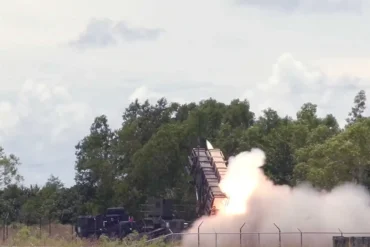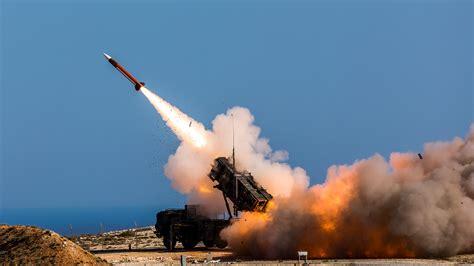
Greece has deployed a Patriot air defense battery in northern Greece to extend protective coverage over significant portions of Bulgarian territory, marking a notable step in regional missile defense cooperation within NATO’s integrated air defense architecture. The move follows a direct request from Bulgaria for additional protection against potential ballistic missile threats and reflects growing security concerns in southeastern Europe as instability in surrounding regions continues to ripple across the continent.
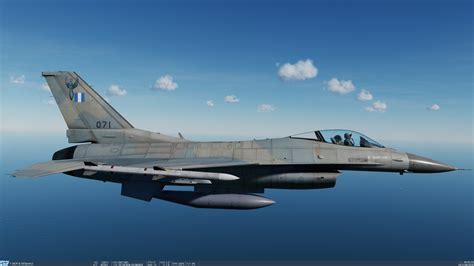
The deployment combines several operational elements designed to create a layered defensive posture. Alongside the Patriot system, two Greek F-16 fighter jets have been assigned to reinforce air policing duties, while senior Hellenic Air Force liaison officers have been dispatched to Bulgaria’s military operations center in Sofia. These officers are responsible for synchronizing radar data, coordinating interception procedures, and ensuring seamless integration with existing Bulgarian and NATO command structures.
Bulgarian Defense Minister Atanas Zapryanov confirmed on March 11, 2026, that the Patriot battery had become operational within sixteen hours of the public announcement of the deployment. The rapid activation occurred during a high-level visit to Sofia by Greek Minister of National Defence Nikos Dendias, who met with Zapryanov and Bulgarian Prime Minister Andrey Gurov to finalize operational coordination.
A Strategic Missile Shield Over Southeastern Europe
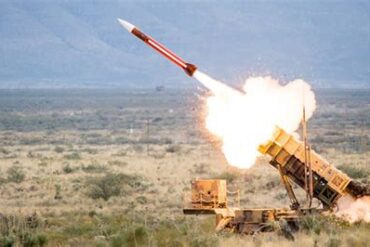
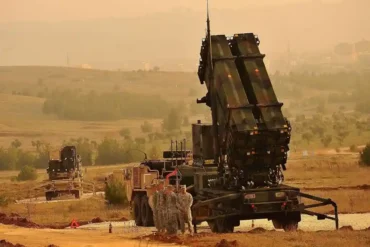
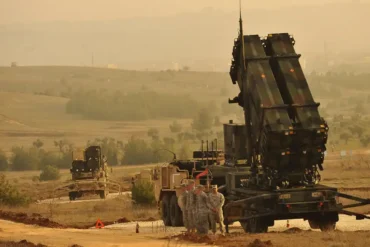
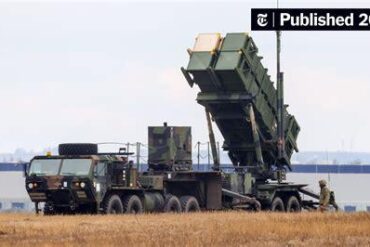
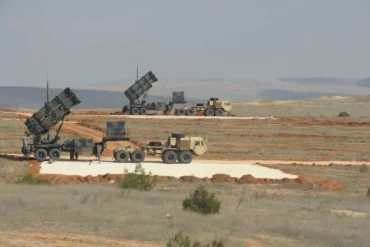
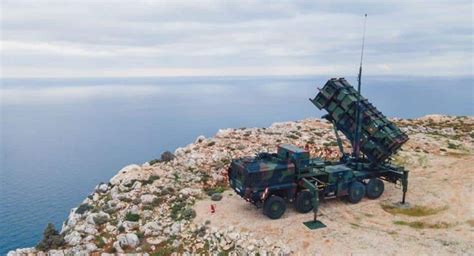
Positioned strategically in northern Greece, the MIM-104 Patriot system now extends its anti-ballistic missile coverage across a large section of Bulgarian territory. This geographic placement allows radar systems and interceptor launchers to monitor potential missile trajectories approaching southeastern Europe from multiple directions.
The deployment is fundamentally preventive rather than reactive. Bulgarian officials emphasized that the reinforcement does not signal an imminent attack but reflects the need to strengthen defensive readiness as geopolitical tensions intensify across neighboring regions.
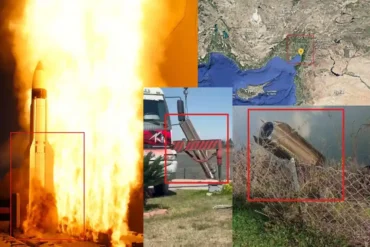
Recent developments in the Middle East have contributed significantly to these concerns. On March 4, 2026, Iranian missile launches directed toward Türkiye raised alarms about the potential reach of long-range ballistic weapons. Modern Iranian systems are capable of traveling several thousand kilometers, placing parts of southeastern Europe—including Greece, Bulgaria, and Romania—within theoretical range depending on launch location and missile configuration.
For policymakers in Sofia, the incident underscored a sobering reality: ballistic missile trajectories do not respect borders, and even distant conflicts can create spillover risks for European security.
Greek Fighters Strengthen Air Policing Missions
The Patriot battery is only one element of the defensive arrangement. Greece has also assigned two F-16 multirole fighters to operate from an airbase in northern Greece, enhancing the surveillance and response capabilities of regional air defenses.
These aircraft conduct air policing missions, a NATO practice designed to monitor and intercept unidentified aircraft approaching alliance airspace. Their mission extends beyond traditional fighter interception duties and includes tracking unmanned aerial vehicles, suspicious aircraft movements, and other airborne anomalies.
The operational concept works like a carefully choreographed dance between sensors and interceptors. Ground-based radar identifies potential threats, command centers evaluate trajectories and intent, and fighter aircraft provide the rapid reaction component capable of visually identifying or intercepting suspicious targets before they penetrate defended airspace.
Cross-Border Coordination Inside NATO Structures
A distinctive feature of the deployment is the direct integration of Greek personnel inside Bulgarian command structures. Two senior officers from the Hellenic Air Force are now stationed in Sofia, where they assist Bulgarian forces in coordinating airspace surveillance and missile defense procedures.
Their presence ensures that radar feeds, targeting data, and engagement protocols remain synchronized across national boundaries. Modern air defense relies heavily on real-time data exchange, and even minor delays in information flow can undermine interception timelines when dealing with ballistic missiles traveling at several kilometers per second.
The cooperation is enabled by a bilateral defense agreement that allows both nations to conduct cross-border military operations when necessary. Under this framework, Greek and Bulgarian fighter aircraft may perform joint patrols, share operational intelligence, and coordinate responses to aerial threats without bureaucratic delays.
Officials in Sofia also clarified that Bulgarian missile inventories remain under national control, and the Patriot deployment does not involve transferring Bulgarian interceptors to Greek command. Instead, the arrangement functions as a supplementary protective layer, reinforcing the country’s existing defenses.
The Patriot System: A Pillar of Modern Missile Defense
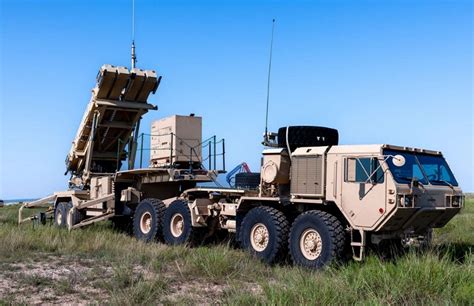
At the center of this operation stands the Patriot air defense system, one of the most widely deployed long-range missile defense platforms in the world. Developed in the United States during the late Cold War, the system entered operational service with the U.S. Army in 1984 as a replacement for older platforms such as the MIM-23 HAWK and the Nike Hercules.
Over the decades, Patriot has evolved into a sophisticated multi-role interceptor network capable of defeating aircraft, cruise missiles, drones, and ballistic missiles. Its architecture blends radar detection, command-and-control computing, communications infrastructure, and mobile launchers into a single integrated system.
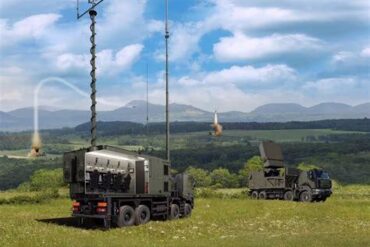
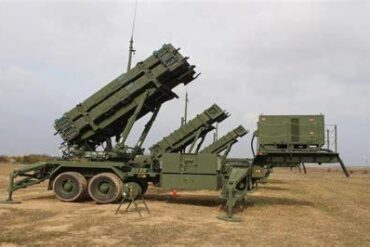
A typical Patriot battery includes several major components:
- AN/MPQ-53 or AN/MPQ-65 phased-array radar
- Engagement Control Station (ECS) that calculates firing solutions
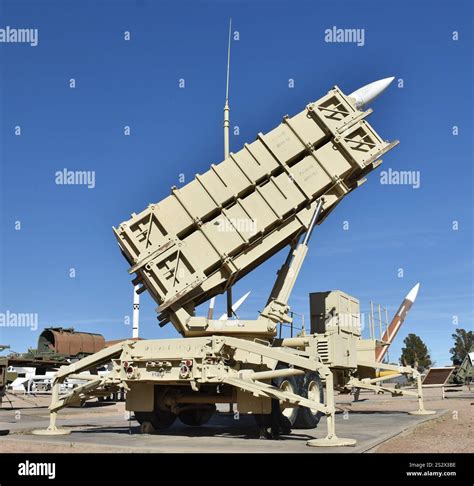
- Missile launchers mounted on semi-trailers
- Antenna mast groups and communications systems
- Electric power plants supporting field operations
The heart of the system is the phased-array radar, an engineering marvel containing more than 5,000 individual antenna elements. Instead of physically rotating like traditional radars, the beam is steered electronically, allowing it to shift direction in fractions of a second.
This design allows the radar to detect, track, and guide interceptors simultaneously, scanning large portions of the sky while maintaining precise tracking on multiple targets.
Missile Interceptors Built for Speed and Precision
Patriot’s effectiveness depends heavily on its interceptor missiles, which have undergone multiple upgrades since the system’s introduction.
The earlier PAC-2 interceptor weighs roughly 900 kilograms and measures about 5.8 meters in length. It uses a blast-fragmentation warhead triggered by a proximity fuze, destroying incoming aircraft or missiles through a controlled explosion near the target.
The more advanced PAC-3 interceptor takes a radically different approach. Instead of relying on explosive fragmentation, it employs a hit-to-kill mechanism that destroys the target through direct kinetic impact. At closing speeds exceeding Mach 3, the collision releases enormous energy—enough to obliterate an incoming missile without a conventional warhead.
PAC-3 missiles are also smaller and lighter, weighing around 315 kilograms. This allows a single launcher to carry sixteen PAC-3 interceptors, compared with four PAC-2 missiles, significantly increasing the number of engagements available during a missile attack.
These interceptors can reach altitudes above 20 kilometers, intercepting ballistic targets during their terminal descent phase when precision and reaction speed are critical.
Greece’s Long Experience With Patriot Systems
Greece has operated the Patriot system for decades as part of its layered national air defense network. The country acquired its batteries during the late 1990s and early 2000s to counter both aircraft and missile threats across the eastern Mediterranean.
Greek air defense does not rely on a single platform. Instead, it combines multiple layers of interception, including short-range systems, medium-range interceptors, and long-range missile defenses like Patriot. Interestingly, the network also includes Russian-built S-300PMU-1 systems, reflecting the complex procurement history of the region.
All these components feed data into national radar networks and NATO command systems, creating overlapping coverage designed to ensure that no threat approaches Greek airspace unnoticed.
Greek Patriot units have also demonstrated operational flexibility abroad. Beginning in 2021, Greece deployed a Patriot battery to Saudi Arabia, helping defend critical infrastructure against missile and drone attacks during periods of heightened regional tension.
A Regional Security Environment in Flux
The Greek deployment to support Bulgaria illustrates how European defense cooperation increasingly revolves around shared missile defense capabilities. Ballistic missile technology has proliferated across several regions, and modern systems can travel thousands of kilometers in minutes.
This reality forces neighboring states to collaborate in ways that would have seemed unusual decades ago. Air defense systems, after all, do not merely protect the territory where they are stationed—they create protective umbrellas that extend across borders.
In southeastern Europe, geography amplifies the importance of such cooperation. The region lies at a crossroads between the Middle East, the Black Sea basin, and the eastern Mediterranean. Conflicts or missile launches in any of these areas can produce trajectories passing close to European airspace.
For NATO members like Greece and Bulgaria, integration within the alliance’s missile defense network allows them to pool sensors, share early-warning data, and coordinate interception strategies.
Modernization Efforts and Future Defense Cooperation
Beyond the immediate Patriot deployment, the discussions between Greek and Bulgarian defense officials in Sofia touched on broader military cooperation. Topics included military mobility infrastructure, coordination with Romania, and joint participation in European defense innovation initiatives.
Bulgaria is also preparing to accelerate modernization across its armed forces. The country’s parliament has authorized negotiations for a €3.261 billion loan under the European Security Action for Europe (SAFE) financial instrument. The funding will support nine modernization programs designed to meet NATO capability targets before 2032.
These initiatives include improvements in air defense, command systems, and military mobility—elements that are increasingly vital in an era where threats can travel across continents in minutes.
A New Layer of Protection for the Balkans
The deployment of a Greek Patriot system to shield Bulgarian airspace represents more than a technical military arrangement. It is a visible example of how regional security partnerships are evolving in response to long-range missile threats and shifting geopolitical tensions.
For Bulgaria, the system adds a critical defensive layer while national modernization efforts continue. For Greece, it demonstrates the operational reach of its air defense capabilities and its role as a stabilizing partner within NATO’s southeastern flank.
The result is a cooperative defensive network stretching across borders, radar beams sweeping the sky for threats that may never come—but must always be anticipated. In the strange mathematics of deterrence, the best missile interception is the one that never needs to happen at all.