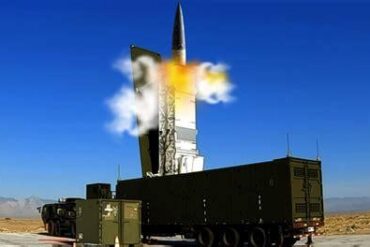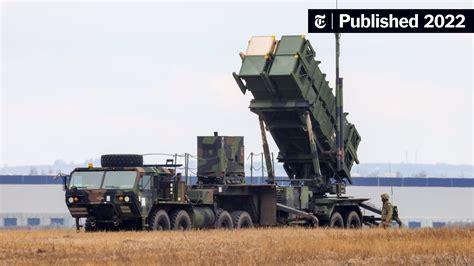
In a significant reaffirmation of long-term support for Ukraine, the United States has approved a $105 million sustainment package aimed at bolstering the operational capacity of Patriot air defense systems. As Russia intensifies missile and drone attacks on Ukrainian infrastructure and urban centers, this move underscores Washington’s strategic commitment to Kyiv’s airspace defense — a gesture that carries profound military and geopolitical weight.
The Strategic Context: Russia’s Escalating Aerial Campaign
Since the early days of the full-scale invasion, Russia has relentlessly targeted Ukraine’s energy grid, command centers, and urban hubs. However, in recent months, the missile threat has become notably more sophisticated. Russian forces have adapted by integrating software-driven terminal maneuvers into their Iskander-M and Kinzhal hypersonic missiles, reducing Ukraine’s interception rates from an estimated 37% in August to just 6% by September 2025. This alarming drop has heightened the urgency to modernize and maintain existing air defense assets, particularly the Patriot system, which remains Ukraine’s only proven counter to advanced ballistic threats.
What the $105 Million Package Covers
The newly approved U.S. package, detailed by the Defense Security Cooperation Agency (DSCA) on November 18, 2025, does not deliver new batteries but rather ensures that Ukraine’s existing Patriot systems remain battle-ready. The core components of the deal include:
- Upgrade of legacy M901 launchers to M903 configuration
- Prescribed load and stockage lists for ground support equipment
- Spares and repair parts for high-demand components
- Training programs for Ukrainian personnel
- Broader logistics and program assistance
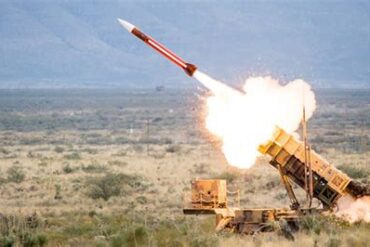
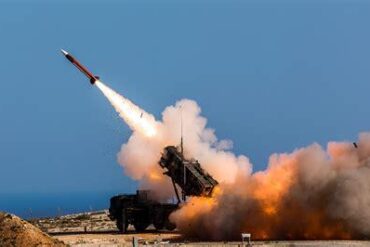
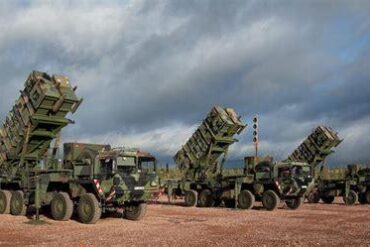
Crucially, the M903 launcher upgrades stand out for their tactical impact. The M903 can house up to 16 PAC-3 or 12 PAC-3 MSE interceptors, significantly boosting missile density compared to the older M901 configuration. It also allows mixed loadouts—such as a combination of PAC-2 GEM-T and PAC-3 MSE—tailored to match the nature of an incoming threat.
Technical Supremacy: Why Patriot Remains Indispensable
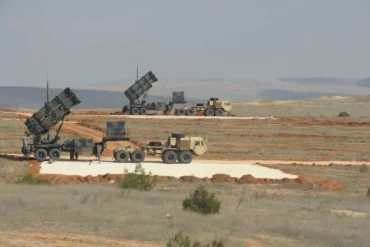
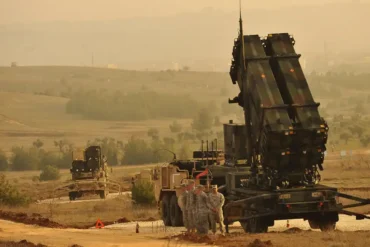
The Patriot Air and Missile Defense System, developed by RTX (formerly Raytheon Technologies) and Lockheed Martin, is designed for layered defense against a spectrum of aerial threats. It is built around the AN/MPQ-65 phased-array radar, paired with an engagement control station and truck-mounted launchers. Two key interceptor families form its core firepower:
- PAC-2 GEM-T: Employs a blast-fragmentation warhead with semi-active radar homing; ideal for cruise missiles and aircraft.
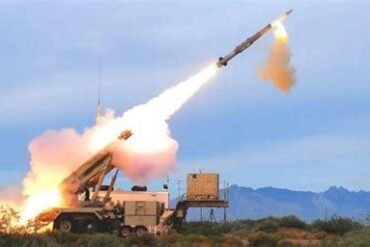
- PAC-3 / PAC-3 MSE: Smaller, agile, and designed for hit-to-kill accuracy against ballistic missiles. The MSE variant adds a dual-pulse motor and larger fins for extended reach and agility.
These capabilities give Ukraine a crucial edge in targeting high-speed ballistic threats. Notably, in May 2023, Patriot batteries successfully intercepted Russia’s much-feared Kh-47M2 Kinzhal hypersonic missiles over Kyiv, marking a watershed moment in Ukraine’s air defense.
Layered Defense in Action: Integration with Other Systems
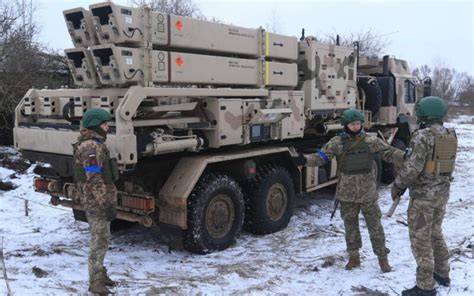
Ukraine’s air defense network is a multi-layered architecture designed to handle a variety of threats at different altitudes and ranges. Alongside Patriot, it includes:
- Soviet-era S-300 and Buk systems
- NASAMS (Norwegian Advanced Surface-to-Air Missile System)
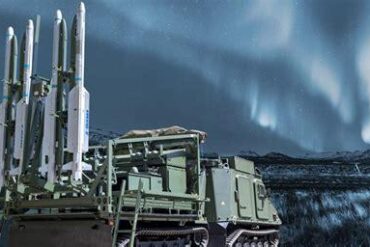
- IRIS-T (German-made infrared homing system)
- SAMP/T (joint French-Italian system)
Patriot is typically deployed around Kyiv and other strategic sites, offering high-altitude cover. Lower-tier systems counter cruise missiles, Shahed drones, and other low-flying threats. However, as the Russian threat grows more technologically complex, the interoperability and continual upgrading of these systems become paramount.
Strategic Importance of Launcher Upgrades
The M903 launcher, a central feature of the $105 million package, is not merely a mechanical upgrade — it is a force multiplier. While the M901 is restricted to a basic loadout, the M903’s modular flexibility allows Ukrainian forces to:
- Rapidly respond to intelligence about incoming threats
- Customize launcher loads based on expected missile types
- Increase missile availability during sustained engagements
This flexibility translates into greater survivability for Ukrainian infrastructure. Whether protecting critical power stations, military command nodes, or civilian shelters, the ability to field more interceptors at once enhances Ukraine’s strategic depth and resilience.
Training and Implementation: A Joint Effort
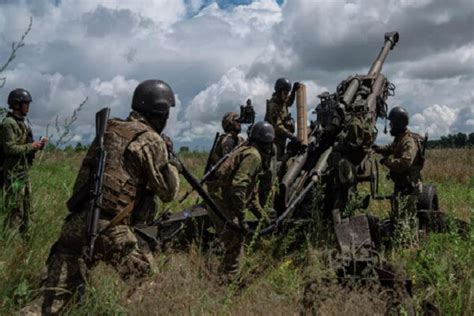
According to DSCA, the implementation of this support package will require around five U.S. government personnel and fifteen contractor representatives, who will rotate through U.S. European Command bases for training and strategic coordination. This structure reflects a move toward long-term collaboration rather than one-off aid drops.
Earlier joint training initiatives, particularly those launched in Germany in late 2022, have already produced Ukrainian crews capable of handling Patriot systems under combat conditions. The integration of additional logistics and technical advisors will only deepen that proficiency.
The Geopolitical Layer: Allies, Budgets, and Deterrence
This package comes on the heels of a $179.1 million Patriot sustainment deal in August 2025, hinting at a shift in U.S. policy from reactive donations to structured, multi-year planning for Ukraine’s air defense. Several political and strategic implications emerge from this trend:
- Congressional Reassurance: The administration has signaled that these support packages will not degrade U.S. readiness, a necessary reassurance amid rising concerns about domestic stockpiles.
- NATO Synergy: Allies like Germany, the Netherlands, and others continue to contribute through either direct deliveries or financial pathways facilitated by NATO and bilateral agreements.
- Sustainment Over Expansion: The emphasis is now as much on keeping current systems alive and effective as it is on delivering new batteries. This acknowledges the attritional nature of the air war.
President Volodymyr Zelensky has persistently called for at least seven more Patriot-class systems, with newer assessments suggesting a need for up to twenty-five. Yet, sustaining existing systems with upgrades, spare parts, and software updates is proving just as crucial as meeting numerical goals.
Conclusion: Survivability Through Sustainability
Ukraine’s defense against an evolving missile threat increasingly depends on the continuous modernization of existing systems. In this context, the $105 million Patriot sustainment package is more than just a support deal—it is a strategic enabler that allows Ukrainian forces to maintain operational tempo, defensive depth, and national morale.
Every operational Patriot battery buys time and space for Ukraine’s ground operations. It shields critical infrastructure from degradation, denies Russia easy victories from the air, and projects a message of unwavering support from the West. As the war enters another brutal winter, the ability to sustain and adapt air defense assets may well determine not just tactical outcomes, but the broader trajectory of Ukraine’s sovereignty and survival.