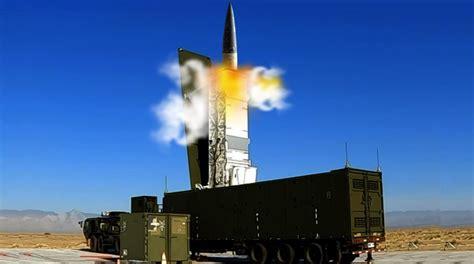
Germany has taken a significant strategic leap by announcing its intent to acquire the US-made Typhon missile system, a mid-range ground-launched platform designed to bridge critical capability gaps in Europe’s defense posture. On July 14, 2025, German Defence Minister Boris Pistorius confirmed during a state visit to Washington that Berlin had formally submitted a purchase request to the Pentagon, marking a pivotal moment in Germany’s response to escalating tensions with Russia.

The announcement came after high-level discussions with US Secretary of Defense Pete Hegseth, in which the two defense chiefs reportedly agreed on the strategic value of deploying Typhon in Europe. Pistorius emphasized the purely defensive nature of the system, which, despite its 2,500-kilometer range, will be used strictly to deter a conventional first strike. The missile’s operational reach could theoretically place large swathes of Russian territory within striking distance, but Berlin reiterated its intent to avoid any aggressive posturing.
Germany’s Strategic Rationale and NATO’s Deterrence Architecture
The proposed Typhon acquisition signals a broader shift in Germany’s defense doctrine, aiming to reinforce NATO’s deterrence capability against Russia’s expanding missile arsenal. With Russian deployments of long-range cruise and ballistic missiles increasing in both quantity and precision, European NATO members have accelerated efforts to modernize their land-based missile defense systems.
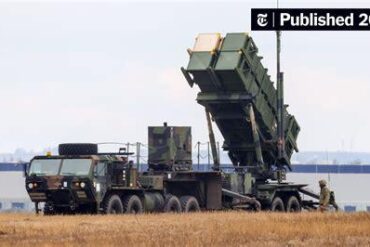
Germany currently relies on Patriot missile batteries and a patchwork of older systems ill-suited for rapid, multi-domain response. The Typhon system, by contrast, offers unprecedented flexibility, capable of launching two of America’s most potent missiles: the BGM-109 Tomahawk and the RIM-174 SM-6.
The acquisition is also seen as an interim capability until a new generation of European missile systems, currently under joint development with the United Kingdom, becomes operational—expected within the next seven to ten years. For Berlin, Typhon fills the immediate gap and complements ongoing investments in air defense, electronic warfare, and rapid reaction forces.
Typhon: Bridging the Range Gap in Europe’s Arsenal
Developed by Lockheed Martin for the US Army, the Typhon Missile System—also known as Mid-Range Capability (MRC) or Strategic Mid-Range Fires (SMRF)—was conceived to plug the range gap between short-range tactical munitions like the Precision Strike Missile (PrSM) and high-end hypersonic assets such as the Dark Eagle.
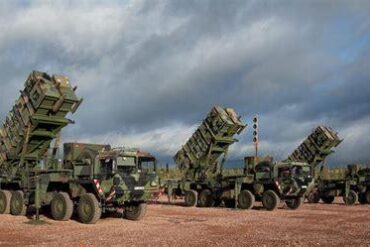
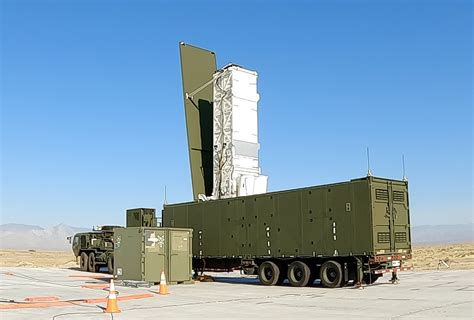
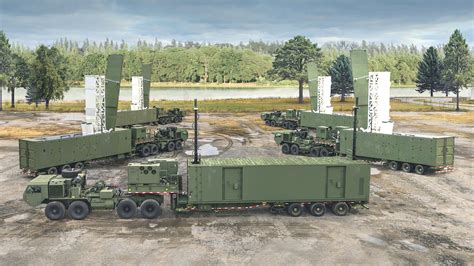
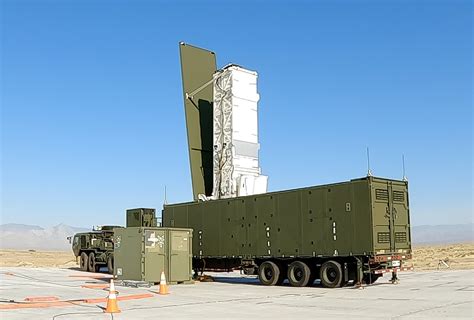
A Typhon battery includes:
- Four truck-mounted launchers
- A battery operations center
- Command and support vehicles
- Prime movers and trailers
Each launcher is based on the Mk 41 Vertical Launch System, adapted for land-based use. This modularity allows Typhon to deploy either the Tomahawk or the SM-6, offering both offensive and defensive flexibility.
Tomahawk Cruise Missile Capabilities
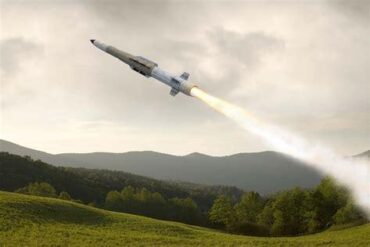
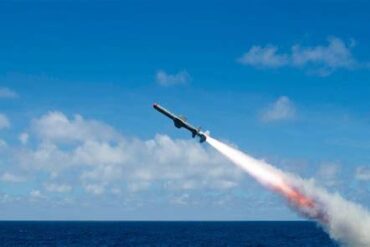
The BGM-109 Tomahawk is a long-range, all-weather subsonic cruise missile with a current operational range of up to 2,500 kilometers. Modern versions are equipped with sophisticated guidance systems including GPS, Inertial Navigation, TERCOM, and DSMAC, achieving a circular error probable (CEP) of about 10 meters. Capable of flying at low altitudes (30–50 meters) and speeds around 920 km/h, it supports in-flight retargeting, dynamic rerouting, and loitering.
Variants like the Block Va are equipped with anti-ship capabilities, while Block Vb focuses on hard-target penetration. The missile can carry 450 kg high-explosive warheads and has integrated seamlessly into network-centric warfare environments, sharing targeting data with aircraft, UAVs, and naval assets.
SM-6 Interceptor Versatility
The RIM-174 Standard ERAM (SM-6), developed by Raytheon, is a multi-role weapon designed for extended-range anti-air, missile defense, and anti-ship engagements. Based on the SM-2ER Block IV and incorporating the AIM-120 AMRAAM seeker, it boasts a maximum estimated range of 370–460 kilometers and speeds exceeding Mach 3.5.
Equipped with inertial navigation, active radar homing, and Cooperative Engagement Capability, it can intercept:
- Cruise missiles
- Ballistic missiles in terminal phase
- Aircraft and UAVs
- Surface vessels
The 64-kilogram warhead is supported by radar and contact fuzing, with a high-altitude engagement ceiling above 34,000 meters. This makes the SM-6 a highly adaptable tool in both air defense and conventional strike scenarios.
Forward Deployed Deterrence and European Force Posture
The Typhon system is already in operational use in the Indo-Pacific, first deployed to the Philippines in April 2024 during the joint Salaknib exercise. It remains stationed in Northern Luzon, despite repeated protests from China. The system’s successful deployment and flexibility have significantly bolstered Washington’s regional deterrence against Chinese naval expansion.
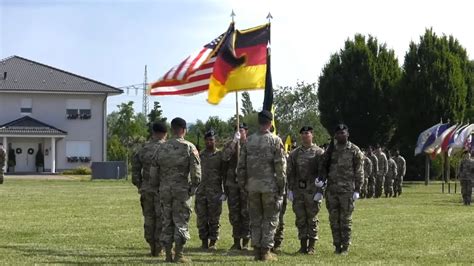
Germany’s intent to field the Typhon is a clear message to Moscow that NATO will not tolerate an escalation imbalance. According to Pistorius, the system could be deployed as early as fiscal year 2026 with the 2nd Multi-Domain Task Force (MDTF) in Wiesbaden, Germany. Additional MDTFs, including the 5th MDTF based at Fort Bragg, are being structured to support European operations.
Hypersonics on the Horizon: Germany and the Dark Eagle
Pistorius also confirmed Germany’s participation in the US Army’s long-range missile deployments, including the Dark Eagle hypersonic weapon, which is expected to achieve ranges near 3,000 kilometers. While deployment agreements were made under the previous Biden administration, final approval is pending in Washington.
Berlin considers the integration of Typhon and future hypersonics as vital steps toward reestablishing strategic parity with Russia. The move comes amid intensive consultations with NATO allies to address potential gaps created by any future US troop drawdowns in Europe.
Financing, Defense Budgets, and NATO Commitments
Germany’s defense budget is projected to rise from €95 billion in 2025 to €162 billion by 2029, aligning with NATO’s updated spending target of 3.5% of GDP. This expansion will fund the Typhon acquisition, replenish existing Patriot batteries, and support Ukraine’s air defense.
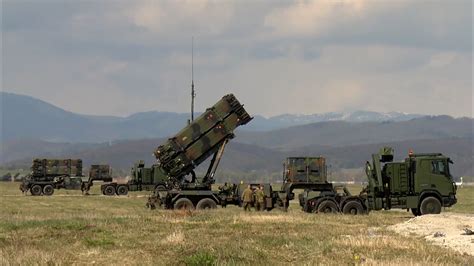
During his visit, Pistorius reiterated Germany’s commitment to deliver two additional Patriot batteries to Ukraine. The transfer could either involve direct purchase from US inventories or reallocation of two of Germany’s nine operational units, followed by US-provided replacements. The delivery is considered urgent, as Russian missile attacks continue to devastate Ukrainian infrastructure.
This decision also intersects with US policy shifts under President Trump, who has stated the US would no longer fund Patriot donations to Ukraine. Instead, European allies will bear the cost, with Washington acting as the manufacturer and supplier.
Strategic Consequences and Long-Term Vision
Germany’s Typhon acquisition reflects an acute recognition of the changing security dynamics in Europe. As Russian missile forces modernize, and the future of US military commitments becomes more uncertain, NATO members are taking steps to ensure independent deterrence capability within the alliance framework.
The decision marks a fundamental reorientation of German defense policy—from a focus on post-Cold War peacekeeping to one of forward deterrence and multi-domain preparedness. Pistorius described the Typhon as a “strategic necessity,” not just for German defense, but for NATO’s credibility as a united front.
Moreover, the Typhon system—backed by thousands of Tomahawks in US stockpiles and over 800 SM-6 units slated for delivery—represents more than a missile battery. It’s a signal that Europe is stepping up, building the architecture to defend its borders while coordinating more closely than ever with Washington.
As Europe moves into an era marked by increased great-power competition, missile deterrence and rapid-response systems like Typhon will form the cornerstones of continental security. Germany’s move is not just a procurement deal—it is a declaration that Berlin is ready to lead within NATO, reinforcing both national sovereignty and alliance strength.