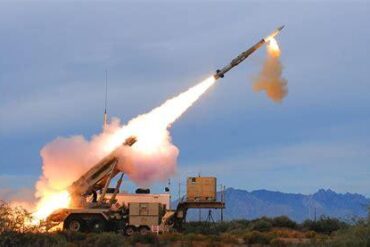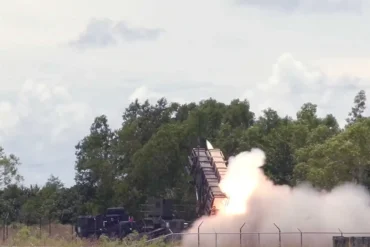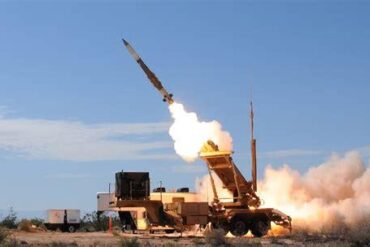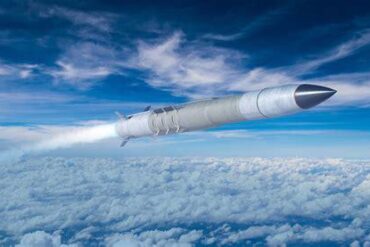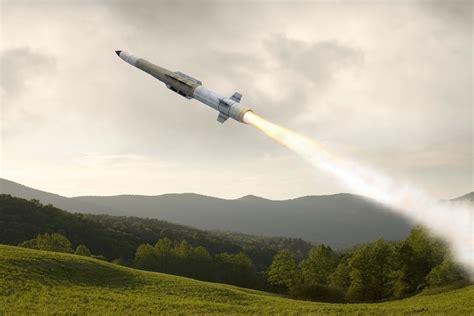
The United States is preparing a significant new arms package for Taiwan centered on the advanced Patriot PAC-3 MSE (Missile Segment Enhancement) interceptor, a move designed to reinforce the island’s defenses against an expanding spectrum of Chinese ballistic missile capabilities. The prospective sale reflects Washington’s ongoing effort to strengthen Taiwan’s resilience as military pressure from the People’s Republic of China intensifies across the Taiwan Strait.
According to the Taipei Times, the package would provide enough PAC-3 MSE interceptors to support the creation of at least one additional Patriot air defense battalion. This expansion would substantially increase Taiwan’s capacity to detect, track, and intercept short- and medium-range ballistic missiles positioned along China’s southeastern coastline—missile forces that have grown both in number and sophistication over the past decade.
The proposed deal extends beyond interceptors alone. It represents a layered, network-centric architecture integrating IBCS command systems, NASAMS air defense platforms, LTAMDS next-generation radars, and mobile counter-drone vehicles. Together, these elements are designed to transform Taiwan’s missile defense posture from a collection of discrete systems into a unified defensive grid capable of responding to complex, multi-vector attacks.
Strategic Context: Countering China’s Expanding Missile Arsenal
China’s People’s Liberation Army Rocket Force has deployed large inventories of DF-series ballistic missiles opposite Taiwan, including systems optimized for precision strikes against airbases, ports, radar stations, and command centers. These deployments are paired with increasingly frequent large-scale air operations and joint-force exercises simulating blockade and strike scenarios.
The military logic behind the U.S. package is rooted in defensive density. By fielding more Patriot battalions equipped with mixed interceptor loads—combining PAC-3 MSE and PAC-3 CRI missiles—Taiwan can create overlapping engagement zones around critical infrastructure. This redundancy complicates adversary strike planning by increasing the number of intercept opportunities per incoming missile.
The PAC-3 MSE’s enhanced intercept altitude—reaching up to 60 kilometers—extends the defensive envelope well beyond earlier Patriot variants. That additional vertical battlespace translates into more reaction time, more engagement geometry options, and a higher probability of successful interception against maneuvering ballistic threats.
A $20 Billion Defense Package Within a Larger Security Overhaul
The interceptor sale is reportedly nested within a broader arms initiative valued at up to $20 billion, aligned with Taiwan’s sweeping NT$1.25 trillion ($40 billion) special defense budget. Taipei has already moved forward with procurement, purchasing 102 PAC-3 MSE interceptors using surplus funds from prior Patriot programs. Initial deliveries began in early January 2026, signaling an accelerated deployment timeline.
This acquisition surge reflects Taiwan’s transition from platform-centric procurement to system-of-systems integration—prioritizing interoperability, survivability, and distributed command authority rather than isolated weapons purchases.
Building the ‘T-Dome’: Taiwan’s Layered Missile Shield
At the doctrinal level, the new systems feed directly into President William Lai’s proposed T-Dome air and missile defense network, sometimes referred to as the “Taiwan Shield.” The concept envisions a fully layered defensive web capable of countering ballistic missiles, cruise missiles, aircraft, and unmanned systems simultaneously.
Central to this architecture is the Integrated Battle Command System (IBCS), a networked command platform that fuses sensor data and shooter units into a single operational picture. Rather than each battery operating independently, IBCS allows radars, launchers, and interceptors to share targeting data across the battlespace in real time.
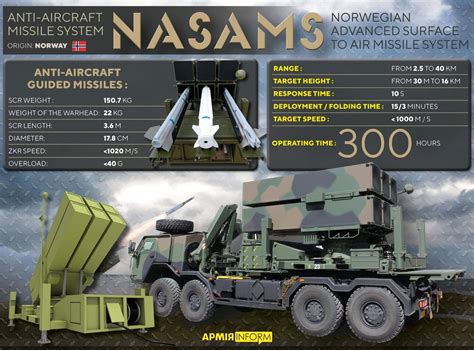
Complementing Patriot’s high-altitude intercept role, the NASAMS (National Advanced Surface-to-Air Missile System) strengthens low- and medium-altitude defense. NASAMS batteries use distributed launchers and radar cueing to counter cruise missiles and aircraft that slip beneath higher intercept layers.
Next-Generation Sensors: LTAMDS and 360-Degree Radar Coverage
Missile defense effectiveness begins with detection, and the package’s inclusion of the Lower Tier Air and Missile Defense Sensor (LTAMDS) marks a major technological leap. Unlike legacy Patriot radars constrained by narrower fields of view, LTAMDS employs three active electronically scanned array (AESA) panels to deliver continuous 360-degree surveillance.
This omnidirectional coverage is crucial in a Taiwan contingency, where threats could arrive from multiple azimuths—ballistic missiles from inland launch sites, cruise missiles from maritime vectors, and drones from forward operating zones.
The radar’s enhanced discrimination capabilities also improve tracking of complex targets such as decoys, maneuvering reentry vehicles, and low-observable cruise missiles.
Counter-Drone Layer: Mobile M-ACE Defense Units
Modern missile warfare rarely occurs in isolation. Saturation attacks increasingly combine ballistic missiles with loitering munitions, reconnaissance drones, and electronic warfare platforms. To address this evolving threat environment, the package includes vehicle-mounted counter-drone systems known as M-ACE units.
These mobile platforms integrate:
- Radar and electro-optical/infrared sensors
- Radio-frequency detection arrays
- Electronic warfare jammers
- A 30 mm autocannon for kinetic intercepts
Mounted on tactical trucks, M-ACE units provide flexible urban and base defense, with at least three systems under consideration for capital-region protection.
Integration with Indigenous Missile Systems
Taiwan’s missile shield is not purely import-driven. The T-Dome framework integrates U.S. systems with domestically developed interceptors, notably the Tien Kung III and the next-generation Tien Kung IV (Strong Bow).
The Tien Kung IV, now entering serial production, is engineered to intercept ballistic missiles at ranges of up to 70 kilometers. By pairing indigenous interceptors with Patriot units, Taiwan gains logistical independence, diversified supply chains, and layered redundancy.
An AI-assisted battle management system underpins the network, enabling decision-support automation, sensor fusion, and distributed engagement authority—features designed to maintain operational continuity even if command nodes are targeted.
Technical Anatomy of the PAC-3 MSE Interceptor
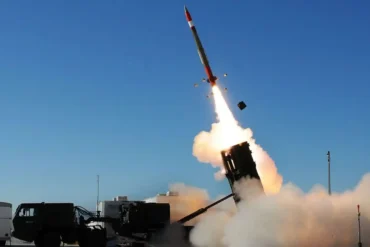
The PAC-3 MSE represents the most advanced evolution of the Patriot interceptor family. Unlike older blast-fragmentation missiles, it uses hit-to-kill kinetic impact, destroying targets through sheer collision energy rather than explosive proximity.
Physically, the missile measures approximately:
- Length: 5 meters
- Diameter: 25 centimeters
- Weight: 370 kilograms
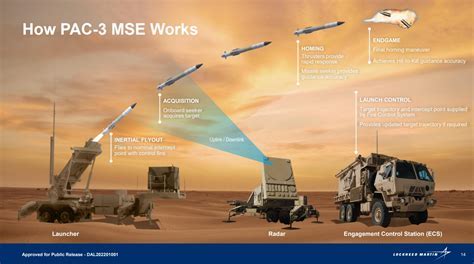
A dual-pulse solid rocket motor provides extended range and altitude performance, enabling engagements out to roughly 120 kilometers. Speeds exceed 4,900 km/h, allowing rapid intercept geometry against high-velocity ballistic targets.
Guidance relies on a layered navigation stack:
- Inertial Measurement Unit (IMU) for midcourse flight
- Active Ka-band radar seeker for terminal homing
- Guidance processor computer for onboard targeting calculations
A multi-band RF data link connects the missile to ground fire-control systems, enabling in-flight updates and trajectory refinement.
Advanced Maneuverability and Endgame Precision
Intercepting ballistic missiles requires extreme agility in the final seconds before impact. The PAC-3 MSE employs a dual-control autopilot system combining aerodynamic fins with an attitude control section equipped with side thrusters.
This configuration enables rapid divert maneuvers—sharp course corrections that align the interceptor with a descending warhead traveling at hypersonic velocity.
Engineering refinements include:
- Enlarged control surfaces
- Enhanced actuators and batteries
- Thermal hardening for high-heat engagements
- Updated seeker algorithms
- Insensitive munitions safety upgrades
These improvements collectively expand maneuverability, lethality, and operational safety.
Launcher Flexibility and Firepower Density
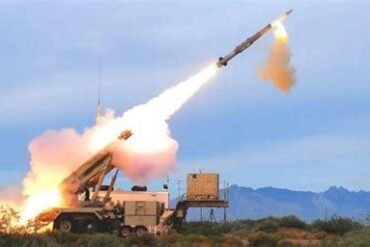
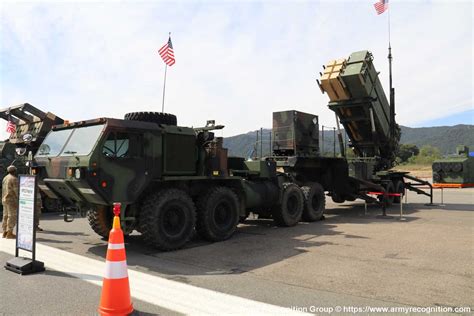
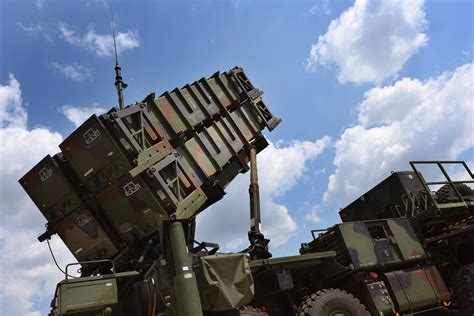
PAC-3 MSE missiles are deployed via the M903 Patriot launcher, a platform capable of carrying up to 12 interceptors per launcher. Mixed loadouts allow commanders to combine PAC-3 MSE and PAC-3 CRI missiles based on threat assessments.
The launcher integrates an Enhanced Launcher Electronics System and updated fire-solution computing software, enabling simultaneous engagement planning for multiple missile types.
One-pack canister designs streamline field replacement and reloading, ensuring sustained defensive operations during prolonged strike campaigns.
Combat Lessons from Ukraine
Real-world combat data has significantly influenced Patriot system evolution. Since 2023, Patriot batteries deployed in Ukraine have engaged Russian ballistic and cruise missiles, including the Kh-47 Kinzhal air-launched ballistic missile.
Ukrainian forces report multiple successful intercepts during large-scale strike waves targeting energy grids and urban centers. Engagements often required multiple interceptors per target to maximize kill probability—an operational reality that informs stockpile planning and launcher density calculations.
Telemetry and radar data from these intercepts have been shared with manufacturer Lockheed Martin, feeding software updates, seeker refinements, and threat modeling improvements. This battlefield feedback loop accelerates system adaptation against evolving missile tactics.
Operational Implications for Taiwan’s Defense Posture
For Taiwan, the integration of PAC-3 MSE interceptors, advanced radars, and networked command systems represents more than incremental modernization. It marks a shift toward distributed, survivable missile defense designed to function under saturation attack conditions.
By dispersing sensors and shooters while linking them through resilient data networks, Taiwan reduces the risk that a single strike could cripple its defensive capacity. Layered interception zones—high, medium, and low altitude—create multiple opportunities to defeat incoming threats before impact.
The addition of counter-drone and cruise missile defenses acknowledges the reality that future conflicts will unfold across air, missile, electronic, and unmanned domains simultaneously.
Deterrence Signaling Across the Taiwan Strait
Arms transfers of this scale carry political as well as military weight. For Washington, the sale reinforces commitments under the Taiwan Relations Act to support the island’s self-defense capabilities. For Beijing, it signals continued U.S. involvement in the cross-strait security equation.
Missile defense systems are inherently defensive, yet their deployment alters strategic calculus by reducing the coercive leverage of missile arsenals. In effect, every additional interceptor complicates offensive strike planning and raises the threshold for successful escalation.
As China continues expanding its rocket forces and precision-strike doctrine, Taiwan’s investment in layered missile defense—anchored by Patriot PAC-3 MSE technology—illustrates a clear strategic priority: survive the opening salvo, preserve command continuity, and maintain the capacity to respond.
In modern deterrence theory, resilience is power. Missile shields do not eliminate threats, but they reshape the risk landscape—turning what might be a decisive first strike into a contested, uncertain gamble.