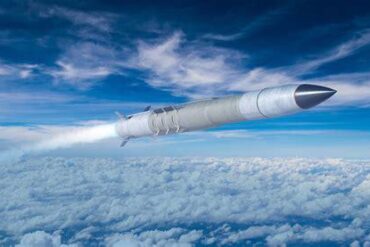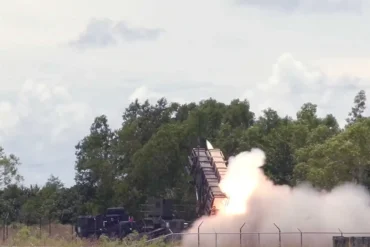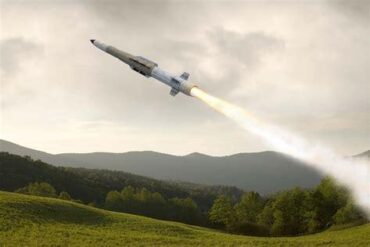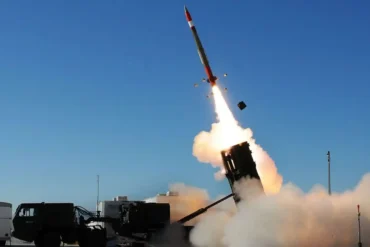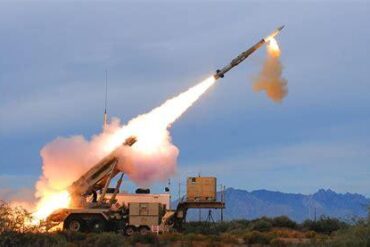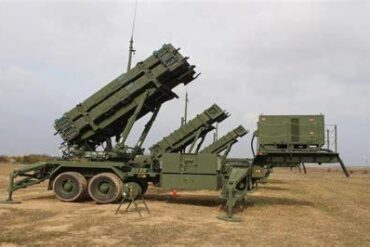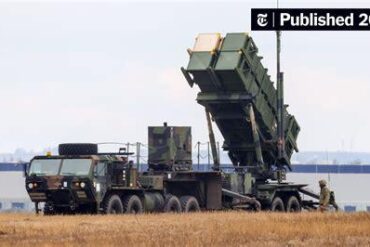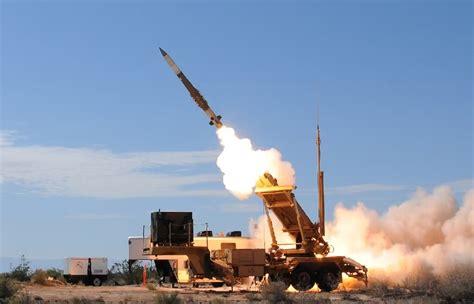
Amid a rapidly evolving global security landscape, Boeing’s decision to triple the production of Patriot PAC-3 missile seekers stands as a defining moment for Western missile defense infrastructure. This strategic move, driven by mounting European defense demands and the ongoing war in Ukraine, is not merely a response to current needs but a proactive investment in the future of allied deterrence and operational readiness.
Strategic Expansion: Boeing’s New Huntsville Facility
Boeing unveiled its new 40,000-square-foot manufacturing facility in Huntsville, Alabama, a state-of-the-art center designed explicitly to boost the production of Ka-band radar seekers critical to the PAC-3 interceptor missile. Announced at the 2025 Dubai Air Show, this expansion marks a bold industrial commitment by the U.S. defense giant, reaffirming its pivotal role in allied missile defense.
The expansion is more than architectural—it is foundational. This new facility addresses key bottlenecks in electronics integration, precision machining, and final seeker assembly. By streamlining processes and integrating modern automation and testing technologies, Boeing ensures that NATO and allied countries receive consistent and predictable deliveries of these critical missile components.
Preemptive Investment: Boeing’s Calculated Risk Pays Off
Long before orders began flooding in, Boeing anticipated a geopolitical shift. Steve Parker, head of Boeing Defense, Space & Security, explained that the company foresaw increasing demand well before formal requisitions were made. Rather than waiting, Boeing began constructing the dedicated seeker production line, ensuring resilience and responsiveness in a defense sector often criticized for being reactionary.
This foresight enabled Boeing to reach record production levels in 2024, exceeding 500 PAC-3 seekers annually. The company aims to surpass that figure significantly in 2025 and beyond, filling not just U.S. defense needs, but those of 19 international partners.
Seeker Technology: The “Eye and Brain” of the PAC-3
The PAC-3’s effectiveness hinges on a component rarely seen in media coverage: its Ka-band millimeter wave active radar seeker. Boeing’s role as the original equipment manufacturer (OEM) for this seeker makes it an indispensable part of the Patriot missile ecosystem.
Unlike legacy systems that depend on semi-active radar homing, where the ground radar guides the missile, the PAC-3’s active radar seeker allows for autonomous target acquisition and tracking in the final moments before impact. This leap in capability frees up the ground radar (e.g., Raytheon’s AN/MPQ-65 or LTAMDS) to manage multiple threats, enhancing the system’s multi-target engagement capacity.
Operating in the Ka-band frequency range provides extremely fine resolution, essential for distinguishing warheads from decoys or debris. This becomes critical when engaging maneuverable ballistic missiles or reentry vehicles that employ advanced countermeasures.
Hit-to-Kill Precision: A Paradigm Shift in Missile Defense
The PAC-3’s hit-to-kill kinetic strategy, enabled by Boeing’s seeker, represents a revolution in interception technology. Unlike older interceptors that rely on explosive warheads to destroy incoming threats, the PAC-3 aims to physically collide with the target at hypersonic speeds, neutralizing it through direct impact.
This method is particularly vital when confronting missiles armed with chemical, biological, or nuclear payloads. Destroying such weapons through kinetic impact greatly reduces the risk of partial detonation or fallout. As European and U.S. defense planners contend with advanced missile arsenals from Russia and potentially China, the PAC-3’s precision becomes a non-negotiable strategic asset.
Ukraine and the European Catalyst for Expansion
Combat use in Ukraine has showcased the PAC-3’s real-world prowess. Ukrainian defense forces have credited the system with intercepting Russian Kinzhal hypersonic missiles and a host of ballistic and cruise threats aimed at Kyiv. These operational victories have not only validated the PAC-3’s capabilities but also catalyzed a surge in European demand.
Countries like Germany, Poland, Romania, Sweden, Spain, and the Netherlands have either deployed or ordered Patriot systems. Switzerland is next in line. As nations donate systems and munitions to Ukraine, their own arsenals are being depleted, prompting urgent backfill contracts and long-term procurement strategies.
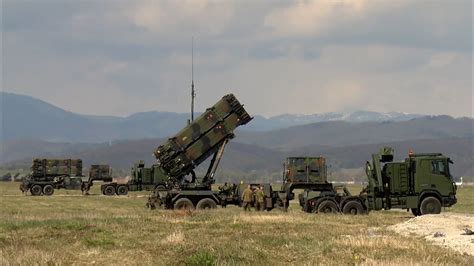
The burden on production is significant. Ukrainian President Volodymyr Zelensky has reportedly expressed interest in acquiring over two dozen Patriot batteries, a move that underscores the scale of demand and the urgency surrounding Boeing’s production ramp-up.
Global Footprint: The Patriot Alliance Expands
Beyond Europe, Patriot systems are foundational to missile defense strategies across East Asia and the Gulf. Nations like Japan, South Korea, Taiwan, Israel, Saudi Arabia, Kuwait, Qatar, and the United Arab Emirates operate various iterations of the system. In each case, the PAC-3 interceptor is seen as the vanguard against modern ballistic threats.
What unites these operators is not just the hardware, but the critical need for Boeing’s seeker. With each PAC-3 missile dependent on a high-precision seeker unit, any production lag becomes a strategic liability across the alliance. Boeing’s enhanced capacity is thus a shared insurance policy among U.S. allies.
Labor Challenges and the Thin Margin for Error
While Boeing’s PAC-3 seeker production is centered in Alabama, the company’s broader defense business is not immune to disruption. At its St. Louis facility, a prolonged labor dispute has seen workers building fighter jets and MQ-25 tankers go on strike after contract disagreements.
Steve Parker has been clear: any restart must be measured. Rushing production following a prolonged work stoppage risks quality control failures on high-stakes defense platforms. This scenario highlights how narrow the margin for error has become across Boeing’s entire defense industrial base, even as demand accelerates. Fortunately, the PAC-3 seeker line has been insulated from these disruptions, maintaining its focus and productivity. However, the St. Louis case underscores the fragility of America’s defense production ecosystem at a moment of global escalation.
Supply Chain Synergy: A Triad of Defense Giants
The Patriot missile system is a joint product of three major U.S. defense contractors:
- Raytheon provides the ground radar and fire control.
- Lockheed Martin builds the PAC-3 and PAC-3 MSE interceptors.
- Boeing delivers the advanced seeker unit embedded in each missile.
The alignment of these timelines, capacities, and quality standards is essential. In 2024, the global ramp-up was nearly stalled due to a shortage of seekers, proving that even a single missing component can cripple the supply chain.
This interdependence prompted a $2.7 billion contract package to stabilize PAC-3 production and further strengthen domestic manufacturing. Boeing’s new facility is central to this effort, establishing a firm industrial anchor for U.S. and NATO missile defense.
Looking Ahead: Strategic Implications for NATO and the Pentagon
As Europe invests in rearmament and the United States pivots to counter Chinese and Russian advancements in hypersonic weaponry, the PAC-3’s future hinges on more than raw production numbers. It depends on industrial agility, supply chain resilience, and strategic foresight.
The payoff will manifest in the coming 3–5 years, when NATO’s eastern flank is expected to field fully stocked launchers and sealed canisters, ready to respond instantly to any incursion. For the Pentagon, this is not just about defense—it is a test of whether the American defense-industrial base can scale rapidly while maintaining the gold standard in technology and reliability.

Boeing’s move to triple PAC-3 seeker production represents a pivotal answer to that test. It is a declaration that the U.S. and its allies will not be outpaced, not in production, not in technology, and certainly not in resolve.