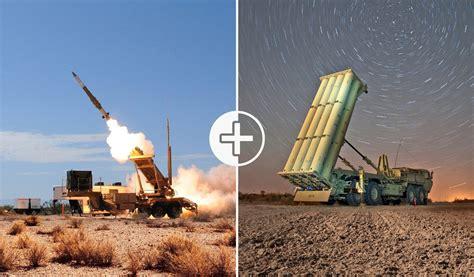
The United States is preparing a dramatic expansion of its most sophisticated missile systems, ordering defense manufacturers to sharply increase production of precision strike weapons and missile interceptors. The directive comes as ongoing operations targeting Iranian military infrastructure expose a reality that strategists have quietly worried about for years: even the world’s most powerful military can burn through advanced missile inventories faster than they can be replaced.
Washington’s response is straightforward in concept but enormous in scale. Key American defense companies have been instructed to accelerate production of what officials call “exquisite-class” weapons—high-end systems whose complexity, cost, and strategic importance set them apart from conventional munitions. The focus includes the PAC-3 MSE interceptor, THAAD missile defense interceptors, and Tomahawk land-attack cruise missiles, along with several related systems critical to modern warfare.
President Donald Trump announced that production for some of these weapons would increase by as much as four times current levels. The goal is not simply replenishing stockpiles depleted during operations against Iran; it is about ensuring the United States can sustain prolonged conflict against missile-armed adversaries while still maintaining reserves for other potential theaters.
Why the U.S. Is Expanding Missile Production Now
Modern war is increasingly defined by the availability of precision weapons. Missiles guide themselves with radar seekers, satellite navigation, infrared sensors, and complex onboard computers. They strike targets hundreds or even thousands of kilometers away with extraordinary accuracy. Yet that technological sophistication brings a downside: these systems are slow and expensive to produce.
During operations targeting Iranian missile infrastructure and military facilities, U.S. forces have relied heavily on both offensive and defensive missile systems. Cruise missiles like the Tomahawk are used to strike hardened or well-defended targets deep inside enemy territory. At the same time, defensive systems such as Patriot PAC-3 and THAAD protect bases, ships, and regional allies from retaliatory ballistic missile attacks.
Each defensive engagement consumes valuable interceptors. A single incoming ballistic missile may require multiple intercept attempts to ensure destruction. The arithmetic becomes brutal during sustained conflict: defenders expend costly interceptors to stop threats that may be cheaper for adversaries to launch.
That imbalance forces planners to confront the issue of “magazine depth.” In military terms, magazine depth refers to the number of ready weapons available before forces must pause to replenish stocks. In a missile war, that number can determine how long a country can fight at high intensity.
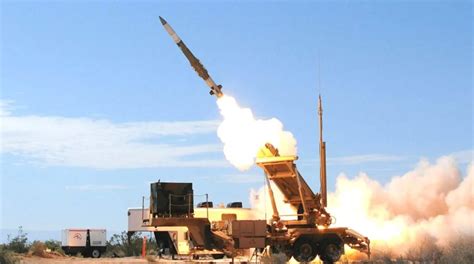
PAC-3 MSE: The Core of U.S. Tactical Missile Defense
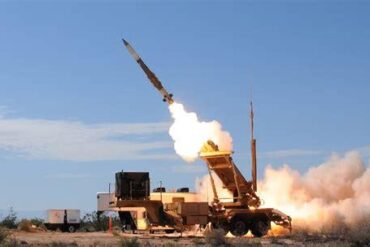
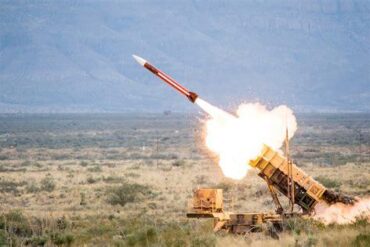
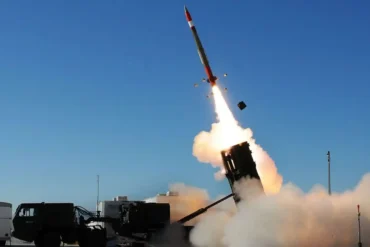
Among the systems slated for expansion, the Patriot Advanced Capability-3 Missile Segment Enhancement (PAC-3 MSE) sits at the center of the U.S. Army’s lower-tier missile defense network. Unlike older interceptors that rely primarily on explosive warheads, the PAC-3 MSE uses a hit-to-kill approach, destroying incoming threats through direct collision.
The physics here is elegant in a terrifying way. Two objects moving several times the speed of sound slam into each other in midair, converting enormous kinetic energy into instantaneous destruction. Even a small interceptor becomes devastating when traveling at such velocities.
PAC-3 MSE is designed to intercept:
- Tactical ballistic missiles
- Cruise missiles
- Hypersonic threats in certain flight profiles
- Enemy aircraft and drones
Lockheed Martin, the prime contractor for the system, has been working with the Pentagon under a long-term agreement intended to raise annual production capacity dramatically. Current projections suggest output could grow from roughly 600 missiles per year to around 2,000 over the next several years, a scale that reflects the increasing importance of missile defense across U.S. and allied forces.
THAAD: The Upper Shield Against Ballistic Missiles
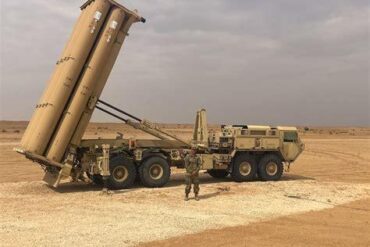
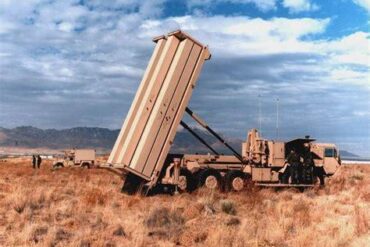
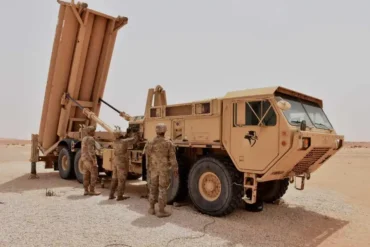
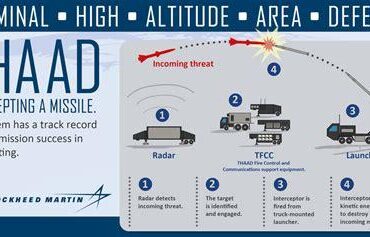
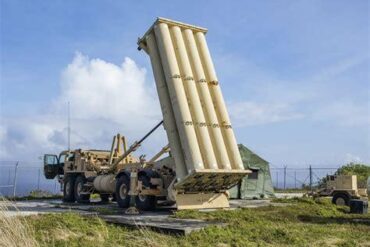
If PAC-3 protects critical assets at the tactical level, the Terminal High Altitude Area Defense (THAAD) system forms the next layer above it. THAAD interceptors engage ballistic missiles either inside the upper atmosphere or just beyond it, creating a protective envelope over large regions.
Think of missile defense as a layered shield. The lower layer attempts to destroy threats during their final descent. The upper layer tries to intercept them earlier, when they are still high in the sky. THAAD fills that second role.
The interceptor itself is a marvel of aerospace engineering. Instead of detonating near a target, THAAD uses precise tracking data from radar networks to guide a kinetic kill vehicle directly into the incoming missile’s path. At speeds approaching several kilometers per second, even a small impact obliterates the warhead.
Lockheed Martin has committed to expanding THAAD production capacity from roughly 96 interceptors annually to around 400 per year. That leap reflects rising demand not only from the United States but also from allies facing growing ballistic missile threats.
Tomahawk: The Long-Range Strike Workhorse
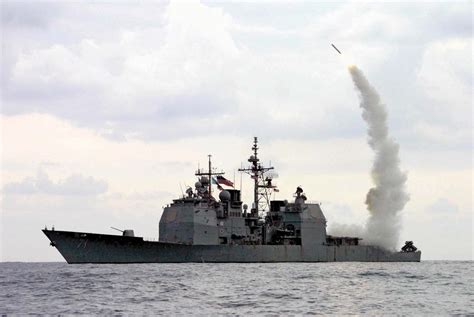
On the offensive side of the equation stands one of the most famous cruise missiles in military history: the Tomahawk. First deployed during the Cold War, this subsonic cruise missile has evolved through multiple generations and remains a central tool in American power projection.
Modern Block V Tomahawk missiles incorporate improved satellite navigation, advanced communications links, and enhanced targeting flexibility. These upgrades allow the missile to receive updated instructions mid-flight, enabling strikes against moving or newly identified targets.
The missile flies low to the ground—sometimes only tens of meters above terrain—using radar altimeters and digital terrain mapping to avoid detection. That ability allows naval vessels hundreds of kilometers away to strike targets deep inland.
RTX, the defense company formed from the merger of Raytheon and United Technologies’ defense businesses, has agreed to raise production of Tomahawk missiles to more than 1,000 units annually. For a weapon with a range exceeding 1,000 kilometers, such numbers represent a massive increase in long-range strike capacity.
The Industrial Network Behind the Missile Surge
Building advanced missiles is less like assembling consumer electronics and more like orchestrating a complex scientific ecosystem. Each weapon depends on specialized components produced by a wide network of contractors.
Several major defense companies are involved in the expansion effort:
- Lockheed Martin, responsible for PAC-3 and THAAD interceptors
- RTX, producer of Tomahawk, SM-3, SM-6, and AMRAAM missiles
- Northrop Grumman, involved in propulsion and advanced systems
- L3Harris, a major supplier of solid rocket motors
- Honeywell Aerospace and BAE Systems, which contribute electronics, sensors, and subsystems
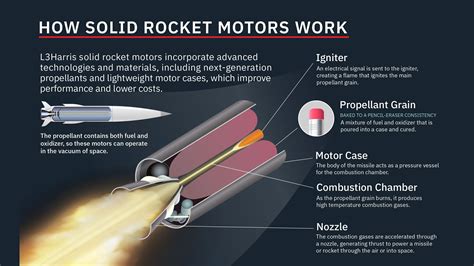
One of the most important bottlenecks in missile production lies in the manufacturing of solid rocket motors—the propulsion units that drive many interceptors and cruise missiles. L3Harris has begun expanding facilities in Camden, Arkansas, where a sprawling campus dedicated to rocket motor production is expected to multiply output capacity several times over.
Iran Operations and the Reality of Missile Consumption
The ongoing campaign targeting Iranian missile sites and military infrastructure illustrates why such industrial expansion is necessary. U.S. warships and aircraft have launched numerous precision weapons during strikes on missile production facilities, air defense networks, and naval bases.
Meanwhile, American and allied forces stationed in the region face persistent threats from Iranian ballistic missiles, drones, and cruise missiles. Defensive systems must remain ready to intercept these threats at any moment.
This two-sided missile expenditure creates a difficult equation. Offensive strikes reduce the enemy’s capability, but defensive engagements continuously consume interceptors. Over time, both sides are drawing down their missile inventories.
Strategists sometimes describe this as a “missile economy.” Just as industrial output determined the outcome of many 20th-century wars, the production rate of advanced weapons may shape conflicts in the 21st century.
Preparing for Larger Strategic Competitors
Although Iran provides the immediate context, American defense planners are thinking far beyond the current campaign. The deeper concern involves potential conflicts with technologically advanced missile powers.
Countries such as China possess large and sophisticated missile arsenals capable of targeting ships, air bases, and logistics hubs across vast distances. Any prolonged conflict in the Indo-Pacific would require immense quantities of both defensive interceptors and long-range strike weapons.
In that environment, missile stockpiles become a strategic resource much like oil reserves or ship fleets once were. A nation able to produce thousands of precision weapons per year holds a decisive advantage over one struggling to replace its losses.
Increasing missile production therefore serves two purposes simultaneously: replenishing current inventories and preparing for future conflicts that could demand even greater quantities.
From Peacetime Procurement to Wartime Production
For decades after the Cold War, the United States operated under the assumption that advanced missiles would be used sparingly. Production lines were optimized for efficiency rather than sheer volume. That model worked well during limited conflicts where only small numbers of precision weapons were required.
Recent wars—and the possibility of high-intensity great-power conflict—have shattered that assumption.
Missiles are no longer boutique weapons reserved for occasional strikes. They have become the backbone of modern military operations. Every layer of warfare now depends on them: air superiority, naval defense, strategic strike, and missile interception.
Scaling production to match that reality represents a significant shift in defense policy. It signals recognition that industrial capacity itself is now a battlefield variable.
A Strategic Industrial Shift
The decision to quadruple production of systems such as PAC-3 MSE, THAAD, and Tomahawk marks one of the most ambitious expansions of U.S. missile manufacturing in decades. Achieving those targets will require sustained funding, expanded supply chains, and years of industrial investment.
Even with political urgency, factories cannot transform overnight. Complex weapons involve thousands of parts, specialized materials, and highly trained engineers. Production increases will unfold gradually as new facilities come online and suppliers scale their operations.
Yet the direction is unmistakable. Modern conflicts are revealing a fundamental truth about high-technology warfare: the side that invents the best weapons does not necessarily win. The side that can build enough of them, fast enough, often holds the real advantage.
In the strange arithmetic of 21st-century conflict, missiles are not just tools of war. They are the currency of strategic endurance—and the United States is now racing to mint far more of them.