The modern battlefield is no longer defined solely by tanks, fighter jets, or traditional ballistic missiles. A new class of weapons—hypersonic missiles capable of traveling faster than Mach 5 while maneuvering unpredictably—is reshaping strategic calculations across the globe. The escalating conflict between Iran, Israel, and U.S. forces in the Middle East has unexpectedly become a real-world laboratory for testing the limits of existing missile defense systems.
Recent claims from Chinese researchers arguing that U.S.-made missile defense systems such as THAAD, Patriot, and Aegis struggle to intercept hypersonic weapons have drawn renewed attention after multiple Iranian strikes reportedly penetrated layered defensive networks. The ongoing war has provided a rare and dramatic demonstration of how advanced offensive technologies can challenge even the most sophisticated defensive architectures.
For military planners worldwide, the implications are profound. If hypersonic missiles can consistently bypass modern defenses, the balance between offense and defense in warfare may be entering a new and uncertain era.
A War That Became a Hypersonic Testing Ground
The confrontation that erupted on February 28 between the United States, Israel, and Iran rapidly escalated into one of the most technologically complex conflicts in recent memory. Iran responded to coordinated military operations by unleashing waves of drones, ballistic missiles, and hypersonic weapons across multiple targets in the region.
Cities across Israel, along with several U.S. military facilities in the Middle East, faced repeated missile attacks. Videos circulating online showed interceptor missiles streaking into the sky in attempts to neutralize incoming threats. Yet in several cases, Iranian projectiles appeared to evade these defenses, striking strategic targets despite the presence of sophisticated interception systems.
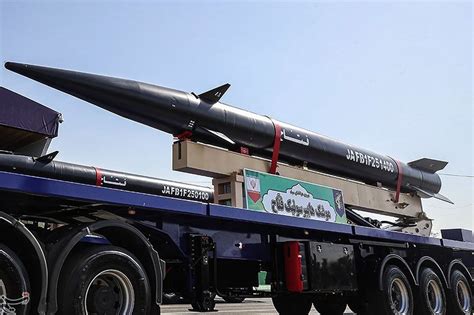
Iran used new missiles, including hypersonic, today not used in the operations before
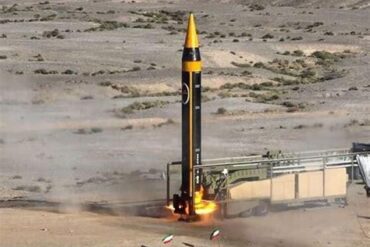
According to state media, the missiles are of type: Fattah-1, Qader and Kheibar Shekan. pic.twitter.com/zMxeLGYl5R
— Hussein of the south (@EyesOnSouth1) June 14, 2025
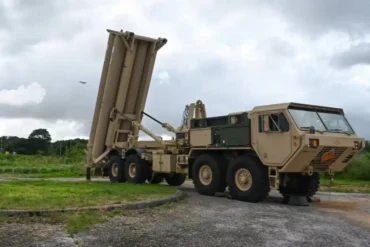
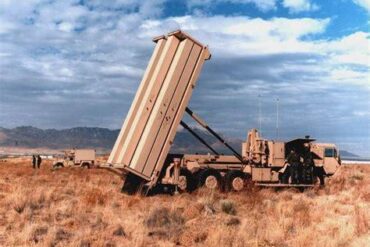
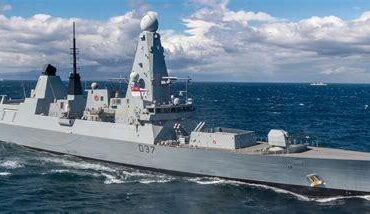
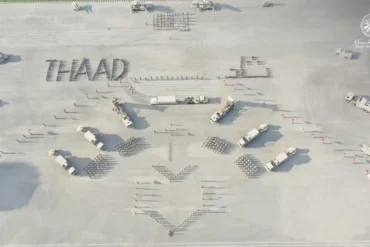
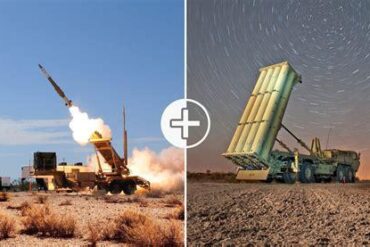
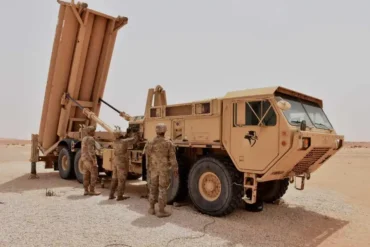
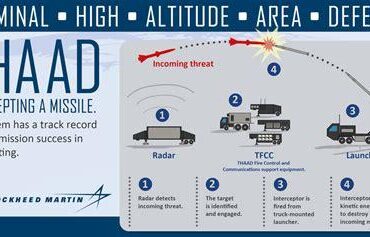
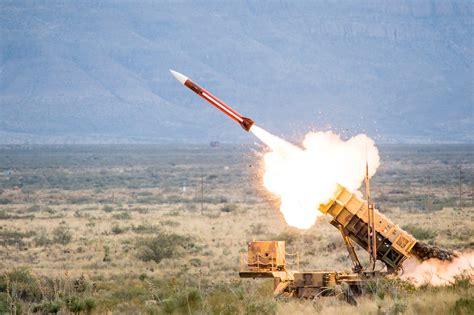
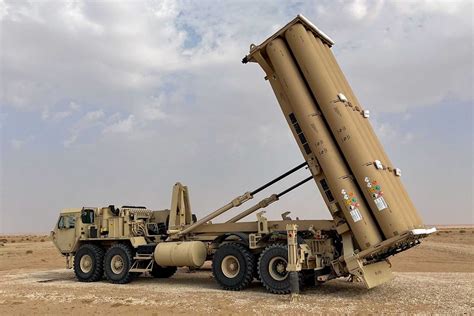
The United States had already positioned a dense network of missile defense technologies across the region before the conflict began. This included multiple THAAD batteries, Patriot air-defense systems, and ship-based Aegis interceptors operating in nearby waters. Supporting these were powerful early-warning sensors such as Qatar’s AN/FPS-132 Upgraded Early Warning Radar, capable of detecting incoming threats from vast distances.
Despite this formidable network, reports indicated that some Iranian missiles successfully penetrated the defensive shield, raising questions about whether current systems were designed for a different era of missile warfare.
Chinese Research Raises Early Warnings
Before the conflict began, a Chinese research team had already examined the vulnerability of U.S. missile defense systems against hypersonic weapons. Their findings, published in a study on tactical missile technology, suggested that existing interception systems face major limitations when confronting highly maneuverable hypersonic threats.
The researchers argued that traditional missile defense architectures were optimized primarily for ballistic missiles following predictable trajectories. Ballistic weapons generally travel along a parabolic arc—ascending into space before descending toward their target.
Hypersonic missiles, however, behave very differently. After being launched by rockets, hypersonic glide vehicles descend back into the atmosphere and flatten their trajectory, allowing them to glide at extremely high speeds while making frequent course corrections. This unpredictable flight pattern complicates the task of tracking and intercepting them.
The Chinese study concluded that although American systems might theoretically intercept some hypersonic weapons under ideal conditions, speed, maneuverability, and thermal effects make successful interception extremely difficult in practice.
Why Hypersonic Missiles Are So Difficult to Stop
Understanding the challenge requires a closer look at how hypersonic weapons operate. The defining characteristic of these systems is speed: anything exceeding Mach 5—five times the speed of sound—is considered hypersonic. At such velocities, a missile can cover roughly a mile every second.
Speed alone would be formidable, but hypersonic weapons combine velocity with advanced maneuverability and unpredictable trajectories. Unlike traditional ballistic missiles, they can shift direction mid-flight, change altitude, and adjust course using onboard navigation systems.

Two main types of hypersonic weapons dominate current military development:
• Hypersonic Glide Vehicles (HGVs) launched by rockets before gliding toward targets within the atmosphere
• Hypersonic Cruise Missiles powered by scramjet engines capable of sustained high-speed flight
The glide vehicle model, used by several countries, is particularly problematic for missile defenses. These weapons re-enter the atmosphere early and glide at lower altitudes, where radar tracking becomes more difficult and reaction times shrink dramatically.
Another complication arises from physics itself. As hypersonic vehicles slice through the atmosphere at incredible speeds, friction generates intense heat, forming a plasma sheath around the weapon. This superheated layer can interfere with certain detection methods, making it harder for sensors to lock onto the target.
Limitations of Current Interception Systems
Modern missile defense relies on a layered strategy designed to intercept threats at different phases of flight. U.S. systems are typically divided into two categories: midcourse interception and terminal-phase defense.
Midcourse systems attempt to intercept missiles outside the atmosphere, when they travel through space. The most notable among these are Ground-Based Midcourse Defense interceptors and the Aegis SM-3 missile system.
These interceptors use a “hit-to-kill” approach. Instead of carrying explosives, they rely on kinetic energy—essentially smashing into the target at high speed.
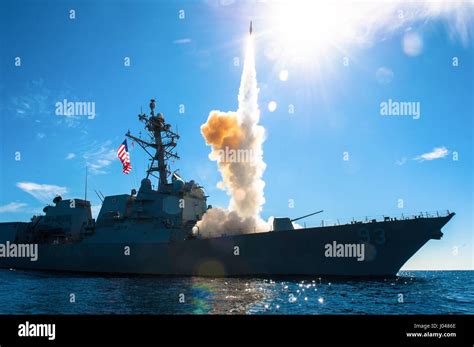
However, the Chinese research team noted a key limitation: midcourse interceptors rely heavily on infrared sensors to track targets. Hypersonic vehicles traveling through the atmosphere generate enormous heat, which can obscure these sensors and complicate targeting. As a result, many interceptors are most effective outside the atmosphere at altitudes above roughly 100 kilometers.
Once a hypersonic missile descends into the atmosphere and begins maneuvering, interception becomes significantly more complicated.
Terminal Defense and the Narrow Window of Reaction
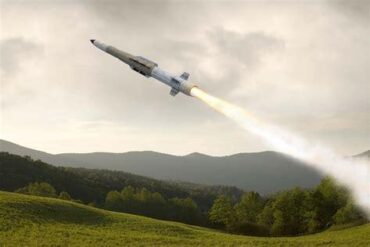
When a missile enters its final descent, responsibility shifts to terminal-phase defense systems such as THAAD, Patriot PAC-3, and Aegis SM-2 or SM-6 interceptors.
These systems are designed to intercept threats within the atmosphere during the final moments of flight. The idea is to create a last defensive barrier protecting critical infrastructure and population centers.
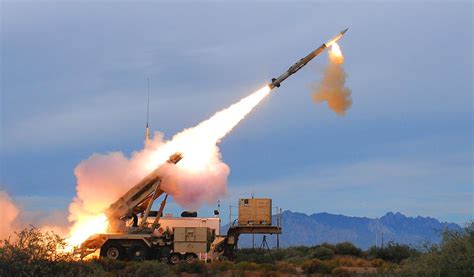
THAAD operates within a broad altitude range, typically between 40 and 150 kilometers. In theory, this allows it to intercept ballistic missiles both inside and outside the atmosphere.
Yet hypersonic weapons exploit gaps within this envelope. If a missile glides below THAAD’s optimal interception altitude, the responsibility shifts to Patriot systems operating closer to the ground. At that point, the timeline for detection, targeting, and interception shrinks to mere seconds.
If the missile is maneuvering during its descent—something hypersonic vehicles are specifically designed to do—the probability of interception decreases even further.
Modeling the Hypersonic Challenge
To evaluate the feasibility of interception, Chinese researchers simulated a scenario involving the Patriot PAC-3 MSE interceptor and a hypersonic glide vehicle similar to the experimental HTV-2.
Their findings highlighted a fundamental physical challenge. Interceptors must not only match the target’s speed but also outmaneuver it. According to missile guidance theory, the interceptor must generate two to three times the lateral acceleration of its target in order to adjust its trajectory quickly enough to achieve a hit.
Hypersonic glide vehicles complicate this by performing dramatic maneuvers during their terminal dive. The study described how a wedge-shaped glider can flip orientation and convert aerodynamic lift into a steep downward dive, accelerating toward its target at extraordinary speeds.
If the weapon begins this dive at speeds exceeding Mach 9, it can maintain velocities above Mach 6 throughout its descent—placing it beyond the reach of many existing interceptors.
Systems like the Aegis SM-2 and SM-6, which travel around Mach 4, face even greater limitations under such conditions.
When Interception Doesn’t Mean Destruction
Even if an interceptor successfully strikes a hypersonic missile, the result may not guarantee neutralization. Unlike older missile designs, modern hypersonic weapons are often built with redundant systems and structural resilience.
A glancing hit may damage the weapon without disabling it completely. If critical components remain intact, the missile could still continue its trajectory toward the target.
This design philosophy reflects the strategic importance of hypersonic weapons. Their purpose is not merely speed but ensuring that at least some missiles penetrate defensive shields.
Evidence from the Iran Conflict
During the ongoing conflict, Iranian forces claimed that hypersonic missiles and attack drones successfully penetrated Israeli and U.S. missile defenses during multiple waves of attacks.
🚨🚨🚨 HYPERSONIC MISSILE STRIKES ON JERUSALEM BY IRAN
CASUALTIES REPORTED pic.twitter.com/Mvt2Nudjyb
— Iran Observer (@IranObserver0) March 1, 2026
According to statements from Iran’s Islamic Revolutionary Guard Corps, missiles used in these operations included the Fattah-1, Qader, and Kheibar Shekan systems. Some reports suggested that several strikes reached strategic locations such as Ben Gurion International Airport and government buildings in Tel Aviv.
While independent verification of every claim remains difficult during wartime, numerous videos showed interceptor missiles attempting to intercept incoming threats, sometimes firing multiple interceptors against a single target.
In several instances, the attacking missiles appeared to evade interception.
For analysts, this raised the possibility that hypersonic maneuverability may be overwhelming traditional missile defense tactics.
The Global Hypersonic Arms Race
The strategic significance of hypersonic weapons extends far beyond the Middle East conflict. Major military powers are currently locked in an intense competition to develop these technologies.
The United States began pursuing hypersonic systems in the early 2000s under the Conventional Prompt Global Strike program, which aimed to deliver rapid precision strikes anywhere on Earth.
Despite significant investment—nearly $7 billion requested for hypersonic research in the Pentagon’s FY2025 budget—many U.S. programs remain in development or testing stages.
Meanwhile, other countries have already deployed operational hypersonic weapons. Russia fields several systems, including Kinzhal, Zircon, and Avangard, and has begun producing a newer missile known as Oreshnik.
China has also invested heavily in the technology. Systems such as the DF-17 hypersonic glide vehicle are believed to be operational, capable of targeting regional military installations with high-speed precision.
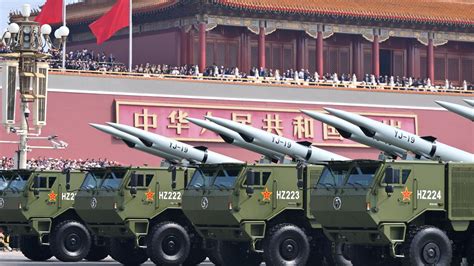
These developments have fueled concerns that the United States may be temporarily behind in the deployment of operational hypersonic weapons, even though it pioneered many foundational technologies decades ago.
The Scramjet Revolution
One of the most advanced forms of hypersonic propulsion involves scramjet engines—short for “supersonic combustion ramjet.” Unlike traditional rocket engines that carry both fuel and oxidizer, scramjets use oxygen from the atmosphere, allowing them to sustain extremely high speeds over long distances.
China and Russia are believed to be leading in the operational deployment of scramjet-powered missiles. China’s CJ-1000 long-range missile and ship-launched YJ-19 reportedly use this advanced propulsion technology.
Russia’s Zircon missile also relies on scramjet propulsion, enabling sustained hypersonic flight while maintaining maneuverability.
Ironically, the United States demonstrated scramjet technology decades earlier, achieving a sustained 240-second scramjet flight in 2013. Yet transitioning these breakthroughs into deployable weapons has proven far more complex than early research suggested.
Can Missile Defense Catch Up?
Despite the daunting challenge, hypersonic missiles are not invincible. Improvements in early detection and tracking systems could significantly enhance interception capabilities.
One promising concept involves integrating space-based sensors with ground radar networks. Satellites equipped with advanced infrared sensors could track hypersonic vehicles continuously as they glide through the atmosphere.
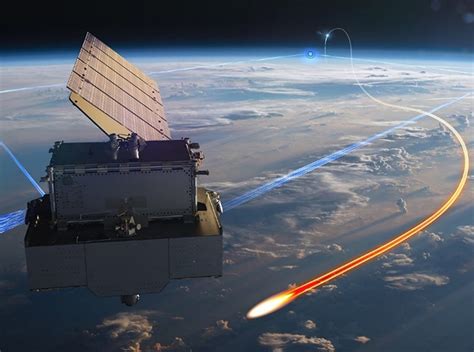
The United States Missile Defense Agency is currently developing the Hypersonic and Ballistic Tracking Space Sensor (HBTSS) system. This project envisions a constellation of satellites capable of detecting and tracking hypersonic threats in real time.
Such systems would provide defenders with earlier warnings and longer decision windows, improving the chances of successful interception.
Proposals such as a large-scale global missile defense network combining satellites, sensors, and interceptors aim to create a truly layered shield capable of addressing future threats.
A Strategic Turning Point in Missile Warfare
The war in the Middle East may ultimately be remembered as a pivotal moment in the evolution of missile warfare. Hypersonic weapons are forcing militaries to rethink decades-old assumptions about air defense and deterrence.
Systems like THAAD, Patriot, and Aegis were built to counter ballistic threats from earlier generations of missile technology. Hypersonic weapons represent a new challenge altogether—one that combines extreme speed, unpredictable flight paths, and sophisticated engineering designed to defeat interception.
The unfolding conflict suggests that offensive missile technology may currently hold the advantage. Yet history shows that defense technologies often evolve rapidly once a new threat becomes clear.
In the coming years, the global race to develop more advanced sensors, faster interceptors, and integrated defense networks will likely accelerate. The outcome of that race may determine whether hypersonic weapons remain unstoppable—or whether the balance between offense and defense can be restored in the skies above future battlefields.