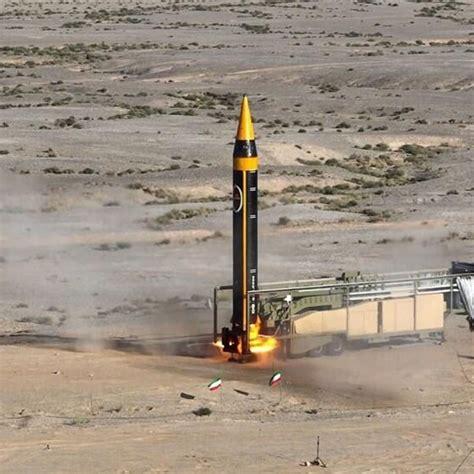
Iran’s Islamic Revolutionary Guard Corps (IRGC) has announced the launch of “Khyber” missiles against senior Israeli government and military targets, a declaration that immediately shifts attention from impact sites to missile architecture. The central question is not simply whether projectiles reached their intended coordinates, but what category of system Tehran is attempting to validate under live operational conditions. By invoking the “Kheibar” name and allowing the term “hypersonic” to circulate in affiliated reporting, Iran appears to be stress-testing Israel’s layered missile defense network while amplifying deterrent messaging across the region.
The ambiguity surrounding the exact missile variant is deliberate and strategically useful. “Kheibar” has evolved into a flexible label within Iranian defense communications, applied to different systems over time. Some reports refer to the solid-fuel Kheibar Shekan, while others imply the heavier, liquid-fueled Khorramshahr-4, which Iran itself also calls Kheibar. Without publicly verified debris analysis or telemetry data, the distinction remains unresolved. That uncertainty is part of the effect: ambiguity complicates defensive assessment and enhances perceived capability.
Iran’s missile doctrine has consistently emphasized survivability, mobility, and defense penetration. The Kheibar family reflects these priorities, combining medium-range reach with improved guidance, rapid launch readiness, and in some variants, maneuverable reentry vehicles intended to complicate interception at extreme velocities.
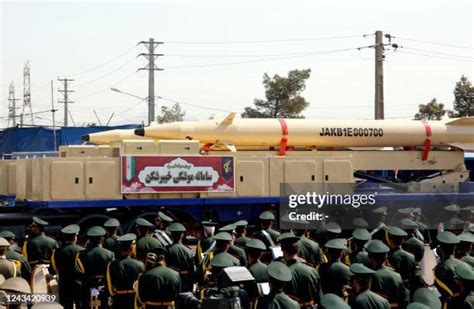
The Kheibar Shekan and Solid-Fuel Mobility
The Kheibar Shekan is widely assessed as a third-generation solid-fuel medium-range ballistic missile (MRBM) with a reported range of approximately 1,450 kilometers. Solid-fuel propulsion is a critical operational advantage. Unlike liquid-fueled missiles, which often require time-consuming fueling procedures that expose launch crews to detection and preemption, solid-fuel systems can remain stored in a ready-to-launch configuration. This reduces preparation time and enhances survivability against “left-of-launch” strikes designed to destroy missiles before they fire.
Mobility compounds this survivability. Road-mobile transporter-erector-launchers allow dispersion across hardened or concealed sites. In wartime conditions, dispersal increases the difficulty of locating and neutralizing launch units, particularly when combined with decoys and underground infrastructure. A missile that can be fired quickly from unpredictable positions creates a compressed decision cycle for defenders.
Accuracy improvements further complicate interception. Reports have linked the Kheibar Shekan to satellite-aided guidance and maneuvering reentry vehicle (MaRV) technology. A MaRV differs from a traditional ballistic warhead in that it can adjust its trajectory during the terminal phase of flight. Even modest lateral movement at hypersonic velocity—defined as speeds above Mach 5—forces interceptors to solve a rapidly shifting geometry problem. For missile defense systems designed around predictable ballistic arcs, this shift represents a meaningful technical challenge.
The Khorramshahr-4: Heavy Payload and Strategic Messaging
If Iran’s claim instead refers to the Khorramshahr-4, also branded as Kheibar, the strategic emphasis changes. The Khorramshahr lineage is associated with longer range—roughly 2,000 kilometers—and significantly heavier payload capacity. Such payload flexibility permits either a single large warhead or multiple configurations tailored to mission objectives.
When Iran unveiled the Khorramshahr-4 in 2023, it highlighted reduced launch preparation time and enhanced guidance capability. The system reportedly uses hypergolic liquid propellants, which ignite on contact and can remain stored within the missile for extended periods. This design reduces fueling vulnerability while preserving the energy advantages of liquid propulsion. A heavy warhead launched from deep within Iranian territory can reach Israeli targets without forward basing, reinforcing strategic depth.
The introduction of mid-course navigation capability—allowing trajectory adjustments outside the atmosphere—signals an attempt to improve precision and resilience. In a contested electromagnetic environment, where jamming or spoofing may degrade guidance, redundant or adaptable navigation pathways enhance strike reliability. Even incremental gains in circular error probable (CEP) alter the calculus for hardened infrastructure targets.
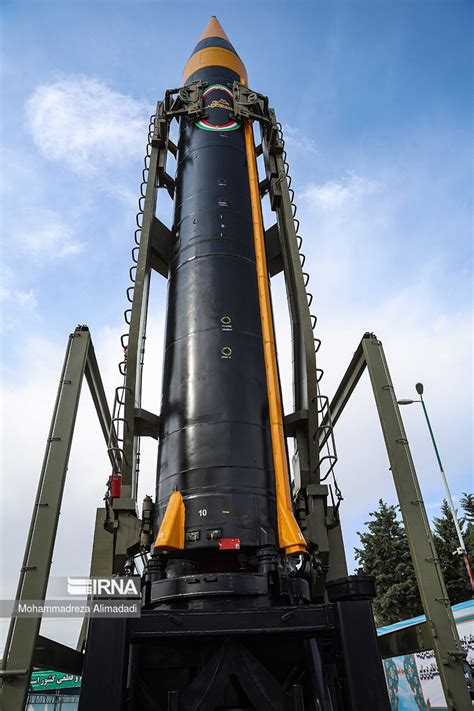
What “Hypersonic” Actually Means in This Context
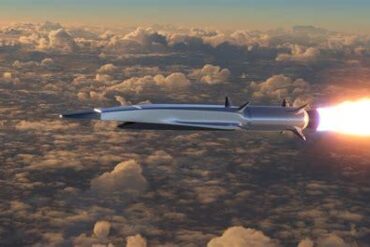
The term hypersonic carries rhetorical weight, but clarity matters. Ballistic missiles have traveled faster than Mach 5 for decades. Speed alone does not define the new generation of hypersonic weapons. The critical variable is sustained maneuverability within or near the atmosphere.
Iran’s Fattah program provides insight into this approach. Official statements describe speeds of Mach 13 to Mach 15 and ranges around 1,400 kilometers. More technically, Fattah-1 appears to incorporate a maneuvering reentry vehicle equipped with a small internal propulsion system that enables powered adjustments during descent. This is not a scramjet-powered cruise missile nor a classic hypersonic glide vehicle that skims the atmosphere over long distances. It is an evolution of ballistic design that enhances terminal unpredictability.
This distinction is significant. True glide vehicles require advanced materials capable of surviving sustained atmospheric heating while maintaining lift and control. A maneuverable ballistic reentry vehicle represents a more incremental and achievable engineering pathway. By pursuing this route, Iran may be optimizing cost-to-benefit ratios—introducing enough unpredictability to stress defenses without undertaking the most technologically demanding forms of hypersonic development.
Israel’s Layered Missile Defense Under Pressure
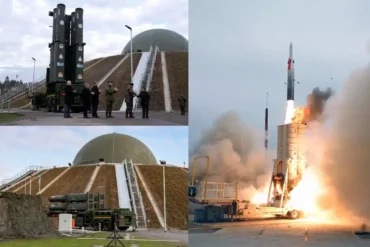
Israel fields one of the most sophisticated integrated air and missile defense architectures in the world. The Arrow-3 system is designed for exo-atmospheric interception, destroying incoming ballistic warheads in space using hit-to-kill technology. Intercepting outside the atmosphere reduces the risk of debris falling on populated areas and extends engagement windows.
However, maneuverability compresses those windows. If a warhead adjusts trajectory late in flight, the defender must either commit interceptors earlier with incomplete certainty or wait longer and accept reduced reaction time. Each interceptor launch is expensive and finite. Salvo tactics—firing multiple missiles simultaneously—compound the challenge by forcing prioritization decisions under time pressure.
Arrow-4, currently reported to be entering advanced testing phases, is explicitly oriented toward next-generation threats, including maneuverable and hypersonic systems. This suggests that Israeli planners anticipate an evolving offensive environment where traditional ballistic predictability can no longer be assumed.
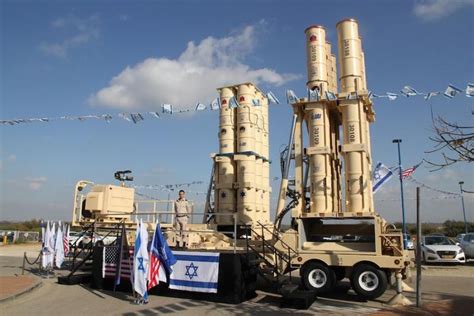
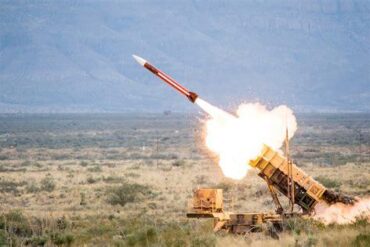
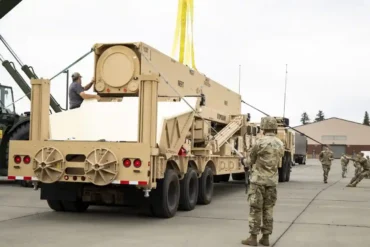
Complementing Arrow are Patriot and David’s Sling systems for lower-tier interception. The architecture is layered by design, but layered systems depend on seamless sensor fusion. Radar tracking, satellite cueing, and command-and-control integration must function without latency. Even milliseconds of delay can alter intercept geometry at hypersonic speeds.
The U.S. and Regional Dimension
The United States reinforces regional missile defense through Aegis Ballistic Missile Defense ships equipped with SM-3 and SM-6 interceptors. SM-3 engages threats in space, while SM-6 can operate in the terminal phase within the atmosphere. Recent Missile Defense Agency testing has focused on integrating space-based sensors with maritime platforms to simulate engagements against maneuvering hypersonic-representative targets.
Yet the dedicated Glide Phase Interceptor (GPI), a joint U.S.-Japan program intended to counter advanced glide vehicles, remains under development. Until such systems are operational, defense against maneuverable threats relies heavily on improved tracking fidelity and rapid data sharing among distributed assets.
This layered multinational posture is not symbolic. Naval platforms extend sensor horizons and add interceptor inventory, directly contributing to the defensive kill chain. In a saturation scenario, additional intercept capacity may determine whether critical infrastructure is preserved.
Strategic Calculus and Deterrence Signaling
Iran’s missile force is widely assessed as the largest in the Middle East, encompassing short-, medium-, and potentially intermediate-range systems. Quantity and diversity generate strategic leverage. A mix of conventional MRBMs, maneuverable reentry vehicles, and heavy-payload systems forces defenders to prepare for multiple profiles simultaneously.
The calculus is not about invulnerability. No missile is truly unstoppable. Rather, the objective is to raise the cost and uncertainty of interception to a level that deters preemption or retaliation. By publicly associating recent launches with hypersonic capability, Iran amplifies the psychological dimension of deterrence. Even if technical realities fall short of marketing claims, perception influences strategic behavior.
For Israel, the operational imperative is inventory discipline and prioritization. High-value assets—command centers, air bases, and energy infrastructure—require layered protection. Leakage is statistically possible in any high-volume exchange. Resilience planning therefore complements interception, ensuring continuity even under partial penetration.
The broader regional picture reflects an accelerating contest between offensive missile innovation and defensive adaptation. Each maneuverable reentry vehicle prompts improvements in sensor fusion and interceptor agility. Each defensive upgrade encourages new penetration aids or flight profiles. The cycle is iterative and relentless.
Iran’s claimed Kheibar launch underscores this dynamic. Whether solid-fuel Kheibar Shekan, heavy Khorramshahr-4, or a maneuverable derivative linked to Fattah, the message is consistent: Tehran intends to normalize more sophisticated ballistic capabilities within active confrontation. The technical details remain under scrutiny, but the strategic signal is unmistakable. In the evolving geometry of Middle Eastern missile warfare, speed, maneuverability, and survivability are redefining both deterrence and defense.