Germany has officially activated the first operational segment of the Arrow 3 ballistic missile defense shield, marking the most significant upgrade to European air and space defense in decades. This move is not symbolic—it is strategic, urgent, and deeply reflective of a continent recalculating security under the shadow of Russia’s long-range strike capability. Developed jointly by the United States and Israel, the Arrow 3 serves as the backbone of the European Sky Shield Initiative (ESSI), and for the first time in Germany’s modern military history, protection against high-altitude ballistic threats is not theoretical. It is live.
The deployment is a response forged by conflict. When Russia expanded its war in Ukraine in 2022, it exposed vulnerabilities in NATO’s layered defense zones, and Europe suddenly found itself staring into a future where hypersonic and ballistic strikes could bypass traditional air defenses. Berlin’s answer came swiftly—investing in a system capable of reaching beyond the atmosphere and destroying threats before they re-enter Earth.
German Defence Minister Boris Pistorius stated that the activation grants Germany and NATO the capability for early warning and interception against long-range ballistic attacks. For Berlin, this is more than procurement. It is commitment, responsibility, and the clearest message yet that Europe intends to shield itself without hesitation.
A Historic Deal — And Israel’s Largest Defense Export Ever
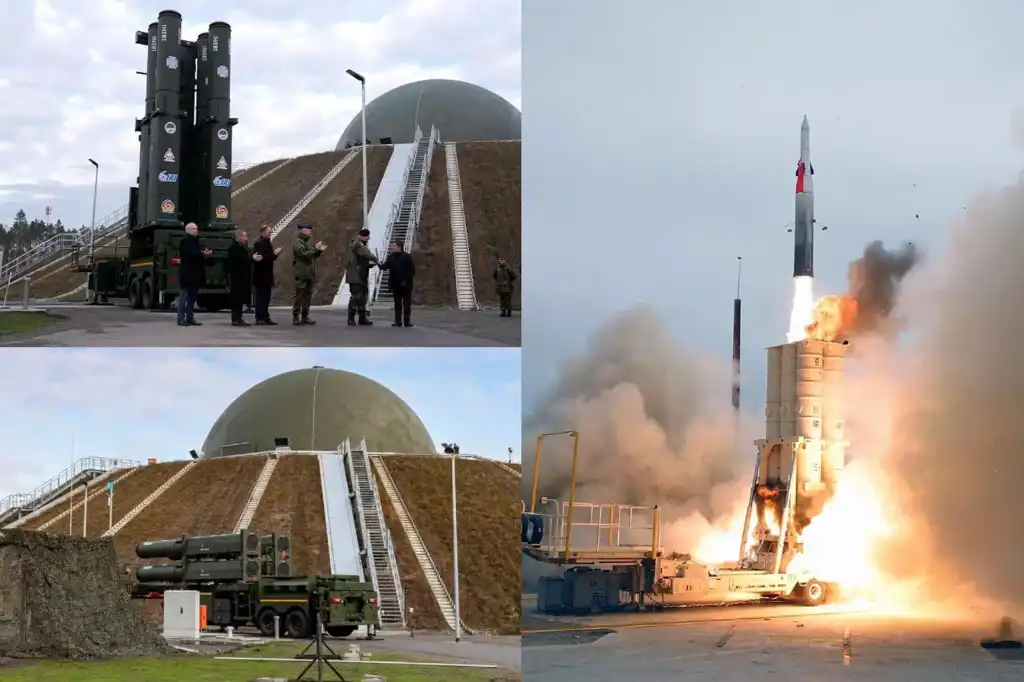
The $3.5 billion Arrow 3 purchase is Israel’s largest defense export in history, symbolizing the deep military and political bond linking Jerusalem, Washington, and Berlin. Commissioning took place at Holzdorf-Schönewalde Air Base, where Israeli officials joined German military leadership in announcing the system’s first operational status. This marks the first time an Arrow system has ever been deployed outside Israel, and two additional German sites are already in line for installation, with full operational capability expected by 2030.
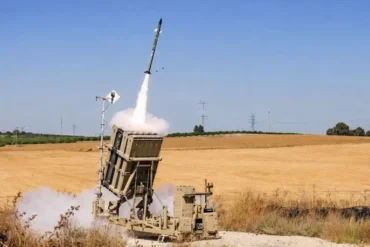
Arrow 3 is now positioned as the upper layer of Germany’s missile shield, complementing IRIS-T and Patriot defenses. When combined, the tri-system structure protects from low-altitude drones to space-borne ballistic threats—a rare capability among global militaries.
What Makes Arrow 3 Lethal: The Technology and Kill Mechanism
Unlike traditional interceptors, Arrow 3 does not rely on explosive warheads. Instead, its two-stage missile uses a hit-to-kill kinetic warhead, guided by optical and sensor-rich systems capable of adjusting in exo-atmospheric flight. The kill vehicle doesn’t detonate; it obliterates. When contact is made, the interceptor shreds the incoming missile into molten fragments, neutralizing warheads far before they enter populated airspace.
This method demands precision. Tracking, sensor lock, and real-time trajectory correction must perform flawlessly, and Arrow 3 was built for exactly this purpose. Its mobile truck-mounted launchers ensure survivability and rapid relocation, while electronic countermeasures protect guidance systems from jamming. In modern conflict, mobility is life—Arrow 3 is built for the road, not for a fixed bunker.
Combat Proven In The Real World
Arrow 3 is not theoretical tech. It has already been blood-tested in high-pressure conflict. In November 2023, it intercepted a Ghadr-110 ballistic missile fired by Yemen-based Houthi forces. In April 2024, amid a massive Iranian missile wave, Arrow 3 helped Israel’s multi-layer shield achieve a reported 99% interception rate, neutralizing dozens of exo-atmospheric threats.
Combat trials, however, exposed limits. During Iran’s October 2024 retaliatory strike, a volume-saturation barrage pushed the system’s capacity. Several missiles reached Israeli targets, proving that even elite defense architecture strains under overwhelming missile swarms. Germany acknowledges the lesson clearly—Arrow 3 is powerful, but missile warfare evolves. Europe must evolve too.
Strategic Implications for Europe
The commissioning of Arrow 3 in Germany is more than defense—it is deterrence. NATO’s eastern flank gains a shield against high-trajectory weapons, and adversaries must now calculate against an interception window that extends into space. Berlin is sending a message: Europe does not intend to be defenseless in the next era of long-range warfare.
Arrow 3 is the blueprint for a European missile network that spans the sky from troop deployments to capital cities. As ESSI expands, the continent moves closer to a unified missile wall capable of defending 500 million people. The next step will be integration, coordination, and ensuring every NATO capital can speak the same radar language in milliseconds.
The shield is active. The warning architecture is awake. What comes next is a new age of continental security shaped by precision missiles, fast-moving threats, and a Germany no longer content to spectate—but prepared to intercept.