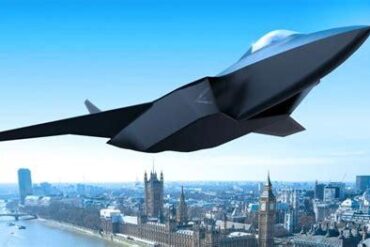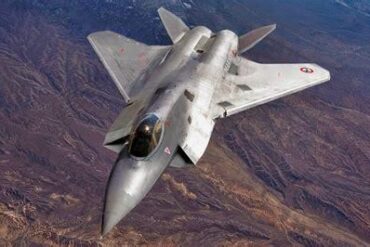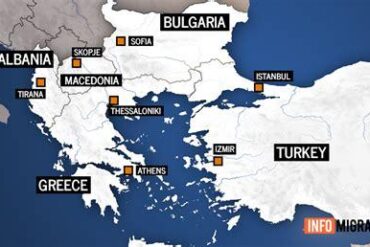
France and Germany have officially brought an end to the Future Combat Air System (FCAS) fighter jet program, terminating what was once envisioned as the most ambitious defense-industrial project in European history. Valued at approximately €100 billion, the multinational initiative was designed to deliver a sixth-generation combat aircraft capable of operating alongside autonomous drones, advanced networking systems, and next-generation battlefield technologies. Its collapse marks a significant turning point for European defense cooperation at a moment when security concerns across the continent continue to intensify.
The End of Europe’s Most Ambitious Fighter Program
The FCAS program was launched in 2017 as a flagship effort to strengthen European strategic autonomy and reduce dependence on foreign military technology. France, Germany, and later Spain joined forces with the objective of creating a cutting-edge combat ecosystem centered around a stealth fighter aircraft capable of dominating future battlefields.
However, despite years of political support and extensive negotiations, the project became increasingly burdened by disagreements between its industrial partners. The central dispute revolved around intellectual property rights, leadership responsibilities, technology ownership, and work-share arrangements. The rivalry between Dassault Aviation and Airbus gradually evolved into a major obstacle that neither side could overcome.
According to reports, discussions between French President Emmanuel Macron and German Chancellor Friedrich Merz ultimately resulted in a decision to discontinue the joint fighter aircraft effort rather than continue a process that had repeatedly stalled.
By ending the fighter component of FCAS, Europe has effectively closed the chapter on a project that many defense analysts once considered the cornerstone of the continent’s future air power strategy.
Industrial Rivalries Proved Stronger Than Political Ambitions
The cancellation highlights a recurring challenge within multinational defense programs: balancing national interests while pursuing shared strategic goals.
France entered the project with substantial experience gained through the development and operation of the Rafale, a fighter aircraft that serves both the French Air Force and French Navy. Paris sought to maintain this dual-service philosophy in any future combat aircraft. Germany, meanwhile, had no requirement for a carrier-capable fighter and questioned the necessity of incorporating naval aviation capabilities into the program.
These differing operational requirements translated into disagreements over aircraft design priorities, engineering authority, and development costs. As negotiations dragged on, trust between the industrial stakeholders deteriorated. What began as a vision for European unity increasingly became a contest over technological leadership and future export opportunities.
The result was a prolonged deadlock that made continued development politically and financially difficult to justify.
FCAS Was More Than Just a Fighter Jet
One of the most important aspects of FCAS was that it was never intended to be merely a replacement aircraft.
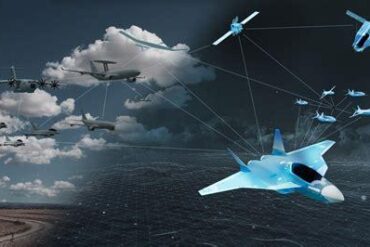
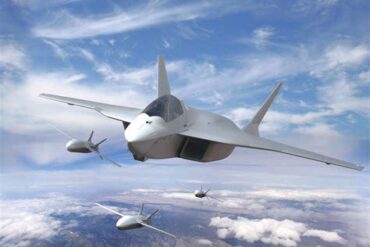
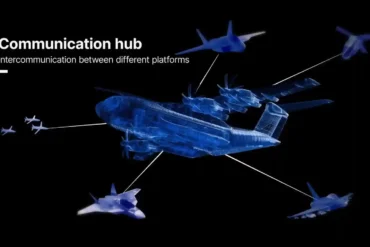
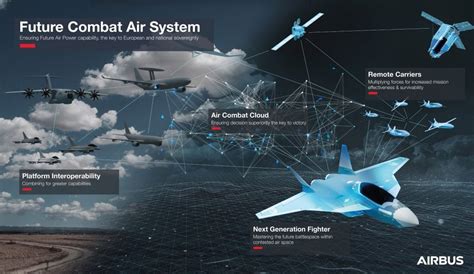
The program envisioned a comprehensive system-of-systems architecture that would integrate a stealth fighter with collaborative combat aircraft, artificial intelligence-enabled mission management tools, and a highly connected digital battlefield known as a combat cloud. The fighter would function as the command node of a larger network capable of coordinating manned and unmanned assets in real time.
This concept mirrors the direction being pursued by several major military powers. Future air warfare increasingly emphasizes information dominance, distributed operations, and human-machine teaming rather than relying solely on the capabilities of a single aircraft.
Even though the fighter component has been abandoned, reports suggest that France, Germany, and Spain may continue exploring cooperation in selected FCAS technologies, preserving elements of the broader vision.
Germany’s Next Move Remains Uncertain
The collapse of FCAS immediately raises questions about Germany’s future fighter strategy.
Berlin has already committed to acquiring additional Lockheed Martin F-35 Lightning II aircraft to modernize portions of its combat fleet. While the F-35 remains one of the most advanced stealth fighters currently in service, it belongs to the fifth-generation category and does not provide the full range of sixth-generation capabilities envisioned under FCAS.
Moreover, the United States is unlikely to export its future Next Generation Air Dominance fighter, currently represented by the F-47 concept. This limitation narrows Germany’s options considerably.
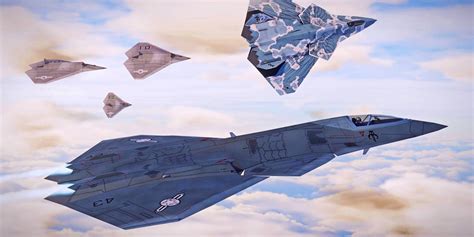
Attention is therefore turning toward the Global Combat Air Programme (GCAP) led by the United Kingdom, Italy, and Japan. GCAP already represents one of the most advanced sixth-generation fighter efforts outside the United States and could become an attractive alternative for Berlin if political and industrial conditions align.
France May Pursue an Independent Sixth-Generation Aircraft
For France, the collapse of FCAS may reinforce a long-standing preference for sovereign defense capabilities.
The French defense industry has historically emphasized national control over critical military technologies. The success of the Rafale program demonstrated that France can independently design, manufacture, and export advanced combat aircraft.
With Germany no longer participating in a joint fighter effort, Paris could choose to launch a fully independent sixth-generation fighter project tailored specifically to French military requirements. Such an approach would provide greater control over technology development, operational doctrine, and export policy while avoiding many of the compromises associated with multinational programs.
Spain Explores Alternative Partnerships
Spain now faces its own strategic decision regarding the future of combat aviation.
Madrid has already distanced itself from acquiring the F-35, citing concerns related to technological sovereignty and operational independence. As a result, Spanish defense planners have increasingly focused on alternative solutions that preserve greater national control.
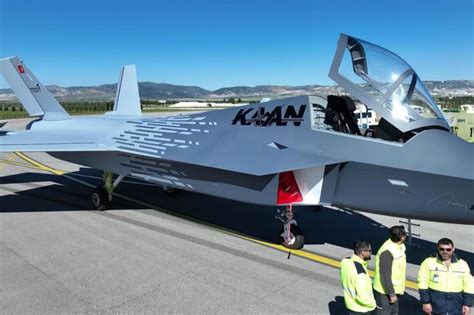
Among the most notable possibilities is participation in Turkey’s KAAN stealth fighter program. Discussions between Spanish officials and Turkish Aerospace Industries have generated growing interest, with analysts suggesting that Spain could eventually become a significant development partner.
A New Era for European Air Power
The termination of FCAS represents far more than the cancellation of a fighter aircraft. It reflects the difficulties of aligning political ambitions, military requirements, and industrial interests across multiple nations pursuing increasingly complex defense technologies.
As Europe accelerates military modernization amid rising geopolitical tensions, the continent’s leading powers must now determine whether future air dominance will be achieved through national programs, new international partnerships, or a combination of both.
The collapse of FCAS may have ended one vision for Europe’s next-generation fighter, but it has also opened the door to a new and potentially more fragmented chapter in the race to define the future of air warfare.